Bottle-palm
Beaucarnea recurvata
Last reviewed: November 2026
Bottle-palm (Beaucarnea recurvata) is a perennial succulent.
Watering reminders and freeze alerts for Bottle-palm, free in the app.


Toxicity unknown
Bottle-palm (Beaucarnea recurvata) is not listed by the ASPCA Animal Poison Control Center (opens in new tab) or the other sources we check, so we have no verdict for it either way. Absence from those lists is not a clearance. If your pet shows symptoms after eating any plant, call the ASPCA at (888) 426-4435.
Light
full sun
Water
low
Size
48"–180" H × 36"–72" W
Bloom
N/A
Before you buy
Your city may pay you to plant this
Cities and water utilities offer rebates for replacing lawn with native and water-wise plants. We track 465 programs across 44 states, each with a link to the provider and the date we last checked it.
Find rebates in your areaPicture natives in your own yard
Wondering what could grow where Bottle-palm is now? Upload a photo of the spot and Patch Vision shows a rendering of it replanted with natives for your region.
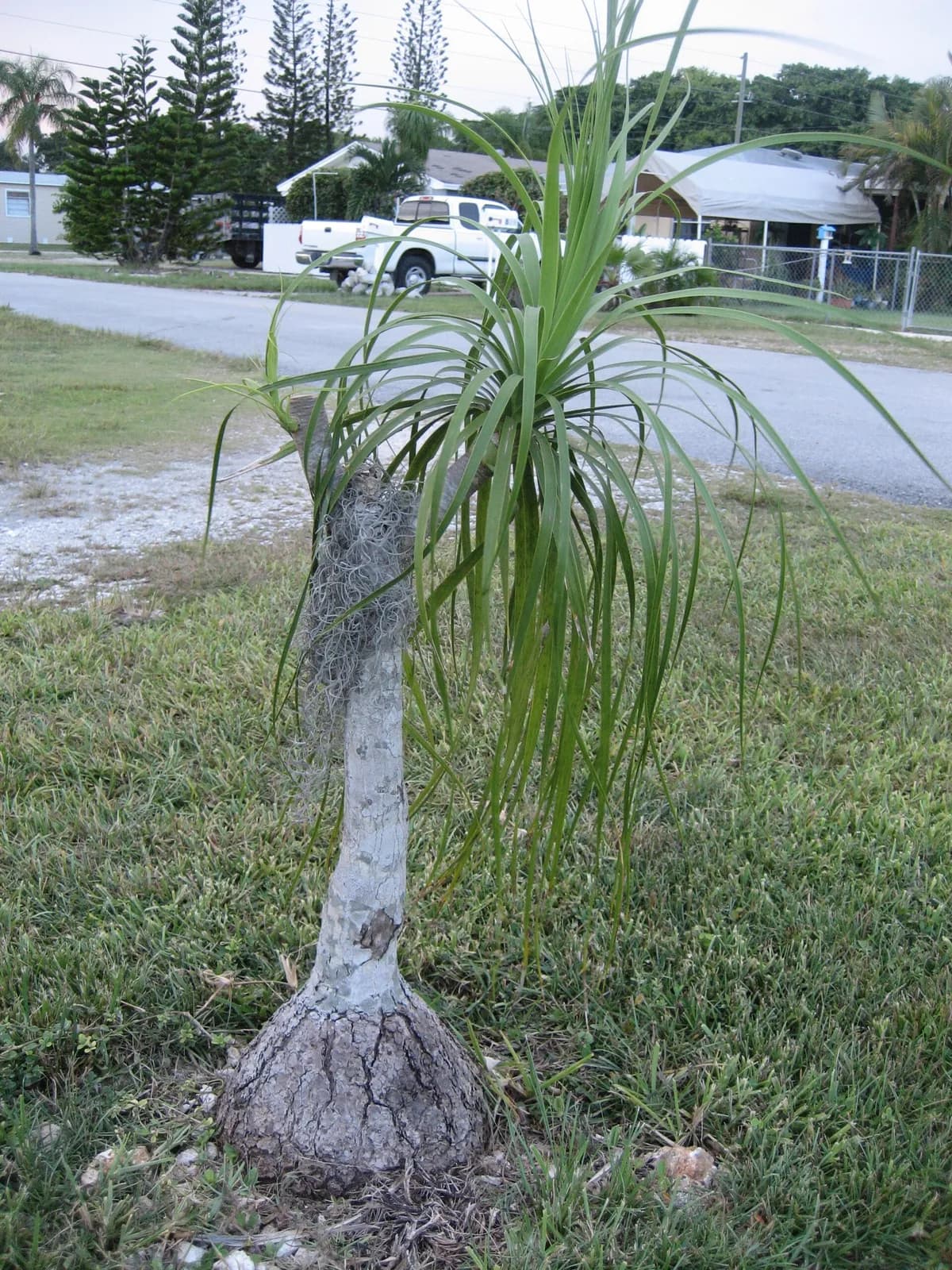
Ponytail palm, also called elephant's-foot, is a slow-growing succulent with a swollen water-storing trunk base topped by a fountain of long, narrow leaves. It is native to eastern Mexico and is not a true palm.
Growing Bottle-palm
Grow Bottle-palm in full sun and low water. Mature plants reach 48 to 180 inches tall and spread 36 to 72 inches wide. Expect low maintenance to keep it looking intentional in a front yard.
How to care for Bottle-palm, by region
How to care for Bottle-palm where it is actually grown: year-round basics plus what to do each season, region by region, with the sources for each.
Care guidance last updated: November 2026
Sonoran Basin and Range (includes Phoenix, AZ)
Year-round
Ponytail palm is a slow-growing succulent native to eastern Mexico, not to the Southwest. In the Phoenix area it does well in full sun to bright part shade with fast-draining soil and protection from hard freezes.
- Plant in full sun to bright part shade in fast-draining soil.
- Water deeply but infrequently, letting the soil dry between waterings, since the swollen trunk base stores water.
- Protect from temperatures below freezing.
- Remove brown leaf tips and dead lower leaves for a tidy look.
Its compact, evergreen form reads as a tidy accent plant in a front-yard bed or container, which keeps it HOA-friendly.
Fall
Fall is a time to taper watering.
- Water less often as temperatures cool.
- Trim dead leaves before frost season.
Winter
Winter cold is the main risk.
- Cover or move containers when a freeze is forecast.
- Keep soil nearly dry in cold months to avoid rot.
Spring
Spring is the main growth period.
- Resume regular deep watering as growth begins.
- Plant or repot after the last frost.
Summer
Summer heat is well tolerated.
- Water deeply every one to two weeks, less in humid spells.
- Give afternoon shade if leaf tips scorch.
Sources: Missouri Botanical Garden Plant Finder, University of Arizona Cooperative Extension
In an HOA neighborhood
Bottle-palm takes more care to keep looking intentional in a front yard. Maintenance level: low. Consider it for backyard or mid-zone beds rather than the street edge.
Works well in: front yard accent, container.
Wildlife value
Limited wildlife value outside its native range.
Common questions
- How much sun does Bottle-palm need?
- Bottle-palm grows best in full sun conditions.
- Is Bottle-palm HOA-friendly?
- Bottle-palm takes more care to look intentional in a front yard. Consider it for backyard or mid-zone beds rather than the street edge.
Pollinator and host plant associations compiled from GBIF, iNaturalist, and published ecological literature.
If something looks wrong
Common plant problems, and what to check first
These come up on almost any plant. Each guide lists the likely causes in the order they are worth ruling out, with one thing to check before you act on any of them, and links to the source it came from.
- It is dying right after planting
- Leaves turning yellow
- Wilting even though I watered it
- Brown crispy leaf tips
- Bugs on the plant
Ready to grow Bottle-palm? Add it to your garden in the Pollinator Patch App to track it and get season-by-season care guidance.