Florida's landscape challenges are unlike any other state. Hurricanes, salt spray, seasonal flooding, punishing humidity, and sandy soils that drain almost instantly. This is not the same problem set as California's drought or Texas's heat. But Florida homeowners also share one thing with the rest of the Sun Belt: rising water bills, increasing storm damage, and HOA communities that expect intentional-looking yards. Native plants adapted to Florida's coastal and subtropical conditions offer a practical path forward, one that's hurricane-resistant, salt-tolerant, and designed to thrive where imported landscaping struggles.
This guide covers the specific challenges Florida homeowners face, why natives are the best response, how to handle HOA expectations in the state with the highest HOA participation rate in the country, and which plants work in your specific region, from Jacksonville down to Miami.
Florida's unique landscaping challenges
Florida is a state shaped by water and wind. The landscaping constraints here are fundamentally different from the arid West or the temperate Midwest, and they compound in ways that make traditional ornamental landscaping expensive and fragile.
- Hurricanes and tropical storms. Florida averages a hurricane landfall every three years. Shallow-rooted ornamental trees and palms become projectiles in high winds. Post-storm cleanup and replanting is a recurring cost that native, deep-rooted species cut way down.
- Salt spray and coastal exposure. Millions of Florida homes sit within a few miles of the coast. Salt-laden wind burns the foliage of most non-adapted plants, requiring constant replacement. Natives from coastal ecosystems handle salt exposure without damage.
- Intense rain and drought cycles. Florida's wet season (June–October) brings heavy, almost daily rainfall. The dry season (November–May) can bring weeks without rain. Plants need to handle both extremes: waterlogged roots in summer and dry sandy soil in winter.
- Sandy, fast-draining soil. Much of Florida sits on sand and limestone. Nutrients wash through quickly, and organic matter breaks down fast in the heat. Ornamental plants adapted to richer soils need constant fertilization, which contributes to nutrient runoff into waterways.
- High water table and flooding. In many parts of South and Central Florida, the water table sits just a few feet below the surface. During heavy rains or king tides, yards can flood. Plants without flood tolerance die back repeatedly.
Why Florida natives are the solution
Florida's native plants evolved in exactly these conditions: hurricanes, salt, flooding, sandy soil, and intense sun. They don't just survive here; they're engineered by millennia of adaptation to thrive.
- Deep, anchored root systems. Native trees like Gumbo Limbo and Sabal Palm develop extensive root networks that resist wind throw during storms. Many native species flex rather than snap in high winds, a critical trait that imported ornamentals lack.
- Built-in salt tolerance. Coastal natives like Sea Grape and Silver Buttonwood evolved with salt spray as a constant. They don't just tolerate it. Their leaf structures are adapted to shed or resist salt accumulation.
- Adapted to seasonal flooding. Species like Sabal Palm and Walter's Viburnum handle periodic inundation without root rot, while also tolerating the dry season. This dual tolerance is rare in non-native landscape plants.
- No fertilizer dependency. Florida natives are adapted to nutrient-poor sandy soils. They don't need the constant fertilization that ornamentals demand, which also means less nutrient runoff into Florida's sensitive waterways and springs.
- Pollinator and wildlife support. Florida's native ecosystems support unique biodiversity, including the Atala butterfly (dependent on Coontie), native bees, and migratory birds. Native plants maintain these connections where ornamentals create ecological dead zones.
HOAs in Florida: the highest participation rate in the U.S.
Florida has the highest share of homes in HOAs of any state: approximately 45.6% of all homes belong to a community association. That means nearly half of Florida homeowners need to consider HOA expectations when making landscaping decisions. This isn't a niche concern; it's the majority experience.
The good news: Florida has a well-established framework that bridges the gap between native landscaping and HOA expectations.
Florida-Friendly Landscaping™ program
The Florida-Friendly Landscaping™ (FFL) program, developed by the University of Florida's Institute of Food and Agricultural Sciences (UF/IFAS), is a state-recognized standard for sustainable landscaping. Many Florida HOAs are familiar with it and reference it in their guidelines.
Florida Statute §720.3075 provides that HOA documents cannot be enforced to prohibit homeowners from implementing Florida-Friendly Landscaping practices (defined in §373.185) on their property. While enforcement and interpretation vary by community, the statute gives homeowners a strong foundation for conversations with their HOA.
Framing your project as "Florida-Friendly," using the program's language, principles, and (if applicable) certification, gives your native landscape a recognizable context that HOA boards understand. It shifts the conversation from "why are you removing grass?" to "this follows a state-recognized program."
As with any HOA community, presentation matters. Clean edges, mulched beds, defined boundaries, and intentional height layering signal care and planning. For more on this approach, see our guide on why structure matters more than plant choice.
Regional plant recommendations
Florida spans USDA hardiness zones 8b (Jacksonville) through 11a (the Keys), covering temperate, subtropical, and tropical climates. "Florida native" is not one-size-fits-all. Here are regionally appropriate selections for four major areas.
Central Florida (Orlando area)
Hot, humid summers with afternoon thunderstorms. Mild winters with occasional freezes. Sandy soil. This region bridges the temperate north and subtropical south.
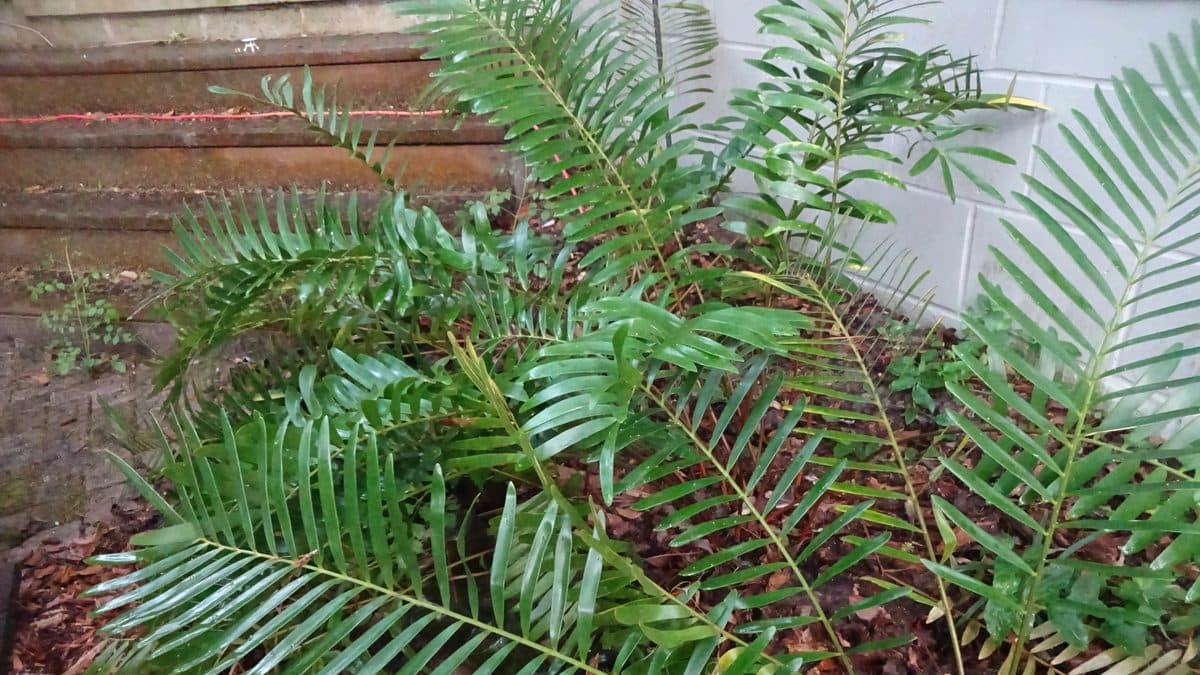
- Coontie (Zamia integrifolia): Florida's only native cycad, 2–3 feet. Evergreen, compact, and extremely low-maintenance. Sole host plant for the Atala butterfly. Thrives in shade to part sun. Clean, architectural form reads as intentional in any landscape setting.
- Firebush (Hamelia patens): Semi-evergreen shrub, 5–10 feet. Produces clusters of red-orange tubular flowers nearly year-round. Attracts hummingbirds and butterflies. Can be pruned to maintain a tidy form. One of the most reliable native flowering shrubs in Florida.
- American Beautyberry (Callicarpa americana): Deciduous shrub, 4–6 feet. Known for dramatic clusters of magenta-purple berries in fall. Excellent wildlife food source. Open, arching form provides winter structure even after leaf drop.
- Muhly Grass (Muhlenbergia capillaris): Clumping grass, 3–4 feet, with spectacular pink-purple flower plumes in October–November. Drought-tolerant, salt-tolerant, and deer-resistant. Outstanding as a mass planting or bed border. Reads as intentional and maintained from the curb.
- Sabal Palm (Sabal palmetto): Florida's state tree. Grows 30–50 feet but maintains a clean, single-trunk silhouette. Extremely wind-resistant, one of the best performers in hurricanes. Salt-tolerant, flood-tolerant, drought-tolerant. The ultimate low-maintenance Florida tree.
For local resources and city-specific guidance, see our Orlando native landscaping page.
Gulf Coast (Tampa / Sarasota)
Warm, humid climate with strong coastal influence. Salt spray is a factor even several miles inland during storms. Sandy soils with shell fragments near the coast.
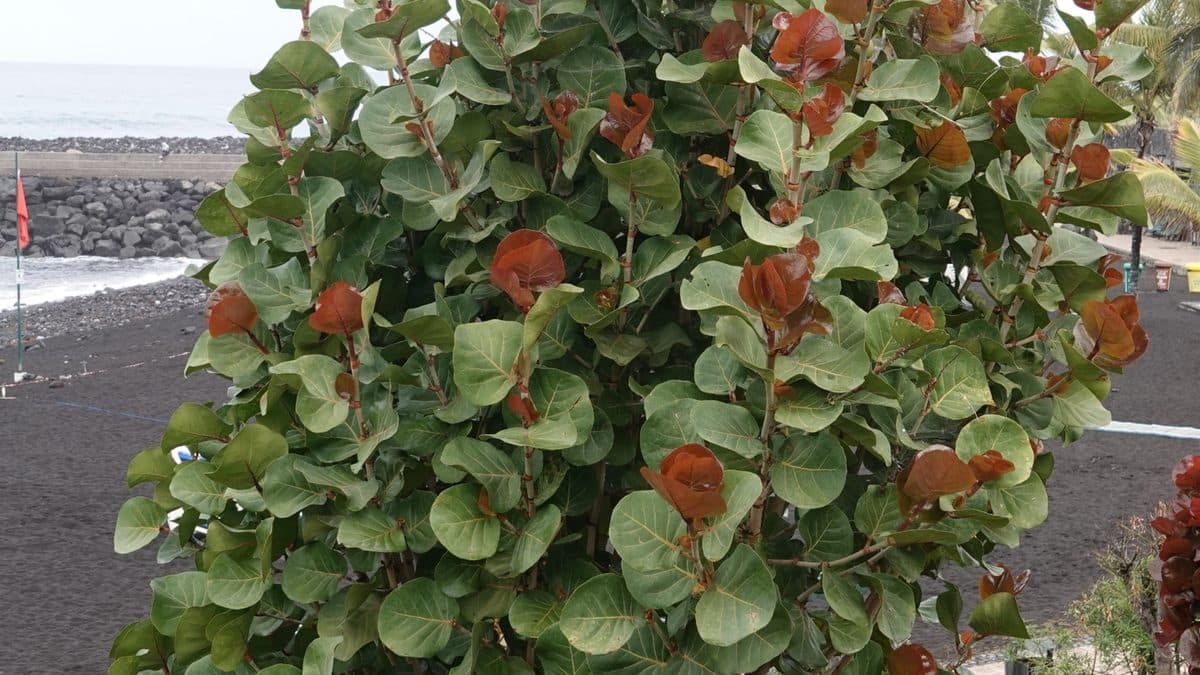
- Sea Grape (Coccoloba uvifera): Evergreen tree or large shrub, 10–25 feet. Large, round, leathery leaves handle salt and wind without damage. Produces grape-like clusters of fruit. Can be trained as a hedge, screen, or single-trunk specimen. Iconic coastal Florida plant.
- Gaillardia / Blanket Flower (Gaillardia pulchella): Low-growing perennial, 1–2 feet. Red and yellow daisy-like flowers bloom most of the year. Exceptionally salt-tolerant and drought-tolerant. Works in full sun beds, along walkways, or as a colorful groundcover.
- Saw Palmetto (Serenoa repens): Clumping palm, 3–8 feet. Extremely wind-resistant with a dense, low growth habit. Salt-tolerant and drought-tolerant. Produces small fruits that support wildlife. Works as a foundation planting or natural screen.
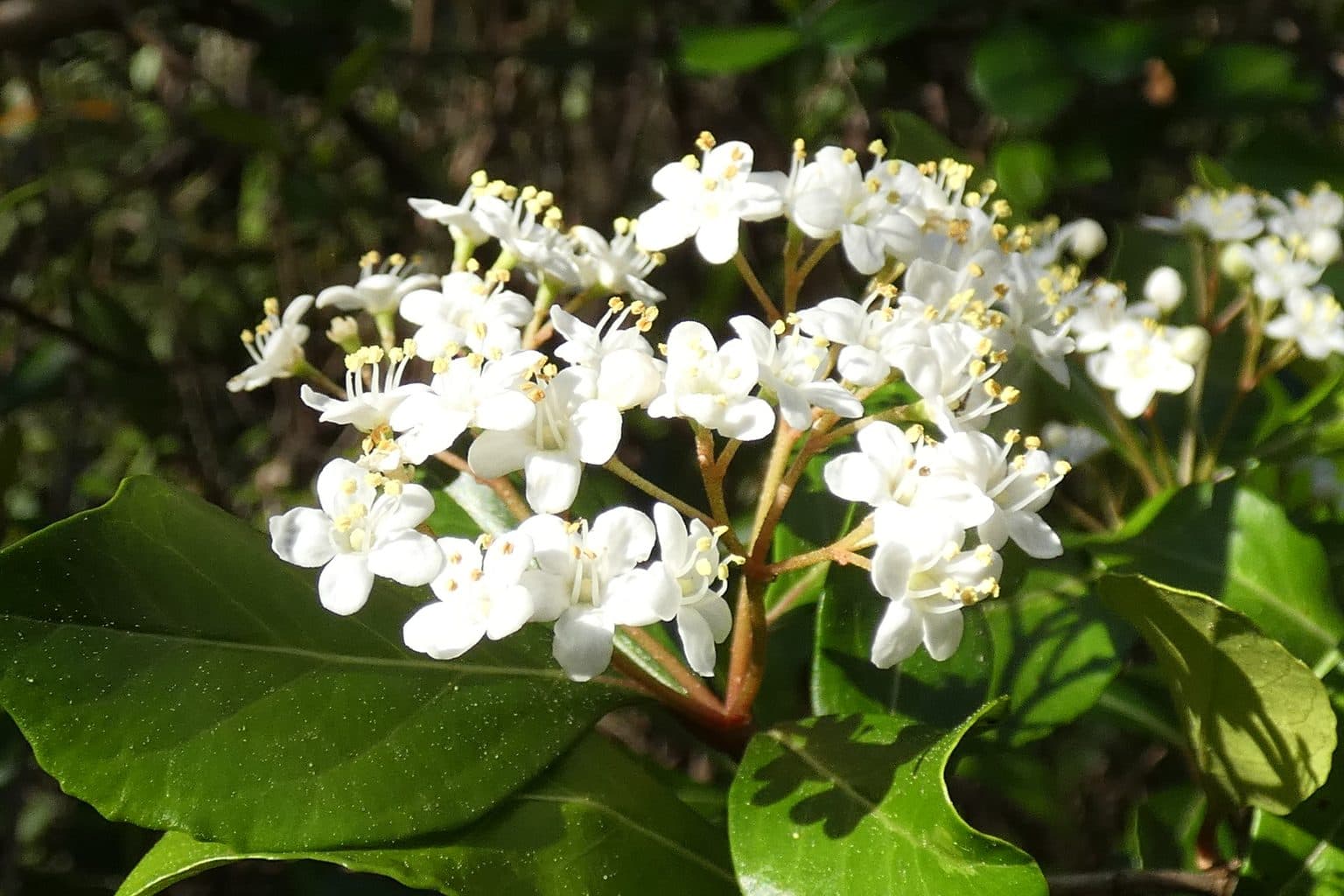
- Walter's Viburnum (Viburnum obovatum): Versatile evergreen shrub or small tree, 6–20 feet depending on cultivar. White spring flowers, small dark berries for birds. Handles wet and dry conditions equally well. Excellent as a hedge that doesn't require the maintenance of non-native alternatives.
- Beach Sunflower (Helianthus debilis): Fast-spreading groundcover, 1–2 feet tall. Bright yellow flowers nearly year-round. Highly salt-tolerant and drought-tolerant. Excellent for filling sunny beds quickly with minimal care. Avoid planting near beds you want to keep tightly contained. It spreads.
For Tampa-specific resources, see our Tampa native landscaping page.
South Florida (Miami / Fort Lauderdale)
Tropical climate with no real winter. Limestone-based soil (oolite rock) with very thin topsoil. High humidity, intense rainfall, and direct hurricane exposure. Plants here need to handle the most extreme version of Florida's challenges.
- Gumbo Limbo (Bursera simarouba): Native tree, 25–40 feet. Known as the "tourist tree" for its red, peeling bark. One of the most hurricane-resistant trees in Florida. It sheds branches to reduce wind load rather than toppling. Grows fast, handles salt, and thrives in limestone soil.
- Silver Buttonwood (Conocarpus erectus var. sericeus): Evergreen tree or large shrub, 10–20 feet. Silver-green foliage is striking and distinctive. Extremely salt-tolerant, commonly found on barrier islands. Works as a specimen tree, screen, or formal hedge when pruned.
- Wild Coffee (Psychotria nervosa): Evergreen shrub, 4–8 feet. Glossy dark green leaves with prominent veining. Small white flowers followed by red berries that attract birds. Excellent shade or part-shade plant. Clean, dense form works well as a foundation planting or understory layer.
- Marlberry (Ardisia escallonioides): Evergreen shrub or small tree, 8–15 feet. Fragrant white flowers and dark purple berries. Handles shade, salt, and limestone soil. Provides a dense, polished look that fits formal and casual landscapes alike.
- Firebush (Hamelia patens): Also thrives in South Florida where it can grow year-round. In this zone it stays evergreen and flowers continuously, making it one of the most reliable sources of color in a native landscape.
North Florida (Jacksonville area)
The most temperate part of Florida, with actual winter cold snaps and occasional freezes. More clay in the soil mix. This region shares some plant options with the coastal Southeast.
- Eastern Red Cedar (Juniperus virginiana): Evergreen conifer, 20–40 feet. Dense, pyramidal form provides year-round structure and screening. Extremely wind-resistant and salt-tolerant. Supports cedar waxwings and other birds with its blue berry-like cones. One of the most versatile native trees for North Florida.
- Stokes' Aster (Stokesia laevis): Perennial wildflower, 1–2 feet. Large lavender-blue flowers bloom spring through summer. Compact, clumping form works in borders and foundation plantings. Low-maintenance and neat enough for the most structured front yards.
- Walter's Viburnum (Viburnum obovatum): Works exceptionally well in North Florida, where it's cold-hardy and provides a reliable evergreen hedge or small tree option. 'Mrs. Schiller's Delight' is a popular dwarf cultivar for smaller spaces.
- Coral Honeysuckle (Lonicera sempervirens): Native vine with red tubular flowers from spring through fall. Semi-evergreen in North Florida. Outstanding hummingbird plant. Can be trained on a trellis, fence, or mailbox for controlled, vertical interest. Not invasive like Japanese honeysuckle.
The Florida-Friendly Landscaping program explained
The UF/IFAS Florida-Friendly Landscaping™ program is built around nine principles designed to reduce environmental impact while maintaining attractive landscapes. Understanding these principles helps you design a landscape that's both ecologically sound and recognizable to HOAs and neighbors.
The 9 Florida-Friendly principles
- Right plant, right place: Match plants to your site's light, soil, and moisture conditions.
- Water efficiently: Irrigate only when needed, and use the right amount for each zone.
- Fertilize appropriately: Use minimal fertilizer, and only where plants actually need it.
- Mulch: Maintain 2–3 inches of mulch to conserve moisture and reduce weeds.
- Attract wildlife: Include plants that support birds, butterflies, and pollinators.
- Manage yard pests responsibly: Use integrated pest management rather than broad-spectrum chemicals.
- Recycle yard waste: Compost leaves and clippings rather than sending them to landfill.
- Reduce stormwater runoff: Design landscapes that absorb rainwater rather than channeling it to storm drains.
- Protect the waterfront: Maintain buffer zones along any adjacent water features.
Many Florida counties offer Florida Yards & Neighborhoods (FYN) certification through their UF/IFAS Extension offices. Getting your yard certified provides documentation you can share with your HOA, a tangible credential that shows your landscape follows a recognized standard.
Florida rebate and incentive programs
Florida's rebate landscape differs from Western states. Rather than large turf-replacement rebates, Florida programs tend to focus on water conservation, irrigation upgrades, and stormwater management. Some municipalities offer specific incentives for Florida-Friendly landscape conversions.
Common Florida incentive types
- Irrigation evaluation and upgrade rebates: Many water utilities offer free irrigation audits and rebates for installing smart controllers or rain sensors.
- Rain barrel and cistern programs: Some counties provide free or subsidized rain barrels for capturing roof runoff.
- Florida-Friendly Landscaping recognition: Certified FFL yards may qualify for reduced water rates or utility incentives in some jurisdictions.
- Stormwater utility credits: Properties that reduce impervious surface or improve on-site water management may qualify for stormwater fee reductions.
Programs vary a lot by county and water management district. For current details and eligibility for your area, see our comprehensive Florida rebates guide.
Hurricane-smart landscaping
In Florida, storm resilience isn't an optional design consideration. It's a core requirement. The plants and trees in your yard are either an asset or a liability when hurricane-force winds arrive.
- Choose wind-resistant species. Sabal Palm, Gumbo Limbo, Live Oak, and Bald Cypress consistently rank among the most wind-resistant trees in post-hurricane studies. They flex, shed branches strategically, or have root systems that hold firm.
- Avoid brittle and top-heavy trees. Queen Palm, Norfolk Island Pine, and large non-native ficus trees are among the worst performers in hurricanes. They snap, uproot, or drop heavy limbs.
- Prune for wind, not just aesthetics. Thin the interior canopy of trees to allow wind to pass through rather than catch. Avoid "lion-tailing" (stripping interior branches and leaving foliage only at the tips), which makes trees more vulnerable.
- Invest in root depth. Deep-rooted native trees resist wind throw better than shallow-rooted species planted in compacted soil. When planting, break up compacted layers to encourage downward root growth.
- Keep trees structurally pruned year-round. Don't wait until a storm is forecast. Regular structural pruning, removing crossing branches, dead wood, and co-dominant leaders, is the single best investment in storm resilience.
Practical tips for getting started
Plant from October through March
Florida's best planting window is the dry season: October through March. This gives roots time to establish before the stress of summer heat, humidity, and daily thunderstorms. Plants installed during the cool season need less water to get started and develop stronger root systems before facing Florida's wet season.
Amend for sand, not for richness
Florida's sandy soils drain fast and hold few nutrients. Rather than enriching with heavy compost (which many natives don't need), focus on adding organic matter to the top few inches to improve moisture retention. A 2–3 inch layer of mulch does more for Florida soil than any amendment. It breaks down slowly, feeds the soil biology, and keeps roots from drying out between rains.
Set up irrigation zones
If you're using irrigation during the establishment period, separate your native plantings from your remaining turf. Natives and turf have different water needs. Overwatering natives can be as harmful as underwatering them. A simple valve separation lets you water turf on its schedule while reducing or eliminating irrigation to native beds after the first year.
Design for HOA-conscious curb appeal
With 45.6% of Florida homes in HOA communities, designing for the curb is not optional. It's the default expectation. The same principles that work nationally apply here with extra importance:
- Clean edges around all beds: metal, stone, or a crisp mowed line.
- Mulch all visible soil: pine bark or melaleuca mulch are common Florida choices.
- Layer by height: groundcovers at the street, shrubs in the middle, trees near the house.
- Frame the Florida-Friendly narrative: if submitting to an HOA, reference the FFL program and the state statute that supports it.
The bottom line
Florida's landscaping challenges (hurricanes, salt, flooding, sand) aren't going away. Traditional ornamental landscaping fights these conditions at every turn, requiring constant irrigation, fertilization, and post-storm replacement. Florida natives work with these conditions because they evolved in them.
The practical path forward: choose regionally appropriate native species, plant during the cool season, design with visible structure for HOA-conscious curb appeal, and use the Florida-Friendly Landscaping framework to give your project a recognized context. With nearly half of Florida homes in HOA communities, framing matters as much as plant selection. The plants are ready. The framework exists. The starting point is your next planting season.