Every summer, you watch the water bill climb. The sprinklers run on schedule. The lawn stays green. Barely. And somewhere in the back of your mind, you wonder: is there a better way?
There is. And it doesn't mean giving up a yard that looks good. It means transitioning, gradually and strategically, from a thirsty lawn to native plants that work with your local climate instead of fighting it.
The real cost of a traditional lawn
Most people underestimate how much water their lawn uses. The numbers are significant:
Water usage by the numbers
- A typical 5,000 sq ft lawn needs about 1 inch of water per week during summer
- That's roughly 3,000 gallons per week, or 60,000 to 100,000 gallons per year depending on climate
- In hot, dry regions like Texas and the Southwest, outdoor irrigation can account for 50-70% of household water use
- At average municipal water rates, that's $200–$600+ per year just to keep grass green
And that's assuming everything works correctly. Broken sprinkler heads, runoff from slopes, and evaporation during midday watering can push actual usage even higher.
Why native plants use less water
Native plants evolved in your region's rainfall patterns. They developed root systems, leaf structures, and dormancy strategies adapted to local conditions, including dry periods.
What this means in practice:
- Deep root systems: many native grasses and wildflowers send roots 3–10 feet deep, accessing moisture that lawn grass (with 2-inch roots) can't reach
- Drought adaptation: native plants may go dormant during dry spells rather than dying, then bounce back when rain returns
- No irrigation after establishment: most native plantings need supplemental water for the first 1–2 growing seasons, then thrive on rainfall alone
- Lower maintenance overall: no mowing, less fertilizer, fewer pest problems
Native alternatives that work in a front yard
"Replacing your lawn" doesn't mean your yard has to look wild. There are native options for every visual preference:
Native groundcovers (lawn-like appearance)
All three below are native to the Blackland Prairie (Dallas area), per the Lady Bird Johnson Wildflower Center.
- Buffalo Grass (Bouteloua dactyloides): low, dense, needs minimal mowing. Native to the Great Plains.
- Frog Fruit (Phyla nodiflora): flat, spreading groundcover with tiny flowers. Handles foot traffic.
- Sedges (Carex spp.): grass-like appearance, many species for shade or sun. No mowing needed.
Native garden beds (structured replacement)
All four below are native to the Edwards Plateau (San Antonio area), per the Lady Bird Johnson Wildflower Center.
- Black-eyed Susan: compact, cheerful, blooms all summer
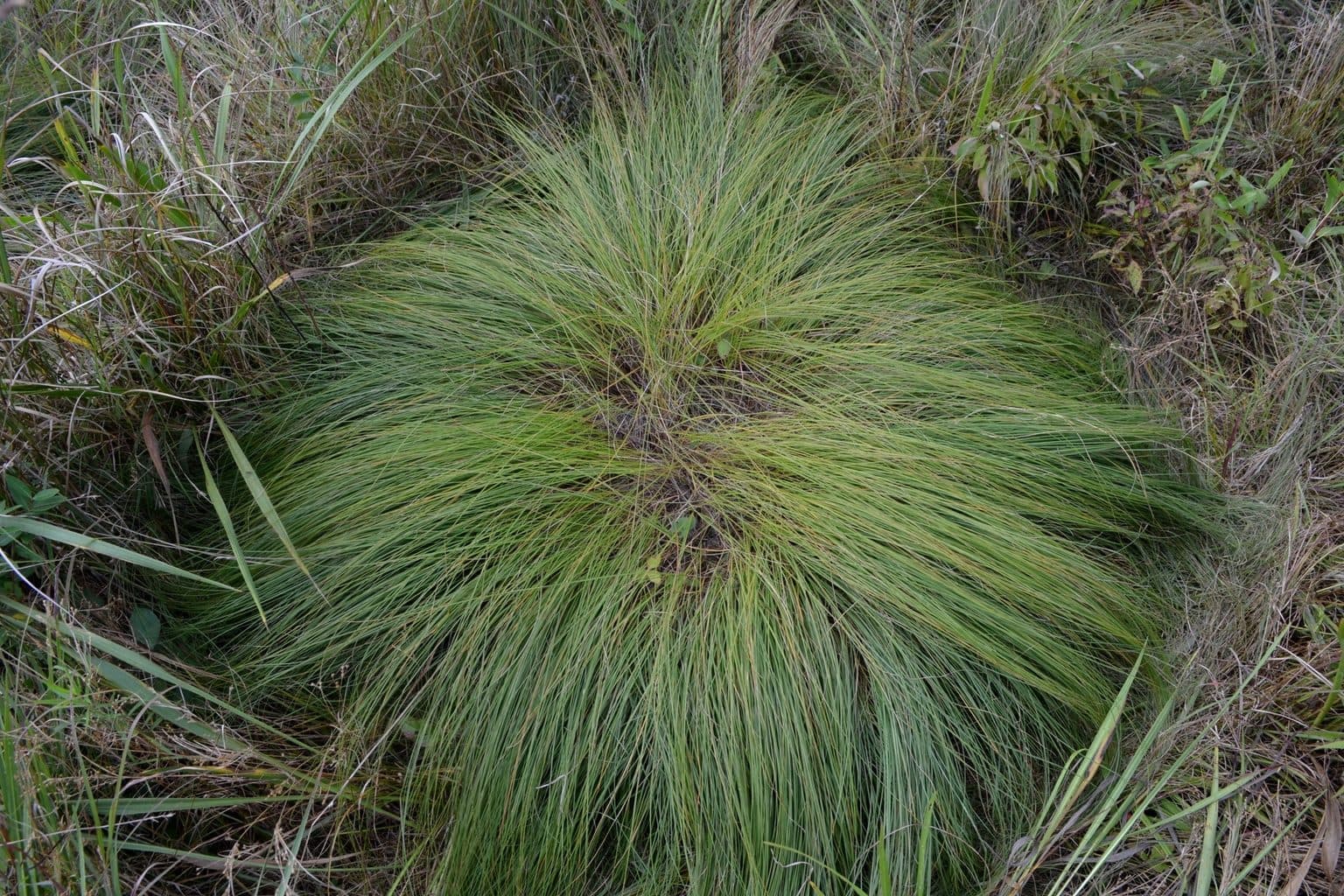
- Little Bluestem: ornamental grass with blue-green summer foliage and copper fall color
- Blackfoot Daisy (Melampodium leucanthum): low white mounds, blooms spring through fall, handles heat and rocky soil
- Salvia (Salvia greggii): evergreen in mild climates, compact, blooms spring to fall
Hardscape + native combos
Replacing some lawn with pathways, gravel areas, or patio space (then filling the rest with native plantings) can be the most dramatic water reduction. A 50% reduction in turf area cuts water use roughly in half.
The phased approach: start with one bed
You don't have to rip out your entire lawn at once. A phased approach is lower risk, easier on your budget, and lets you learn as you go.
A practical timeline:
- Year 1: Convert one bed, maybe the area along the driveway, or the strip between the sidewalk and street. Plant native groundcovers or a structured native bed. Water to establish.
- Year 2: Evaluate what worked. Expand to a second area. The first bed should need little to no supplemental water by now.
- Year 3: Continue expanding. By now you have practical experience with what thrives in your conditions and what your HOA responds to.
Each phase reduces your water usage, your maintenance time, and your lawn area, while adding visual interest and ecological value.
Check for water rebates
Many municipalities (especially in Texas, California, Colorado, and the Southwest) offer financial incentives for reducing turf area. These programs vary widely but can include:
- Cash rebates per square foot of lawn removed (often $1–$3/sq ft)
- Free or subsidized native plants from local conservation districts
- Discounted rain barrels or irrigation efficiency equipment
- Property tax incentives for water-efficient landscaping
Check with your local water utility or municipality. Some programs have waitlists, so applying early is worthwhile. A 500 sq ft conversion could earn $500–$1,500 in rebates, often enough to cover the cost of plants and mulch.
Making it work with your HOA
The HOA concern is real but manageable. A few principles keep the transition smooth:
- Start with the least visible area: side yard, backyard, or a bed near the house rather than the most prominent street-facing zone
- Use clean edges and mulch: the visual cues of care matter more than the plant species
- Keep some conventional elements: a mowed border between native beds and the sidewalk signals intention
- Document your plan: if anyone asks, you can explain the phased approach with confidence
Most neighbors and HOA reviewers respond positively to landscaping that looks maintained and purposeful, regardless of whether it's traditional lawn or native plants.
Ready to reduce your water bill with native plants?
Pollinator Patch helps you find drought-adapted native plants for your region and design a phased lawn replacement plan that looks intentional and works with your HOA.