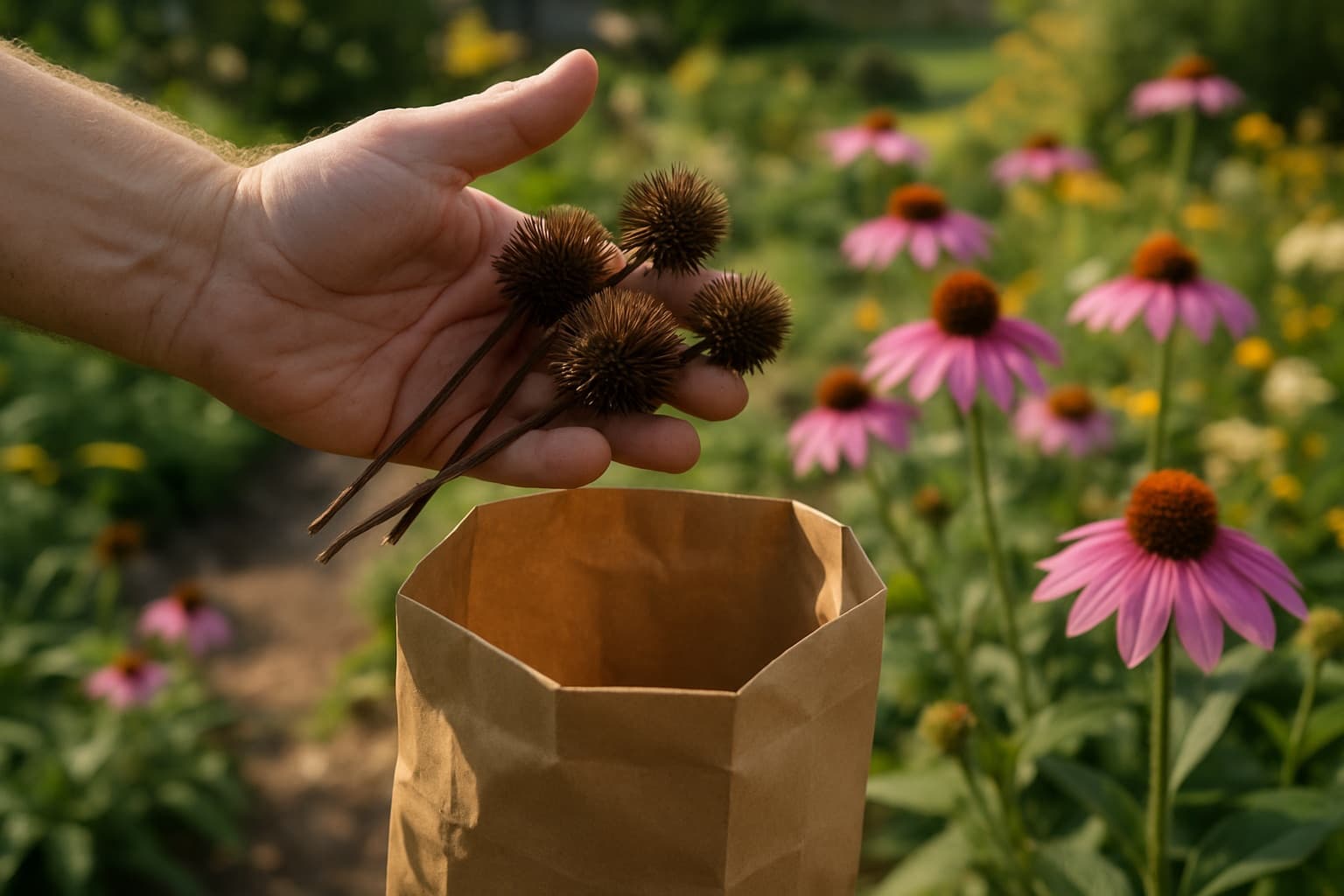
How to Collect Native Plant Seed From Your Own Garden
The short version
- Ripe seed comes off the plant easily when you touch it; if you have to pull, it is not ready yet (SDSU Extension).
- The harvest window runs from roughly mid-July through November, depending on when each plant matures (SDSU Extension).
- Dry collected seed in an open paper bag for two to four more weeks before storing it in anything sealed.
- Sow outdoors from late November through January and let winter break the seed's dormancy for you (University of Maryland Extension).
The plants that finished blooming in late spring and early summer are already carrying next year's seed, and the window to collect it does not announce itself. There is no sign in the bed telling you to look. The only way to know is to check, and the check itself is simple.
Key takeaways
- Ripe seed comes off the plant easily when you touch it; if you have to pull, it is not ready yet (SDSU Extension).
- The harvest window runs from roughly mid-July through November, depending on when each plant matures (SDSU Extension).
- Dry collected seed in an open paper bag for two to four more weeks before storing it in anything sealed.
- Sow outdoors from late November through January and let winter break the seed's dormancy for you (University of Maryland Extension).
The test is in your fingers, not the calendar
You do not need a precise date. SDSU Extension's Native Seed Hand Harvest Guidelines put the test plainly: seeds of most species will easily come off the plant when they are ripe. Touch the seed head. If it lets go without resistance, it is ready. If you find yourself pulling or tugging, it is early, and the plant is telling you to come back in a week.
A useful rule of thumb, roughly six to eight weeks after the flowers on a given plant finished blooming, is when to start checking. A plant that bloomed in May or June is already worth a look by mid-July. One example: pale purple coneflower (Echinacea pallida), which blooms June through August and is native to the Texas Blackland Prairies around the Dallas area, is often one of the first seed heads worth checking in that region.
The window is wider than most people think
This is not a single harvest day. SDSU Extension gives the range as anytime between mid-July and November, depending on when each individual plant matures. Different species, and even different plants of the same species, ripen at different times. Treat it as a walk you take through the beds repeatedly across fall rather than one task to check off, and you will catch far more seed than a single pass would.
Dry it before you store it
Seed collected today still holds moisture, even when it looked and felt dry on the plant. Spread it in a single layer in an open paper bag or on a paper plate, somewhere dry, shaded, and out of direct sun, for another two to four weeks. Sealing damp seed into an envelope or jar too soon is the fastest way to lose it to mold before it ever gets a chance to grow.
Let winter do the hard part
Once the seed is dry, the easiest path is also the one closest to how these plants reproduce on their own. University of Maryland Extension recommends sowing native seed outdoors from late November through January, so the cold and moisture of winter can break the seed's dormancy naturally. That cold period, called stratification, is something a greenhouse or refrigerator would otherwise have to simulate for weeks. A normal winter in the ground does it for free, and you do nothing but wait.
Grow your plan for free, one seed at a time
Pollinator Patch builds a native plant list for your zip code, so you can check which of the plants already in your beds are worth collecting from and what still has room to grow next to them. It tracks what you have planted and sends care reminders tuned to your area, seed collection included.
Open the appSee a finished plan for a yard like this
Find our guides useful? Add Pollinator Patch as a preferred source on Google and articles like this one will show up higher in your own search results.