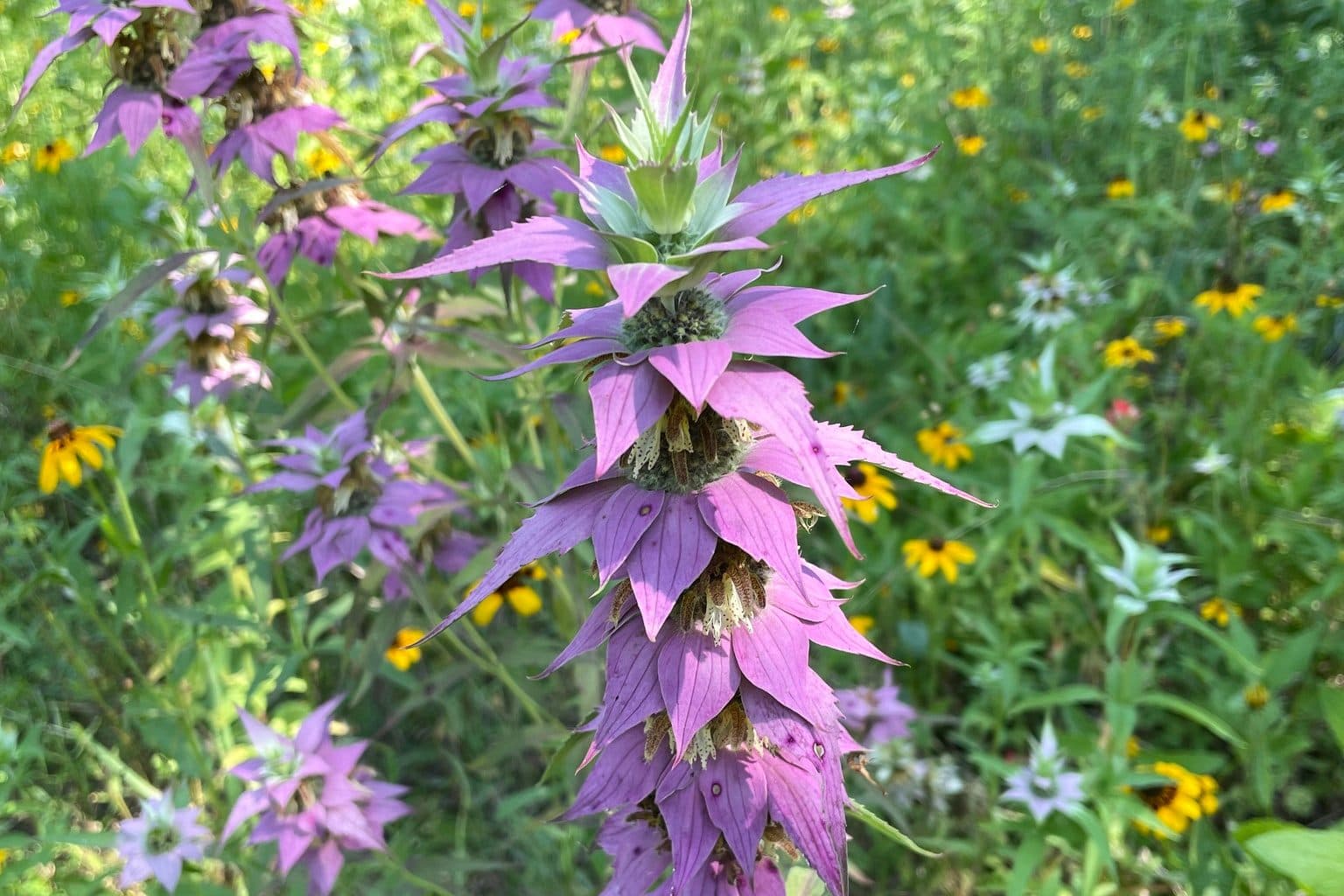
A heat wave is harder on bees and butterflies than it looks. They are tiny, they overheat fast, and the flowers they depend on stop making nectar when the soil dries out. The good news is that the things that help most are small and quick, and a few of them are about doing less, not more. Here is what actually helps pollinators get through the hottest stretch of summer, in any zone.
Key takeaways
- Water is what pollinators run short of first. A shallow dish with stones to stand on, refreshed daily, is the single highest-value thing you can add (Xerces Society).
- Skip the sprays right now. Heat-stressed bees are more vulnerable, and even products marketed as safe can harm them (Xerces Society).
- Leave the flowers up. Every open bloom is fuel. Deadhead lightly if you want more, but do not strip the plant.
- Water your plants deeply in the early morning so they keep producing nectar through the afternoon.
- Plan for continuous bloom so there is no hungry gap in mid to late summer.
Give them water they can actually use
Bees and butterflies need to drink, and in a heat wave open water dries up everywhere they would normally find it. A bird bath is too deep and too steep for an insect, so they drown in it. What works is a shallow dish, a plant saucer, or a pie pan with a single layer of pebbles, marbles, or flat stones for them to land on. Keep the water just below the tops of the stones so there are dry footholds. Set it in part shade near your flowers and refresh it every day, because warm standing water goes bad and breeds mosquitoes. The Xerces Society recommends exactly this kind of shallow, landing-friendly water source for pollinators.
If you want to do one thing this week, do this. It costs nothing and it is the resource they are most likely to be missing.
Put the sprayer away until it cools off
Mid-heat-wave is the worst time to reach for any insecticide. Pollinators are already stressed and dehydrated, which makes them more sensitive to chemical exposure, and sprays drift onto the open blooms where bees are feeding. The Xerces Society is blunt about this: insecticides, including many products sold as natural or organic, kill bees, and the safest pest approach in a pollinator garden is to tolerate minor damage and let predators catch up. Aphids and chewed leaves in July are almost always cosmetic. If a problem is genuinely serious, wait for a cool, still evening after bloom and spot-treat, rather than blanket-spraying a yard full of foraging insects.
The flowers are the food, so leave them
It is tempting to tidy a heat-tired garden by cutting it back. Resist that in summer. Open flowers are the nectar and pollen pollinators live on, and a hard shearing removes the buffet right when it is needed. Light deadheading is fine and on many plants it nudges out a fresh round of bloom, but the goal is more flowers, not a neat haircut. Spent seed heads have value too: small birds eat the seed, and the dried stems become overwintering habitat later in the year.
Water in the early morning, deeply
This one helps the pollinators by helping the plants. A flower that is wilting from drought stress quits making nectar, so a thirsty bed is an empty bed as far as a bee is concerned. A deep soak in the early morning, before the heat peaks, lets the plant recover its water reserves and keep producing through the afternoon. Deep and infrequent beats a daily sprinkle, and morning beats evening because the foliage dries before night and you lose less to evaporation. Most established natives only need this during a real heat wave, not all summer.
Keep something blooming all summer
The hardest time for pollinators is the mid to late summer gap, after the spring rush of bloom fades and before fall asters and goldenrod arrive. You close that gap by choosing plants with staggered bloom times so something is always open. Native perennials and grasses do this best because they are built for your local summer, and many push their heaviest bloom in the heat. The specific plants that fill the gap depend on where you live, which is the whole point of choosing regionally rather than from a generic list.
Four heat-tough natives for the Blackland Prairie (Dallas area)
As a concrete example, here are four sun-loving natives suited to the Blackland Prairie around Dallas, zones 7 to 8, that keep the garden working through heat. All four are documented at the Lady Bird Johnson Wildflower Center. If you garden in another region, the same idea applies with your own natives.
- Engelmann daisy (Engelmannia peristenia): a sturdy yellow daisy that the Lady Bird Johnson Wildflower Center describes as heat and drought tolerant and able to bloom well even in drought, on the calcareous clays typical of the Blackland Prairie.
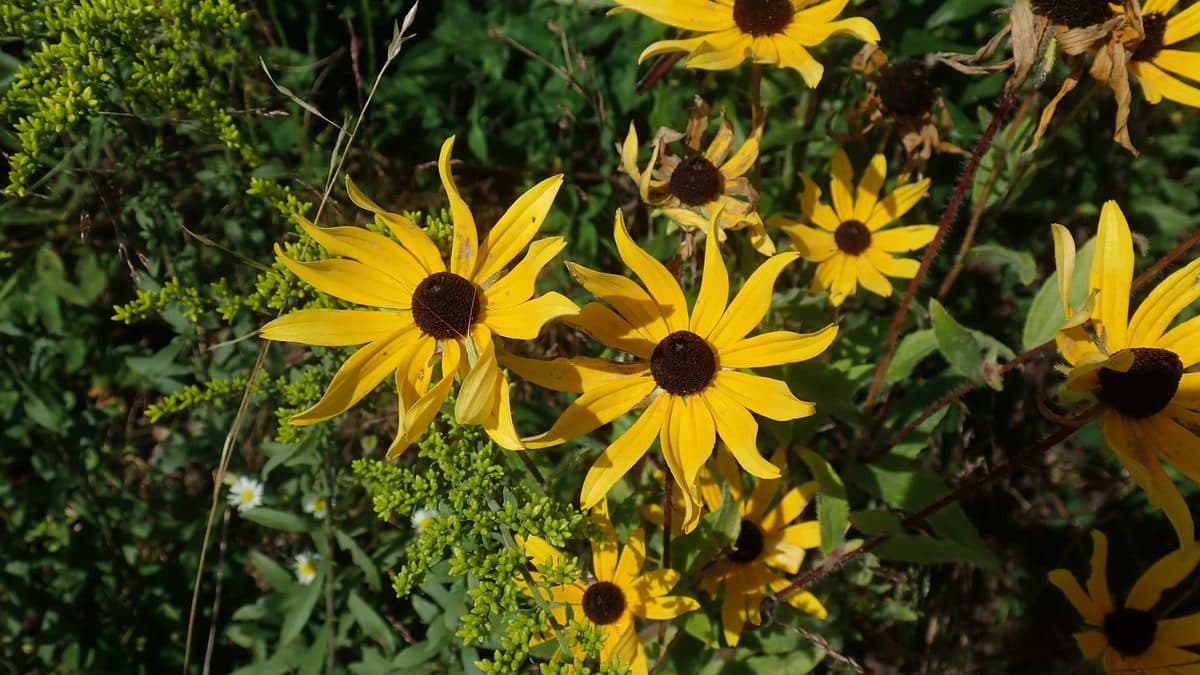
- Black-eyed Susan (Rudbeckia hirta): a prairie native that blooms June through October per the Wildflower Center, giving steady nectar across the whole hot season.
- Maximilian sunflower (Helianthus maximiliani): a native prairie perennial, drought tolerant per the Wildflower Center, that opens August through November and carries the buffet into fall when little else is left.
- Little bluestem (Schizachyrium scoparium): one of the signature Blackland Prairie grasses (Lady Bird Johnson Wildflower Center). It is not a nectar plant, but native bunchgrasses give butterflies larval habitat and overwintering cover (Xerces Society), and the structure holds a planting together.
Find what blooms for pollinators in your area
Pollinator Patch builds plant lists for your zip code with bloom timing included, so you can fill the summer gap with natives that belong where you live. It tracks what you have planted and sends watering reminders tuned to your area, and you can ask Patch whether a plant is right for your region or HOA before you buy it.
Open the app