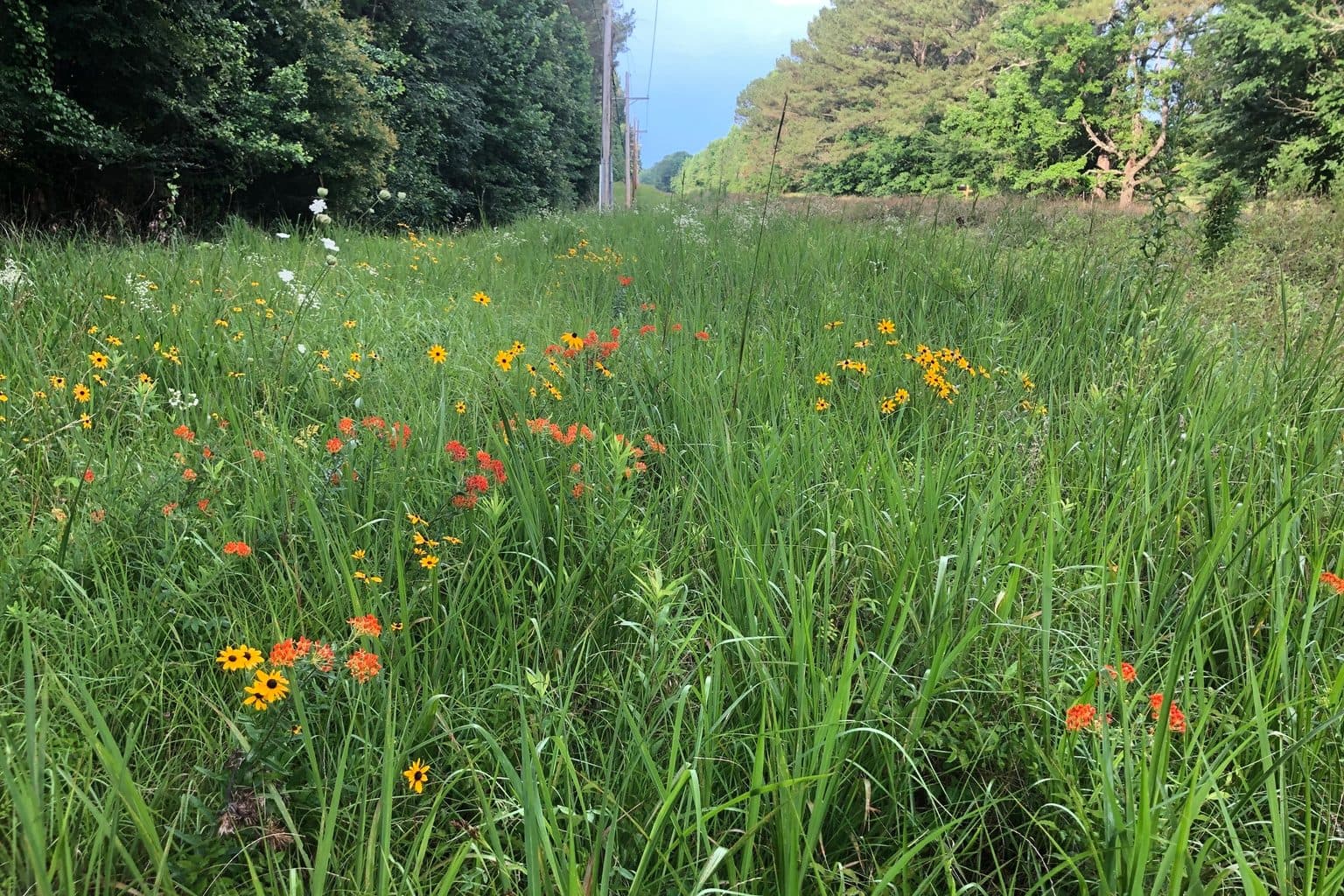
Native Plants Are Not Low Maintenance (For Two Years)
The short version
- Colorado State University Extension states plainly that drought-tolerant and native species are not drought-tolerant until the root system becomes established.
- Extension watering schedules run daily for the first one to two weeks, every two to three days through week twelve, then weekly. University of Minnesota Extension sizes establishment from about 1.5 years for a 1-inch caliper tree to 9 years for a 6-inch one.
- University of Minnesota Extension states weed control in the first two years of a prairie planting is essential, and recommends mowing to 4 to 6 inches in year one.
- "Sleep, creep, leap" is a professional adage, not a research finding. University of Illinois Extension introduces it as exactly that.
- EPA WaterSense cites a rule of thumb that a bed of landscape plants needs about two-thirds the water of a Kentucky bluegrass lawn. No credible hours-per-year maintenance comparison against turf appears to exist.
Quick answer
Eventually, yes. For the first two years, no. Colorado State University Extension states the thing the marketing leaves out: drought-tolerant and native species are not drought-tolerant until the root system becomes established. Extension watering schedules for new plantings run from daily in the first weeks to weekly through the first season, and University of Minnesota Extension puts shrub establishment in that climate at a minimum of two growing seasons. Plan for two years of real work, then a yard that mostly looks after itself.
We sell low maintenance in this industry, ourselves included, and the claim is true on a long enough timeline. Stated without the timeline, it sets people up to feel like they failed in month eight when the correct answer was that month eight is supposed to be work.
Year one is a watering job
The specifics vary by region and by plant size, and every one of these comes from a university extension service.
- Texas A&M AgriLife Extensiongives a taper for newly planted trees: three times a week in the first month, twice a week in the second, once a week in the third, then once a month through month twelve. Texas A&M Forest Service puts the establishment window at two growing seasons.
- University of California ANR, through the UC Marin Master Gardeners, publishes a year-by-year taper for California natives: weekly in year one, every two weeks in year two, every three weeks in year three, and monthly in year four if needed.
- Colorado State University Extension (opens in new tab) gives the progression as daily for the first one to two weeks, every two to three days from weeks three to twelve, then weekly until roots establish.
- University of Minnesota Extension (opens in new tab) gives the same daily-then-tapering progression, and sizes establishment to the plant: about a year and a half for a one-inch caliper tree, up to nine years for a six-inch one.
Nine years is not a typo. That is the outer end for a large tree, and it is a useful corrective to the idea that native means plant it and walk away.
Year one and two are also a weeding job
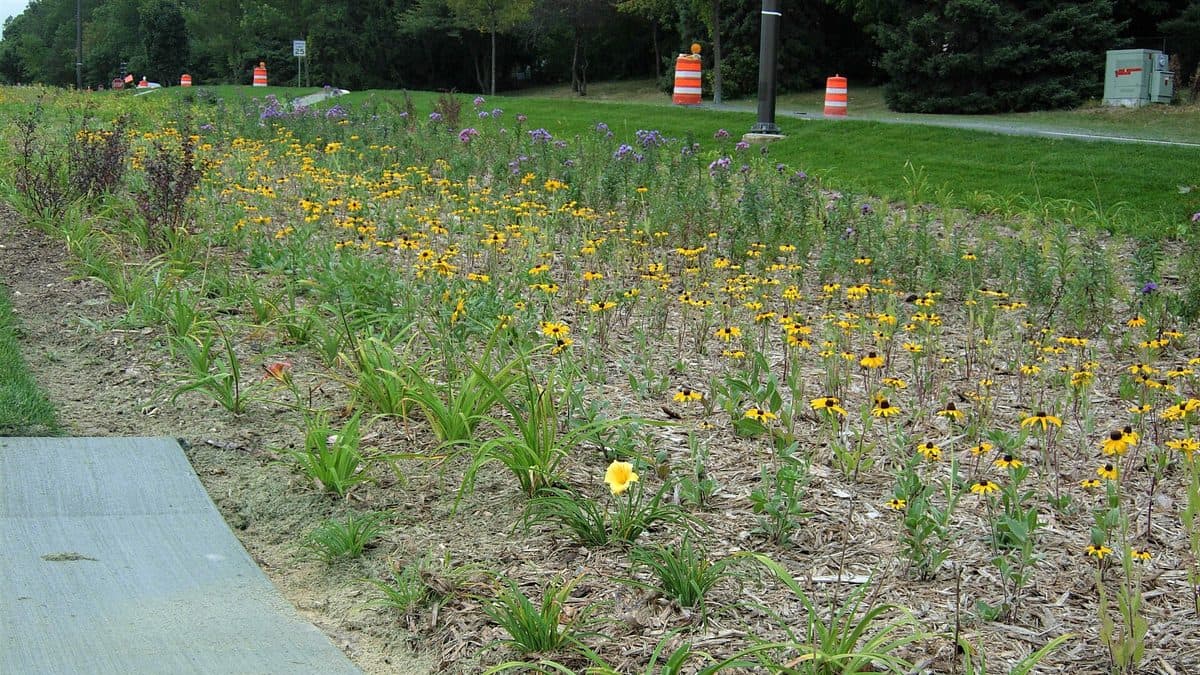
The bare soil in that photo is the other half of the workload. All that open ground between young plants is growing capacity that something will use, and weed seed gets there first.
University of Minnesota Extension's prairie garden guidance (opens in new tab) is blunt about it: weed control in the first two years of a prairie is essential. They recommend mowing to a height of four to six inches in year one as a weed-suppression tactic, which surprises people who expected never to own a mower again. University of Arkansas Cooperative Extension describes the same pressure lasting the first several years, because the canopy stays open for at least half the growing season while plants are small.
Purdue Extension's guidance for evaluating a first-year native planting says that if weed pressure is high and shading out the ground, mowing is the move. The recurring theme is that the first two seasons are managed, not left alone.
Sleep, creep, leap is folklore, and it is still the right expectation
You will hear that a native planting sleeps the first year, creeps the second, and leaps the third. We went looking for the study behind it and did not find one.
What we found is University of Illinois Extension introducing it honestly as an adage used in the profession. It is shorthand that extension educators repeat to set expectations, not a measured finding with a paper behind it. We could not locate research quantifying it.
That does not make it wrong. It lines up with the establishment timelines above, which are measured. It just means it is a rule of thumb, and it is worth saying so rather than dressing it up as science. Our post on why native gardens fail covers the same ground from the other direction.
What you actually get at the end
Here is where we have to be careful, because the payoff is where this topic usually gets oversold.
Water use: there is real evidence.The EPA's WaterSense research report on turfgrass allowance cites a Colorado study finding an average crop coefficient of 0.56 for fifteen commonly planted shrubs against 0.81 for a traditionally managed Kentucky bluegrass lawn, and states the rule of thumb that a typical bed of landscape plants needs about two-thirds the water of a bluegrass lawn. The same report cites a Southern Nevada Water Authority five-year study in which water-efficient landscaping used 76 percent less water than turfgrass.
The number we could not find
There is also no study, as far as we could find, measuring how often homeowners abandon a native conversion after installing it. The closest research is a nationwide survey by Turley and colleagues at the University of Central Florida, which found maintenance time and not knowing what to do were the top-ranked barriers to converting a lawn in the first place. That is a preprint rather than a peer-reviewed paper, and it measures reluctance before installation rather than what happens afterward, so treat it as suggestive.
How to plan for the real curve
- Budget two years of attention, not two weekends. Put the watering schedule on a calendar rather than trusting yourself to remember it in August.
- Start smaller than you want to. A bed you can actually weed beats a yard you abandon. Add the next one once the first has closed in.
- Plant more densely than the tags say, within reason. Closed canopy is the thing that ends weed pressure, and open spacing is what extends it.
- Mulch the gaps in year one. It buys you time while the plants do not yet cover the ground.
- Expect to mow something in year one if you are establishing a prairie or meadow planting. Minnesota Extension recommends it.
- Judge the planting in year three, not in month eight.
The honest pitch is not that native plants are effortless. It is that the effort is front-loaded and then largely ends, where a lawn's effort is level and never does. That is a better deal. It is just a different one from what the phrase low maintenance implies.
If you want the low-effort design moves that genuinely do reduce work, we have those in low maintenance front yard landscaping ideas that actually work.
People also ask
Are native plants really low maintenance?
Once established, they generally need less water and less routine intervention than turf. During establishment they need more. Colorado State University Extension states that drought-tolerant and native species are not drought-tolerant until the root system becomes established, and extension watering schedules for new plantings run from daily in the first weeks down to weekly through the first season.How long do native plants take to establish?
It depends on plant size. University of Minnesota Extension gives roughly a year and a half for a one-inch caliper tree and up to nine years for a six-inch one, and says shrubs in that climate likely need at least two growing seasons. Texas A&M Forest Service puts tree establishment watering at two growing seasons.How often should I water new native plants?
Schedules differ by region. Colorado State University Extension and University of Minnesota Extension both give daily watering for the first one to two weeks, every two to three days from weeks three through twelve, then weekly until established. UC Marin Master Gardeners give a year-by-year taper for California natives: weekly in year one, every two weeks in year two, every three weeks in year three.Do native plant gardens need weeding?
Yes, heavily, for the first two years. University of Minnesota Extension states that weed control in the first two years of a prairie is essential and recommends mowing to four to six inches in year one. University of Arkansas Cooperative Extension notes the pressure lasts several years because the canopy stays open for much of the growing season while plants are small.Do native plants save water?
The EPA WaterSense turfgrass research report cites a rule of thumb that a typical bed of landscape plants requires about two-thirds the water of a Kentucky bluegrass lawn, based on crop coefficients of 0.56 for fifteen common shrubs against 0.81 for managed bluegrass. The same report cites a Southern Nevada Water Authority study where water-efficient landscaping used 76 percent less water than turf.Get the two-year plan, not just the plant list
Pollinator Patch gives each plant in your yard its own seasonal care schedule, so the establishment years are a checklist instead of a guess.
See a finished plan for a yard like this
Find our guides useful? Add Pollinator Patch as a preferred source on Google and articles like this one will show up higher in your own search results.