Quick answer: New Hampshire has no native-plant, xeriscape, or landscaping-protection law, and no general statute for standard subdivision homeowners associations at all. Non-condominium HOAs run on the recorded declaration plus RSA 292, the state's bare-bones Voluntary Corporations and Associations Act. What is genuinely distinctive about New Hampshire: the legislature has not even protected rooftop solar from an association, twice considering it and twice letting the bill die. If solar has no statutory override here, a garden bed, which nobody has proposed protecting, certainly does not. Your leverage comes from what the declaration actually says, whether the board followed its own procedure, and whether it enforces the rule on every yard.
A lot of guidance online implies every state has some law shielding native or drought-tolerant landscaping from an HOA, and a fair amount of it goes further and claims New Hampshire already protects solar panels too. Neither is true. Being clear about that up front matters, because citing a statute that does not say what a search result claims is the fastest way to lose credibility with a board. What follows is what actually governs a landscaping dispute in New Hampshire and where you genuinely have room to push.
This is a plain-English summary, not a fight plan. Most of these disputes end quietly once a homeowner reads their covenants closely and asks the association to apply them evenly.
The honest starting point: no landscaping statute
Texas has Property Code §202.007, which bars an HOA from prohibiting drought-resistant landscaping or water-conserving natural turf. Washington bars governing documents from prohibiting drought-resistant landscaping and pollinator habitat by name. New Hampshire has nothing comparable. No New Hampshire statute says an association cannot require turf grass, cannot ban native beds, or has to approve a low-water planting plan.
So in New Hampshire the landscaping rules live in your subdivision's recorded declaration, plainly and simply. The room to push back is about how that document is written and how the board applies it.
New Hampshire has no umbrella HOA act
New Hampshire does have a detailed statute for one kind of community. The Condominium Act (opens in new tab), RSA 356-B, governs the formation, budgets, meetings, and enforcement powers of every condominium created after September 10, 1977. If you own a condominium unit, that chapter, plus your master deed and bylaws, is your framework.
If you own a single-family home in a subdivision with an HOA, RSA 356-B almost certainly does not apply to you. New Hampshire has no comparable planned-community or property owners association act for standard subdivisions.
RSA 292 is an incorporation statute, not a governance code
Most stand-alone New Hampshire HOAs are organized as nonprofit corporations under RSA 292 (opens in new tab), the Voluntary Corporations and Associations Act. Read closely, it is a short, mechanical statute: how five or more people may form a nonprofit corporation, what the articles of agreement must contain, how bylaws get adopted, and how the corporation may be dissolved. It says nothing about fines, notice, hearings, or how a board may discipline a member for a landscaping violation. Authority over those questions comes entirely from your recorded declaration and the corporation's own bylaws.
One narrow addition changed this in 2024. RSA 292:8-m (opens in new tab), effective January 1, 2024, does two specific things and nothing more. First, if a single person acquires more than 50 percent of an association's votes after the developer's control period ends, amending bylaws, the budget, or a property management contract requires a two-thirds vote rather than a simple majority. Second, an association approved by a town or city planning board cannot be dissolved under the ordinary RSA 292:9 or 292:10-a procedure without a hearing before that same planning board under RSA 676:2. Neither provision touches how a board enforces a landscaping rule against an individual owner.
The practical result is that your recorded declaration is doing almost all of the work a statute does in a state like Virginia or Ohio. It is not background paperwork. For a non-condominium New Hampshire HOA, it is close to the whole ballgame.
Solar is not protected either, and that is worth knowing
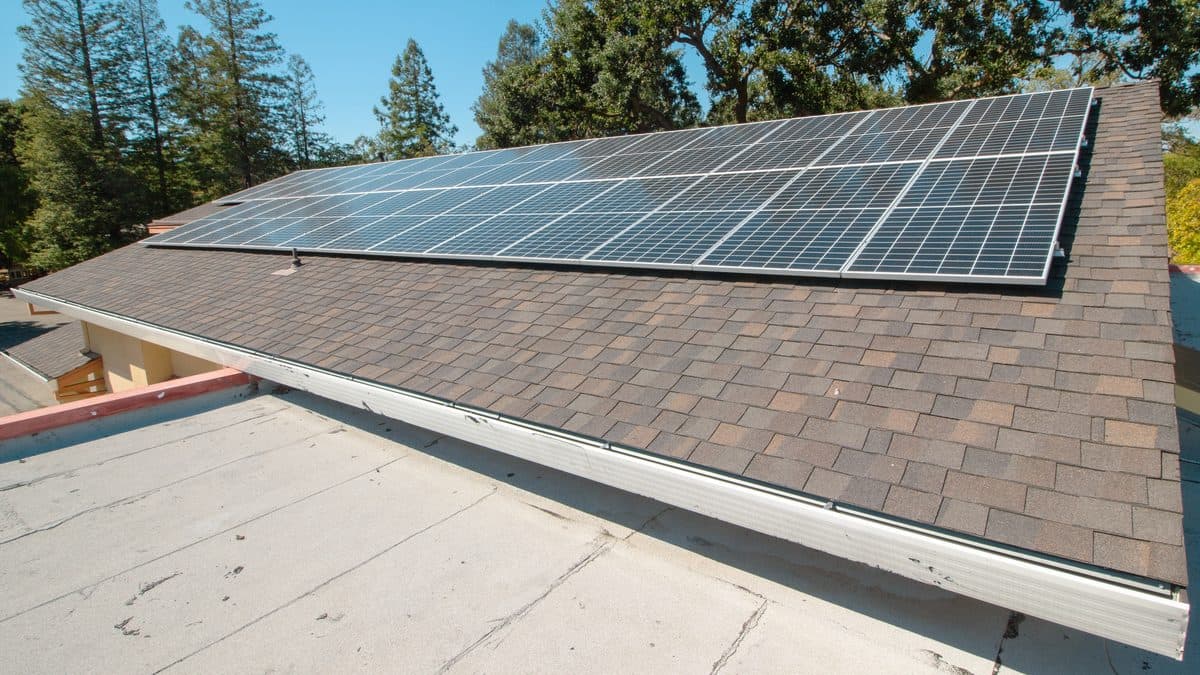
In most of the states covered so far in this series, the legislature has protected solar panels from HOA restriction while staying silent on landscaping, which reads as a deliberate choice: lawmakers know how to override a covenant when they want to, and they have chosen not to for a garden. New Hampshire breaks that pattern in an even more informative way. Its legislature has tried to protect solar from an association twice, and both attempts died without a vote becoming law.
Two solar bills, two failures
House Bill 1535 (2020) (opens in new tab) would have prohibited condominiums and homeowners associations from prohibiting or restricting the installation or operation of a solar photovoltaic energy system. The House amended it to cover only areas entirely under a homeowner's own control before it reached the Senate, where it was tabled and never became law.
House Bill 358 (2021) (opens in new tab) was narrower still. It would only have barred a condominium from requiring more than a simple majority vote of unit owners to approve installing solar panels. It died due to inactivity and also never became law.
No New Hampshire statute today bars a condominium or a homeowners association from prohibiting or restricting solar panel installation. If solar, the single most litigated HOA restriction nationally, has no statutory backing here, a landscaping preference has even less.
A myth worth knowing before you cite it
Several solar-installer and homeowners association advice sites claim New Hampshire already has a "solar rights law" at RSA 477:49 (opens in new tab) that stops an association from banning solar panels. That is not what the statute says. RSA 477:49 through 477:51 (opens in new tab), enacted in 1985, define and provide a form for a "solar skyspace easement": a private, voluntary negative easement one landowner may negotiate and record against a neighboring property to keep trees or buildings on that neighbor's land from shading a solar collector. It is a tool for two neighbors to use against each other. It has nothing to do with what an HOA or condominium association may require of its own members, and it does not override a declaration or set of bylaws.
The two failed bills above are the clearest proof this statute does not already do what those sites claim. If RSA 477:49 already barred an association from restricting solar, House Bill 1535 would not have needed to be introduced in 2020, and House Bill 358 would not have needed to be introduced again in 2021.
No expiration date on old covenants either
Two states earlier in this series, Massachusetts and Wisconsin, turned out to have a statute that automatically extinguishes an old restriction after 30 or 40 years unless someone re-records it. New Hampshire has no equivalent. There is no general marketable-title or covenant-duration statute that puts an expiration date on an ordinary landscaping restriction here.
A second citation that does not check out
A generic search-summary claim circulates online that New Hampshire has a 40-year marketable record title act at "RSA 477:56 through 477:58." The published text of RSA chapter 477 (opens in new tab) runs from section 1 through section 52 and contains no sections numbered 56, 57, or 58. This post does not repeat that citation.
There is a genuine, narrower statute nearby that is easy to mistake for a covenant-expiry rule. RSA 477:3-b (opens in new tab), in force since a person's interest was created after December 31, 2008, requires the holder of a possibility of reverter, a right of re-entry, or an executory interest to file a renewal declaration and refile it every 25 years or lose it. That is a real expiration mechanism, but it applies only to that narrow category of future interest, not to an ordinary use restriction like a turf or landscaping covenant. Do not read it as putting a clock on your HOA's landscaping rules.
Where you do have leverage
No statute does not mean no options. Three angles carry real weight in New Hampshire, and they carry more weight here precisely because the declaration is the only authority in play.
What the declaration actually says
Boards sometimes enforce a rule that is not in the recorded document, or read a general maintenance clause far more broadly than its words support. A clause requiring a yard be kept neat is not the same as a clause requiring turf grass. Ask for the exact recorded provision and the page it appears on, not a summary from a newsletter or a board member's recollection.
Even-handed enforcement
Selective enforcement is one of the strongest positions available to a New Hampshire homeowner, and it matters more where the association's authority rests entirely on a private contract it is expected to apply consistently. If your native bed is cited while comparable or messier yards on the same street are not, document it. Dated photos of uncited yards put the board's consistency in question and often end the matter on their own.
Whether the board followed its own procedure
A declaration and bylaws usually specify how rules are adopted, what notice precedes a fine, and whether an owner gets a hearing. Because RSA 292 supplies almost none of that itself, whatever your documents promise is what you are owed, no more and no less. A board that skipped its own steps is on weak ground regardless of whether the underlying rule is valid. Confirm the process was followed before you concede a citation.
What your HOA can still require
Because New Hampshire supplies so little statutory leverage, it helps to be realistic about what an association can enforce through a clearly written declaration:
- Turf grass, or a minimum percentage of lawn, where the declaration says so plainly
- Pre-approval of landscaping changes through an architectural review committee
- Maintenance standards covering dead plants, overgrowth, and edging
- Height limits near sidewalks, driveways, and street sight lines
- Rules about raised beds, borders, trellises, and other structures
- Setback and screening requirements
The practical difference from a protected state like Texas or Washington is that a clearly written New Hampshire turf requirement is more likely to hold up as written. The productive path is usually to design something the declaration can accept rather than to argue a statute overrides it. New Hampshire also has no statewide turf-replacement rebate program, though utility-specific offers exist by zip code; see our New Hampshire rebate page for what is currently available.
How to respond when the rules feel unfair
Even with no statute behind you, a calm and documented approach settles most of these. Four steps, in order:
- 1Ask for the rule in writing.Request the exact recorded provision the association is citing, by section. A verbal warning is not an enforceable violation, and seeing the language often reveals the rule says less than the board believes.
- 2Find out what governs your association.Determine whether you are in a condominium under RSA 356-B or a standard subdivision running on its declaration plus RSA 292. That answer sets what procedure, if any, your board actually owes you.
- 3Document uneven enforcement.Photograph comparable yards that have not been cited, with dates. Where an association's authority rests entirely on a private agreement, evidence that it applies that agreement inconsistently carries real weight and frequently gets a citation withdrawn.
- 4Submit a tidy plan.Give the review committee something concrete to approve: a plant list, a simple layout, and a maintenance schedule. A neat, clearly intentional design is far easier for a board to accept than a request framed as a challenge.
When to involve a lawyer
- You are being fined and cannot tell whether the declaration actually supports the citation
- The association is threatening a lien
- You suspect selective enforcement and want to know how strong that position is
- You cannot tell whether your community is a condominium under RSA 356-B or a standard subdivision under RSA 292
A New Hampshire real estate attorney can read your declaration and tell you quickly whether the rule holds. Given how completely New Hampshire leans on that document, one consultation is often worth it before you commit to either a fight or a redesign.
This is not legal advice.
We are a gardening app, not lawyers. This post summarizes publicly available New Hampshire law as of 2026. New Hampshire has no native-plant, landscaping, or solar-access protection statute, your recorded declaration controls your situation, and every dispute is different. If you are facing fines or legal threats, talk to a real estate attorney in New Hampshire.
People also ask
Does New Hampshire have a law protecting native landscaping from HOAs?
No. New Hampshire has no native-plant, pollinator, or xeriscape statute, and nothing comparable to Texas Property Code §202.007 or Washington's RCW 64.38.057. If your recorded declaration clearly requires turf grass, New Hampshire law generally lets the association enforce it. Your leverage comes from the wording of that declaration, whether the board followed its own procedure, and whether it enforces the rule uniformly.
Does New Hampshire law protect solar panels from HOA restrictions?
No. Two bills that would have done this, House Bill 1535 in 2020 and House Bill 358 in 2021, both died without becoming law. RSA 477:49 through 477:51, sometimes cited online as a solar-rights law, actually define a private voluntary easement between neighboring landowners and do not limit what an HOA or condominium association may require of its own members.
Is there a general New Hampshire HOA statute?
Not for standard subdivisions. RSA 356-B, the Condominium Act, governs condominiums. A non-condominium HOA operates on its recorded declaration and bylaws plus RSA 292, the Voluntary Corporations and Associations Act, which covers incorporation and bylaw adoption but sets no fine, notice, or hearing procedure of its own. A narrow 2024 addition, RSA 292:8-m, adds a two-thirds vote requirement in a specific majority-owner scenario and a dissolution-hearing requirement, but neither touches landscaping enforcement.
Do HOA covenants expire in New Hampshire?
Not under any general statute. Unlike Massachusetts and Wisconsin, which extinguish an old restriction after 30 or 40 years unless it is re-recorded, New Hampshire has no comparable covenant-duration law. RSA 477:3-b does require periodic renewal of a possibility of reverter, right of re-entry, or executory interest, but that is a narrow category of future interest, not an ordinary landscaping or turf restriction.
Can a New Hampshire HOA make me keep a grass lawn?
If the recorded declaration clearly requires turf grass or a minimum percentage of lawn, then generally yes. New Hampshire has no statute overriding a turf requirement the way a protected state does. A vague tidiness or maintenance clause is not the same as a turf mandate, though, and inconsistent enforcement can undercut a citation.
Planning a native yard in New Hampshire?
Pollinator Patch helps you build a plant plan that fits your declaration, with the tidy documentation review committees respond to. Plant list, layout, and maintenance schedule, all printable.