Asclepias subverticillata
Last reviewed: August 2026
Light
full sun
Water
low
Size
12"–36" H × 12"–24" W
Bloom
Jun, Jul, Aug, Sep
Native to
AZ, CO, KS, MO and 5 more states
Pollinators
bees, wasps, butterflies
Before you buy
Your city may pay you to plant this
Cities and water utilities offer rebates for replacing lawn with native and water-wise plants. We track 431 programs across 44 states, each with a link to the provider and the date we last checked it.
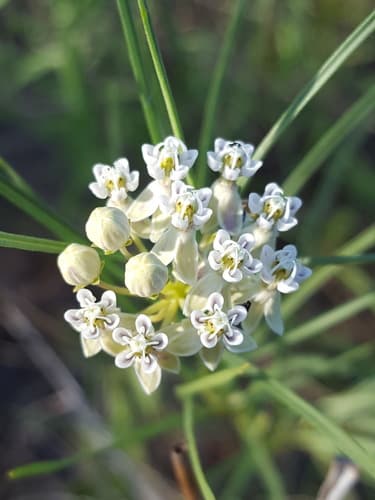
Find rebates in your areaAn upright milkweed with narrow, whorled leaves in tight clusters along the stem and rounded umbels of small white flowers. Spreads by rhizomes to form loose colonies in open, dry ground.
Wildlife value
Host plant for monarch.
A milkweed species that is a larval host plant for monarch butterflies, and its flowers are also a nectar source for bees and wasps. Note: this species is toxic to livestock and pets if ingested in quantity.
Common questions
- How much sun does need?
- grows best in full sun conditions.
- When does bloom?
- blooms in June, July, August, and September.
- Where is native?
- (Asclepias subverticillata) is native to AZ, CO, KS, MO and 5 more states, per vouchered herbarium specimen records and regional native plant society lists.
- What butterflies or moths does host?
- is a larval host plant for monarch.
Native range data from vouchered herbarium specimen records and regional native plant society lists. Pollinator and host plant associations compiled from GBIF, iNaturalist, and published ecological literature.
Ready to grow ? Add it to your garden in Pollinator Patch to track it and get season-by-season care guidance.
Not sure where to start? Take the 2-minute yard quiz