Balmony
Chelone glabra
Last reviewed: September 2026
Balmony (Chelone glabra) is a moist-soil perennial forb that produces white to pink-tinged, turtlehead-shaped flowers from July through September, growing best in part shade with consistently wet soil.
Toxicity unknown
Balmony (Chelone glabra) is not listed by the ASPCA Animal Poison Control Center (opens in new tab) or the other sources we check, so we have no verdict for it either way. Absence from those lists is not a clearance. If your pet shows symptoms after eating any plant, call the ASPCA at (888) 426-4435.
Light
part shade
Water
high
Size
12"–48" H × 12"–24" W
Bloom
Jul, Aug, Sep
Native to
AL, AR, CT, DE and 25 more states
Pollinators
bees, butterflies
Deer
Resistant (per Prairie Moon Nursery)
Before you buy
Your city may pay you to plant this
Cities and water utilities offer rebates for replacing lawn with native and water-wise plants. We track 459 programs across 44 states, each with a link to the provider and the date we last checked it.
Find rebates in your areaPicture natives in your own yard
Upload a photo of your yard and Patch Vision shows a rendering of it planted with natives for your region, like Balmony.


Browse plants for this ecoregion
Balmony is a native perennial wildflower that produces distinctive white, snapdragon-like flowers from summer into fall. This moisture-loving plant forms neat clumps with glossy green foliage and thrives in partially shaded, consistently moist areas.
Growing Balmony
Grow Balmony in part shade and high water. Mature plants reach 12 to 48 inches tall and spread 12 to 24 inches wide. Expect high maintenance to keep it looking intentional in a front yard.
How to care for Balmony, by region
How to care for Balmony where it is actually grown: year-round basics plus what to do each season, region by region, with the sources for each.
Care guidance last updated: September 2026
Eastern Corn Belt Plains (includes Columbus, OH)
Year-round
White turtlehead is native to Ohio, including the Columbus area, according to the Lady Bird Johnson Wildflower Center. It naturally grows in wet ditches, stream banks, and low meadows, so in a home garden it does best in a consistently moist spot with rich soil. The plant is a larval host for the Baltimore checkerspot butterfly, so its leaves are meant to be eaten by caterpillars. It stays a tidy clump one to three feet tall and blooms white to pink in late summer.
- Plant in full sun to part shade with soil that stays moist to wet, mulch helps hold moisture between rains.
- Give it rich, organic soil, a low spot or rain garden area works well.
- Expect a clump one to three feet tall that spreads slowly by rhizomes, not an aggressive spreader.
- Leave chewed leaves alone in summer, they likely mean Baltimore checkerspot caterpillars are feeding.
- Division in spring is the easiest way to make more plants.
Fall
Fall is when turtlehead earns its keep, with white to pink snapdragon-like flowers opening from late summer into October in the Columbus area. Hummingbirds and bumblebees visit the blooms, and the stems hold themselves up without staking. Once the flowers fade and stems brown, you can cut them back for a tidier look, or leave them standing for winter interest.
- Enjoy the bloom, flowers usually run from late summer into October here.
- Watch for hummingbirds and bumblebees working the flowers.
- Staking is rarely needed, the stems hold themselves up.
- Cut back spent stems once flowers fade and stems brown, or leave them up for winter interest.
Cutting back browned stems near the street-facing edge of the bed keeps the planting looking tidy through fall cleanup season.
Winter
Turtlehead is hardy through Columbus winters and needs no special protection once established. Leaving the dead stems standing gives overwintering insects a place to shelter, and cutting them back in late winter before new growth starts works just as well. A layer of mulch over the root zone helps a newly planted clump get through its first winter.
- No winter protection needed for established plants in this area.
- Leave old stems standing through winter if you want to support overwintering insects.
- Cut back dead stems in late winter before new shoots emerge, if you would rather have a clean start.
- Mulch the root zone of a first year planting to help it get through its first winter.
A late winter cutback of old stems, before new growth starts, keeps the bed tidy for anyone viewing it from the street.
Spring
In the Columbus area turtlehead is slow to show itself in spring, new shoots often do not appear until other perennials are already up, so do not assume it died over winter. Keep the soil moist while it wakes up, since dry spring soil around the crown can set the plant back. Spring is also the best time to divide an established clump.
- Wait for shoots, they emerge later in spring than many other perennials.
- Keep the root zone moist through spring, dry spells before the plant is established can slow it down.
- Divide overgrown clumps now if you want to spread turtlehead to another moist spot.
- Pinch stem tips once growth is a few inches tall to keep plants bushier, especially in shadier spots.
Summer
Columbus summers get hot and humid, and turtlehead needs steady moisture through that stretch since it naturally grows in wet ground. A layer of mulch and regular watering during dry weeks keep it from wilting. You may see chewed leaves this time of year from Baltimore checkerspot caterpillars, a native butterfly that relies on this plant, according to the Lady Bird Johnson Wildflower Center.
- Water deeply during dry summer stretches, this plant does not tolerate drought well.
- Mulch around the base to hold moisture and keep roots cool.
- Chewed leaves in summer are often Baltimore checkerspot caterpillars feeding, leave them be.
- Full sun spots may need more frequent watering than part shade spots.
Sources: Lady Bird Johnson Wildflower Center: Chelone glabra, Wisconsin Horticulture Extension: Turtlehead (Chelone spp.)
In an HOA neighborhood
Balmony takes more care to keep looking intentional in a front yard. Maintenance level: high. Consider it for backyard or mid-zone beds rather than the street edge.
Works well in: backyard only.
- Requires consistently wet conditions that may be impractical in maintained landscapes
- Wildflower appearance may not meet formal landscaping standards
- Dies back completely in winter leaving bare ground
Wildlife value
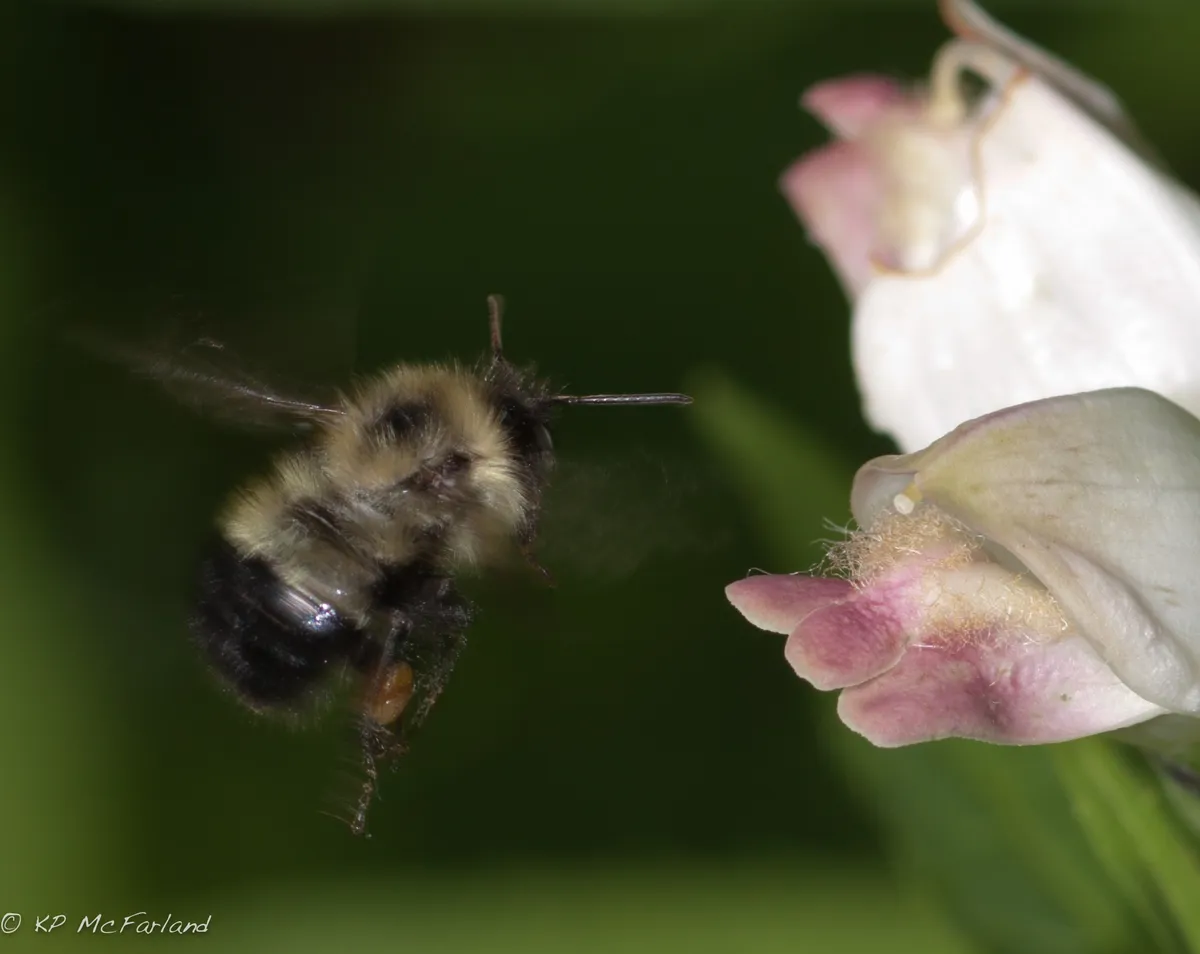
The tubular flowers attract bees and butterflies, particularly specialized native bees that can access the unique flower structure. It serves as a host plant for the Baltimore checkerspot butterfly.
Common questions
- How much light does Balmony need?
- Balmony grows well in part shade to part sun and can also tolerate deeper shade if the soil stays consistently moist. It struggles in full, hot sun unless water is abundant.
- How much water does Balmony require?
- This plant needs consistently high moisture and does well along stream banks, in wet meadows, and in low-lying garden spots that stay damp through the growing season.
- When does Balmony bloom?
- Balmony typically flowers from July through September, with white to pale pink, snapdragon-like blossoms opening along upright stems.
- What pollinators visit Balmony flowers?
- Bees, including bumblebees strong enough to push open the closed flower lips, along with butterflies, are the main visitors and pollinators of Balmony.
- Is Balmony a good plant for a wet garden bed or rain garden?
- Yes, its tolerance for high moisture and part shade makes it a good fit for rain gardens, pond edges, and other consistently damp planting areas.
- Is Balmony HOA-friendly?
- Balmony takes more care to look intentional in a front yard. Consider it for backyard or mid-zone beds rather than the street edge.
These answers were drafted with an AI model from this plant's data. Verify care details with a local expert.
Native range data from vouchered herbarium specimen records and regional native plant society lists. Pollinator and host plant associations compiled from GBIF, iNaturalist, and published ecological literature.
If something looks wrong
Common plant problems, and what to check first
These come up on almost any plant. Each guide lists the likely causes in the order they are worth ruling out, with one thing to check before you act on any of them, and links to the source it came from.
- It is dying right after planting
- Leaves turning yellow
- Wilting even though I watered it
- Brown crispy leaf tips
- Bugs on the plant
Ready to grow Balmony? Add it to your garden in Pollinator Patch to track it and get season-by-season care guidance.