Black-alder
Ilex verticillata
Last reviewed: October 2026
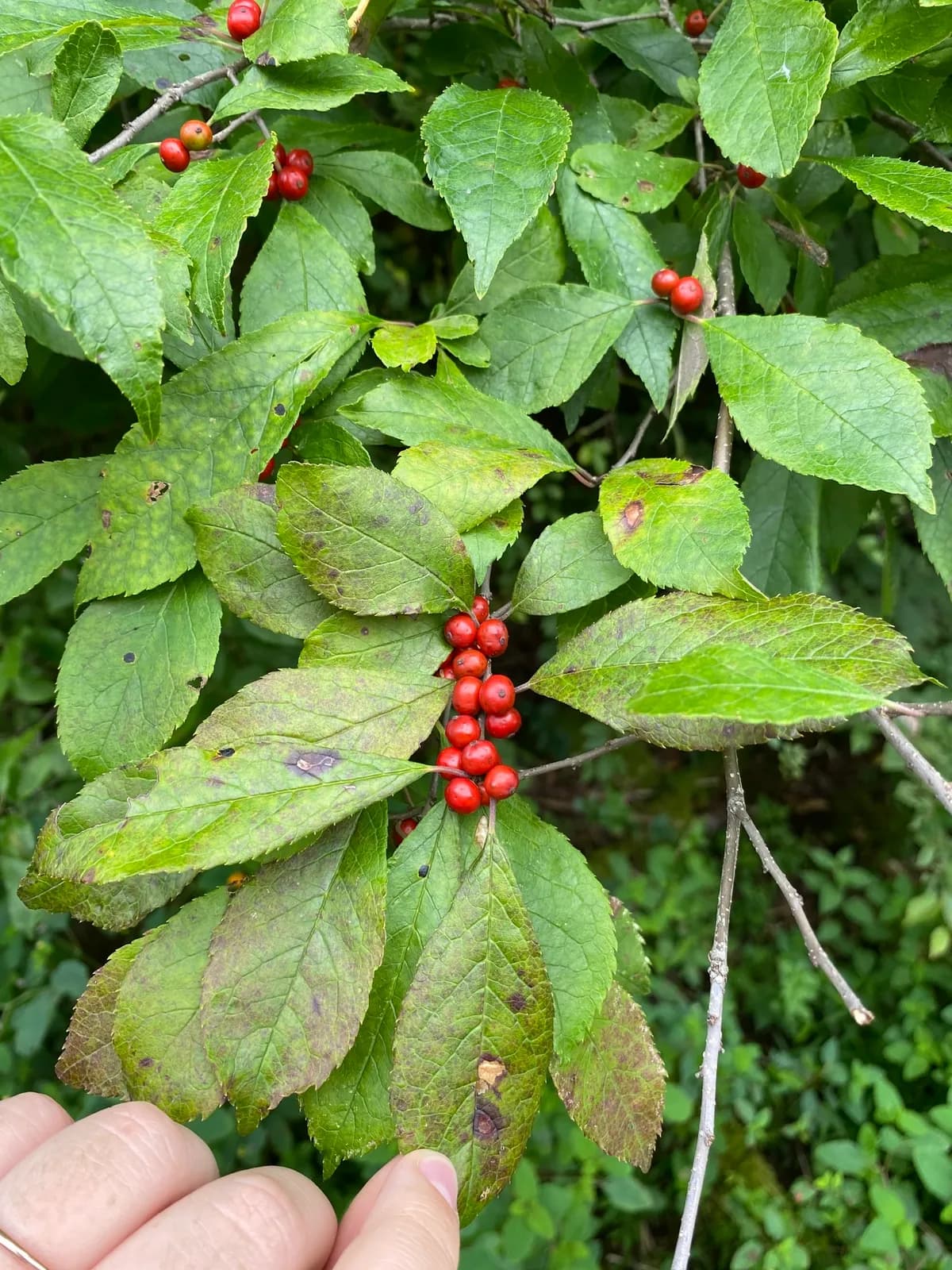
Ilex verticillata is a deciduous shrub that blooms in June and July and produces bright red berries that persist into winter. It thrives in moist to wet soils and part sun, making it a good choice for rain gardens and low spots.
Toxicity unknown
Black-alder (Ilex verticillata) is not listed by the ASPCA Animal Poison Control Center (opens in new tab) or the other sources we check, so we have no verdict for it either way. Absence from those lists is not a clearance. If your pet shows symptoms after eating any plant, call the ASPCA at (888) 426-4435.
The USDA PLANTS Database (opens in new tab) does not flag Black-alder as toxic to livestock.
Light
part sun
Water
high
Size
60"–180" H × 60"–180" W
Bloom
Jun, Jul
Native to
AL, AR, CT, DE and 28 more states
Pollinators
bees, beetles, wasps, flies
Before you buy
Your city may pay you to plant this
Cities and water utilities offer rebates for replacing lawn with native and water-wise plants. We track 459 programs across 44 states, each with a link to the provider and the date we last checked it.
Find rebates in your areaPicture natives in your own yard
Upload a photo of your yard and Patch Vision shows a rendering of it planted with natives for your region, like Black-alder.


Browse plants for this ecoregion
Winterberry is a native deciduous holly that produces clusters of bright red berries on bare branches in fall and winter. This shrub grows 5-15 feet tall and wide, preferring moist to wet soils and partial sun conditions. The berries provide exceptional winter interest and persist through most of the cold season.
Growing Black-alder
Grow Black-alder in part sun and high water. Mature plants reach 60 to 180 inches tall and spread 60 to 180 inches wide. Expect low maintenance to keep it looking intentional in a front yard.
How to care for Black-alder, by region
How to care for Black-alder where it is actually grown: year-round basics plus what to do each season, region by region, with the sources for each.
Care guidance last updated: September 2026
Acadian Plains and Hills (includes Bangor)
Year-round
Winterberry is a native Maine holly that loses its leaves in fall and lights up the winter with bright red berries. It is a true fit for the cold, wet, acidic ground across interior and downeast Maine, and it feeds birds when little else is around.
- Native across all of Maine including the cold Acadian interior, hardy to USDA zone 3b, so Bangor-area winters are no problem (University of Maine Cooperative Extension, Bulletin 2571).
- Loves wet feet. It thrives on bog edges, swampy spots, and low areas that flood in spring and dry out in summer, and it wants acidic soil, which is the norm on this glaciated terrain.
- Full sun to part shade. More sun means more berries.
- You need a male plant nearby to get berries on the female plants. One male can pollinate several females (University of Maine Cooperative Extension, Bulletin 2571).
- The berries are toxic to dogs, cats, and horses if eaten, so place it where pets are not likely to graze.
Fall
Fall is when winterberry earns its name. Leaves drop and the branches load up with red berries. Do not tidy them away, the bare red-berried stems are the whole point.
- As leaves fall, the red berries stand out on bare stems. This is the peak display, so leave the branches uncut.
- Migrating and resident birds start on the berries. Winterberry fruit feeds many bird species through the cold months (University of Maine Cooperative Extension, Bulletin 2571).
- No fall cutback is needed. Unlike perennials, you keep this shrub's structure standing all winter.
- Fall is a fine second planting window if you get plants in the ground several weeks before hard freeze so roots can settle.
- Remember the berries are toxic to dogs, cats, and horses, so rake up any that drop where pets roam (ASPCA Animal Poison Control Center).
Resist cutting the berried stems for tidiness. On a front yard the red-on-bare-branch look reads as a deliberate winter feature, not neglect, which keeps it HOA-friendly.
Winter
Winter is the payoff. Red berries against snow are the reason to grow this shrub in northern Maine. It handles deep cold with no wrapping or protection.
- The berries hold on bare branches through much of a Bangor-area winter and are the plant's main visual feature against snow.
- Fully hardy to zone 3b, so it takes interior and downeast Maine cold without wrapping or winter cover (University of Maine Cooperative Extension, Bulletin 2571).
- Do not prune in winter. Wait until early spring so you keep the berried stems as long as the birds and the view want them.
- Birds strip the fruit gradually, so the display slowly thins as winter goes on. That is normal, not a problem.
- Keep the shrub away from road edges and walkways that get deicing salt, since it does not tolerate salt (University of Maine Cooperative Extension, Bulletin 2571).
The bare red-berried silhouette is a clean, intentional winter look for a front yard, so leaving it standing keeps the planting reading as tidy and cared-for.
Spring
Spring is the best time to plant winterberry in interior Maine and to do any shaping before new growth pushes. Wet spring ground is fine, this shrub expects it.
- Plant after the ground thaws, usually late April into May in the Bangor area. A spot that floods in spring and dries in summer is ideal.
- If you want to shape or thin the shrub, do it in early spring before buds break, since it blooms on new wood.
- Water a new plant about 1 inch a week through its first year while the roots settle in (University of Maine Cooperative Extension, Bulletin 2571).
- Skip fertilizer unless a soil test says you need it. Native acidic soil is what this plant wants.
- Make sure a male winterberry is planted within about 40 to 50 feet so the female sets berries later in the year.
A light early-spring shaping keeps the shrub looking intentional and tended rather than overgrown, which reads as cared-for and avoids a violation letter from a front-yard HOA.
Summer
Summer is easy. Small greenish-white flowers appear and bees work them, then tiny green berries form that will redden later. Mostly you just keep a young plant watered.
- Native bees and other pollinators visit the modest early-summer flowers, and that pollination is what turns into the red winter berries.
- For plants past their first year, extra watering is usually not needed unless there is a long drought (University of Maine Cooperative Extension, Bulletin 2571).
- Keep watering a first-year plant during dry stretches, since interior Maine can see dry mid-summer spells even on wet sites.
- Leave the developing berries alone. No summer pruning, or you cut off the fall and winter show.
- Insect and disease problems are infrequent, so there is little to spray or fuss over (University of Maine Cooperative Extension, Bulletin 2571).
Sources: University of Maine Cooperative Extension, Bulletin 2571, Native Trees and Shrubs for Maine Landscapes: Winterberry, Go Botany, Native Plant Trust: Ilex verticillata (common winterberry), native and present in Maine, ASPCA Animal Poison Control Center plant database: American Holly (Ilex), toxic to dogs, cats, horses (saponins)
Atlantic Coastal Pine Barrens (includes Riverhead, NY)
Year-round
Winterberry is native to the Atlantic Coastal Pine Barrens around Riverhead, growing naturally in the region's bogs and wet, sandy lowlands.
- Give it a consistently damp, low spot, even in sandy pine-barrens soil it wants moisture.
- Plant a male and a female together, only females produce berries and only with a male nearby.
- It grows in full sun to part shade, with sunnier spots giving heavier berry crops.
- All parts are considered toxic to dogs, cats, and horses per the ASPCA plant database, generally causing only mild symptoms.
- Long Island sits within winterberry's native coastal range, which runs from the Gulf Coast to Canada.
Fall
Fall is when winterberry drops its leaves and the red berries take center stage near Riverhead.
- Expect earlier leaf drop than most nearby shrubs, which is normal.
- Fall planting works well since roots settle before the ground freezes.
- Bare stems covered in red berries look tidy and intentional from the road.
- Leave berried branches alone now if you want the display through winter.
Bare red-berried stems read as deliberate winter interest, not an unkempt shrub.
Winter
Winter is winterberry's showcase season on Long Island, red berries on bare stems through the coastal cold.
- Berries usually persist through winter, feeding birds like robins and cedar waxwings when food is scarce.
- No pruning needed, let the berries stand for wildlife and color.
- This shrub handles Long Island winters well without special care.
- Gently brush off heavy wet snow if branches start to bend.
Persistent red winter berries on bare wood is a clean, well-kept coastal winter look.
Spring
Spring near Riverhead brings winterberry's small white flowers ahead of the berry season.
- Flowers bloom on new wood in late spring, small and greenish white.
- Keep a male plant within about 50 feet of your females for pollination.
- Prune out winterkill once new leaves show which branches survived.
- Damp, low ground in the pine barrens suits this shrub well even where surrounding soil is sandy.
Summer
Summer means keeping winterberry's roots consistently moist through the coastal growing season.
- Water deeply during dry spells, especially since surrounding sandy soils drain fast.
- Green berries form now and will color up as fall nears.
- Light shaping is fine, save heavier pruning for late winter.
- Give plants airflow to help avoid fungal leaf spot in humid coastal weather.
Sources: New York Flora Atlas: Ilex verticillata, ASPCA: Toxic and Non-Toxic Plants, Winterberry
Blue Ridge (includes Gettysburg, PA)
Year-round
Winterberry grows natively in the Blue Ridge foothills around Gettysburg, found in wet coves, bogs, and along mountain streams.
- Plant it in the dampest spot you have, low ground or a stream edge works best.
- You need a male and a female nearby, only females berry and only if pollinated.
- It tolerates full sun to part shade, more sun means more berries.
- All parts are considered toxic to dogs, cats, and horses per the ASPCA plant database, generally mild in effect.
- Pennsylvania is well within winterberry's native range, which runs from the Gulf Coast to Canada.
Fall
Fall is when winterberry drops its leaves and the red berries become the focal point.
- Expect earlier leaf drop than other nearby shrubs, that's normal.
- Fall is a good time to plant so roots settle before frost.
- Bare stems full of red berries look tidy and deliberate from the road.
- Leave the berried branches be if you want the show through winter.
Bare red-berried stems read as intentional winter interest, not an unkempt shrub.
Winter
Winter is winterberry's showcase season near Gettysburg, red berries on bare stems through the cold.
- Berries usually persist through winter, feeding birds like robins and waxwings when little else is available.
- No pruning needed, let the berries stand for wildlife and color.
- This shrub handles Pennsylvania winters well without special care.
- Gently brush off heavy wet snow if branches start to bend.
Persistent red winter berries on bare wood is a clean, well-kept look for front yards.
Spring
Spring near Gettysburg brings the small white flowers that lead to winterberry's berry season.
- Flowers bloom on new wood in late spring, small and easy to miss.
- Keep a male plant within about 50 feet of your females for pollination.
- Prune dead wood once new leaves show which branches survived winter.
- Damp mountain-foothill soil is exactly what this shrub prefers.
Summer
Summer means keeping winterberry's roots consistently moist through the growing season.
- Water deeply during dry spells, this shrub does not like to dry out.
- Green berries form now, turning red as fall approaches.
- Light shaping is fine, hold off on major pruning until late winter.
- Give plants room for airflow to avoid fungal leaf spot in humid stretches.
Sources: Piedmont Master Gardeners: Winterberry Holly, ASPCA: Toxic and Non-Toxic Plants, Winterberry
Central Appalachians (includes Johnstown, PA)
Year-round
Winterberry is native to the Central Appalachians around Johnstown, growing naturally in wet mountain hollows and along streams.
- Choose a low, consistently damp spot, this shrub is built for wet ground.
- Plant a male and a female together since only females berry and only with a male nearby.
- It grows in full sun to part shade, with more sun giving a heavier berry crop.
- All parts are considered toxic to dogs, cats, and horses per the ASPCA plant database, typically mild in effect.
- This part of the Appalachians sits within winterberry's native range, which runs from the Gulf Coast to Canada.
Fall
Fall is when winterberry drops its leaves and the red berries become the highlight.
- Leaf drop happens earlier than most nearby shrubs, which is expected.
- Fall planting works well here, giving roots time to settle before the mountain cold sets in.
- Bare, berry-lined stems look neat and deliberate from the road.
- Leave berried branches alone now if you want the display through winter.
Bare red-berried stems read as tidy winter interest rather than neglect.
Winter
Winter is winterberry's signature season in the Central Appalachians, red berries on bare stems through the cold.
- Berries usually persist through winter, an important food source for birds like robins and waxwings.
- No pruning needed, let the berries stand for wildlife and winter color.
- This shrub is fully cold-hardy through mountain winters here.
- Gently brush off heavy wet snow if branches start to sag.
Persistent red berries on bare wood is a clean, deliberate winter look.
Spring
Spring near Johnstown brings winterberry's small white flowers before the berry display begins.
- Flowers bloom on new wood in late spring, small and easy to overlook.
- Keep a male plant within roughly 50 feet of your females for pollination.
- Prune dead wood once new growth shows which branches survived the mountain winter.
- Wet spring soil suits this shrub well.
Summer
Summer means keeping winterberry's roots consistently moist through the mountain growing season.
- Water deeply if a dry spell hits, this shrub does not tolerate drying out.
- Green berries form now and color up as fall nears.
- Light shaping is fine, save major pruning for late winter.
- Space plants for airflow to help avoid fungal leaf spot.
Sources: Piedmont Master Gardeners: Winterberry Holly, ASPCA: Toxic and Non-Toxic Plants, Winterberry
Central Corn Belt Plains (includes Chicago)
Year-round
Winterberry grows naturally in the Central Corn Belt Plains around Chicago, documented in the region's wet woodland edges, shrub bogs, and rocky riverbanks.
- Give it the lowest, dampest spot in your yard, this shrub is built for wet ground.
- Plant a male and a female together, only females produce berries and only with a male nearby.
- It grows in full sun to part shade, with sunnier spots giving heavier berry crops.
- All parts are considered toxic to dogs, cats, and horses per the ASPCA plant database, generally causing only mild symptoms.
- Winterberry is native to the Chicago region per Swink and Wilhelm's Plants of the Chicago Region, though it's occasional rather than common.
Fall
Fall is when winterberry drops its leaves and the red berries take over the display around Chicago.
- Expect earlier leaf drop than most nearby shrubs, that's normal for this species.
- Fall is a good time to plant so roots settle before the ground freezes.
- Bare stems full of red berries look tidy and deliberate from the street.
- Leave the berried branches alone if you want the show through winter.
Bare red-berried stems read as intentional winter interest, not an unkempt shrub.
Winter
Winter is winterberry's signature season around Chicago, red berries on bare stems through the cold months.
- Berries usually persist through winter, feeding birds like robins and cedar waxwings when food is scarce.
- No pruning needed, let the berries stand for wildlife and color.
- This shrub is cold-hardy through Chicago-area winters.
- Gently brush off heavy wet snow if branches start to bend.
Persistent red winter berries on bare wood is a clean, well-kept look for front yards.
Spring
Spring around Chicago brings winterberry's small white flowers ahead of the fall berry show.
- Flowers bloom on new wood in late spring, small and greenish white.
- Keep a male plant within about 50 feet of your females for pollination.
- Prune out winterkill once new leaves show which branches survived.
- Damp spring soil suits this shrub well.
Summer
Summer means keeping winterberry's roots consistently moist through the Chicago-area growing season.
- Water deeply during dry spells, this shrub does not tolerate drought well.
- Green berries form now and will color up as fall nears.
- Light shaping is fine, save major pruning for late winter.
- Give plants room to breathe to help avoid fungal leaf spot in humid weather.
Sources: Chicago Botanic Garden: Ilex verticillata (Winterberry), ASPCA: Toxic and Non-Toxic Plants, Winterberry
Driftless Area (includes Galena, IL)
Year-round
Winterberry is documented as occasional in the Driftless Area around Galena, growing in wet woodland edges and boggy low spots.
- Plant it in the wettest, lowest spot you have, it wants consistently damp soil.
- You need both a male and a female nearby, only females berry and only with a male close by.
- It grows in full sun to part shade, with sunnier spots producing more berries.
- All parts are considered toxic to dogs, cats, and horses per the ASPCA plant database, typically only mildly so.
- This species is native but occasional in northern Illinois, not common statewide.
Fall
Fall is when winterberry drops its leaves and the red berries become the highlight near Galena.
- Expect earlier leaf drop than most other shrubs, which is normal.
- Fall planting works well so roots settle before the ground freezes.
- Bare stems full of red berries look tidy and deliberate from the road.
- Leave the berried branches alone if you want the show through winter.
Bare red-berried stems read as intentional winter interest, not overgrowth.
Winter
Winter is winterberry's signature season in the Driftless Area, red berries on bare stems through the cold months.
- Berries usually persist through winter, feeding birds like robins and cedar waxwings when food is scarce.
- No pruning needed, let the berries stand for wildlife and color.
- This shrub is cold-hardy through Driftless Area winters.
- Gently brush off heavy wet snow if branches start to bend.
Persistent red winter berries on bare wood is a clean, deliberate look.
Spring
Spring around Galena brings winterberry's small white flowers ahead of the berry season.
- Flowers bloom on new wood in late spring, small and easy to miss.
- Keep a male plant within about 50 feet of your females for good pollination.
- Prune out any winterkill once new leaves show which branches survived.
- Damp spring soil in low ground suits this shrub well.
Summer
Summer means keeping winterberry's roots consistently moist through the Driftless growing season.
- Water deeply during dry spells, this shrub does not tolerate drought well.
- Green berries form now, turning red as fall nears.
- Light pruning is fine, save major cuts for late winter.
- Give plants airflow to help avoid fungal leaf spot in humid weather.
Sources: Illinois Wildflowers: Winterberry (Ilex verticillata), ASPCA: Toxic and Non-Toxic Plants, Winterberry
Eastern Corn Belt Plains (includes Columbus)
Year-round
Winterberry is a wetland-loving holly native to the Eastern Corn Belt Plains around Columbus, where it grows along stream banks, pond edges, and in low wet spots.
- Plant it in the wettest, lowest part of your yard, a spot that stays damp after rain.
- It needs both a male and a female plant nearby to produce the red winter berries, since each plant is only one sex.
- Give it full sun to part shade and acidic to neutral soil for the best berry show.
- All parts of winterberry are considered toxic to dogs, cats, and horses per the ASPCA Animal Poison Control Center plant database, though the effect is usually mild.
- It loses its leaves in fall, which is what makes the bare red-berried branches stand out all winter.
Fall
Fall is the payoff season, when winterberry drops its leaves and reveals bright red berries along the bare stems.
- Leaves yellow and drop earlier than most shrubs, which is normal and lets the berries take center stage.
- This is the best time to plant new winterberry so roots settle before winter.
- The bare, berry-covered branches read as tidy and intentional to neighbors, a good front-yard choice for HOA-conscious homeowners.
- Do not cut the berried branches for indoor arrangements right when they color up, wait until they are fully ripe for the best display.
Bare red-berried stems look neat and deliberate rather than messy, which reads well for curb appeal in fall and winter.
Winter
Winter is winterberry's whole reason for being, red berries on bare stems that feed birds through the cold months.
- Berries persist into winter and are a key food source for songbirds like cedar waxwings and robins when little else is available.
- No pruning needed now, let the berries stay for the birds and the winter show.
- The shrub tolerates Columbus winters well since it is cold-hardy across the region.
- If snow load bends young branches, gently brush it off rather than shaking hard.
Persistent red berries on bare stems is a classic tidy winter-interest look that reads as intentional landscaping, not neglect.
Spring
Spring in Columbus is when winterberry's small white flowers appear, easy to miss but essential for the berries to come.
- Flowers are small and greenish white, blooming on new growth in late spring.
- Check that you have at least one male plant within about 50 feet of your female plants so bees can move pollen between them.
- New leaf growth is a good time to check for winter dieback and prune out any dead tips.
- Mulch now to help the roots hold moisture through the wetter months ahead.
Summer
Summer is about keeping winterberry's roots consistently moist through the humid Ohio growing season.
- Water deeply during dry spells, this shrub does not tolerate drought well.
- Berries begin forming now but stay green, they will not turn red until fall.
- Light pruning to shape the shrub is fine now, but avoid heavy cuts that remove next winter's berry wood.
- Watch for leaf spot in humid weather and improve air flow if you see it.
Sources: NC State Extension Gardener Plant Toolbox: Ilex verticillata, ASPCA: Toxic and Non-Toxic Plants, Winterberry
Eastern Great Lakes Lowlands (includes Rochester, NY)
Year-round
Winterberry is native to the Eastern Great Lakes and Hudson Lowlands around Rochester, growing naturally in swamps and along the region's lakeshore wetlands.
- Pick a spot that stays consistently damp, low ground near the lake plain works well.
- Plant a male and a female together, only females produce berries and only with a male nearby.
- It thrives in full sun to part shade, with sunnier spots producing heavier berry crops.
- All parts are considered toxic to dogs, cats, and horses per the ASPCA plant database, generally mild in effect.
- This region sits within winterberry's core native range, which runs from the Gulf Coast to Canada.
Fall
Fall brings early leaf drop and the start of winterberry's red berry display near Rochester.
- Leaves yellow and drop earlier than most nearby shrubs, which is normal.
- Fall is a good time to plant so roots settle before the ground freezes.
- Bare, berry-covered stems look tidy and deliberate from the street.
- Leave berried branches in place if you want them through winter.
Bare red-berried stems read as intentional winter interest, not neglect.
Winter
Winter is winterberry's signature season near Rochester, bright red berries on bare stems through the lake-effect cold.
- Berries typically persist through winter, feeding birds like cedar waxwings and robins when little else is available.
- No pruning needed, let the display stand for wildlife and color.
- This shrub is fully cold-hardy through lake-effect winters here.
- Gently brush off heavy wet snow if branches start to bend.
Persistent red winter berries on bare wood is a clean, cared-for winter look.
Spring
Spring near Rochester brings the small white flowers that will become winterberry's fall berries.
- Flowers bloom on new wood in late spring, small and greenish white.
- Keep a male plant within about 50 feet of your females for pollination.
- Prune dead wood once new leaves show which branches survived winter.
- Wet spring ground near the lake plain suits this shrub well.
Summer
Summer calls for consistent moisture to keep winterberry going through the lake-plain growing season.
- Water deeply during dry spells, this shrub does not tolerate drought well.
- Green berries form now and will color up closer to fall.
- Light shaping is fine, save major pruning for late winter.
- Give plants breathing room to avoid fungal leaf spot in humid weather.
Sources: New York Flora Atlas: Ilex verticillata, ASPCA: Toxic and Non-Toxic Plants, Winterberry
Erie Drift Plain (includes Buffalo)
Year-round
Winterberry is native to the Erie Drift Plain around Buffalo, naturally found in wet woods and swamp margins near the lakeshore.
- Choose the wettest part of your yard, low spots and swale edges suit it best.
- Plant a male and a female together, only the females berry and only with a male close by.
- It grows in full sun to part shade, with sunnier spots producing more berries.
- All parts are considered toxic to dogs, cats, and horses per the ASPCA plant database, usually only mildly.
- Buffalo sits within winterberry's core native range, which runs from the Gulf Coast into Canada.
Fall
Fall is when winterberry drops its leaves and the red berries take center stage.
- Leaf drop happens earlier than many neighboring shrubs, which is expected.
- Fall is a good planting window so roots settle before the lake-effect cold arrives.
- Bare stems covered in red berries look tidy and intentional from the curb.
- Skip pruning the berried wood if you want the display through winter.
Bare red-berried branches read as deliberate winter interest, not overgrowth.
Winter
Winter is the season winterberry is grown for near Buffalo, bright red berries through the lake-effect cold.
- Berries usually persist all winter, a valuable food source for birds when snow covers everything else.
- No pruning needed, let the display stand.
- This shrub handles Buffalo's harsh lake-effect winters without special care.
- Gently knock off heavy wet snow if branches bend.
Persistent red winter berries on bare stems is a clean look that reads as cared-for, not neglected.
Spring
Spring near Buffalo brings the small white flowers that lead to the fall and winter berry show.
- Flowers are small and greenish white, blooming on new growth.
- Confirm a male plant is within about 50 feet of your females for pollination.
- Prune out winterkill once you can see which branches leafed out.
- Lake-effect spring moisture suits this shrub well.
Summer
Summer around Buffalo means keeping the roots consistently damp through the growing season.
- Water deeply if rain is scarce, this shrub does not tolerate drying out.
- Berries form green now and will color up closer to fall.
- Light shaping is fine, save heavier pruning for late winter.
- Watch for fungal leaf spot in humid stretches and give plants room to breathe.
Sources: New York Flora Atlas: Ilex verticillata, ASPCA: Toxic and Non-Toxic Plants, Winterberry
Huron/Erie Lake Plains (includes Toledo)
Year-round
Around Toledo's Lake Erie plains, winterberry grows naturally in the wet, poorly drained soils that are common near the lakeshore.
- It thrives in the heavy, slow-draining clay soils typical of the Huron/Erie Lake Plains.
- You need a male and a female plant close together for the females to set berries.
- Full sun gives the heaviest berry crop, part shade is fine but with fewer berries.
- All parts are considered toxic to dogs, cats, and horses per the ASPCA plant database, generally at a mild level.
- Native range for this shrub runs from the Gulf Coast up into Canada, and Ohio sits solidly within it.
Fall
Fall is when the leaves drop and the red berries take over as the main event.
- Expect early leaf drop compared to other shrubs, that's normal for this species.
- Fall is a good planting window since roots can establish before the ground freezes.
- Bare stems full of red berries look deliberate and well-kept, a plus for street-facing yards.
- Hold off on heavy pruning now so you don't remove the berries you've been waiting for.
Leafless red-berried branches read as intentional winter interest, not an unkempt shrub.
Winter
Winter is the payoff near Lake Erie, bright red berries on bare branches through the cold months.
- Berries typically hang on into winter, feeding birds like robins and cedar waxwings when food is scarce.
- No pruning needed, let the display stand for wildlife and winter color.
- This shrub is cold-hardy and handles Toledo's lake-effect winters without special protection.
- Brush off heavy wet snow gently if it's bending branches.
Persistent red berries on bare wood is a classic clean winter-interest look for front yards.
Spring
Spring near Toledo brings small white flowers that set up the berry display later in the year.
- Flowers bloom in late spring on new wood, small and easy to overlook.
- Confirm you have both sexes planted, only female plants berry and only if a male is nearby.
- Prune away any winterkill from harsh lake-effect winters once new growth shows where it's alive.
- Wet spring soil is exactly what this shrub wants, no need to amend drainage.
Summer
Summer keeps winterberry green and quietly forming berries while it handles the humid Lake Erie air.
- Keep soil consistently moist, this is not a drought-tolerant shrub.
- Green berries are forming now, they stay green until fall color change.
- Shape lightly if needed but leave most branches alone so you don't cut off berry wood.
- Good air circulation helps avoid fungal leaf spot in muggy summer weather.
Sources: NC State Extension Gardener Plant Toolbox: Ilex verticillata, ASPCA: Toxic and Non-Toxic Plants, Winterberry
Interior Plateau (includes Cincinnati)
Year-round
Winterberry is native to the Interior Plateau around Cincinnati, where it naturally grows in bottomland woods and along streams.
- Choose a spot that stays moist, low areas and stream edges are ideal.
- You need one male plant for every several female plants nearby to get berries.
- It tolerates both full sun and part shade, though more sun means more berries.
- All parts are considered toxic to dogs, cats, and horses per the ASPCA plant database, usually causing only mild stomach upset.
- This shrub's native range runs from the Gulf Coast states north into Canada, and southern Ohio is well within that range.
Fall
Fall is when winterberry drops its leaves and shows off the red berries along its bare stems.
- Expect leaves to yellow and drop earlier than other shrubs nearby.
- Fall is a solid time to plant so roots can settle in before winter cold sets in.
- The clean look of bare, berried stems reads as tidy and intentional from the street.
- Avoid cutting berried branches now if you want the display to last through winter.
Bare stems covered in red berries look deliberate rather than messy, a good front-yard fit.
Winter
Winter is winterberry's signature season around Cincinnati, red berries on bare branches feeding birds through the cold.
- Berries usually persist into winter, an important food source for robins and cedar waxwings when little else is around.
- Skip pruning now, let the berries stay for wildlife and winter color.
- This shrub handles Ohio Valley winters well without any special protection.
- Gently knock off heavy wet snow if branches start bending.
Persistent red winter berries on bare wood is a clean, well-kept look for street-facing beds.
Spring
Spring around Cincinnati brings the small white flowers that will become winter berries.
- Blooms are small and greenish white on new growth, easy to miss if you're not looking closely.
- Make sure a male plant is within about 50 feet of your females so pollinators can do their job.
- Prune out any dead wood once you can see which branches leafed out.
- Keep soil moist as spring rains taper off.
Summer
Summer heat and humidity around Cincinnati call for steady moisture to keep winterberry happy.
- Water during dry stretches, this shrub struggles if the soil dries out.
- Green berries are forming now and will turn red closer to fall.
- Light shaping is fine, but save major pruning for late winter so you don't cut off berry wood.
- Watch for fungal leaf spot in muggy weather and space plants for airflow.
Sources: NC State Extension Gardener Plant Toolbox: Ilex verticillata, ASPCA: Toxic and Non-Toxic Plants, Winterberry
Interior River Valleys and Hills (includes Peoria, IL)
Year-round
Winterberry can be found in the Interior River Valleys and Hills around Peoria, in wet bottomland woods and along the region's rivers, though it is less common here than in northern Illinois.
- Plant it in the wettest, lowest spot you have, it wants consistently damp soil.
- You need both a male and a female nearby, only females berry and only with a male close by.
- It grows in full sun to part shade, with sunnier spots producing more berries.
- All parts are considered toxic to dogs, cats, and horses per the ASPCA plant database, typically only mildly so.
- Statewide, winterberry is occasional in northern Illinois but uncommon to absent through much of central Illinois, so treat this as a marginal fit here.
Fall
Fall is when winterberry drops its leaves and the red berries become the highlight near Peoria.
- Expect earlier leaf drop than most other shrubs, which is normal.
- Fall planting works well so roots settle before the ground freezes.
- Bare stems full of red berries look tidy and deliberate from the road.
- Leave the berried branches alone if you want the show through winter.
Bare red-berried stems read as intentional winter interest, not overgrowth.
Winter
Winter is winterberry's signature season near Peoria, red berries on bare stems through the cold months.
- Berries usually persist through winter, feeding birds like robins and cedar waxwings when food is scarce.
- No pruning needed, let the berries stand for wildlife and color.
- This shrub is cold-hardy through central Illinois winters.
- Gently brush off heavy wet snow if branches start to bend.
Persistent red winter berries on bare wood is a clean, deliberate look.
Spring
Spring near Peoria brings winterberry's small white flowers ahead of the berry season.
- Flowers bloom on new wood in late spring, small and easy to miss.
- Keep a male plant within about 50 feet of your females for pollination.
- Prune out any winterkill once new leaves show which branches survived.
- Damp river-bottom soil suits this shrub well.
Summer
Summer means keeping winterberry's roots consistently moist through the river-valley growing season.
- Water deeply during dry spells, this shrub does not tolerate drought well.
- Green berries form now, turning red as fall nears.
- Light pruning is fine, save major cuts for late winter.
- Give plants airflow to help avoid fungal leaf spot in humid weather.
Sources: Illinois Wildflowers: Winterberry (Ilex verticillata), ASPCA: Toxic and Non-Toxic Plants, Winterberry
Middle Atlantic Coastal Plain (includes Philadelphia)
Year-round
Winterberry is native to the Middle Atlantic Coastal Plain around Philadelphia, growing naturally in swamps and along slow-moving streams.
- Pick a spot that stays consistently damp, this is a wetland shrub.
- You need a male and a female plant, only females produce berries and only with a male nearby.
- Full sun to part shade both work, with more sun giving heavier berry crops.
- All parts are considered toxic to dogs, cats, and horses per the ASPCA plant database, typically mild in effect.
- This region is well within winterberry's native range, which stretches from the Gulf Coast to Canada.
Fall
Fall is when winterberry drops its leaves and the red berries come into their own.
- Expect earlier leaf drop than most nearby shrubs, that's normal.
- Fall is a solid time to plant, giving roots time to settle before frost.
- Bare stems lined with red berries look neat and planned from the street.
- Skip pruning the berried branches if you want the show to last into winter.
Bare red-berried stems read as tidy, intentional winter interest.
Winter
Winter is winterberry's signature season around Philadelphia, red berries on bare stems through the cold months.
- Berries typically persist through winter, feeding birds like robins and cedar waxwings when food is scarce.
- No pruning needed, let the berries stand for wildlife and winter color.
- This shrub handles Mid-Atlantic winters without special care.
- Gently brush off heavy wet snow if branches start to bend.
Persistent red winter berries on bare wood is a clean, deliberate look for front-facing beds.
Spring
Spring around Philadelphia brings winterberry's small white flowers ahead of the berry season.
- Flowers are small and greenish white, blooming on new wood in late spring.
- Make sure a male plant sits within roughly 50 feet of your females.
- Prune out dead wood once new leaves show which branches made it through winter.
- Damp spring soil is ideal, no drainage changes needed.
Summer
Summer means keeping winterberry's roots consistently moist through the Mid-Atlantic humidity.
- Water deeply during dry spells, this shrub struggles if it dries out.
- Berries form green now, turning red as fall approaches.
- Light pruning is fine, save bigger cuts for late winter.
- Give plants room for airflow to avoid fungal leaf spot in humid weather.
Sources: NC State Extension Gardener Plant Toolbox: Ilex verticillata, ASPCA: Toxic and Non-Toxic Plants, Winterberry
Mississippi Alluvial Plain (includes Memphis, TN)
Year-round
Winterberry holly is native to the Mississippi Valley Loess Plains, where its natural range runs through bottomland swamps and stream edges across west Tennessee and north Mississippi.
- Its native range runs from Nova Scotia south to the Florida panhandle and west to Minnesota, southeastern Missouri, and eastern Texas, which covers this region, per Go Botany (Native Plant Trust).
- It is dioecious, so plant a male near several females (within about 50 feet) to get berries, per the University of Maryland Extension.
- It wants consistently moist, acidic soil, closer to a swamp margin or low spot than a typical dry lawn bed.
- Full sun to part shade both work, with more sun generally meaning heavier berry production.
- Flower buds set on old wood in late summer, so prune in late winter, not spring, if shaping is needed.
Fall
Fall is when berries color up red and leaves drop, giving winterberry its bare-branch, red-berried display.
- Berries ripen to red in late summer through fall and remain after leaves drop.
- Losing its leaves is expected. This is one of the few deciduous hollies, so bare red-berried stems are the intended fall look.
- That look is a recognized, well-known ornamental display, reading as tidy and intentional rather than a stressed shrub.
- Hold off on heavy cutting for indoor decorating now. Removing branches also removes next year's flower buds.
- Birds begin feeding on berries this season, so a thinning crop later in fall is expected.
Bare red-berried stems in fall are the plant's normal look, not a sign of decline.
Winter
Winter is winterberry's showcase across the Loess Plains, with red berries lasting through the region's mild, wet winters.
- Berries typically hold through winter and sometimes into early spring, one of the longest color displays of any native shrub here.
- Leave berries in place for birds, including cedar waxwings, that rely on them through the cold months.
- Late winter, just before new growth, is the safest window to prune if needed, though cut stems skip a berry season.
- Wet or soggy soil from winter rain is not a concern. This shrub is native to bottomland swamps and handles standing water well.
- Keep pets from chewing on fallen berries. The ASPCA lists winterberry as mildly toxic to dogs, cats, and horses.
Red berries on bare stems through winter are winterberry's expected look, not a shrub needing cleanup.
Spring
Spring flowering feeds native bees as the shrub sets up its fall berry crop across the Loess Plains.
- Small white flowers open on new growth in late spring and attract bumble bees and mining bees, per the Xerces Society.
- Skip pruning now. Flower buds already formed on last year's wood.
- A young plant may flower lightly for its first 2 to 3 years while roots establish.
- Keep soil moist through spring rains. This shrub is adapted to wet bottomland, not a dry bed.
- West Tennessee native plant guides include winterberry among recommended wetland-edge shrubs for this region.
Summer
Summer heat and humidity in the Loess Plains call for steady moisture while green berries develop.
- Berries stay green through summer and will not turn red until fall approaches.
- Water during hot, dry stretches. Summer dry spells here can stress a shrub built for swampy, bottomland soil.
- Mulch over the root zone helps retain moisture and moderate soil heat.
- No pruning needed. Let the plant put energy toward growth and its coming berry crop.
- Pale or yellow leaves usually point to soil pH drifting too high for this acid-loving shrub.
Sources: Go Botany (Native Plant Trust): Ilex verticillata, University of Maryland Extension: Winterberry Holly, ASPCA: Toxic and Non-Toxic Plants, Winterberry, Xerces Society: feed the bees, plants for pollinators, Southeast Exotic Pest Plant Council: Landscaping With Native Plants, West Tennessee
Mississippi Valley Loess Plains (includes Memphis, TN)
Year-round
Winterberry holly is native to the Mississippi Alluvial Plain, fitting naturally into the bottomland swamps and river-edge habitat that define this ecoregion.
- It occurs in bottomland swamp and wetland margin habitat throughout the Mississippi Alluvial Plain, part of a native range that runs from Nova Scotia to the Florida panhandle and west to eastern Texas, per Go Botany (Native Plant Trust).
- It is dioecious, so plant a male within about 50 feet of several females to get berries, per the University of Maryland Extension.
- It wants wet, acidic soil, closer to a low spot or rain garden than a typical dry front-yard bed.
- Full sun to part shade both work, with fuller sun generally giving the heaviest berry set.
- Flower buds set on old wood in late summer, so save pruning for late winter instead of spring.
Fall
Fall brings red berries and leaf drop, giving winterberry its namesake bare-branch display across the Alluvial Plain.
- Berries color up red in late summer through fall and stay on the stems once leaves drop.
- Losing its leaves is expected. This deciduous holly is meant to go bare while its berries take center stage.
- That bare-branch, red-berry look is a well-known ornamental display, reading as intentional rather than a shrub in trouble.
- Avoid heavy cutting for holiday greens this early. Removing branches now takes next year's flower buds along with the berries.
- Birds start feeding on berries this season, so a thinning crop by late fall is expected, not a plant problem.
Bare red-berried stems in fall are the plant's normal, intentional look, not dieback.
Winter
Winter is winterberry's peak display across the Mississippi Alluvial Plain, with red berries lasting through the region's mild, wet winters.
- Berries typically persist through winter and sometimes into early spring, one of the longest-lasting color displays among native shrubs here.
- Leave berries for birds, including cedar waxwings, that depend on them through the cold months.
- Late winter, right before new growth starts, is the safest time to prune if shaping is needed, though it will cost some of next year's berries.
- Wet, flooded ground from winter rain is not a concern here. This shrub is native to bottomland swamps and tolerates standing water well.
- Keep pets from chewing on fallen berries. The ASPCA lists winterberry as mildly toxic to dogs, cats, and horses.
Red berries on bare stems through winter are winterberry's expected look here, not a shrub needing cleanup.
Spring
Spring flowering here feeds native bees while the shrub sets up its berry crop for later in the year.
- Small white flowers open on new growth in late spring and attract bumble bees, mining bees, and sweat bees, per the Xerces Society.
- Do not prune now. This shrub already formed its flower buds on last year's wood.
- A young plant may bloom lightly its first 2 to 3 years while it establishes.
- Spring flooding on the Alluvial Plain is not a problem for this shrub. It is adapted to seasonal wet ground.
- If new leaves look pale, check soil pH. This holly needs acidic soil to take up nutrients well.
Summer
Summer heat across the Alluvial Plain calls for steady moisture while green berries size up before fall color.
- Berries stay green through summer and will not turn red until fall approaches.
- Water during dry spells away from the immediate floodplain. Even a wetland-native shrub needs help if planted on higher, drier ground in a yard.
- Mulch helps retain soil moisture and moderate root-zone temperature during hot stretches.
- No pruning needed now. Let the plant direct energy into growth and berry development.
- Pale or yellowing leaves usually signal soil pH drifting too high for this acid-loving shrub.
Sources: Go Botany (Native Plant Trust): Ilex verticillata, University of Maryland Extension: Winterberry Holly, ASPCA: Toxic and Non-Toxic Plants, Winterberry, Xerces Society: feed the bees, plants for pollinators
North Central Appalachians (includes Williamsport, PA)
Year-round
Winterberry holly grows naturally in the wet meadows, stream edges, and low spots around Williamsport in central Pennsylvania. It is native to eastern North America and its documented range reaches into Pennsylvania, so a spot here fits it well. Unlike most hollies it loses its leaves every fall, and what is left behind is a bare shrub covered in small bright red berries that hold on through winter. To get those berries you need both a male plant and a female plant growing near each other, since each winterberry is only one sex and only the female produces fruit. Plant it in full sun to part shade in soil that stays moist and on the acidic side, the kind of ground you would find near a low wet spot or rain garden. The berries look festive but they carry saponins and are mildly toxic if eaten, both to people and to dogs, cats, or horses, so keep that in mind around small kids and pets that put things in their mouths.
- Native to eastern North America, including this part of Pennsylvania, so it belongs in a Williamsport-area yard.
- Loses its leaves in fall, unlike most hollies, leaving bare branches covered in red berries all winter.
- You need a male and a female plant growing near each other for the female to set berries.
- Give it full sun to part shade and moist, acidic soil, the kind found in a low or wet part of the yard.
- The berries and leaves contain saponins and are mildly toxic if eaten by people or pets, so keep them away from kids and dogs who put things in their mouths.
Fall
Fall is when winterberry earns its name and its reputation. As nights cool through September and into October, the leaves turn yellow and drop, and the berries that stayed green all summer flush bright red. Williamsport's first fall frost typically lands around the second week of October, and a light frost will not hurt the berries at all, if anything the cold seems to deepen their color. This is a good season to plant a new winterberry if you did not get to it in spring, since cooler weather is easier on new roots than summer heat. If you plan to cut branches for a fall or holiday arrangement, remember the berries are mildly toxic if eaten by people or pets, so keep cut branches away from small kids and animals who chew on things. Leave most of the berries on the shrub, they are the whole point of growing it through winter.
- Leaves yellow and drop through September and October, berries turn bright red at the same time.
- First frost typically arrives around the second week of October and does not damage the berries.
- Fall is a good backup planting window if spring planting did not happen.
- If cutting branches for decoration, keep them away from kids and pets since the berries are mildly toxic if eaten.
- Leave the bulk of the berries on the plant, they carry the display through winter.
Bright red berries against bare branches read as an intentional, well kept winter feature, not an overgrown or neglected shrub.
Winter
Winter is winterberry's whole show. With the leaves gone, the bare branches covered in red berries stand out clearly against snow or a gray Pennsylvania winter sky, and they usually hold well into January or later since birds tend to leave them alone until other food sources run low. Robins, cedar waxwings, and bluebirds will eventually strip the berries, which is a normal and expected part of the plant's winter role in the yard. The shrub itself is fully hardy through Williamsport's winters and needs no wrapping, burlap, or other cold protection. If you bring cut branches inside for a wreath or centerpiece, keep them somewhere pets and small kids cannot reach, since the berries are mildly toxic if eaten and can look tempting to a curious toddler or dog.
- Bare, red-berried branches are the main winter feature, usually holding color into January.
- Birds like robins, cedar waxwings, and bluebirds eventually strip the berries once other food runs low.
- Fully hardy through Williamsport winters, no wrapping or winter protection needed.
- Keep any cut branches brought indoors away from pets and small kids, the berries are mildly toxic if eaten.
The bright red winter display is a plus for curb appeal in most HOA-conscious neighborhoods, it reads as intentional winter interest rather than a bare, neglected shrub.
Spring
Spring around Williamsport usually carries a frost risk into late April, so treat late April as your rough cutoff before you count on warm weather sticking. Winterberry is hardy well past this area's cold, so a late frost will not hurt an established plant, but wait until frost risk passes before setting out a new one. Small greenish white flowers open in May and are easy to miss, they are not showy, but they are what turns into this fall's berries. If you planted both a male and female winterberry, this is the season their bloom times need to line up so bees can carry pollen between them. Once new leaves are out, check the branches over for any tips that died back over winter and trim those out. A layer of mulch spread now helps the roots hold moisture through the drier stretches early summer can bring.
- Last frost in this area typically falls in late April, wait until then to plant a new winterberry.
- Small white to greenish flowers open in May and lead to this fall's berries, easy to overlook.
- Male and female plants need to bloom at roughly the same time for pollination to work.
- Prune out any winter dieback once new leaves show you which branches are still alive.
- Spread mulch now to help roots hold moisture into summer.
The shrub looks bare and twiggy into mid spring before leaves fill in. That is normal for this plant, not a sign it died over winter.
Summer
Summers in the Williamsport area bring warm, sometimes humid weather, and winterberry handles that well as long as its roots stay in moist soil. This is not a drought plant, dry soil during a hot stretch can cause it to drop some of the berries it is trying to grow before they even ripen. Water it during any extended dry spell, especially if it is planted somewhere other than its preferred low, damp spot. It tolerates part shade well, which makes it a reasonable choice under high tree canopy where turf usually struggles anyway. You do not need to fertilize a winterberry growing in reasonable soil, and heavy feeding tends to push leafy growth at the expense of berries. This is also a good time to check for small green berries forming on your female plants, a sign that spring pollination worked.
- Water during dry spells, this plant wants consistently moist soil, not drought conditions.
- Dry soil in summer heat can cause it to drop developing berries before fall.
- Tolerates part shade well, a good pick under high tree canopy.
- Skip heavy fertilizer, it pushes leaf growth over berry production.
- Check female plants for small green berries forming, a sign spring pollination worked.
Sources: NC State Extension Gardener Plant Toolbox: Ilex verticillata, Lady Bird Johnson Wildflower Center: Ilex verticillata, ASPCA: Toxic and Non-Toxic Plants, Winterberry, Virginia Department of Health: Toxic Holiday Plants
North Central Hardwood Forests (includes Minneapolis, MN)
Year-round
Winterberry is a native wetland shrub for the Minneapolis and Eau Claire region, and it belongs here in the cool northern woods and swamps.
- Winterberry is native to central and east-central Minnesota and to central and northern Wisconsin, so it is a true local plant around Minneapolis, Eau Claire, and Wausau, not a plant borrowed from a warmer place (Minnesota Wildflowers, Wisconsin State Herbarium, Lady Bird Johnson Wildflower Center).
- It loves wet feet. In the wild it grows in swamps, bogs, wet thickets, and pond edges, and it does best in soil that stays moist to wet and is on the acidic side (Minnesota Wildflowers).
- This shrub is dioecious, which means you need a male plant and a female plant to get the famous red berries. One male can pollinate several females planted nearby (Lady Bird Johnson Wildflower Center).
- The bright red berries feed robins, cedar waxwings, and other winter birds well into the cold months, and the early-summer flowers are visited by native bees. Winterberry is a larval host for the Henry's elfin butterfly and has special value to honey bees (Lady Bird Johnson Wildflower Center, Xerces Society via Lady Bird Johnson Wildflower Center).
- The berries and leaves are toxic to dogs, cats, and horses per the ASPCA Animal Poison Control Center. Toxicity is usually mild and causes vomiting or diarrhea, but keep an eye on pets that chew on it. ASPCA Animal Poison Control: (888) 426-4435 (ASPCA).
Fall
Fall is when winterberry earns its name, so leave the berries up and let the shrub color the yard as the leaves drop.
- The berries turn bright red from early September into October on the female plants and hang on long after the leaves fall (Minnesota Seasons).
- Do not cut it back for winter. The whole point of this shrub is the red berries glowing against the snow, and they feed robins and cedar waxwings through the cold months (Minnesota Seasons).
- Fall is a fine second planting window if you missed spring, as long as you get it in the ground by late September so roots settle before the hard freeze arrives.
- Rake fallen leaves away from the base only if they mat down thickly. A light leaf layer is fine and actually helps keep the acidic, moist soil this plant likes.
- Water well right up until the ground freezes if fall is dry. A shrub going into a central Minnesota winter with dry roots is more likely to struggle.
The bright red berries and neat upright shape read as an intentional, planted feature in fall, so leaving the shrub uncut looks like a design choice rather than neglect. A tidy mulch ring at the base keeps it looking cared-for and avoids any curb-appeal complaints.
Winter
Winter is winterberry's showpiece season, and the cold is no threat because this is a true northern native.
- Cold is not a concern. Winterberry is fully hardy through the deep freezes and reliable snow cover of the Minneapolis and Eau Claire winters, since it is native to this cool northern ecoregion (Minnesota Wildflowers, Lady Bird Johnson Wildflower Center).
- Leave the berries standing. The red fruit against snow is the reason to grow this shrub, and it becomes an important food source for winter birds when little else is available (Minnesota Seasons).
- No winter protection is needed. Skip the burlap and the wrapping that non-native shrubs sometimes require here. This plant handles the cold on its own.
- If heavy wet snow bends a branch, gently brush it off rather than pulling, since frozen wood snaps easily.
- Enjoy the wait. The berries usually get stripped by birds by late winter, which is a good sign the shrub is doing its job in the yard.
Because winterberry is bare-stemmed with red berries in winter, it can read as a deliberate ornamental feature rather than a dead shrub, which keeps the winter yard looking intentional and lowers the odds of a violation letter over a bare-looking plant.
Spring
Spring comes late up here, so plant winterberry once the soil thaws and stays workable, usually May into early June.
- Wait for the ground to fully thaw before planting. In the Minneapolis and Eau Claire area that is usually early to mid May, later than the southern Midwest, because the frost sits deep and spring runs behind.
- Pick a low, damp spot. Winterberry is a facultative wetland plant, so a rain garden edge, a swale, or a naturally soggy corner suits it far better than a dry raised bed (Minnesota Wildflowers).
- Set out both a male and a female plant if you want berries. Space the male within about 40 to 50 feet of the females so bees can carry pollen between them (Lady Bird Johnson Wildflower Center).
- If your soil is sandy or alkaline, mix in peat or composted leaves at planting. Winterberry wants acidic soil, and it can yellow in the limey glacial soils common around here (Minnesota Wildflowers).
- Hold off on heavy pruning. The flowers form on old wood, so pruning now can cut off this year's berries. Just remove any branch tips that died back over winter.
Summer
Summer is short and the shrub is blooming, so keep the roots wet and let the bees do their work.
- Winterberry flowers here from mid June into early July, a bit later than farther south. The small greenish-white flowers are easy to miss but are busy with native bees (Minnesota Seasons).
- Never let it dry out. A young plant in its first two summers needs steady water during the dry stretches that hit central Minnesota and Wisconsin in July and August. This is a wetland shrub and it wilts fast in dry sand (Minnesota Wildflowers).
- Mulch with a few inches of wood chips or shredded leaves to hold moisture and keep the roots cool through the short, warm summer.
- Leave the flowers alone so they can set fruit. The green berries forming now will turn bright red in fall, but only on the female plants that got pollinated (Lady Bird Johnson Wildflower Center).
- Skip fertilizer. Native winterberry is adapted to lean, acidic wetland soil and does not need feeding to thrive.
Sources: Minnesota Wildflowers: Ilex verticillata (Winterberry), Online Virtual Flora of Wisconsin: Ilex verticillata, Lady Bird Johnson Wildflower Center: Ilex verticillata, ASPCA Toxic and Non-toxic Plants: Winterberry, Minnesota Seasons: Common Winterberry
Northeastern Coastal Zone (includes New York City)
Year-round
Winterberry is a cold-hardy native shrub for the New York City area, prized for the bright red berries that cover its bare stems all winter. One rule matters more than any other: you need both a male and a female plant.
- Plant in full sun to part shade in moist to wet soil. It grows naturally in swamps, marshes, and pond edges and tolerates standing water better than most shrubs (Lady Bird Johnson Wildflower Center).
- Winterberry is dioecious: male and female flowers grow on separate plants, and only females produce berries. You need at least one male plant within bee range of your females, generally one male for every 4 to 5 females, or no berries will form (Great Garden Plants).
- Unlike most hollies, it is deciduous. The leaves drop in fall, which is exactly what makes the berries so visible against bare stems in winter.
- Birds, including robins and cedar waxwings, strip the berries through winter, often not until late in the season.
- Winterberry is toxic to dogs, cats, and horses per the ASPCA, though classified as low toxicity; signs include vomiting, diarrhea, and lethargy. ASPCA poison hotline: (888) 426-4435.
Fall
Leaves drop and the berries take center stage on bare stems, the whole point of growing this shrub.
- Do not prune now. The flower buds for this display are already set; wait until late winter (North Carolina Extension Gardener Plant Toolbox).
- Leave the berries. Birds rely on them later in winter when other food is scarce.
- Keep the soil from drying out completely as temperatures drop.
A shrub covered in bright red berries against bare stems reads as an intentional winter feature, not a bare, forgotten plant.
Winter
This is the reason to grow winterberry. Bare red stems covered in berries carry the garden through the cold.
- Established plants are fully cold hardy in the New York City area and need no protection (Lady Bird Johnson Wildflower Center).
- Leave the berries standing. Birds often do not strip them until late winter, when other food is scarce.
- If pruning is needed, late winter, just before new growth, is the safe window.
The bright winter berry display is this shrub's signature curb-appeal moment, best left uncut through the season.
Spring
New leaves emerge and flower buds set for the coming winter's berry crop.
- If pruning is needed, do it now, in late winter or very early spring before new growth. This is the safe pruning window (North Carolina Extension Gardener Plant Toolbox).
- Keep soil consistently moist. This shrub does not want to dry out.
- Confirm you have both a male and a female plant nearby if you have not seen berries yet; this is the most common reason a winterberry never fruits.
A light shaping prune in late winter, done before flower buds form, keeps the shrub full without sacrificing next winter's berry display.
Summer
Small white flowers bloom quietly, and bees carry pollen between the male and female plants.
- Do not prune now. Cutting stems in late summer removes the flower buds that would become this winter's berries (Great Garden Plants).
- Water during dry spells. This is a wetland species and prefers steady moisture.
- No fertilizer needed in typical garden soil.
Sources: Lady Bird Johnson Wildflower Center, Great Garden Plants, Growing and Caring for Winterberry Holly (community tip), ASPCA Animal Poison Control Center, Winterberry, North Carolina Extension Gardener Plant Toolbox, Ilex verticillata
Northeastern Highlands (includes Montpelier, VT)
Year-round
Winterberry holly is native to eastern North America and its range reaches up into Vermont, so it is a reasonable native pick for a yard in the Montpelier area. It grows naturally in wet meadows, along stream banks, and in low spots that stay damp, and it does best when placed somewhere similar in your own yard. Unlike most hollies it drops its leaves every fall, leaving bare branches loaded with small bright red berries that carry the winter display. To get berries you need both a male and a female plant growing near each other, since only the female produces fruit and only if a male is close enough to pollinate it. This part of Vermont runs colder than much of the plant's range, but winterberry is hardy well past that, so the cold itself is not a concern. The berries carry saponins and are mildly toxic if eaten, both to people and to pets like dogs and cats, so keep that in mind around kids and animals.
- Native to eastern North America, with its range reaching into Vermont, a fit for a Montpelier-area yard.
- Loses its leaves in fall, unlike most hollies, leaving bare branches covered in red berries through winter.
- Needs a male and a female plant growing near each other, only the female produces berries.
- Plant in full sun to part shade and moist, acidic soil, similar to a low or wet spot in the yard.
- Berries and leaves are mildly toxic if eaten by people or pets due to saponins, keep them away from kids and animals who chew on things.
Fall
Fall comes early to the Montpelier area, with the first frost typically arriving around late September, weeks ahead of much of winterberry's range. That earlier cold is exactly the cue that turns the berries from green to bright red and starts the leaves dropping, so the payoff shows up quickly once the weather turns. A light frost does not damage the berries and if anything seems to deepen their red color. If you did not plant in spring, early fall while the soil is still warm is a reasonable backup window, just give a new plant enough time to root before the ground freezes. If you cut branches for a fall or holiday arrangement, keep them out of reach of kids and pets, since the berries are mildly toxic if eaten. Leave most of the berries on the shrub itself, since that display through the long Vermont winter is the reason to grow this plant in the first place.
- First frost typically arrives around late September, earlier than much of this plant's range.
- Cool weather quickly turns berries from green to bright red and starts leaf drop.
- Early fall is a workable backup planting window if you missed spring, give roots time before the ground freezes.
- Keep any cut branches away from kids and pets, the berries are mildly toxic if eaten.
- Leave most berries on the plant so they carry the display through the long winter ahead.
Bright red berries against bare branches read as an intentional winter feature in a Montpelier yard, not a neglected shrub.
Winter
Winter is long in the Montpelier area, and winterberry is built for exactly that. Once the leaves are down, the bare branches covered in red berries carry the display against snow for months, often into late winter since birds tend to leave the berries alone while other food is available. Eventually robins, cedar waxwings, and other fruit eating birds will strip them, which is a normal part of what this plant offers wildlife through a hard winter. The shrub itself needs no winter protection here even though this part of Vermont runs colder than most of its range, since it is built to handle far colder winters than USDA zone 4 or 5 brings. If you bring cut branches inside for a wreath or centerpiece, keep them well away from pets and small kids, since the berries are mildly toxic if eaten and can look tempting to a curious toddler or dog.
- Bare, red-berried branches carry the winter display for months, often into late winter.
- Birds like robins and cedar waxwings eventually strip the berries once other food runs low.
- No winter protection needed, the plant is hardy well past the cold this area sees.
- Keep any cut branches brought indoors away from pets and small kids, the berries are mildly toxic if eaten.
A bright red winter display reads as intentional winter interest to most HOA-conscious neighbors, not a bare or neglected shrub.
Spring
Spring arrives later in the Montpelier area than in much of this plant's range, with the average last frost usually landing around the second week of May rather than April. Wait until then before planting a new winterberry so it is not stressed by a late cold snap while it is still settling in. The small greenish white flowers open a bit later here too, typically late May into early June, and they are easy to walk past without noticing. Those flowers are what turn into this fall's berries, so if you have both a male and a female plant, this is the window their bloom times need to overlap for pollination to happen. Once new leaves fill in, look over the branches for any winter dieback and prune those tips out. A shorter growing season here means the plant has less time to recover from a rough start, so getting roots established early matters more than in warmer regions.
- Last frost in this area typically lands around mid May, later than most of the plant's range.
- Flowers open late May into early June, small and greenish white, easy to miss.
- Male and female bloom times need to overlap now for pollination to work.
- Prune out any winter dieback once new leaves show you which branches survived.
- A shorter growing season here means getting roots established early matters more than in warmer climates.
The shrub looks bare into mid spring here, later than neighboring yards with different plants. That is normal for winterberry, not a sign of a dead plant.
Summer
Summer in the Montpelier area is shorter and cooler than in much of winterberry's range, but the plant is well suited to that since it is bred to handle far colder winters than this area sees. Keep the soil consistently moist through summer, since dry conditions can cause developing berries to drop before they ripen, and central Vermont summers can still bring dry stretches between rains. It handles part shade well, which makes it a workable choice under trees where turf usually struggles. Skip heavy fertilizer, since it tends to push leafy growth instead of the berry production you are growing this plant for. With a shorter growing season here, summer is really the plant's main window to build strength before fall, so keeping it consistently watered rather than letting it dry out and rebound matters more in this climate.
- Keep soil consistently moist through summer, dry spells can cause berries to drop before they ripen.
- Handles part shade well, a workable choice under trees where grass struggles.
- Skip heavy fertilizer, it favors leaf growth over berries.
- With a shorter growing season here, steady summer watering matters more than in warmer climates.
- Vermont's shorter, cooler summers are well within what this plant handles, it is bred to handle far colder winters than this area sees.
Sources: NC State Extension Gardener Plant Toolbox: Ilex verticillata, Lady Bird Johnson Wildflower Center: Ilex verticillata, ASPCA: Toxic and Non-Toxic Plants, Winterberry, Virginia Department of Health: Toxic Holiday Plants
Northern Allegheny Plateau (includes Binghamton, NY)
Year-round
Winterberry grows wild across the Northern Appalachian Plateau near Binghamton, in bogs, swamp edges, and along slow streams.
- Pick the wettest, lowest spot in your yard, this shrub wants consistently damp soil.
- You need both a male and a female plant, only females berry and only with a male nearby.
- Full sun to part shade both work, but more sun means more berries.
- All parts are considered toxic to dogs, cats, and horses per the ASPCA plant database, typically only mildly so.
- This region sits well within winterberry's native range, which spans from the Gulf Coast to Canada.
Fall
Fall brings early leaf drop and the start of winterberry's signature red berry display.
- Leaves yellow and fall earlier than most other shrubs, which is normal.
- This is a good time to plant new winterberry so roots settle before frost.
- Bare stems lined with red berries look neat and planned, not overgrown.
- Leave berried branches in place if you want the show to carry into winter.
Leafless, berry-covered stems read as tidy winter interest rather than neglect.
Winter
Winter is the whole point of winterberry near Binghamton, red berries on bare stems all season long.
- Berries typically last through winter, a key food source for birds like robins and waxwings.
- No pruning needed, let the berries stay for wildlife and color.
- This shrub is fully hardy through plateau winters without extra care.
- Brush off heavy wet snow gently if branches start to sag.
Persistent red berries on bare wood is a clean, deliberate winter look.
Spring
Spring near Binghamton brings small white flowers that set up the coming berry season.
- Flowers bloom on new wood in late spring, small and easy to miss.
- Make sure a male plant is within roughly 50 feet of your females for pollination.
- Prune dead wood once new leaves show you which branches survived winter.
- Damp spring soil is exactly what this shrub prefers.
Summer
Summer means keeping the soil consistently moist through the plateau's growing season.
- Water during any dry spell, this is not a drought-tolerant plant.
- Green berries form now and will turn red as fall approaches.
- Light pruning is okay, but hold off on major cuts until late winter.
- Give plants room to breathe to avoid fungal leaf spot in humid weather.
Sources: New York Flora Atlas: Ilex verticillata, ASPCA: Toxic and Non-Toxic Plants, Winterberry
Northern Lakes and Forests (includes Marquette, MI)
Year-round
Winterberry holly is a genuinely native shrub in the Upper Peninsula's conifer swamps and boreal wetlands, and it thrives in the region's cold, wet ground.
- This deciduous holly is a regular shrub-layer species in Michigan's rich conifer swamps and boreal forest wetlands, per the Michigan Natural Features Inventory.
- It needs a male and a female plant to produce berries. One male can pollinate several females within about 50 feet, per the University of Maryland Extension.
- It is hardy to zone 3, so Upper Peninsula winters are well within its range.
- It prefers consistently moist, acidic soil and does best in a low spot, along a pond edge, or near a rain garden rather than a dry, sunny bed.
- Flower buds form on old wood in late summer, so heavy spring pruning removes the coming year's berries.
Fall
Fall is when the berries turn bright red just as leaves drop, giving an early jump on winter color in the Upper Peninsula.
- Berries ripen to red earlier here than in warmer regions, often visible by early to mid fall.
- Leaf drop is expected. This is one of the few deciduous hollies, so bare stems covered in red berries are the normal look, not a sign of stress.
- The tidy, well-known ornamental look of bare red-berried branches reads as intentional rather than overgrown to neighbors.
- Avoid heavy cutting for holiday greens this early. Trimming now removes next year's flower buds along with berries.
- Birds begin working the berries this season, so a lighter crop by late fall is normal, not a failure of the plant.
Bare branches covered in red berries are winterberry's normal fall look here, not a dying shrub.
Winter
Winter is winterberry's showcase season in the Upper Peninsula, with red berries standing out against snow long after other shrubs have gone bare and brown.
- Berries typically persist through the coldest months, giving color against snow when little else in the yard is showing any.
- This shrub is hardy to zone 3, so Upper Peninsula cold is well within its natural range.
- Leave berries for birds. Species like cedar waxwings depend on them as a winter food source when little else is available.
- Late winter, just before new growth starts, is the safest time to prune if shaping is needed, though any cut stems will skip a berry season.
- Keep pets from chewing on fallen berries. The ASPCA lists winterberry as mildly toxic to dogs, cats, and horses.
Red berries against snow are winterberry's intended winter display, not a shrub that needs cutting back.
Spring
Spring brings small white flowers that native bees rely on early in the Upper Peninsula's short growing season.
- Flowers open on new growth in late spring, later here than farther south because of the shorter, cooler season.
- Bumble bees and other native bees are the main visitors, per the Xerces Society.
- Skip pruning now. The flower buds already set last fall on old wood.
- A young plant may look sparse its first couple springs. Winterberry generally needs 2 to 3 years to establish before it flowers well.
- Snowmelt saturation is fine and even helpful. This shrub is adapted to spring flooding in swamp and bog margins.
Summer
Summer in the Upper Peninsula is short, so let the shrub focus on filling out and sizing up green berries.
- Green berries form on female plants through summer and will not color up until closer to fall.
- Water during any dry stretch. Even though this is a wetland native, a newly planted shrub still needs help until roots reach deeper moisture.
- No pruning is needed this season. Let the plant put energy into growth and berry development.
- Full sun to part shade both work, but a bit of afternoon shade can help if the site dries out faster than a natural swamp margin.
- Watch for chlorotic, pale green leaves, which usually points to soil that is too alkaline for this acid-loving shrub.
Sources: Michigan Natural Features Inventory: Rich Conifer Swamp, University of Maryland Extension: Winterberry Holly, Xerces Society: feed the bees, plants for pollinators, ASPCA: Toxic and Non-Toxic Plants, Winterberry
Northern Piedmont (includes Poughkeepsie, NY)
Year-round
Winterberry is native to the Northern Piedmont around Poughkeepsie, growing naturally in swamps, bogs, and along the region's streams.
- Choose the dampest, lowest spot in your yard for this wetland shrub.
- Plant both a male and a female, only females berry and only with a male close by.
- It handles full sun to part shade, with more sun producing more berries.
- All parts are considered toxic to dogs, cats, and horses per the ASPCA plant database, usually only mildly.
- The Hudson Valley sits well within winterberry's native range, which spans the Gulf Coast to Canada.
Fall
Fall is when winterberry drops its leaves and the red berries take over the show.
- Leaf drop happens earlier than many other shrubs, which is expected.
- Fall planting works well here since roots settle before the ground freezes.
- Bare, berry-lined stems look tidy and intentional from the road.
- Leave berried branches alone now if you want the display through winter.
Bare red-berried stems read as deliberate winter interest, not neglect.
Winter
Winter is what winterberry is grown for in the Hudson Valley, bright red berries on bare stems all season.
- Berries usually persist through winter, feeding birds like waxwings and robins when other food is scarce.
- No pruning needed, let the display stand for wildlife and color.
- This shrub is fully cold-hardy through Hudson Valley winters.
- Gently brush off heavy wet snow if branches start to sag.
Persistent red berries on leafless stems is a clean, well-kept winter look.
Spring
Spring in the Hudson Valley brings winterberry's small white flowers ahead of the fall berry show.
- Flowers are small and greenish white, blooming on new growth.
- Keep a male plant within about 50 feet of your females for pollination.
- Prune out winterkill once new leaves show which branches survived.
- Wet spring ground suits this shrub perfectly.
Summer
Summer means keeping winterberry's roots moist through the Hudson Valley growing season.
- Water deeply in dry spells, this shrub does not tolerate drought well.
- Green berries form now and will color up closer to fall.
- Light shaping is fine, save heavier pruning for late winter.
- Watch for fungal leaf spot in humid weather and give plants breathing room.
Sources: New York Flora Atlas: Ilex verticillata, ASPCA: Toxic and Non-Toxic Plants, Winterberry
Ozark Highlands (includes Springfield, MO)
Year-round
Winterberry is the one native holly that actually belongs in the Ozark Highlands. In Missouri it grows wild only in the shut-ins, granite rocky stream beds, and sandstone bluffs of a few southeastern counties, so it is right at home in the acidic, rocky, moisture-holding low spots around Springfield. It is a deciduous holly, meaning it drops its leaves and shows off bright red berries on bare stems all winter.
- Give it the wettest, most acidic corner of your yard. It naturally lives along Ozark streams and seeps and is rated a facultative wetland plant, so a low spot that stays damp or a rain garden edge suits it far better than a dry rocky slope.
- Plant it in full sun to part shade. More sun means more of the winter berries that make this shrub worth growing.
- You need a male plant nearby for a female plant to set berries. Winterberry is dioecious, so buy one labeled male for every few females or you will get leaves and no red fruit.
- The berries feed songbirds through winter and the flowers are a good honey bee nectar source, and it is the larval host for Henry's elfin butterfly, per the Lady Bird Johnson Wildflower Center.
- Keep pets in mind. Winterberry holly is toxic to dogs, cats, and horses per the ASPCA Animal Poison Control Center, with saponins causing vomiting, diarrhea, and depression, though the ASPCA rates the leaves and berries low toxicity. Pet poison hotline: (888) 426-4435.
Fall
Fall is winterberry's payoff. The leaves drop and the bare stems light up with red berries just as most of the garden is winding down. In the Ozarks this is also a fine time to plant, since fall rains and cooling soil help new roots settle in before winter.
- Fall is a good planting window here. Cooling, damp Ozark soil lets roots establish with less watering than a summer planting needs.
- Do not rake the shrub bare or over-tidy it now. The berries are the feature, and birds will work them through late fall and winter, per the Lady Bird Johnson Wildflower Center.
- Skip fall pruning. Cutting now removes berries and next year's flower wood, per the Missouri Botanical Garden. Save any shaping for late winter.
- If leaf drop looks messy against a formal bed, a clean edge and a raked border keep the bare berried stems reading as a planned winter feature rather than a plant that died back.
A winterberry that drops all its leaves can look bare or unkempt to an HOA-conscious neighbor. A tidy mulched edge and cleaned border make the bare red-berried stems read as an intentional winter accent, which helps avoid a violation letter over a shrub that looks dead.
Winter
Winter is the whole reason to grow this native holly. Bare gray stems covered in red berries stand out against Ozark snow and feed birds when little else is fruiting. Late winter, before new growth, is also the only time to prune it without sacrificing berries.
- Enjoy and leave the berries. They persist into and through winter and are a key cold-season food for songbirds, per the Lady Bird Johnson Wildflower Center.
- Prune only in late winter while the shrub is dormant, before buds swell. This is the one window that shapes the plant without cutting off the flower wood that makes berries, per the Missouri Botanical Garden.
- Cut a few berried stems for indoor arrangements if you like, but keep them away from pets. Winterberry is toxic to dogs, cats, and horses per the ASPCA Animal Poison Control Center. Pet poison hotline: (888) 426-4435.
- A neatly pruned, upright cluster of red-berried stems keeps the plant looking like a deliberate winter feature during the leafless months.
In the leafless months a native holly can look like a dead shrub to an HOA-conscious eye. A clean late-winter shaping into an upright, berried cluster keeps it reading as an intentional seasonal accent and helps avoid a violation letter.
Spring
Spring is planting and pollination time for Ozark winterberry. Get new shrubs in the ground while the soil is still cool and wet from spring rains, and make sure a male plant is close enough for bees to carry pollen to your female plants when the small flowers open around April into summer.
- Plant in early spring into that acidic, moisture-holding Ozark ground. Do not amend the hole with lime or heavy topsoil. This shrub wants the naturally acidic, rocky, damp soil it grows in along local streams.
- Set a male winterberry within about 40 to 50 feet of your females so bees can pollinate the flowers. Without a male nearby you get no winter berries, per the Missouri Botanical Garden.
- Water new plants deeply and often through spring. Even though established plants handle wet feet, first-year roots in Springfield's rocky soil dry out fast on a sunny bank.
- Hold off on heavy pruning. Winterberry blooms on old wood, so cutting now removes the flowers that become berries, per the Lady Bird Johnson Wildflower Center.
Summer
Summer is when Ozark winterberry sets the fruit that will glow red all winter. The green berries are forming now, and the main job is keeping the roots cool and damp through the hot, dry stretches that hit the Springfield area in July and August.
- Water during dry spells. This is a streamside and seep plant that wants steady moisture, and thin Ozark soil over rock drains and heats up quickly in a summer drought.
- Mulch with a few inches of shredded leaves or pine to hold moisture and keep the acidic soil this shrub likes. Keep mulch pulled back a little from the stems.
- Watch the leaves for yellowing between the veins. In neutral or limed soil winterberry can go chlorotic, so if you see it, an acidifying amendment for acid-loving plants helps per the Missouri Botanical Garden.
- Leave the developing green berries alone. They ripen red in fall and are the whole point of the plant, feeding birds later per the Lady Bird Johnson Wildflower Center.
Sources: Lady Bird Johnson Wildflower Center - Ilex verticillata (Common winterberry), Missouri Botanical Garden Plant Finder - Ilex verticillata, ASPCA Animal Poison Control - Winterberry (Ilex)
Piedmont (includes Atlanta, GA)
Year-round
Winterberry holly is a native wetland shrub for the Piedmont, best sited in a low or damp spot rather than a typical dry front yard bed.
- This is a deciduous holly, so it drops its leaves in fall and shows off bare red-berried stems all winter.
- It needs both a male and a female plant to get berries. One male can pollinate up to five females planted within about 50 feet, per the University of Maryland Extension.
- It prefers moist, acidic soil (pH 4.5 to 6.5) and struggles in the alkaline clay common in parts of the Piedmont, per NC State Extension.
- Give it full sun to part shade and consistent moisture. It handles occasional standing water better than most shrubs.
- Flowers bloom on old wood, so avoid heavy spring pruning or you cut off the coming year's berries.
Fall
Fall is the payoff season, when berries turn bright red and leaves drop to show them off.
- Berries ripen to red in late summer through fall and hang on the bare stems after leaves drop.
- Leaf drop is normal here. Winterberry is one of the few deciduous hollies, so bare branches with red berries are the intended look, not a problem.
- This bare-branch, red-berry look reads as tidy and intentional to neighbors, since it is a well-known ornamental shrub, not a wild or overgrown look.
- Do not deadhead or clip berry clusters for indoor arrangements too heavily. Cutting back now removes next spring's flower buds along with the berries.
- Birds start feeding on the berries this season. Over 48 bird species use winterberry fruit, per the Xerces Society, so do not expect every berry to last.
Bare red-berried stems in fall are the shrub's normal, intentional look, not dieback, which keeps the bed reading as cared for.
Winter
Winter is winterberry's signature season, with bare red-berried branches standing out against the Piedmont's mild, wet winters.
- Berries typically persist through winter and sometimes into early spring, giving the longest color season of any native shrub in this region.
- Leave the berries in place for birds. Cedar waxwings and other species rely on them as a winter food source.
- This is the one time of year pruning is safe. If shaping is needed, do it in late winter before new growth starts, understanding it will reduce next year's berry count on cut stems.
- Standing water from winter rain is fine. This shrub is native to swamps and pond margins and tolerates wet feet better than almost anything else in a Piedmont yard.
- Keep it away from areas where pets might chew on fallen berries. The ASPCA lists winterberry as mildly toxic to dogs, cats, and horses.
Berry-covered bare stems are winterberry's expected winter display and read as an intentional planting, not a dead shrub.
Spring
Spring is when winterberry's small white flowers open and the plant sets up next winter's berry crop.
- Small white flowers appear on new growth in late spring and are easy to miss, but they draw in native bees.
- Bumble bees, mining bees, sweat bees, and small carpenter bees all visit the flowers, per the Xerces Society.
- Do not prune now. Flower buds already formed on last year's wood, so spring cuts remove this year's berries.
- If growth looks thin, that is normal for a shrub still establishing. Winterberry usually takes 2 to 3 years in the ground before it flowers and fruits well.
- Keep soil consistently moist. A dry spring can reduce flowering on a shrub that evolved in wetland margins.
Summer
Summer is about keeping roots moist and letting green berries size up before their fall color change.
- Green berries are forming on female plants now. They will not turn red until closer to fall.
- Water during dry spells. This shrub is native to swamps and pond edges, so Piedmont summer droughts stress it more than most yard plants.
- A layer of mulch over the root zone helps hold moisture and keeps soil temperature down.
- No pruning needed. Let the shrub put its energy into berry development.
- Watch for pale or yellowing leaves, which can signal soil that is too alkaline. NC State Extension notes this holly does not tolerate high pH soils.
Sources: NC State Extension Gardener Plant Toolbox: Ilex verticillata, University of Maryland Extension: Winterberry Holly, Xerces Society: feed the bees, plants for pollinators, Lady Bird Johnson Wildflower Center, Ilex verticillata, ASPCA: Toxic and Non-Toxic Plants, Winterberry
Ridge and Valley (includes Harrisburg, PA)
Year-round
Winterberry is native to the Ridge and Valley region around Harrisburg, found naturally in wet bottomlands and along the region's streams.
- Give it the wettest, lowest spot available, this is a true wetland shrub.
- Plant a male and a female together, only females produce berries and only with a male nearby.
- Full sun to part shade both work, with sunnier spots giving heavier berry crops.
- All parts are considered toxic to dogs, cats, and horses per the ASPCA plant database, generally causing only mild symptoms.
- This region falls well within winterberry's native range, which stretches from the Gulf Coast to Canada.
Fall
Fall is when winterberry's leaves drop and the red berries take center stage.
- Expect earlier leaf drop than most nearby shrubs, that's normal for this species.
- Fall planting works well since roots get time to settle before frost.
- Bare stems covered in red berries look deliberate and neat from the street.
- Skip pruning the berried branches if you want the show to carry into winter.
Bare red-berried stems read as tidy, intentional winter interest.
Winter
Winter is winterberry's signature season in the Ridge and Valley, red berries on bare stems through the cold months.
- Berries typically persist through winter, feeding birds like cedar waxwings and robins when food is scarce.
- No pruning needed, let the display stand for wildlife and winter color.
- This shrub handles central Pennsylvania winters well without special care.
- Gently brush off heavy wet snow if branches start bending.
Persistent red winter berries on bare wood reads as a clean, cared-for look.
Spring
Spring around Harrisburg brings the small white flowers that lead into winterberry's berry season.
- Flowers bloom on new wood in late spring, small and greenish white.
- Make sure a male plant is within about 50 feet of your females.
- Prune out any winterkill once new leaves show which branches survived.
- Wet spring ground is exactly what this shrub wants.
Summer
Summer calls for consistent moisture to keep winterberry thriving through the valley's growing season.
- Water deeply during dry stretches, this shrub struggles if it dries out.
- Berries form green now and will turn red closer to fall.
- Light pruning is fine, save bigger cuts for late winter.
- Space plants for airflow to help avoid fungal leaf spot in humid weather.
Sources: Piedmont Master Gardeners: Winterberry Holly, ASPCA: Toxic and Non-Toxic Plants, Winterberry
South Central Plains (includes Beaumont)
Year-round
Winterberry Holly grows in the wet, acidic soils of the Piney Woods, especially the bogs and low-lying wetlands found in areas like the Big Thicket.
- It needs consistently moist to wet, acidic soil and tolerates standing water, which matches the swamps and bottomland conditions of deep East Texas.
- Winterberry occurs in a scattering of East Texas counties per range descriptions built on USDA and Lady Bird Johnson Wildflower Center distribution data, fitting the wetter pockets of the Piney Woods rather than the region generally.
- Its bright red winter berries are an important cold-season food source for birds like robins and cedar waxwings.
- Winterberry Holly is toxic to dogs, cats, and horses per the ASPCA Animal Poison Control Center plant database, though the ASPCA notes toxicity from the leaves and berries is generally mild.
Fall
Fall is when the berries begin to color up, turning bright red as the leaves start to drop.
- Leave berries untouched. They're the shrub's main ornamental and wildlife feature and only get better through winter.
- Deciduous leaves will drop earlier than the berries, which is normal and actually shows off the berry display more.
- No pruning needed this time of year.
Bare branches loaded with red berries read as a deliberate winter feature, not a dead-looking shrub.
Winter
Winter is the shrub's showcase season, with bare red-berried branches standing out against the Piney Woods forest floor.
- Leave the berries in place through winter. Birds rely on them as a late-season food source once other food is scarce.
- Hold off on any major pruning until late winter, just before new spring growth starts.
- No watering needed while dormant, though the wet Piney Woods ground rarely dries out in winter anyway.
A shrub covered in red winter berries reads as a deliberate seasonal accent, especially useful when little else in the yard is blooming.
Spring
Spring is when new leaves emerge and it's the right time to prune for shape before summer growth.
- Prune right after flowering if needed, since next winter's berries form on new growth that follows.
- Plant both a male and female shrub nearby, since only female plants produce berries and need a male pollinator within range.
- Keep the root zone consistently moist, matching its native wetland habitat.
Summer
Summer is when small white flowers appear and set the stage for the fall and winter berry display.
- Keep soil consistently moist. This shrub struggles in dry conditions even during a wet Piney Woods summer.
- Avoid pruning now, since flower buds for the coming winter's berries are already set.
- Watch for chlorosis (yellowing leaves) if soil pH drifts too far from acidic, and treat with an acidifying soil amendment if needed.
Sources: Ilex verticillata (Common winterberry) - Lady Bird Johnson Wildflower Center, Toxic and Non-toxic Plants: Winterberry - ASPCA, Ilex verticillata (Common Winterberry) - North Carolina Extension Gardener Plant Toolbox
Southeastern Plains (includes Tallahassee)
Year-round
Winterberry reaches its southern range limit in the Southeastern Plains around Tallahassee, growing in the Florida Panhandle's wet flatwoods and bog margins.
- Plant it in a consistently wet, low spot, ideally acidic soil similar to a flatwoods bog edge.
- You need both a male and a female plant, only females produce berries and only with a male nearby.
- Give it full sun to part shade for the best berry set.
- All parts are considered toxic to dogs, cats, and horses per the ASPCA plant database, generally causing only mild symptoms.
- The Florida Panhandle marks the southern edge of winterberry's native range, it does not naturally occur further south into peninsular Florida.
Fall
Fall in the Panhandle is milder, but winterberry still drops its leaves before the berries take over.
- Leaf drop happens later here than in colder climates but still comes before the berry display peaks.
- Fall is a good time to plant so roots establish before any cold snaps.
- Bare, berry-covered stems look tidy and deliberate from the street.
- Leave berried branches alone if you want the display to carry into winter.
Bare red-berried stems read as intentional winter interest, not an unkempt shrub.
Winter
Winter is milder in the Panhandle, but the red berries still stand out against bare stems.
- Berries persist through the mild Panhandle winter, feeding birds when other food sources are scarce.
- No pruning needed, let the display stand for wildlife and color.
- This shrub is well-suited to Panhandle winters, which are much milder than its northern range.
- No snow load concerns here, just keep soil consistently damp.
Persistent red winter berries on bare wood is a clean, deliberate look for front yards.
Spring
Spring around Tallahassee brings winterberry's small white flowers, though it flowers earlier here than in colder climates.
- Flowers bloom on new wood in spring, small and greenish white.
- Keep a male plant within about 50 feet of your females for pollination.
- Prune out any dead wood once new growth shows.
- Consistently wet, acidic soil is essential in this warmer part of its range.
Summer
Summer heat and humidity in the Panhandle call for extra attention to consistent moisture.
- Water regularly, this shrub can struggle in the hotter, drier stretches of a Panhandle summer if soil dries out.
- Green berries form now, coloring up later than in northern parts of its range.
- Light pruning is fine, avoid heavy cuts that remove berry wood.
- Watch for fungal leaf spot in the humid Gulf Coast summer and space plants for airflow.
Sources: NC State Extension Gardener Plant Toolbox: Ilex verticillata, ASPCA: Toxic and Non-Toxic Plants, Winterberry
Southeastern Wisconsin Till Plains (includes Milwaukee, WI)
Year-round
Winterberry holly is a deciduous native shrub that drops its leaves each fall and then shows off bright red, orange, or yellow berries through winter. It needs a male plant blooming nearby to set fruit, since male and female flowers grow on separate plants. Milwaukee's climate, USDA zone 5b to 6a, sits well inside this shrub's cold hardy range.
- Winterberry is native across a wide range that includes Wisconsin, from Nova Scotia to the Florida Panhandle and west to Minnesota, making it a straightforward native pick for a Milwaukee area yard.
- This is a dioecious shrub. Only female plants carry berries, and they need a male winterberry that blooms at the same time planted nearby to pollinate them.
- Winterberry is hardy to USDA zone 3b, well beyond the cold that Milwaukee's zone 5b to 6a winters bring, so cold dieback is not a typical concern here.
- It grows best in moist to wet, acidic soil in full sun to part shade, and tolerates the poor drainage that causes problems for many other landscape shrubs.
- Deer and Japanese beetles generally leave winterberry alone.
- Holly berries, winterberry included, carry mild toxicity for dogs and cats. The ASPCA's genus-wide holly entry lists vomiting, diarrhea, and depression as typical signs, and notes leaves and berries are low toxicity.
Fall
Winterberry's fruit ripens to bright red, orange, or yellow in early fall, and the display improves as leaves drop. Around Milwaukee's average first fall frost of October 19, the foliage often blackens quickly, which clears the leaf cover and puts the berries front and center.
- Winterberry's fruit ripens to bright red, orange, or yellow in early fall, with the display improving as leaves begin to drop.
- Around Milwaukee's average first fall frost of October 19, winterberry foliage often blackens quickly, which clears away leaf cover and puts the berry display front and center.
- Only female plants carry berries. If a female shrub was paired with a compatible, same-timing male earlier in the year, fall is when that pairing finally shows.
- Holly berries, winterberry included, carry mild toxicity for dogs and cats. The ASPCA's genus-wide holly entry lists vomiting, diarrhea, and depression as typical signs, so keep an eye on pets as berries start dropping to the ground.
- Fall pruning is not needed. Winterberry is a slow grower, and cutting now would remove berry covered wood before it gets to show off.
A winterberry loaded with red, orange, or yellow berries after its leaves drop reads as intentional fall structure rather than a shrub that needs cutting back, which is the kind of look most HOA-conscious neighbors welcome.
Winter
Bare stems covered in persistent red, orange, or yellow berries are winterberry's signature winter look, and those berries stay put well after most other shrubs have gone gray. Milwaukee's USDA zone 5b to 6a winters pose no cold damage risk to this zone 3b hardy plant.
- Bare stems covered in persistent red, orange, or yellow berries are winterberry's signature look, providing color in the Milwaukee landscape long after most other shrubs have gone gray.
- Those berries are an important winter food source for birds once easier food sources are gone.
- Winterberry is hardy to USDA zone 3b, so Milwaukee's zone 5b to 6a winters pose no dieback risk. No wrapping, extra mulch, or moving anything indoors is needed for cold protection.
- Deer tend to browse other shrubs first, so winterberry commonly keeps its berries intact through a Milwaukee winter instead of getting stripped.
- Holly berries carry mild toxicity for dogs and cats. Keep pets from grazing on berries that drop into snow near walkways and entryways.
Bare branches loaded with winter berries are a commonly used HOA-friendly feature for cold season curb appeal, since the structure reads as an intentional landscape choice rather than something overgrown that needs cutting back.
Spring
Winterberry puts out small, easy to miss white flowers in spring, after Milwaukee's average last frost around April 25. The flowers matter more than they look, since they determine whether the shrub sets berries later in the year.
- Winterberry blooms with small white flowers in spring, after Milwaukee's average last frost date of around April 25.
- Because it is dioecious, an unpollinated female plant will still leaf out and look healthy without a male nearby. It simply will not set berries, so check that a compatible male winterberry is planted close by before assuming something is wrong.
- New spring growth benefits from consistently moist soil, since winterberry naturally grows in wet, low lying ground.
- Little pruning is needed in spring. Winterberry is a slow grower, so shaping cuts can wait and are rarely urgent.
Summer
Milwaukee's frost free growing season runs roughly April 25 to October 19, about 177 days, and most of that stretch is winterberry's active growing period. Small green berries form on pollinated female plants but will not show their red, orange, or yellow color until early fall.
- Milwaukee's frost free growing season runs roughly April 25 to October 19, about 177 days, giving winterberry a solid stretch to grow and set fruit before dormancy.
- Small green berries form on pollinated female plants over summer. They will not turn red, orange, or yellow until early fall, so a summer shrub with no color yet is normal, not a problem.
- Winterberry naturally grows in swamps and wet thickets, so it tolerates summer downpours and standing water better than most landscape shrubs, and appreciates extra water during a dry stretch.
- It handles full sun to part shade without much summer stress, but consistent soil moisture matters more than sun exposure for keeping it healthy through Milwaukee's mid-summer heat.
- Deer and Japanese beetles, common summer pests on other shrubs, generally leave winterberry alone.
Sources: Ilex verticillata - Lady Bird Johnson Wildflower Center Native Plant Database, Alternatives to Invasive Shrubs - Wisconsin Horticulture, UW-Madison Extension, Toxic and Non-Toxic Plants: Holly - ASPCA, Milwaukee, WI Frost Dates - Plan My Garden (community tip)
Southern Michigan/Northern Indiana Drift Plains (includes Lansing, MI)
Year-round
Winterberry holly is native to southern Michigan's swamps and low woods, and it works well in a wet or low corner of a yard in this region.
- It shows up naturally in southern hardwood swamps and shrub swamps across this part of Michigan, alongside spicebush and red-osier dogwood, per the Michigan Natural Features Inventory.
- You need both a male and a female plant to get berries. One male pollinates up to five females within roughly 50 feet, per the University of Maryland Extension.
- It wants moist, acidic soil (pH 4.5 to 6.5) and will struggle in a dry, sunny bed with alkaline clay, per NC State Extension.
- Full sun to part shade both work, with more sun generally meaning a heavier berry crop.
- Flowers set on old wood, so save any pruning for late winter rather than spring.
Fall
Fall is when berries turn red and leaves drop, giving this shrub its signature bare-branch, red-berried look.
- Berries color up to red in late summer through fall and stay on the bare stems after the leaves drop.
- Losing its leaves is expected. Winterberry is a deciduous holly, so bare branches loaded with berries are the normal fall look.
- That bare-stem, red-berry display is a well-known ornamental look, which reads as tidy and intentional rather than neglected.
- Avoid heavy cutting for holiday arrangements now. Removing branches also removes next year's flower buds.
- Birds start feeding on berries this season, so a thinning crop by late fall is expected, not a plant problem.
Bare red-berried stems in fall are winterberry's intended look, not a sign of a struggling shrub.
Winter
Winter is winterberry's showcase, with red berries on bare stems standing out through southern Michigan's snow cover.
- Berries typically hold on through winter, sometimes into early spring, giving one of the longest color displays of any native shrub here.
- Leave berries for wildlife. Birds including cedar waxwings rely on them through the cold months.
- This is the safest window for any needed pruning, done in late winter before new growth starts, though it will cost some of next year's berries on cut stems.
- Standing water or ice from winter thaw is not a concern. This shrub is native to swamps and pond edges and tolerates wet, cold ground well.
- Keep pets away from fallen berries. The ASPCA lists winterberry as mildly toxic to dogs, cats, and horses.
Red berries on bare stems through winter are winterberry's expected display, not a shrub needing cleanup.
Spring
Spring brings small white flowers that feed early-season native bees before the shrub sets its berry crop.
- Flowers open on new spring growth and are small and easy to overlook, but bumble bees and mining bees use them, per the Xerces Society.
- Hold off on pruning. Buds for this year's flowers already formed on last year's wood.
- A newly planted shrub may bloom sparsely for its first 2 to 3 years while it establishes roots.
- Consistent spring moisture matters. A dry spring can mean fewer flowers on a shrub built for wet ground.
- If leaves emerge pale or yellow-green, check soil pH. This holly needs acidic soil to take up nutrients properly.
Summer
Summer is a quiet growth season, with green berries forming and no pruning needed.
- Berries are green now and will not turn red until later in the season.
- Water during dry spells, especially for a shrub still getting established. Wet-ground natives can still need help the first couple summers in a typical yard.
- Mulch over the root zone helps hold moisture through hot, dry stretches.
- Skip pruning. Let the plant direct energy into berry development for fall and winter.
- Full sun brings the heaviest berry set, though part shade is fine if the spot stays consistently moist.
Sources: Michigan Natural Features Inventory: Southern Hardwood Swamp, NC State Extension Gardener Plant Toolbox: Ilex verticillata, ASPCA: Toxic and Non-Toxic Plants, Winterberry, University of Maryland Extension: Winterberry Holly, Xerces Society: feed the bees, plants for pollinators
Southwestern Appalachians (includes Chattanooga, TN)
Year-round
Winterberry holly is a native wetland-edge shrub for the Southwestern Appalachians, best suited to a moist, low spot rather than a dry hillside.
- It grows in swamps, damp thickets, and along streams and pond margins across this region, per the Tennessee-Kentucky Plant Atlas.
- It is dioecious, so you need a male and a female plant for berries. One male can pollinate up to five females planted within about 50 feet, per the University of Maryland Extension.
- It needs consistently moist, acidic soil and will struggle in dry, rocky Appalachian slopes without supplemental water.
- Full sun to part shade both work, with fuller sun generally producing more berries.
- Flower buds form on old wood in late summer, so save pruning for late winter instead of spring.
Fall
Fall is when berries turn red and the leaves drop, giving winterberry its namesake look just as cooler weather arrives.
- Berries ripen red in late summer through fall and stay on the bare stems once leaves drop.
- Leaf drop is expected. This deciduous holly is meant to go bare while showing off its berries.
- That bare-branch, red-berry look is a recognized ornamental display, which reads as intentional rather than a shrub in decline.
- Avoid heavy cutting for holiday decorating this early. Trimming now removes flower buds for next year along with berries.
- Birds begin feeding on the berries this season, so a lighter crop later in fall is normal.
Bare red-berried stems in fall are the plant's normal, intentional look, not a dying shrub.
Winter
Winter is winterberry's peak season in the Southwestern Appalachians, with red berries on bare stems lasting through the region's milder winters.
- Berries typically persist through winter and sometimes into early spring, giving one of the longest-lasting color displays of any native shrub in this region.
- Leave berries for birds. Species that overwinter here depend on fruit like this when other food is scarce.
- Late winter, right before new growth starts, is the safest time to prune if shaping is needed, understanding it trims off some of next year's berries.
- Wet ground from winter rain is not a problem. This shrub is native to swamps and stream edges and tolerates soggy soil well.
- Keep pets from chewing on fallen berries. The ASPCA lists winterberry as mildly toxic to dogs, cats, and horses.
Red berries on bare stems through winter are winterberry's expected display, not a shrub that needs cleanup.
Spring
Spring brings small white flowers that native bees rely on as the shrub sets up its berry crop for the year.
- Flowers appear on new growth in late spring and draw bumble bees, mining bees, and sweat bees, per the Xerces Society.
- Do not prune now. This shrub already set its flower buds on last year's wood.
- A shrub still settling in may flower lightly its first 2 to 3 years, which is normal.
- Keep soil consistently moist through spring. Dry spells reduce flowering on a shrub adapted to wetland margins.
- Wild Ones Tennessee Valley lists winterberry among recommended natives for the area, a useful sign it fits local wildlife gardens.
Summer
Summer heat in the Southwestern Appalachians means keeping this wetland shrub watered while green berries size up.
- Berries stay green through summer and will not color up until closer to fall.
- Water regularly during hot, dry stretches. This shrub is native to swamps and pond edges, so summer drought common in Appalachian valleys stresses it more than most yard shrubs.
- Mulch helps hold moisture and moderate soil temperature around the roots.
- No pruning needed. Let the plant focus on growth and berry development.
- Pale or yellowing leaves usually mean the soil has drifted too alkaline for this acid-loving shrub.
Sources: Tennessee-Kentucky Plant Atlas: Ilex verticillata, University of Maryland Extension: Winterberry Holly, ASPCA: Toxic and Non-Toxic Plants, Winterberry, Xerces Society: feed the bees, plants for pollinators, Wild Ones Tennessee Valley Chapter: Native Plants for the Tennessee Valley (community tip)
Western Allegheny Plateau (includes Pittsburgh)
Year-round
Winterberry is native to the Western Allegheny Plateau around Pittsburgh, found naturally in wet bottomlands and along streams.
- Choose the wettest, lowest part of your yard for this wetland shrub.
- Plant a male and a female together, only females produce berries and only with a male nearby.
- It grows in full sun to part shade, with sunnier spots giving heavier berry crops.
- All parts are considered toxic to dogs, cats, and horses per the ASPCA plant database, generally causing only mild symptoms.
- Pittsburgh sits within winterberry's native range, which runs from the Gulf Coast to Canada.
Fall
Fall is when winterberry drops its leaves and the red berries take over the display.
- Expect earlier leaf drop than other nearby shrubs, that's normal.
- Fall is a good time to plant so roots settle before frost.
- Bare stems full of red berries look tidy and intentional from the street.
- Leave the berried branches alone if you want the show through winter.
Bare red-berried stems read as deliberate winter interest, not overgrowth.
Winter
Winter is winterberry's signature season around Pittsburgh, red berries on bare stems through the cold months.
- Berries usually persist through winter, an important food source for birds like robins and cedar waxwings.
- No pruning needed, let the berries stand for wildlife and color.
- This shrub handles western Pennsylvania winters well without special care.
- Gently brush off heavy wet snow if branches start to bend.
Persistent red winter berries on bare wood is a clean, well-kept look for front yards.
Spring
Spring around Pittsburgh brings winterberry's small white flowers ahead of the berry season.
- Flowers bloom on new wood in late spring, small and easy to miss.
- Keep a male plant within about 50 feet of your females for pollination.
- Prune out dead wood once new leaves show which branches survived winter.
- Damp spring soil is exactly what this shrub needs.
Summer
Summer calls for steady moisture to keep winterberry thriving through the plateau's growing season.
- Water deeply during dry spells, this shrub does not like to dry out.
- Green berries form now, turning red as fall approaches.
- Light shaping is fine, save heavier pruning for late winter.
- Give plants room to breathe to avoid fungal leaf spot in humid weather.
Sources: NC State Extension Gardener Plant Toolbox: Ilex verticillata, ASPCA: Toxic and Non-Toxic Plants, Winterberry
In an HOA neighborhood
Black-alder is an HOA-friendly choice. Maintenance level: low. Tidiness: 4 out of 5.
Works well in: front yard, foundation, street edge, mid zone.
- Requires consistent moisture which may need irrigation in drier locations
Wildlife value
Host plant for Henry's Elfin, Brown Elfin.
Flowers attract bees, beetles, wasps, and flies during summer blooming period. The bright red berries are highly valued by birds including robins, cedar waxwings, and mockingbirds throughout winter.
Common questions
- When does Ilex verticillata bloom?
- Winterberry holly flowers in June and July, producing small greenish white blooms that are easy to miss but important for pollinators.
- What pollinators visit Ilex verticillata flowers?
- Bees, wasps, beetles, and flies visit the flowers of winterberry holly for nectar and pollen during its summer bloom period.
- Does Ilex verticillata need a male and female plant to produce berries?
- Yes, winterberry holly is dioecious, meaning individual plants are either male or female. A female plant needs a nearby male plant to set the red berries it is known for.
- What kind of site conditions does Ilex verticillata prefer?
- This shrub grows best in part sun with consistently moist to wet soil, and it is often planted along pond edges, in low wet areas, or in rain gardens.
- Is Ilex verticillata evergreen?
- No, winterberry holly is deciduous. It drops its leaves in fall, which actually makes the red berries more visible through winter.
- Is Black-alder toxic to livestock?
- The USDA PLANTS Database does not flag Black-alder as toxic to livestock.
- Is Black-alder HOA-friendly?
- Black-alder is generally an HOA-friendly choice in the right placement, with low maintenance.
These answers were drafted with an AI model from this plant's data. Verify care details with a local expert.
Native range data from the World Checklist of Vascular Plants (Kew). Pollinator and host plant associations compiled from GBIF, iNaturalist, and published ecological literature.
If something looks wrong
Common plant problems, and what to check first
These come up on almost any plant. Each guide lists the likely causes in the order they are worth ruling out, with one thing to check before you act on any of them, and links to the source it came from.
- It is dying right after planting
- Leaves turning yellow
- Wilting even though I watered it
- Brown crispy leaf tips
- Bugs on the plant
Ready to grow Black-alder? Add it to your garden in Pollinator Patch to track it and get season-by-season care guidance.