Black Chokeberry
Aronia melanocarpa
Last reviewed: October 2026
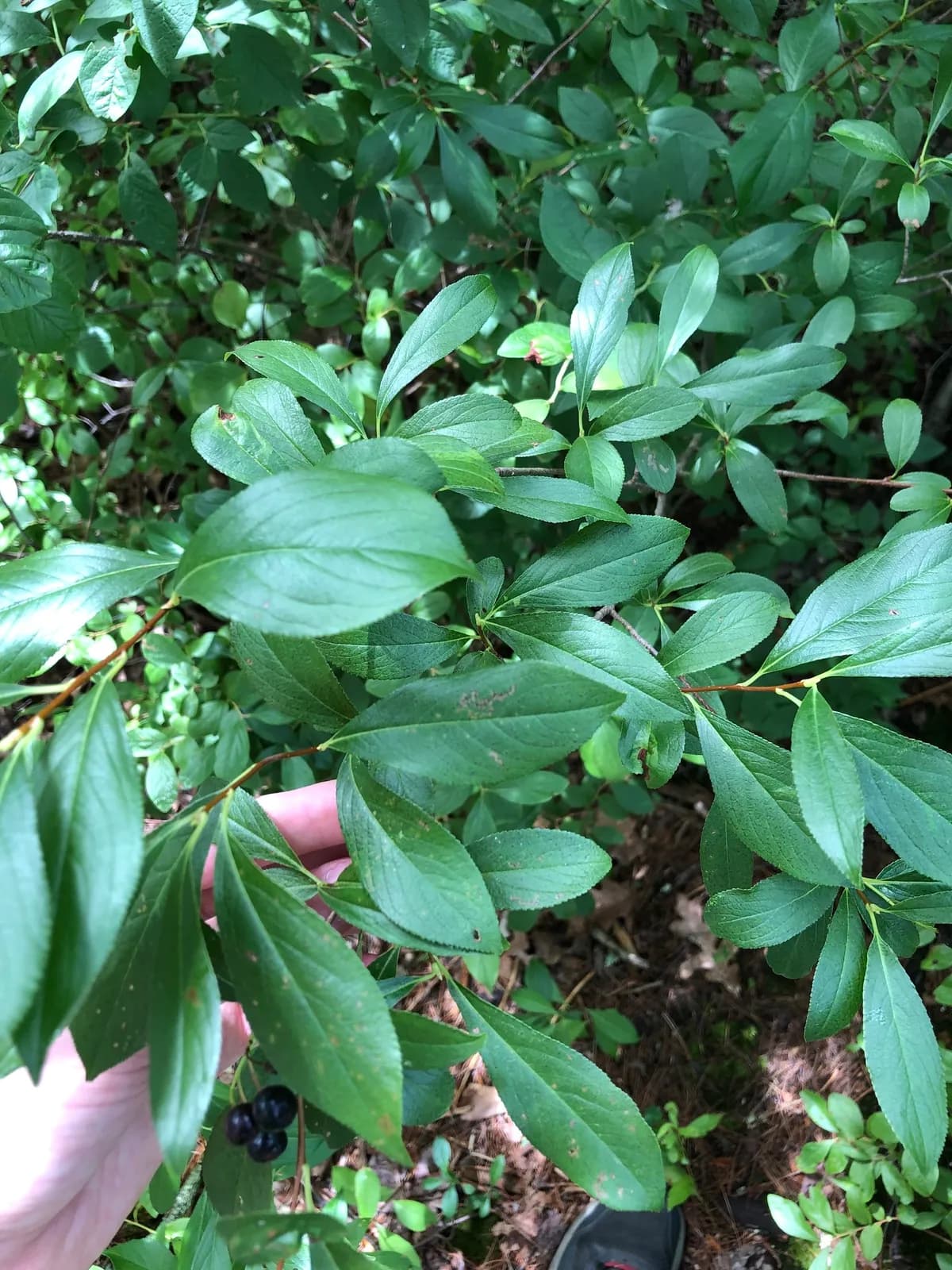
Black chokeberry is a deciduous shrub that produces white flower clusters in May and June, followed by dark purple black berries. It adapts to wet lowlands as well as drier upland sites and thrives in part sun.
Toxicity unknown
Black Chokeberry (Aronia melanocarpa) is not listed by the ASPCA Animal Poison Control Center (opens in new tab) or the other sources we check, so we have no verdict for it either way. Absence from those lists is not a clearance. If your pet shows symptoms after eating any plant, call the ASPCA at (888) 426-4435.
Black Chokeberry is listed as toxic to grazing livestock such as cattle, sheep, and goats at a slight level by the USDA PLANTS Database (opens in new tab). This is a livestock indicator and is separate from pet toxicity.
Light
part sun
Water
medium
Size
24"–60" H × 24"–60" W
Bloom
May, Jun
Native to
AL, AR, CT, DE and 25 more states
Pollinators
bees, butterflies, beetles
Before you buy
Your city may pay you to plant this
Cities and water utilities offer rebates for replacing lawn with native and water-wise plants. We track 459 programs across 44 states, each with a link to the provider and the date we last checked it.
Find rebates in your areaPicture natives in your own yard
Upload a photo of your yard and Patch Vision shows a rendering of it planted with natives for your region, like Black Chokeberry.


Browse plants for this ecoregion
Black chokeberry is a compact native shrub that produces clusters of white flowers in late spring followed by dark purple-black berries in fall. It offers excellent four-season interest with glossy green summer foliage that turns brilliant orange-red in autumn. This low-maintenance shrub adapts well to various soil conditions and tolerates both wet and dry sites.
Growing Black Chokeberry
Grow Black Chokeberry in part sun and medium water. Mature plants reach 24 to 60 inches tall and spread 24 to 60 inches wide. Expect low maintenance to keep it looking intentional in a front yard.
How to care for Black Chokeberry, by region
How to care for Black Chokeberry where it is actually grown: year-round basics plus what to do each season, region by region, with the sources for each.
Care guidance last updated: October 2026
Eastern Corn Belt Plains (includes Columbus, OH)
Year-round
Black chokeberry is a tough shrub rated for USDA zones 3 to 8, so it fits Columbus.
- Best fruit comes in full sun, though it takes part shade too.
- It handles clay, loam, sand, and wet boggy soils, and is also drought tolerant.
- It spreads by suckers, so give it room.
- It tends to get leggy with age.
Fall
Fall is when the fruit feeds the birds.
- Leave berries on for birds, or pick them early if you want them.
- Fall is a good time to plant new shrubs.
Winter
Winter is a quiet time for this hardy shrub.
- No protection is needed in its zone 3 to 8 range.
- If it has gone leggy, late winter is a good time to thin older stems.
If it faces the street, thin a few of the oldest stems each year to keep a tidy shape.
Spring
Spring brings white flowers in May.
- Pull or cut suckers you do not want as the soil softens.
- Mulch to hold moisture, since it likes moist soil.
Summer
Summer needs little more than an occasional drink.
- Water in long dry spells, even though it is drought tolerant.
- Fruit ripens for birds, so skip netting if you want wildlife to enjoy it.
Sources: NC State Extension Plant Toolbox: Aronia melanocarpa, Lady Bird Johnson Wildflower Center: Aronia melanocarpa
Ridge and Valley (includes Harrisburg, PA)
Year-round
Black chokeberry is a tough shrub that grows in sun or part shade and handles most soils.
- Fruits best in full sun but grows with 2 to 6 hours of sun.
- Handles dry spells and wet feet, so it is forgiving.
- Hardy in zones 3 to 8, so winters in Harrisburg are fine.
- It suckers freely, so pull or mow unwanted shoots.
A tidy, trimmed shrub looks neat from the street. Cut suckers back to keep the edge clean.
Fall
Fall brings red to burgundy leaves before they drop.
- Enjoy the color, no feeding needed.
- Rake leaves into the bed as free mulch.
- Cut out any leggy or crowded stems if needed.
Winter
Winter is quiet and the bare stems need no protection.
- Plants are fully hardy for Harrisburg winters.
- Skip fertilizer until growth restarts.
- Plan renewal pruning for a leggy older shrub.
Spring
Spring is bloom time and a good moment to tidy up.
- Small white to pink flowers open in May and June.
- Remove suckers where you do not want it to spread.
- Mulch to hold moisture around new growth.
Summer
Summer fruit ripens in August and September and the shrub needs little help.
- Water deeply during long dry spells, though it tolerates dryness.
- Fruit is very astringent so birds and jam makers get it.
- Few bugs or diseases bother it.
Sources: NC State Extension Plant Toolbox: Aronia melanocarpa
Southeastern Plains (includes Tallahassee, FL)
Year-round
Black chokeberry is a tough, cold-hardy shrub built for a much colder range than Tallahassee, but it can do fine here as long as it gets steady moisture and a spot with decent airflow.
- Give it full sun to part shade and moist, acidic, well-drained soil. It tolerates a wide pH range and both wet and drier spots, so most Tallahassee yards can work with it.
- Expect a rounded shrub roughly 3 to 8 feet tall and 2 to 6 feet wide, good for a hedge row or a background border planting.
- This shrub's documented range runs from Newfoundland south to the Georgia mountains, Tennessee, and Arkansas. It is not native to north Florida, so treat it as an adopted planting rather than a straight native swap.
- Because Tallahassee summers run hotter and more humid than where this plant is naturally found, watch the leaves for spotting or rust, especially after a wet stretch.
- Black chokeberry is not on the ASPCA's toxic plant list for dogs or cats. That means it is not flagged there, not that every part has been formally tested, so it is still worth keeping pets from chewing on fallen fruit or pits.
Its clean rounded form and white spring flower clusters read as a tidy hedge or foundation shrub, which tends to work well on HOA-conscious front yards that want low visual clutter.
Fall
Fall brings the berry harvest, good foliage color, and the start of the dormant pruning window once the shrub finishes for the year.
- Berries ripen from late summer into fall, turning deep purplish black. Birds will take them quickly if you do not get to them first.
- Leaves shift to red or purplish tones before dropping, giving a low-key seasonal show without the plant needing much from you.
- Rake up and remove fallen leaves promptly, especially if the shrub had any leaf spot over summer, to reduce fungal spores that would otherwise sit in the bed over winter.
- Light shaping and removing dead wood is fine anytime, but hold off on any hard structural cutback until the shrub is fully dormant later in the season.
Winter
Winter is the easy season for this shrub. It is bred for far colder places than Tallahassee, so this is mostly a dormant-season pruning and cleanup window rather than a protection job.
- Black chokeberry is rated hardy down through USDA zone 3, so Tallahassee's occasional freezes, like the hard cold snap in December 2022, are well within what it tolerates without special protection.
- This is the best window for structural pruning and cutting out root suckers, since the shrub is dormant and its shape is easy to see.
- Save frost cloth and other cold-protection steps for tender tropicals elsewhere in the yard. This shrub's top growth does not need covering.
- Keep mulch in place over winter to protect roots and hold soil moisture, especially if the season runs dry.
Spring
Spring is bloom season and the best planting and light-pruning window for black chokeberry in Tallahassee.
- Plant new shrubs in early spring once the last frost risk has passed, usually by early to mid March in the Tallahassee area, so roots have time to settle before summer heat sets in.
- White flower clusters open in spring, and this year's berries form from that bloom, so skip hard pruning right before or during flowering if you want fruit.
- Water new plantings deeply and regularly through spring. North Florida's sandy soils drain fast, and spring can bring dry stretches between rain events.
- If last year's plant showed leaf spotting, clear away old fallen leaves now. That cuts down on fungal spores sitting near the new growth.
Summer
Summer heat and humidity are the real stress test for this shrub in Tallahassee, so consistent water and good airflow matter more here than anywhere else in its care.
- Tallahassee summers regularly reach the low 90s with high humidity, well beyond the cooler range this shrub is naturally suited to, so do not let the root zone dry out between waterings.
- Keep 2 to 3 inches of mulch around the base to hold soil moisture and buffer root temperatures during the hottest weeks.
- Frequent afternoon thunderstorms plus high humidity raise the risk of leaf spot and rust. Water at the soil line instead of overhead, and pull off spotted leaves as you notice them.
- Avoid major pruning in summer if you want the berry crop. Fruit is still ripening through late summer into fall, so save any hard cutback for after harvest.
Sources: Lady Bird Johnson Wildflower Center: Aronia melanocarpa, University of Minnesota Extension: Black chokeberry, University of Maryland Extension: Black chokeberry, ASPCA Toxic and Non-Toxic Plant List, Dogs, ASPCA Toxic and Non-Toxic Plant List, Cats, UF/IFAS Extension Leon County: Frost in the Panhandle
In an HOA neighborhood
Black Chokeberry is an HOA-friendly choice. Maintenance level: low. Tidiness: 4 out of 5.
Works well in: front yard, foundation, street edge, mid zone.
Wildlife value
The spring flowers attract bees, butterflies, and beetles, while the nutritious berries feed over 40 bird species including robins, catbirds, and woodpeckers. The dense branching also provides nesting sites for small birds.
Common questions
- When does black chokeberry bloom?
- Aronia melanocarpa produces its white flower clusters in May and June, with fruit ripening later in summer.
- What pollinators visit black chokeberry flowers?
- Bees, butterflies, and beetles regularly visit the spring flowers of Aronia melanocarpa for pollen and nectar.
- How much sun and water does black chokeberry need?
- This shrub grows best in part sun with medium moisture, though it tolerates both wetter soils near ponds and streams and drier upland ground once established.
- What does black chokeberry look like when mature?
- It grows as a multi stemmed shrub with clusters of white spring flowers, glossy green summer leaves, and dark berries that persist into fall.
- Is black chokeberry a good choice for a rain garden or wet area?
- Yes, its tolerance for medium to high moisture and periodic wet soil makes it a common choice for rain gardens, pond margins, and low areas that stay damp part of the year.
- Is Black Chokeberry toxic to livestock?
- Black Chokeberry is listed as toxic to grazing livestock such as cattle, sheep, and goats (slight severity) by the USDA PLANTS Database. This is separate from pet (dog and cat) toxicity.
- Is Black Chokeberry HOA-friendly?
- Black Chokeberry is generally an HOA-friendly choice in the right placement, with low maintenance.
These answers were drafted with an AI model from this plant's data. Verify care details with a local expert.
Native range data from vouchered herbarium specimen records and regional native plant society lists. Pollinator and host plant associations compiled from GBIF, iNaturalist, and published ecological literature.
If something looks wrong
Common plant problems, and what to check first
These come up on almost any plant. Each guide lists the likely causes in the order they are worth ruling out, with one thing to check before you act on any of them, and links to the source it came from.
- It is dying right after planting
- Leaves turning yellow
- Wilting even though I watered it
- Brown crispy leaf tips
- Bugs on the plant
Ready to grow Black Chokeberry? Add it to your garden in Pollinator Patch to track it and get season-by-season care guidance.