Bottlebrush Grass
Elymus hystrix
Last reviewed: September 2026
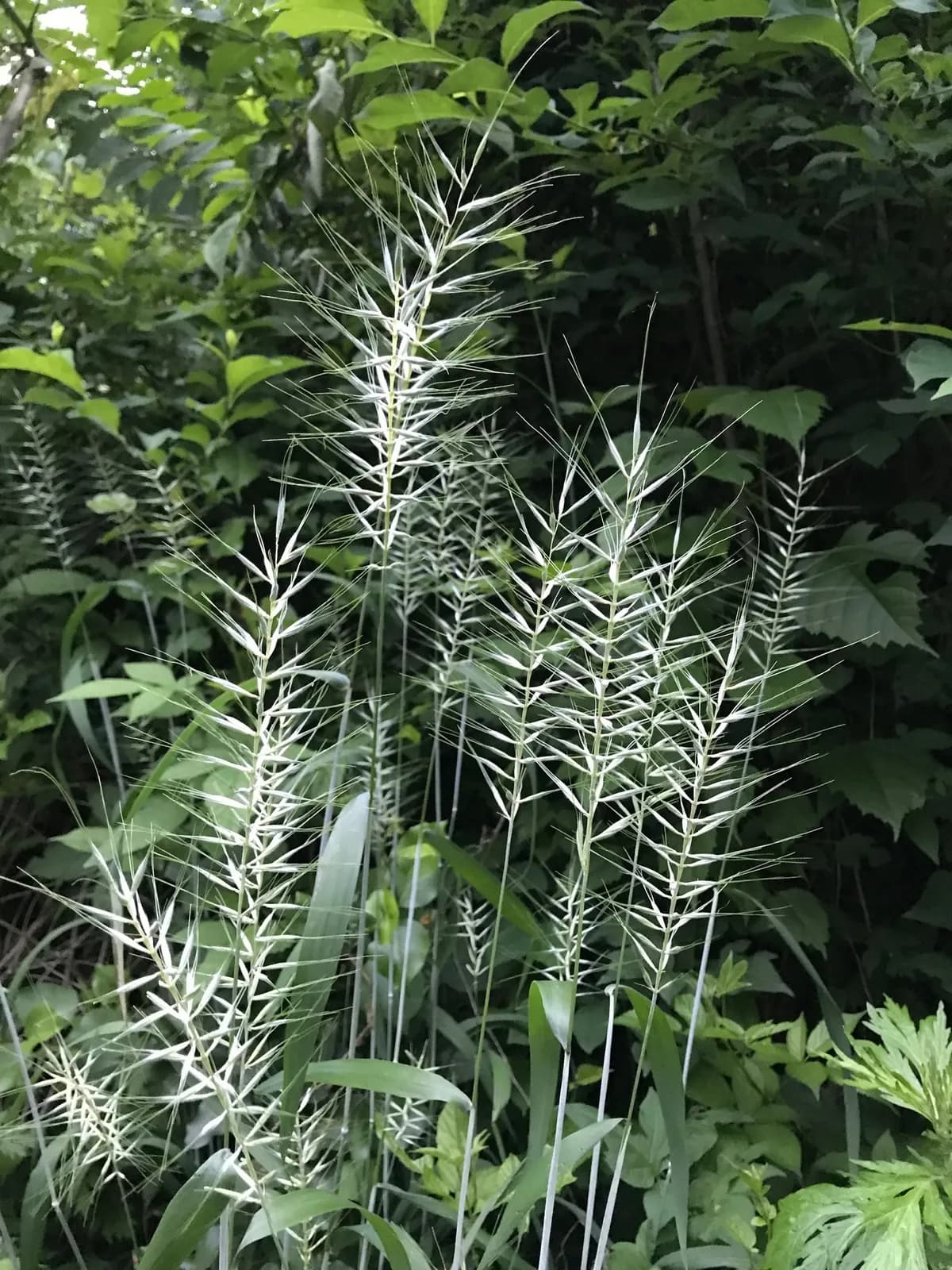
Elymus hystrix, or bottlebrush grass, is a woodland grass that blooms May through July with distinctive bristly seed heads. It grows well in part shade with medium moisture across much of the eastern and midwestern United States.
Toxicity unknown
Bottlebrush Grass (Elymus hystrix) is not listed by the ASPCA Animal Poison Control Center (opens in new tab) or the other sources we check, so we have no verdict for it either way. Absence from those lists is not a clearance. If your pet shows symptoms after eating any plant, call the ASPCA at (888) 426-4435.
Light
part sun
Water
medium
Size
24"–48" H × 12"–24" W
Bloom
May, Jun, Jul
Native to
AL, CT, IA, IL and 23 more states
Deer
Resistant (per Prairie Moon Nursery)
Before you buy
Your city may pay you to plant this
Cities and water utilities offer rebates for replacing lawn with native and water-wise plants. We track 459 programs across 44 states, each with a link to the provider and the date we last checked it.
Find rebates in your areaPicture natives in your own yard
Upload a photo of your yard and Patch Vision shows a rendering of it planted with natives for your region, like Bottlebrush Grass.


Browse plants for this ecoregion
Elymus hystrix is a native perennial grass that forms upright clumps with distinctive bottle-brush seed heads. It tolerates partial shade better than most grasses and provides good texture in naturalized areas. The grass goes dormant in winter, leaving attractive tan stems that can be cut back in spring.
Growing Bottlebrush Grass
Grow Bottlebrush Grass in part sun and medium water. Mature plants reach 24 to 48 inches tall and spread 12 to 24 inches wide. Expect low maintenance to keep it looking intentional in a front yard.
How to care for Bottlebrush Grass, by region
How to care for Bottlebrush Grass where it is actually grown: year-round basics plus what to do each season, region by region, with the sources for each.
Care guidance last updated: October 2026
Northern Piedmont (includes Lancaster, PA)
Year-round
Bottlebrush grass is a shade-friendly clumping grass with bristly seed spikes that look like little bottle brushes. It fits dry to moist spots under trees in Lancaster.
- It does best in part shade to light shade, with 2 to 6 hours of sun.
- It grows about 2.5 to 3 feet tall in an upright clump.
- It tolerates clay, loam, and sand with decent drainage.
- It self-seeds a little but is not described as aggressive.
The bristly seedheads look wild next to a tidy lawn, so cutting back in late winter keeps it neat.
Fall
Seedheads turn tan and last into October. Birds and small animals eat the seeds.
- Leave the seedheads up for birds.
- Pull seedlings that pop up in places you do not want them.
- Rake leaves off the clump.
- Dividing is possible in early fall.
Winter
The grass is dormant but the seed stalks still look nice. Cut it back at winter's end.
- Leave stems standing until late winter.
- No watering is needed.
- Cut the clump back before new growth begins.
- The bristly seedheads can poke bare skin when you handle them, so wear gloves.
Spring
New green blades appear in spring. This is the moment to cut back old stems before growth starts.
- Cut old foliage and seedheads to the ground in late winter or early spring.
- Water new plants regularly in their first season.
- Watch for aphids on new growth.
- Add a little mulch to keep weeds down.
Summer
Green bristly flower spikes show up around mid June and slowly turn brown. The plant handles dry spells once settled.
- Water new plants weekly if rain is scarce.
- Established clumps are drought tolerant.
- Look for leaf spots in humid weather and remove bad leaves.
- Give it dappled shade in the hottest afternoon hours.
Ouachita Mountains (includes Hot Springs, AR)
Year-round
Bottlebrush grass is a cool-season woodland grass, most active in spring and fall rather than in the peak heat of summer. In the Hot Springs area, give it the dappled shade of an oak, hickory, or pine canopy and loamy soil with some leaf litter worked in, and let the soil swing between dry and lightly moist rather than staying soggy.
- Plant in partial sun to light or moderate shade under a tree canopy rather than in full open sun.
- Loamy soil with decaying organic matter suits it best, though it also tolerates clay, rocky, or sandy sites with decent drainage.
- It is hardy from USDA zone 5a through 9b, a range that comfortably covers the Hot Springs area.
- Expect slower growth and more visible stress during the hottest, driest stretches of summer since it is a cool-season species.
- It can self-seed readily where it is happy, so watch for volunteer seedlings if you want to keep the patch contained.
Fall
Fall is a second active growth window for bottlebrush grass, and by now the seed spikes have matured and started dropping seed. Cooler nights bring the plant back to more visible growth after its summer slowdown.
- Let mature seed heads drop naturally if you want the patch to fill in over time.
- Cooler fall weather makes this a good time to divide crowded clumps, since transplant stress is lower than in summer.
- Some leaves may show minor leaf spot late in the season. NC State Extension notes it as a minor issue to monitor, not one that typically needs treatment.
Winter
Bottlebrush grass goes fully dormant over winter, leaving tan, upright seed stalks that many gardeners leave standing for winter interest and bird forage. The one real task is cutting the old foliage and seed heads back before new growth starts in late winter.
- Cut old stalks and foliage back in late winter, before new blades emerge, following NC State Extension's care guidance.
- Leaving seed heads up through most of winter gives seed-eating birds something to forage on.
- A clean late-winter cutback resets the clump for spring instead of letting old growth flop over the bed.
A tidy late-winter cutback reads as intentional care, not neglect. A grass patch left uncut into late winter can otherwise look overgrown or forgotten from the street.
Spring
Spring is when bottlebrush grass does most of its growing, since it is a cool-season species. New blades push up and the plant builds toward its comb-like flower spikes, which can begin opening as early as June.
- Let spring rain handle most of the watering. Step in only if a dry stretch runs longer than a week or two.
- This is the best window to divide or transplant a clump, while the plant is actively rooting.
- Watch for the bristly, one-sided flower spikes starting to form as spring turns to early summer.
Summer
Hot Springs summers push this cool-season grass into a slower, harder mode. Afternoon shade and consistent moisture during dry spells matter here, since the plant's own growth and photosynthesis naturally taper off once heat builds up.
- Prioritize afternoon shade if the planting site gets strong midday sun, since heavy heat is one of its main stress points.
- Water during extended dry spells. The species tolerates short dry periods but struggles under severe or prolonged drought.
- Do not expect much new leaf growth in the hottest weeks. That slowdown is normal for a cool-season grass, not a sign of a problem.
- Seed spikes keep maturing through summer, fading from green toward tan.
Sources: Elymus hystrix, Lady Bird Johnson Wildflower Center Native Plant Database, Elymus hystrix, NC State Extension Plant Toolbox, Eastern Bottlebrush Grass, bplant.org (community tip)
In an HOA neighborhood
Bottlebrush Grass takes more care to keep looking intentional in a front yard. Maintenance level: low. Consider it for backyard or mid-zone beds rather than the street edge.
Works well in: backyard only.
- Seed heads can appear wild and unkempt
- Dormant winter appearance looks messy
- May self-seed creating informal patches
Wildlife value
This grass provides nesting material and seeds for birds, particularly sparrows and finches. The foliage offers shelter for small wildlife and beneficial insects.
Common questions
- When does bottlebrush grass bloom?
- Elymus hystrix typically flowers from May through July, producing slender seed heads with long bristles that give the plant its common name.
- How much light does bottlebrush grass need?
- This grass grows best in part sun to part shade and can also tolerate deeper shade, making it a good fit for woodland edges and understory plantings.
- How much water does bottlebrush grass need?
- Elymus hystrix does well with medium moisture but can handle drier conditions once it is established, especially in shaded sites where soil stays cooler.
- Is bottlebrush grass a good choice for a shade garden?
- Yes. Its tolerance for part shade to shade and its clumping habit make it a practical choice for woodland gardens and naturalized shaded borders.
- Does bottlebrush grass stay green year round?
- No. It is a deciduous perennial grass that dies back after the growing season and regrows from its base the following spring.
- Is Bottlebrush Grass HOA-friendly?
- Bottlebrush Grass takes more care to look intentional in a front yard. Consider it for backyard or mid-zone beds rather than the street edge.
These answers were drafted with an AI model from this plant's data. Verify care details with a local expert.
Native range data from vouchered herbarium specimen records and regional native plant society lists. Pollinator and host plant associations compiled from GBIF, iNaturalist, and published ecological literature.
If something looks wrong
Common plant problems, and what to check first
These come up on almost any plant. Each guide lists the likely causes in the order they are worth ruling out, with one thing to check before you act on any of them, and links to the source it came from.
- It is dying right after planting
- Leaves turning yellow
- Wilting even though I watered it
- Brown crispy leaf tips
- Bugs on the plant
Ready to grow Bottlebrush Grass? Add it to your garden in Pollinator Patch to track it and get season-by-season care guidance.