Climbing hydrangea
Hydrangea barbara
Last reviewed: October 2026
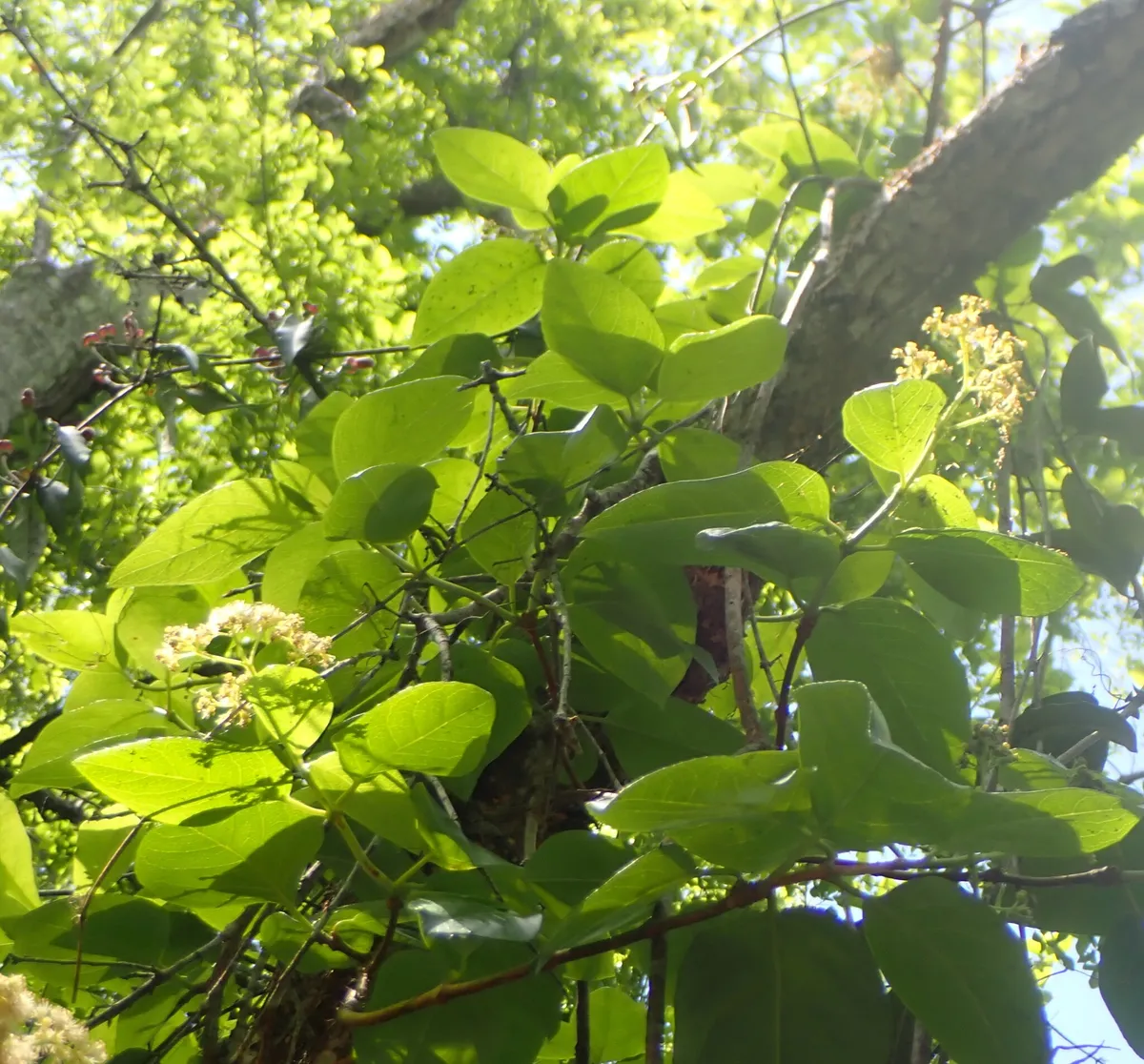
Decumaria barbara is a climbing vine with clusters of small white flowers from May through July, often found scrambling over trees and rocks in moist woodlands and swampy bottomlands.
Toxicity unknown
Climbing hydrangea (Hydrangea barbara) is not listed by the ASPCA Animal Poison Control Center (opens in new tab) or the other sources we check, so we have no verdict for it either way. Absence from those lists is not a clearance. If your pet shows symptoms after eating any plant, call the ASPCA at (888) 426-4435.
Light
part shade
Water
medium
Size
144"–432" H × 12"–36" W
Bloom
May, Jun, Jul
Native to
AL, AR, DE, FL and 8 more states
Pollinators
bees, butterflies
Before you buy
Your city may pay you to plant this
Cities and water utilities offer rebates for replacing lawn with native and water-wise plants. We track 459 programs across 44 states, each with a link to the provider and the date we last checked it.
Find rebates in your areaPicture natives in your own yard
Upload a photo of your yard and Patch Vision shows a rendering of it planted with natives for your region, like Climbing hydrangea.


Browse plants for this ecoregion
A mounding shrub with broad, toothed leaves and rounded clusters of small white flowers ringed by larger sterile florets in early summer. It grows along shaded streambanks and woodland edges.
Growing Climbing hydrangea
Grow Climbing hydrangea in part shade and medium water. Mature plants reach 144 to 432 inches tall and spread 12 to 36 inches wide.
How to care for Climbing hydrangea, by region
How to care for Climbing hydrangea where it is actually grown: year-round basics plus what to do each season, region by region, with the sources for each.
Care guidance last updated: October 2026
Southern Coastal Plain (includes Orlando, FL)
Year-round
Climbing hydrangea (Decumaria barbara) is a woody vine that climbs by tiny aerial rootlets, the same way poison ivy or English ivy grips a surface, and it will only bloom once it is actually climbing something.
- Give it partial sun to partial shade, with some afternoon shade during Orlando's hottest stretches. Full shade keeps the vine alive but cuts down on flowering.
- Plant it in rich, moist, acidic soil that drains but never fully dries out. This vine has low drought tolerance, so skip spots with sandy soil that bakes hard.
- It needs a sturdy support from day one, a mature tree trunk, a fence, or a masonry wall built to take weight. Avoid wood siding, since the rootlets trap moisture against it, and think twice before letting it climb painted stucco, since the rootlets can mark the surface.
- Left without support it spreads as a low groundcover but stays bare of flowers. Given something to climb, it can reach 12 to 36 feet tall and only 1 to 3 feet wide, and it gets noticeably heavier as it matures, so check that whatever it is climbing can carry the weight for years, not just this season.
- Flowers are small, fragrant, and white in flat clusters, typically opening in late spring and continuing into summer, and only on new growth made while the vine is climbing.
- This is Decumaria barbara, native to parts of the southeastern United States including Florida. It is a different plant from the common nursery vine also sold as climbing hydrangea (Hydrangea anomala subsp. petiolaris), which is an Asian species and not native here.
Fall
Fall in Orlando stays mild, and this is when the vine starts easing off for the year. Blooming tapers, growth slows, and the plant drifts toward winter dormancy, though Central Florida's fall rarely brings the sharp cold that triggers a fast leaf drop farther north.
- Stop fertilizing. There is no need to feed the vine this late in the growing season.
- Keep watering through fall dry spells. Florida's rainy season typically tapers off by October, and this vine still does not like to go bone dry.
- Skip major pruning now. Save real structural cuts for late winter, once the vine is dormant and next year's new growth has not started yet.
- As a deciduous vine, expect some leaf thinning or drop heading into winter, though the timing in Central Florida's mild zone is looser and less dramatic than it is in the plant's more northern range.
A light fall cleanup that clears loose or drooping stems away from walkways and fence lines is a simple HOA-friendly touch heading into the quieter winter months.
Winter
Winter is dormant season for this vine, and it is also the best time for any real pruning, since next year's flowers only grow on new climbing wood made after this point. Orlando sits in USDA hardiness zone 9b to 10a, well within this vine's comfort range, so it does not need special cold protection most winters.
- Prune in late winter before new growth starts, if the vine needs shaping or needs to be kept off a roofline or gutter. This is the standard timing for a vine that blooms on new wood.
- With foliage thinned or down, winter is a good time to inspect the support structure, since the vine's weight and its attachment points are easiest to see and check for damage to fences, wood siding, or masonry.
- Cut back watering compared to summer, but do not let the root zone go completely dry during a stretch without rain.
- If a rare hard freeze is forecast, a layer of mulch over the root zone protects the roots even if some top growth gets nipped.
A late-winter prune before spring growth starts gives the vine a clean, HOA-friendly silhouette against its support through the bare season.
Spring
Spring is when this vine wakes up and pushes hard toward its support in Orlando. New growth through March and April is what will eventually flower, so spring is the season to get it attached and climbing.
- Tie or clip new shoots to their support as they grow. The vine's own aerial rootlets take over once a shoot has something to grip, but young growth often needs a hand finding the structure at first.
- Water regularly as temperatures climb, keeping the soil consistently moist. This vine does not handle drying out well, especially through its first year in the ground.
- Buds swell and the first fragrant white flower clusters typically open by late spring, continuing on into summer.
- A light feeding with a balanced fertilizer in early spring can support the new growth flush, but skip it on a plant still establishing its roots in its first year.
Training new growth onto its support as it emerges is an easy, HOA-friendly habit, since it keeps the vine looking deliberate instead of sprawling loose across a visible front-yard support.
Summer
Summer is peak bloom and peak heat for this vine in Orlando. The fragrant white clusters keep opening into summer, and this is also the season it is most likely to dry out or run into fungal trouble in the heat and humidity.
- Water deeply through hot stretches, aiming for soil that stays consistently moist rather than a quick daily sprinkle. Summer heat dries this vine's root zone fast, and it has low drought tolerance.
- Humidity itself is not the problem, this species is used to swampy, humid conditions, but keep an eye out for powdery mildew or leaf spot in crowded, poorly ventilated spots.
- Prune only lightly if at all right now. Flowers form on new climbing growth, so a heavy summer cutback removes wood that would have bloomed.
- Check that the support structure is still comfortably holding the vine's weight during its biggest growth spurt of the year.
Sources: Lady Bird Johnson Wildflower Center plant profile, Decumaria barbara, NC State Extension Gardener Plant Toolbox, Hydrangea barbara, Clemson HGIC vine selection guide for landscaping, USDA Plant Hardiness Zone Map
Wildlife value
The flower clusters attract native bees and butterflies, and the dense form offers cover for small birds.
Common questions
- How does Decumaria barbara grow and climb?
- Decumaria barbara is a woody vine that climbs by attaching aerial rootlets to bark, rock, or masonry, similar to climbing hydrangea relatives, and can cover trunks or fences over time.
- When does Decumaria barbara bloom?
- Flowering typically occurs from May into July, with rounded clusters of small, fragrant white blooms appearing on mature growth.
- What light and moisture conditions suit Decumaria barbara best?
- This vine does well in part sun to shady spots and prefers medium to consistently moist soil, reflecting its habit of growing along wooded stream banks and damp lowland forests.
- What insects are drawn to Decumaria barbara flowers?
- The summer blooms attract bees and beetles, which visit for pollen and nectar during the plant's flowering period.
These answers were drafted with an AI model from this plant's data. Verify care details with a local expert.
Native range data from the World Checklist of Vascular Plants (Kew). Pollinator and host plant associations compiled from GBIF, iNaturalist, and published ecological literature.
If something looks wrong
Common plant problems, and what to check first
These come up on almost any plant. Each guide lists the likely causes in the order they are worth ruling out, with one thing to check before you act on any of them, and links to the source it came from.
- It is dying right after planting
- Leaves turning yellow
- Wilting even though I watered it
- Brown crispy leaf tips
- Bugs on the plant
Ready to grow Climbing hydrangea? Add it to your garden in Pollinator Patch to track it and get season-by-season care guidance.