Corkystem Passionflower
Passiflora pallida
Last reviewed: September 2026
Passiflora suberosa is a fast growing vine well suited to full sun and low water conditions in Florida landscapes, blooming from March through November. Its small greenish flowers draw bees and butterflies, and the leaves host Gulf Fritillary caterpillars.
Toxicity unknown
Corkystem Passionflower (Passiflora pallida) is not listed by the ASPCA Animal Poison Control Center (opens in new tab) or the other sources we check, so we have no verdict for it either way. Absence from those lists is not a clearance. If your pet shows symptoms after eating any plant, call the ASPCA at (888) 426-4435.
Light
full sun
Water
medium
Size
60"–180" H × 36"–72" W
Bloom
May, Jun, Jul, Aug, Sep, Oct
Native to
FL, TX
Pollinators
bees
Before you buy
Your city may pay you to plant this
Cities and water utilities offer rebates for replacing lawn with native and water-wise plants. We track 452 programs across 44 states, each with a link to the provider and the date we last checked it.
Find rebates in your areaBrowse plants for this ecoregion
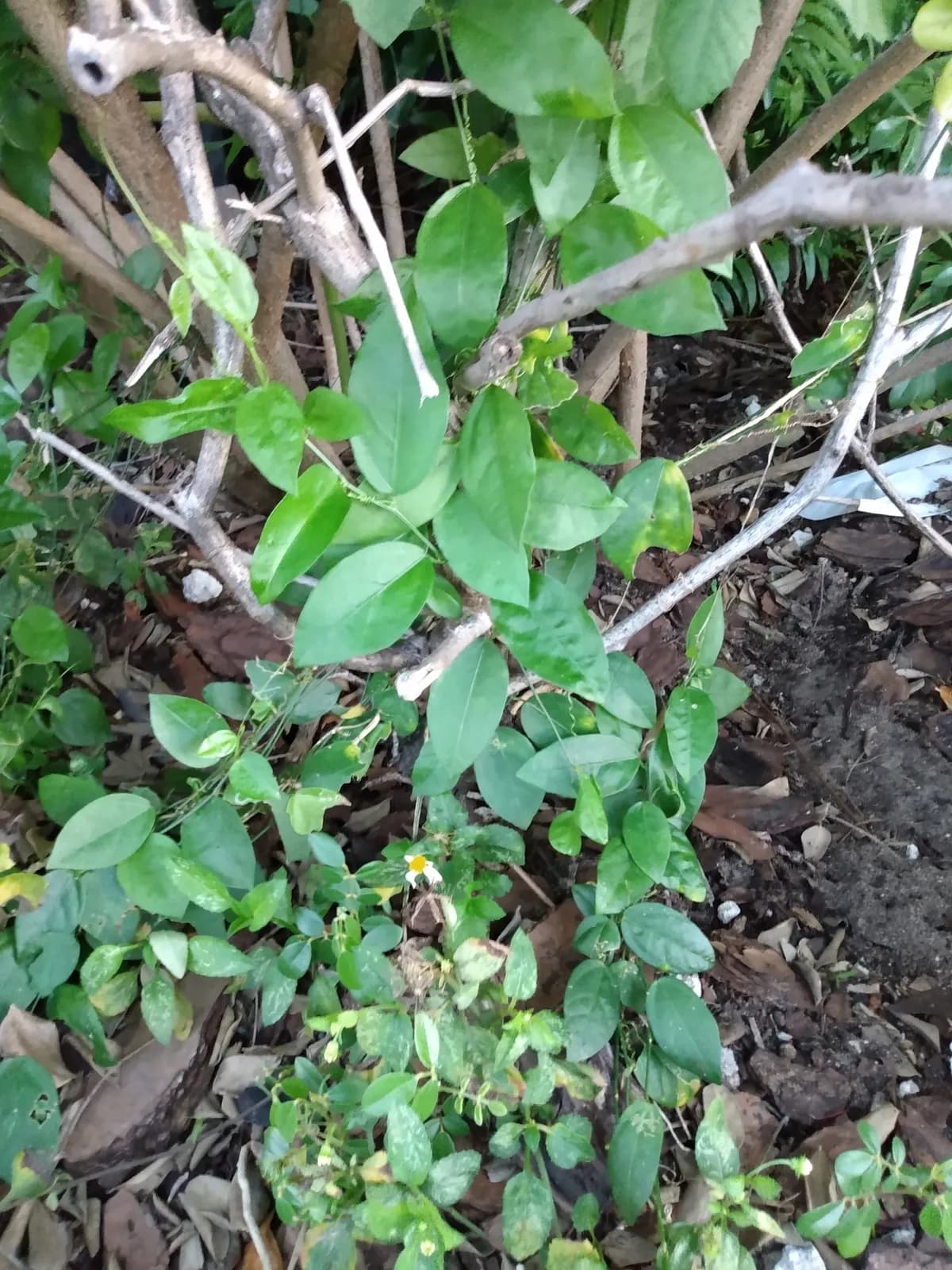
A vigorous, tendril-climbing vine with lobed leaves and small, intricate pale greenish-white flowers followed by round fruit. It scrambles rapidly over fences and shrubs and needs a sturdy support and regular trimming.
How to care for Corkystem Passionflower, by region
How to care for Corkystem Passionflower where it is actually grown: year-round basics plus what to do each season, region by region, with the sources for each.
Care guidance last updated: September 2026
Southern Coastal Plain (includes Orlando, FL)
Year-round
Corkystem passionflower is a small flowered native vine that does best on a trellis in Central Florida's sandy soil and doubles as a host plant for three butterfly species.
- This vine is native to Florida, found naturally in woodlands, scrub, and disturbed areas on sandy to rocky soil, so it is well matched to typical Central Florida yards.
- It climbs by tendrils and can spread ten feet or more, so give it a trellis, fence, or arbor from the start if you do not want it sprawling along the ground as a groundcover.
- It handles full sun to partial shade and adapts to both moist and dry, well drained soil once it is established.
- Its flowers are small and pale green to white, not the big showy purple blooms of its better known relative Passiflora incarnata, so do not expect a dramatic bloom display from this species.
- Leave some new growth unclipped through the growing season if you want zebra longwing, gulf fritillary, or Julia caterpillars, since this is one of their host plants in Florida.
Fall
Fall is when Orlando's dry season returns and growth slows, making it a natural time to cut this vine back and tidy it up before winter.
- Orlando's dry season typically sets in by mid October, so taper off any extra watering and let rainfall become irregular again.
- Growth slows as days shorten, so a shaping cutback now is an easy way to control size since the vine will not rebound as fast as it does in summer heat.
- Florida's mild fall temperatures mean zebra longwing, gulf fritillary, and Julia butterflies can still be active into November, so leave a portion of the vine uncut if you spot eggs or caterpillars.
A fall cutback keeps this fast growing vine tidy along fences, trellises, and mailbox posts heading into the cooler months, which reads as intentional rather than overgrown from the street.
Winter
Winter brings Orlando's only real frost and freeze risk, typically as brief overnight cold snaps rather than a sustained hard freeze.
- Central Florida's average frost window falls mainly in January, with an occasional cold night possible into early February.
- A cold snap can knock back leaves and soft stems, so mulch the base before a hard freeze and hold off on fertilizing so the plant is not pushing tender new growth into the cold.
- As a Florida native adapted to a mild winter climate, established plants typically resprout from the base once temperatures warm back up.
- Flowering can continue lightly through warm winter spells since this species blooms nearly year round across its native range.
An unusually cold snap can leave bare, freeze damaged stems on the trellis for a few weeks in winter, so a light cleanup of dead growth keeps the yard looking tended rather than neglected until spring regrowth starts.
Spring
Spring in Orlando is the tail end of dry season with frost risk essentially over, so the focus is watering new growth and getting the trellis ready before summer's growth spurt.
- By spring the coldest nights are behind you. Central Florida's average frost window falls in January, so new growth from here on is unlikely to be nipped by cold.
- Spring is still dry season in Orlando, with the rains not returning until late May, so water new or recently planted vines regularly until they are established.
- This is a good time to put up or check the trellis, fence, or arbor before the vine's fastest growth kicks in with the return of heat and humidity.
- Watch new tip growth for the first caterpillars of the year. Zebra longwing, gulf fritillary, and Julia butterflies start laying eggs on host plants like this one as temperatures warm.
Summer
Summer is Orlando's wet season and this vine's fastest growing stretch, so the main jobs are keeping it off structures and welcoming the caterpillars it draws in.
- Orlando's rainy season runs roughly late May through mid October and supplies most of the year's rainfall, so established vines rarely need extra watering beyond regular afternoon thunderstorms.
- Heat and humidity push this vine into its fastest growth of the year. UF/IFAS notes that passionflower vines in general need heavy pruning to stay in check, and that holds here too, so check trellis ties every few weeks and trim runners reaching toward fences, other plants, or the house.
- Summer is peak caterpillar season for zebra longwing, gulf fritillary, and Julia butterflies, so some chewed leaves are normal and are a sign the plant is doing its job as a host plant.
- Thin out crowded, dense growth occasionally so air can move through the foliage, since Florida's humid summers can bring on leaf spot in tightly packed vines.
Sources: Lady Bird Johnson Wildflower Center species page for Passiflora pallida, Florida Museum of Natural History, corky-stemmed passionflower profile, UF/IFAS EDIS, Watering Your Florida Lawn, UF/IFAS Gardening Solutions, Passion Flower (genus-level Passiflora care, applied here), Almanac.com frost dates for Orlando, FL, based on NOAA 1991-2020 climate normals (community tip), UF/IFAS Florida Gardening Calendar
Want these tasks as reminders timed to your yard? Pollinator Patch turns this guidance into a season-by-season care plan for the plants you actually grow.
Wildlife value
Host plant for Gulf fritillary, zebra longwing.
Passionflowers are the required larval host for Gulf fritillary and zebra longwing butterflies, both of which depend on this genus.
Common questions
- When does Passiflora suberosa bloom?
- In Florida, Passiflora suberosa typically flowers from March through November, producing small greenish white blooms throughout the warm season.
- What pollinators visit Passiflora suberosa?
- Bees and butterflies regularly visit the flowers, and the foliage also serves as a larval host plant for Gulf Fritillary butterflies.
- What growing conditions does Passiflora suberosa need?
- This vine performs best in full sun with low to moderate water once established, and it can tolerate a few hours of shade during the day.
These answers were drafted with an AI model from this plant's data. Verify care details with a local expert.
Native range data from the World Checklist of Vascular Plants (Kew). Pollinator and host plant associations compiled from GBIF, iNaturalist, and published ecological literature.
If something looks wrong
Common plant problems, and what to check first
These come up on almost any plant. Each guide lists the likely causes in the order they are worth ruling out, with one thing to check before you act on any of them, and links to the source it came from.
- It is dying right after planting
- Leaves turning yellow
- Wilting even though I watered it
- Brown crispy leaf tips
- Bugs on the plant
Ready to grow Corkystem Passionflower? Add it to your garden in Pollinator Patch to track it and get season-by-season care guidance.
Planning a bed around it? Start a free plan with this plant
Not sure where to start? Take the 2-minute yard quiz