Creeping Phlox
Phlox stolonifera
Last reviewed: October 2026
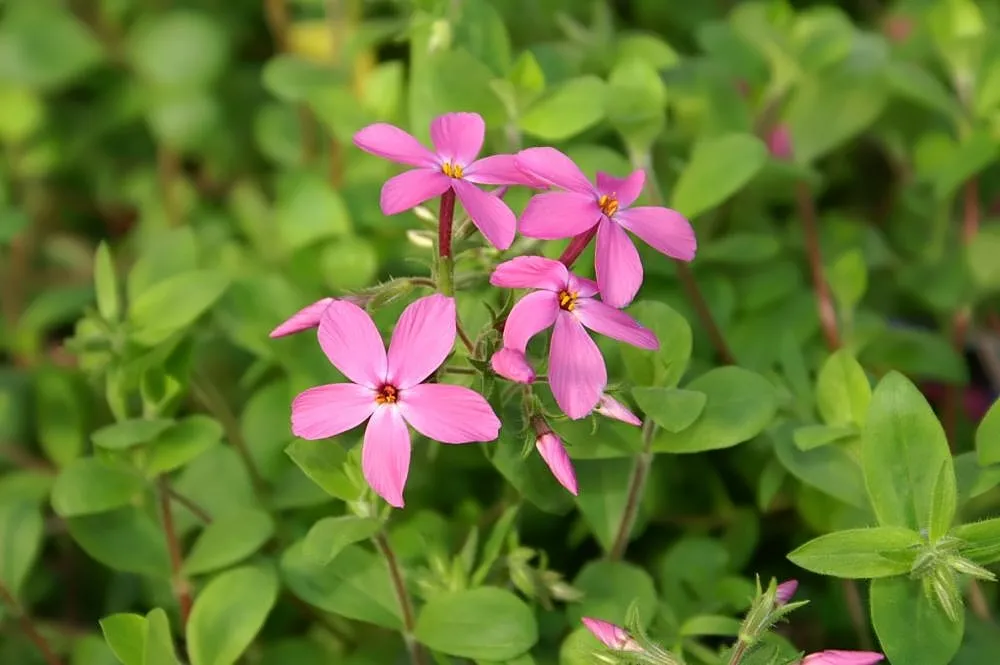
Phlox stolonifera, or creeping phlox, is a low spreading woodland groundcover that blooms pink to lavender flowers from April through June in part shade gardens across Appalachian and eastern forest regions.
Toxicity unknown
Creeping Phlox (Phlox stolonifera) is not listed by the ASPCA Animal Poison Control Center (opens in new tab) or the other sources we check, so we have no verdict for it either way. Absence from those lists is not a clearance. If your pet shows symptoms after eating any plant, call the ASPCA at (888) 426-4435.
Light
part shade
Water
medium
Size
4"–12" H × 12"–24" W
Bloom
Apr, May, Jun
Native to
GA, KY, MD, NC and 6 more states
Pollinators
bees, butterflies, hummingbirds, moths
Before you buy
Your city may pay you to plant this
Cities and water utilities offer rebates for replacing lawn with native and water-wise plants. We track 459 programs across 44 states, each with a link to the provider and the date we last checked it.
Find rebates in your areaPicture natives in your own yard
Upload a photo of your yard and Patch Vision shows a rendering of it planted with natives for your region, like Creeping Phlox.


Browse plants for this ecoregion
Creeping phlox forms a low, spreading carpet of evergreen foliage topped with clusters of fragrant spring flowers in shades of blue, purple, pink, or white. This native groundcover thrives in partial shade and provides excellent coverage for slopes or woodland garden areas.
Growing Creeping Phlox
Grow Creeping Phlox in part shade and medium water. Mature plants reach 4 to 12 inches tall and spread 12 to 24 inches wide. Expect low maintenance to keep it looking intentional in a front yard.
How to care for Creeping Phlox, by region
How to care for Creeping Phlox where it is actually grown: year-round basics plus what to do each season, region by region, with the sources for each.
Care guidance last updated: October 2026
Ridge and Valley (includes Harrisburg, PA)
Year-round
Creeping phlox is a low mat that likes moist, well-drained soil in part shade to sun.
- It grows 6 to 12 inches tall and spreads 9 to 18 inches wide.
- It prefers slightly acidic, well-drained soil.
- It is rated hardy in zones 4 to 8, so Harrisburg winters are fine.
- Maintenance is low.
Low, tidy mat that stays under a foot, so it works well along front walks and edges.
Fall
In fall, make sure air can move around the mat.
- Good airflow helps limit powdery mildew.
- Fall is a fine time to divide or take stem cuttings.
- Keep newly planted pieces watered until the ground freezes.
Winter
In winter, leave it alone.
- It is rated hardy to zone 4, well past Harrisburg winters.
- Skip pruning until spring growth begins.
- Keep heavy debris off the mat.
Spring
In spring, expect fragrant star-shaped blooms and keep new plantings watered.
- Flowers come in blue, purple, lavender, pink, or white.
- Keep new plants moist through their first year.
- Divide or layer stems now if you want to spread it.
Summer
In summer, water during hot dry spells, especially in year one.
- Once established it is very drought tolerant.
- Deadhead spent flowers to reduce powdery mildew.
- Watch for spider mites in hot dry spots and slugs in wet ones.
Sources: NC State Extension Plant Toolbox: Phlox stolonifera
Western Allegheny Plateau (includes Pittsburgh, PA)
Year-round
Baseline care for creeping phlox (Phlox stolonifera), a low native groundcover for shaded and partly shaded spots in the Pittsburgh area.
- This groundcover is native to Pennsylvania. It grows naturally on wooded slopes and stream banks through the Appalachians, so it works as a native, HOA-friendly planting for a shaded bed or foundation edge.
- Give it morning sun or dappled shade. It struggles and can scorch in strong afternoon sun, especially through Pittsburgh's humid summer stretch.
- Plant it in moist, well-drained soil that is rich in organic matter and slightly acidic, like a woodland floor. Once established it handles short dry spells, but it does best with steady moisture.
- Watch the foliage for powdery mildew, a white coating that shows up most in still, humid air. Give plants room to breathe and water at the soil line instead of overhead.
- It spreads by rooting stolons instead of staying in one clump, so leave it room to fill in as a groundcover rather than treating it like a single specimen plant.
Fall
Fall in Pittsburgh, cooling down toward the first frost around mid October, is a good time to divide the mat and settle it in before winter.
- Divide and transplant sections of the mat in early fall while the soil is still warm, so roots can establish before the ground freezes.
- Cut back any tattered or mildewed foliage and clear fallen tree leaves off the mat so the semi-evergreen foliage underneath keeps getting light into winter.
- A light layer of mulch once the ground starts to cool helps even out soil temperature swings, but keep it off the crown of the plant.
A fall cleanup and light cutback keeps this groundcover looking neat along a walkway or foundation bed through the off season.
Winter
Creeping phlox is semi-evergreen, so it holds onto some foliage through a Pittsburgh winter and needs very little from you until spring.
- The foliage is semi-evergreen and can persist through winter rather than dying back completely, so the bed is not left bare.
- Skip pruning and feeding while the plant is dormant. Wait until after next spring's bloom to cut it back.
- Freeze and thaw cycles are common in the Pittsburgh area and can heave shallow-rooted plants partway out of the soil. A thin layer of mulch after the ground cools helps steady soil temperature, but keep it off the crown.
Its semi-evergreen mat holds a low, tidy green patch through winter in a front bed, when many nearby perennials have died back to bare soil.
Spring
Spring is bloom season for creeping phlox in the Pittsburgh area, and the best window to plant, divide, or tidy it up.
- Flowers open in April and carry into May, in white, blue, or purple depending on the variety.
- Once the last hard frost has passed, typically late April into May in the Pittsburgh area, it is a good time to plant new starts or divide and move established mats.
- After the blooms fade, shear the mat back by about a third. This tidies the bed, helps head off powdery mildew before summer humidity builds, and pushes fresh foliage.
- Slugs can chew ragged holes in the leaves in wet spring soil. Keep mulch off the crown and water in the morning so foliage dries by evening.
Shearing back the spent flowers in late spring keeps a front bed or foundation planting looking tended.
Summer
Pittsburgh summers are hot and humid, which is exactly the weather that lets powdery mildew take hold on phlox foliage.
- Keep the soil evenly moist through hot, dry stretches, especially for plants in more sun. Established plantings in shade tolerate short dry spells better.
- Powdery mildew risk climbs with summer humidity and still air. Thin out crowded patches and water the soil rather than the leaves to keep foliage drier.
- The mat can look tired by midsummer after its spring flush. A light trim keeps it dense and tidy without harming the plant.
- Skip fertilizer during the heat of summer. This is a low-input groundcover, and heavy feeding mostly encourages more mildew-prone growth.
Sources: Lady Bird Johnson Wildflower Center, Phlox stolonifera plant profile, NC State Extension Gardener Plant Toolbox, Phlox stolonifera, Penn State Extension, Phlox in the Home Garden, Mt Cuba Center, Creeping Phlox plant profile, Mt Cuba Center, Phlox for Shade trial report
In an HOA neighborhood
Creeping Phlox is an HOA-friendly choice. Maintenance level: low. Tidiness: 4 out of 5.
Works well in: front yard, foundation, street edge, mid zone.
Wildlife value
The abundant spring blooms attract bees, butterflies, and hummingbirds, providing crucial early-season nectar. Night-flying moths also visit the fragrant flowers for nighttime pollination services.
Common questions
- How much sun does creeping phlox need?
- Phlox stolonifera grows best in part shade, such as under high deciduous canopy, and can handle a bit more dappled sun in cooler climates.
- When does creeping phlox bloom?
- In woodland and shade gardens, creeping phlox typically flowers from April into June, tapering off as spring temperatures rise.
- What pollinators visit creeping phlox flowers?
- Bees, butterflies, hummingbirds, and moths are drawn to the nectar of creeping phlox blooms.
- Does creeping phlox keep its leaves in winter?
- The foliage is semi-evergreen, holding onto some leaves through mild winters but dying back more in colder regions.
- How is creeping phlox best used in a garden?
- It works well as a spreading groundcover along shaded slopes, woodland edges, or under trees where its mat forming habit can fill in bare ground.
- Is Creeping Phlox HOA-friendly?
- Creeping Phlox is generally an HOA-friendly choice in the right placement, with low maintenance.
These answers were drafted with an AI model from this plant's data. Verify care details with a local expert.
Native range data from vouchered herbarium specimen records and regional native plant society lists. Pollinator and host plant associations compiled from GBIF, iNaturalist, and published ecological literature.
If something looks wrong
Common plant problems, and what to check first
These come up on almost any plant. Each guide lists the likely causes in the order they are worth ruling out, with one thing to check before you act on any of them, and links to the source it came from.
- It is dying right after planting
- Leaves turning yellow
- Wilting even though I watered it
- Brown crispy leaf tips
- Bugs on the plant
Ready to grow Creeping Phlox? Add it to your garden in Pollinator Patch to track it and get season-by-season care guidance.