Creeping Polemonium
Polemonium reptans
Last reviewed: October 2026
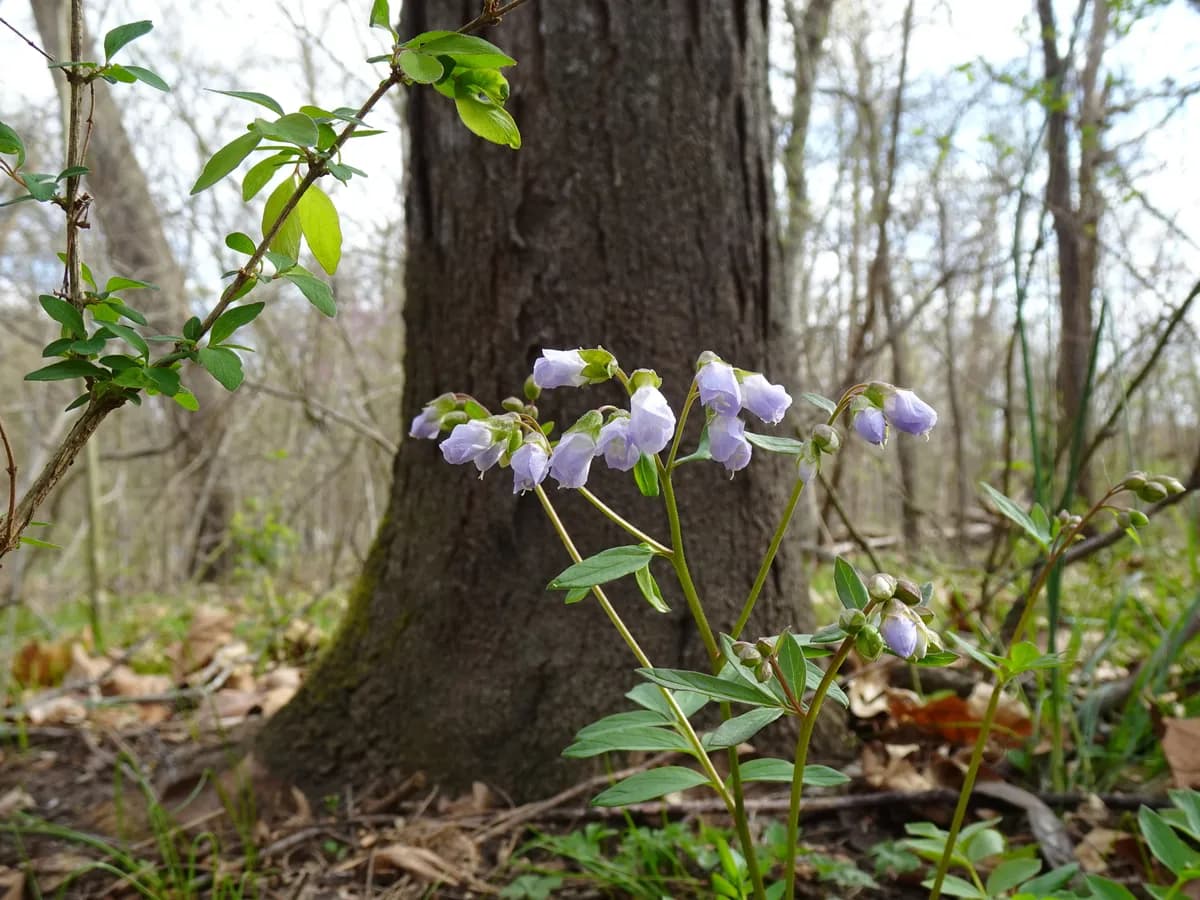
Polemonium reptans, or creeping Jacob's ladder, is a woodland forb with clusters of blue bell shaped flowers in April and May. It grows well in part shade with consistently moist, humus rich soil.
Toxicity unknown
Creeping Polemonium (Polemonium reptans) is not listed by the ASPCA Animal Poison Control Center (opens in new tab) or the other sources we check, so we have no verdict for it either way. Absence from those lists is not a clearance. If your pet shows symptoms after eating any plant, call the ASPCA at (888) 426-4435.
Light
part shade
Water
medium
Size
6"–12" H × 6"–12" W
Bloom
Apr, May
Native to
AL, AR, DE, GA and 22 more states
Pollinators
bees, butterflies
Deer
Resistant (per Prairie Moon Nursery)
Before you buy
Your city may pay you to plant this
Cities and water utilities offer rebates for replacing lawn with native and water-wise plants. We track 459 programs across 44 states, each with a link to the provider and the date we last checked it.
Find rebates in your areaPicture natives in your own yard
Upload a photo of your yard and Patch Vision shows a rendering of it planted with natives for your region, like Creeping Polemonium.


Browse plants for this ecoregion
Creeping polemonium is a low-growing native wildflower that forms neat clumps of delicate, compound leaves. It produces clusters of small blue or purple bell-shaped flowers in spring, creating a charming groundcover effect in shaded areas.
Growing Creeping Polemonium
Grow Creeping Polemonium in part shade and medium water. Mature plants reach 6 to 12 inches tall and spread 6 to 12 inches wide. Expect low maintenance to keep it looking intentional in a front yard.
How to care for Creeping Polemonium, by region
How to care for Creeping Polemonium where it is actually grown: year-round basics plus what to do each season, region by region, with the sources for each.
Care guidance last updated: October 2026
Northern Piedmont (includes Lancaster, PA)
Year-round
Creeping Polemonium likes cool, moist woodland shade, which is a good fit for a shaded Lancaster bed.
- Plant it in part to full shade with humus-rich, evenly moist soil.
- It stays around 1 to 1.5 feet tall and blooms blue in spring.
- Water during dry spells. It goes dormant in drought or in full sun.
- It can self-seed freely when it is happy, so pull extras you do not want.
Fall
Fall is a low-stress time to tidy up and divide.
- Cut off tired, yellowed leaves when they fade.
- Late summer or early fall is a good time to divide clumps.
- Leave fallen leaves around it as natural mulch.
- Water new divisions weekly until the ground freezes.
If a front bed looks messy in fall, trim browned leaves for a neater HOA-friendly look.
Winter
Winter is a rest period, so leave it alone.
- The plant dies back or rests, so there is no need to water when the ground is frozen.
- Keep a loose leaf or mulch layer over the roots.
- Mark where it grows so you do not dig it up in spring.
Spring
Spring is bloom time, so keep the soil moist and enjoy the flowers.
- Blue bell-shaped flowers show up in April and May.
- Water weekly if rain is light so the soil stays damp, not soggy.
- Divide crowded clumps in early spring if you want more plants.
- Native bees visit the flowers, so skip anything that would harm them.
Summer
Lancaster summers are hot and humid, so the goal is to keep it cool and damp.
- Give it shade, especially from hot afternoon sun.
- Water deeply when rain is under an inch a week.
- If leaves fade in dry heat, the plant is resting. Keep watering a little so roots survive.
- A layer of shredded leaves or mulch helps hold moisture.
Sources: Lady Bird Johnson Wildflower Center - Polemonium reptans, Tennessee Smart Yards - Polemonium reptans
Piedmont (includes Atlanta, GA)
Year-round
Creeping Jacob's ladder likes cool, moist, part shade. Atlanta's hot, humid summers are hard on it, so treat it as a trial plant.
- NC State says it does not tolerate the hot, humid conditions of the lower Piedmont and coastal plains, and Atlanta summers are similar, so expect it to struggle.
- Give it part shade (2 to 6 hours of direct sun) with good drainage and loamy soil.
- It has low drought tolerance and goes dormant when it dries out, so keep the soil from drying hard.
- It is hardy in zones 3 to 8, so winter cold is not the problem here, summer heat is.
- It spreads by rhizomes and self-seeds, so it can fill in over time if it likes the spot.
Fall
Fall is a calm time. Keep the soil from drying out and plan for next spring.
- Keep watering during dry fall weeks because it has low drought tolerance.
- Division and seed are listed propagation methods, so fall is a fine time to note which clumps to split later.
- Let it self-seed if you want it to spread, or pull extra seedlings if you do not.
Winter
Winter cold in Atlanta is well within its range, so it needs little from you.
- It is hardy in zones 3 to 8, and Atlanta winters are mild for it.
- Leave the plant alone while it rests.
- Keep an eye out for dry stretches, since the soil should not dry hard even in winter.
Spring
Spring is its good season in Atlanta. Enjoy the blooms and set it up for the heat ahead.
- Bell-shaped blue or white flowers show up in spring, so this is when it looks best.
- Plant or divide it in spring while it is cool. Division, seed and stem cuttings all work.
- Pick a spot with morning sun and afternoon shade, since part shade is what it prefers.
- Water when the top of the soil dries so it does not slip toward dormancy.
Summer
Summer heat and humidity are the risk. Give it shade and steady water, and do not be surprised if it fades.
- NC State notes it does not tolerate hot, humid conditions like the lower Piedmont, so shade and airflow matter most.
- With low drought tolerance, a dry spell can send it dormant. Water deeply during dry weeks.
- If it goes dormant, it may be sulking rather than dead, so leave the roots in place.
- Treat any survival through an Atlanta summer as a bonus.
Sources: NC State Extension Plant Toolbox: Polemonium reptans
In an HOA neighborhood
Creeping Polemonium is an HOA-friendly choice. Maintenance level: low. Tidiness: 3 out of 5.
Works well in: foundation, mid zone.
- Goes completely dormant in winter leaving bare spots
- May spread beyond intended boundaries
Wildlife value
The spring blooms attract native bees and butterflies during an important early season period when few other flowers are available.
Common questions
- When does creeping Jacob's ladder bloom?
- Polemonium reptans typically flowers in April and May, producing loose clusters of blue, bell shaped blooms on low, sprawling stems.
- What growing conditions does this plant need?
- It does best in part shade to shade with medium to consistently moist soil, similar to the dappled light found under deciduous trees in eastern woodlands.
- Does creeping Jacob's ladder attract pollinators?
- Bees and butterflies visit the flowers of Polemonium reptans for nectar and pollen in spring.
- Is creeping Jacob's ladder a good groundcover?
- Its low, spreading growth habit and semi-evergreen foliage make it useful as a shaded groundcover in woodland gardens.
- Is Creeping Polemonium HOA-friendly?
- Creeping Polemonium is generally an HOA-friendly choice in the right placement, with low maintenance.
These answers were drafted with an AI model from this plant's data. Verify care details with a local expert.
Native range data from vouchered herbarium specimen records and regional native plant society lists. Pollinator and host plant associations compiled from GBIF, iNaturalist, and published ecological literature.
If something looks wrong
Common plant problems, and what to check first
These come up on almost any plant. Each guide lists the likely causes in the order they are worth ruling out, with one thing to check before you act on any of them, and links to the source it came from.
- It is dying right after planting
- Leaves turning yellow
- Wilting even though I watered it
- Brown crispy leaf tips
- Bugs on the plant
Ready to grow Creeping Polemonium? Add it to your garden in Pollinator Patch to track it and get season-by-season care guidance.