Beehive Cactus
Escobaria vivipara
Last reviewed: June 2026
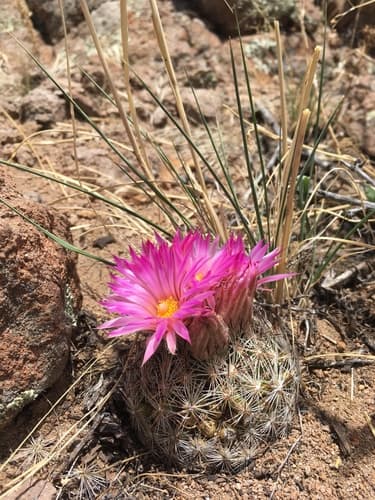
Escobaria vivipara (Beehive Cactus) is a hardy native succulent found in Minnesota and other northern states. This drought-tolerant cactus produces pink to magenta flowers in May and June, attracting bees and beetles.
Light
full sun
Water
low
Size
2"–8" H × 2"–8" W
Bloom
May, Jun
Native to
MN
Pollinators
bees, beetles
Browse plants for this ecoregion
Beehive cactus is a small, rounded succulent that forms tight clusters of spiny stems close to the ground. It produces bright pink to magenta flowers in late spring and early summer, followed by small red fruits.
Growing Beehive Cactus
Grow Beehive Cactus in full sun and low water. Mature plants reach 2 to 8 inches tall and spread 2 to 8 inches wide. Expect low maintenance to keep it looking intentional in a front yard.
In an HOA neighborhood
Beehive Cactus takes more care to keep looking intentional in a front yard. Maintenance level: low. Consider it for backyard or mid-zone beds rather than the street edge.
Works well in: backyard only.
- Sharp spines present safety concerns near walkways
- May be viewed as too exotic for traditional neighborhoods
Wildlife value
The colorful flowers attract native bees and beetles during its May-June bloom period. Birds may feed on the small red fruits that develop after flowering.
Common questions
- When does Escobaria vivipara bloom?
- Beehive Cactus blooms in May and June, producing showy pink to magenta flowers that attract native pollinators.
- What pollinators visit Escobaria vivipara?
- Bees and beetles are the primary pollinators of Beehive Cactus flowers, helping with reproduction of this native species.
- How much water does Beehive Cactus need?
- Escobaria vivipara requires very little water and is extremely drought tolerant, making it well-suited to dry conditions and xeriscaping.
- Where is Escobaria vivipara native?
- Beehive Cactus is native to Minnesota and several other states across the northern Great Plains and western regions of North America.
- Is Beehive Cactus HOA-friendly?
- Beehive Cactus takes more care to look intentional in a front yard. Consider it for backyard or mid-zone beds rather than the street edge.
Native range data from the USDA PLANTS Database and regional native plant society lists. Pollinator and host plant associations compiled from GBIF, iNaturalist, and published ecological literature.
Ready to grow Beehive Cactus? Add it to your garden in Pollinator Patch to track it and get season-by-season care guidance.
Not sure where to start? Take the 2-minute yard quiz