Flame Lily
Lilium philadelphicum
Last reviewed: September 2026
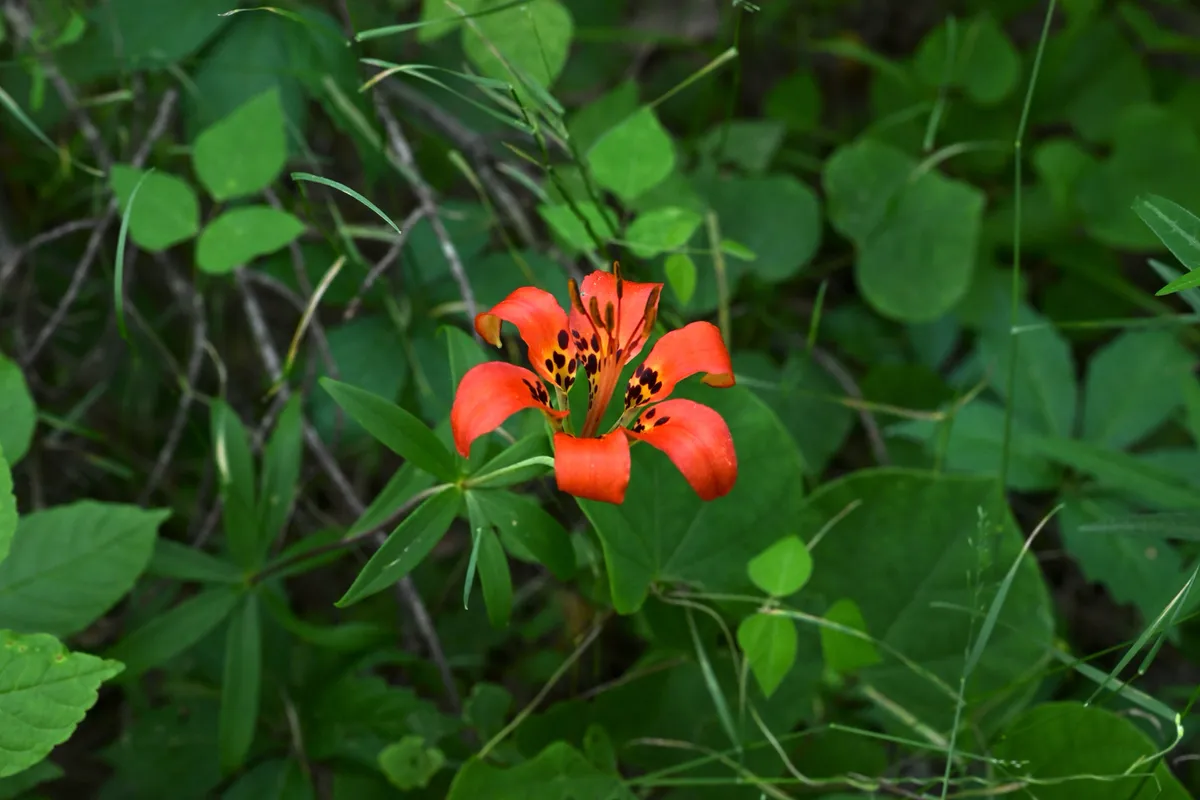
Lilium philadelphicum, the wood lily, opens orange red flowers in June and July in prairies, open woodlands and meadows across much of the eastern and central United States. It favors part sun and medium, well drained soil.
Flame Lily (Lilium philadelphicum) is not on the ASPCA Animal Poison Control Center toxic plant list for dogs (aspca.org (opens in new tab), last reviewed 2026-05-21). If your pet shows symptoms after eating any plant, call the ASPCA at (888) 426-4435.
Light
part sun
Water
medium
Size
12"–36" H × 6"–12" W
Bloom
Jun, Jul
Native to
CO, CT, DE, GA and 30 more states
Pollinators
bees, butterflies, beetles
Before you buy
Your city may pay you to plant this
Cities and water utilities offer rebates for replacing lawn with native and water-wise plants. We track 452 programs across 44 states, each with a link to the provider and the date we last checked it.
Find rebates in your areaBrowse plants for this ecoregion
A striking native wildflower with upward-facing orange-red blooms dotted with dark spots. This compact lily forms small clumps and blooms in early to mid-summer, then dies back to the ground in winter.
Growing Flame Lily
Grow Flame Lily in part sun and medium water. Mature plants reach 12 to 36 inches tall and spread 6 to 12 inches wide. Expect low maintenance to keep it looking intentional in a front yard.
In an HOA neighborhood
Flame Lily is an HOA-friendly choice. Maintenance level: low. Tidiness: 3 out of 5.
Works well in: front yard, foundation, street edge, mid zone.
- Goes completely dormant in winter
- May need marking to avoid accidental damage when dormant
Wildlife value
The bright flowers attract various pollinators including native bees, butterflies, and beetles during its summer bloom period.
Common questions
- When does the wood lily bloom?
- Lilium philadelphicum typically flowers in June and July, with individual plants often holding one to a few upward facing blooms during that window.
- What pollinates Lilium philadelphicum?
- Bees, butterflies and beetles visit the flowers of the wood lily, drawn to its open upright orange red blooms.
- What light and soil does the wood lily prefer?
- This forb does best with part sun and medium moisture in well drained soil, and it also tolerates brighter, more open sites or somewhat drier ground once established.
- What kind of habitat suits Lilium philadelphicum?
- Look for it in dry to moist prairies, open woodland edges, roadsides and meadows where competing vegetation is not too dense.
- Is the wood lily easy to grow in a home garden?
- It can be grown in gardens that mimic its open, well drained habitat, but it is slow to establish from seed and often takes a few years to reach flowering size.
- Is Flame Lily toxic to dogs?
- Flame Lily is not on the ASPCA Animal Poison Control Center toxic plant list for dogs (aspca.org).
- Is Flame Lily toxic to cats?
- Yes. Flame Lily is listed as toxic to cats by the ASPCA Animal Poison Control Center (aspca.org). If your cat has been exposed, call the ASPCA Animal Poison Control Center at (888) 426-4435.
- Is Flame Lily HOA-friendly?
- Flame Lily is generally an HOA-friendly choice in the right placement, with low maintenance.
These answers were drafted with an AI model from this plant's data. Verify care details with a local expert.
Native range data from the World Checklist of Vascular Plants (Kew). Pollinator and host plant associations compiled from GBIF, iNaturalist, and published ecological literature.
If something looks wrong
Common plant problems, and what to check first
These come up on almost any plant. Each guide lists the likely causes in the order they are worth ruling out, with one thing to check before you act on any of them, and links to the source it came from.
- It is dying right after planting
- Leaves turning yellow
- Wilting even though I watered it
- Brown crispy leaf tips
- Bugs on the plant
Ready to grow Flame Lily? Add it to your garden in Pollinator Patch to track it and get season-by-season care guidance.
Planning a bed around it? Start a free plan with this plant
Not sure where to start? Take the 2-minute yard quiz