Fragrant Sage
Salvia clevelandii
Last reviewed: September 2026
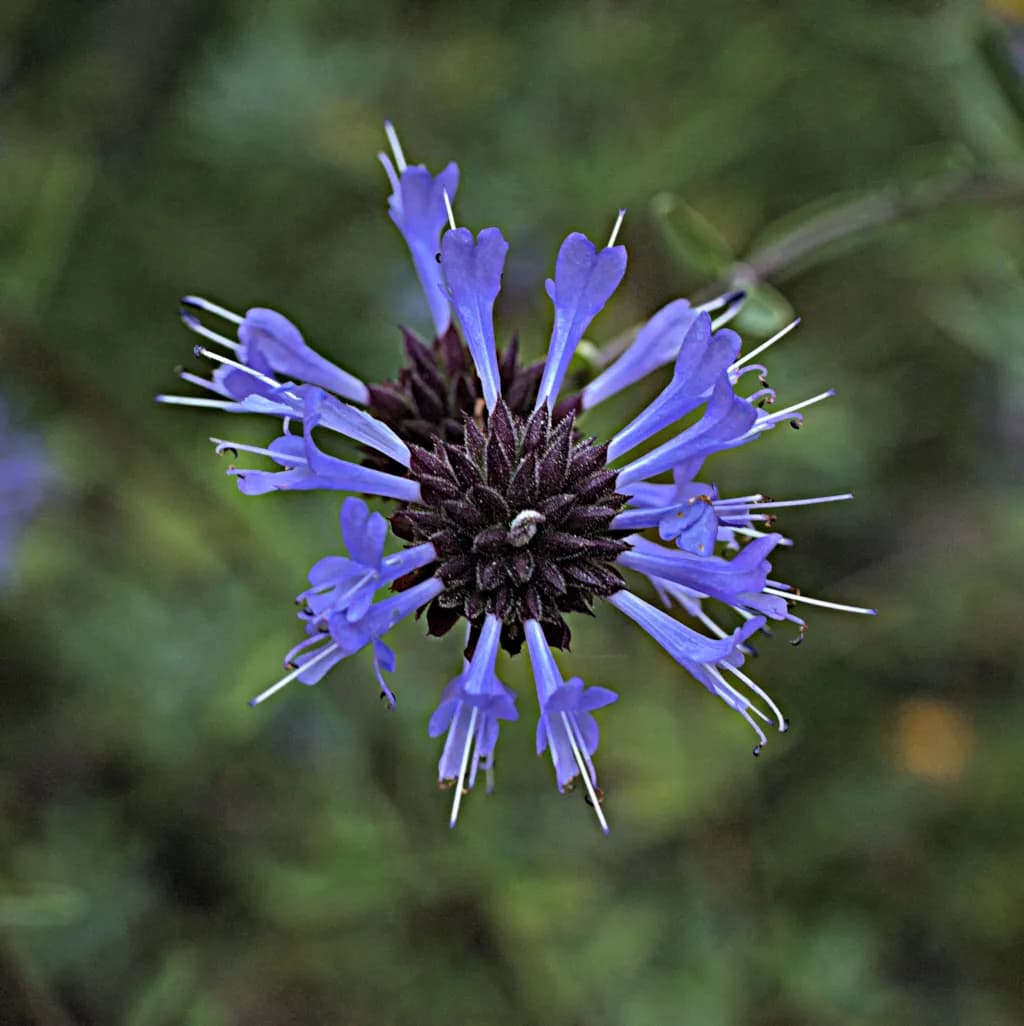
Salvia clevelandii is an aromatic evergreen shrub that blooms from May through July, thriving in dry, sunny chaparral and coastal sage scrub habitats typical of Southern California.
Fragrant Sage (Salvia clevelandii) is not flagged as toxic to dogs or cats by Plants For A Future (PFAF) (opens in new tab) (last reviewed 2026-05-21). This verdict does not come from the ASPCA. If your pet shows symptoms after eating any plant, call the ASPCA at (888) 426-4435.
Light
full sun
Water
low
Size
36"–72" H × 36"–72" W
Bloom
May, Jun, Jul
Native to
CA
Pollinators
bees, hummingbirds, butterflies
Before you buy
Your city may pay you to plant this
Cities and water utilities offer rebates for replacing lawn with native and water-wise plants. We track 459 programs across 44 states, each with a link to the provider and the date we last checked it.
Find rebates in your areaPicture natives in your own yard
Upload a photo of your yard and Patch Vision shows a rendering of it planted with natives for your region, like Fragrant Sage.


Browse plants for this ecoregion
Fragrant sage is a drought-tolerant shrub with aromatic gray-green foliage and whorls of blue-purple flowers in late spring and summer. This native creates an appealing architectural presence in the landscape while requiring minimal water once established.
Growing Fragrant Sage
Grow Fragrant Sage in full sun and low water. Mature plants reach 36 to 72 inches tall and spread 36 to 72 inches wide. Expect moderate maintenance to keep it looking intentional in a front yard.
How to care for Fragrant Sage, by region
How to care for Fragrant Sage where it is actually grown: year-round basics plus what to do each season, region by region, with the sources for each.
Care guidance last updated: August 2026
Cross Timbers (includes Fort Worth, TX)
Year-round
Fragrant Sage (Cleveland sage) is a compact, aromatic evergreen shrub from Southern California chaparral, not native to North Texas. It is not itself listed by the ASPCA, but the related garden sages the ASPCA does track (common sage and scarlet sage) are both non-toxic to dogs, cats, and horses. It thrives in full sun with very little water once established, but its biggest local risk is wet feet in slow-draining clay.
- Plant in full sun, at least 6 hours of direct light, in a spot with excellent drainage.
- In heavy black clay soils, plant it high on a slight mound (6 to 8 inches above grade) or amend the planting hole with expanded shale or coarse sand; in the sandier soils west of the metro it drains faster on its own, but the plant will need water more often through its first summer to establish.
- Space plants 4 to 6 feet apart since a mature shrub spreads as wide as it is tall.
- Skip fertilizer entirely; rich soil or extra nitrogen makes the foliage floppy and shortens the plant's life.
- Expect a lifespan of roughly 5 to 8 years in North Texas conditions rather than a permanent shrub, since it is well outside its native range.
Fall
Fall is a light maintenance season for Fragrant Sage: bloom has faded, the shrub needs less water, and this is a good window to shape it before winter.
- Give the shrub one light shaping cut in September or October, trimming spent flower stalks back to a healthy leaf pair, but avoid a hard cutback this late in the year.
- Cut water back once nighttime temperatures drop in October; established plants need little supplemental water beyond an average North Texas fall.
- Fall is not the ideal season to plant this heat and drought loving shrub; spring establishment is safer here.
- Skip fertilizer; soft new growth pushed late in the year is more likely to suffer freeze damage.
A light fall shaping keeps the shrub's rounded form visible from the street through winter instead of leaving faded bloom stalks standing.
Winter
Fragrant Sage is evergreen and generally holds up through a typical North Texas winter, but a severe Arctic outbreak can damage or kill it, especially a young plant.
- The shrub tolerates the area's USDA zone 8a to 8b winters and short hard freezes with little damage once established.
- During a forecast Arctic outbreak (temperatures well below 20F), cover young or recently planted shrubs with a frost cloth overnight.
- Hold off on any pruning until late February; winter foliage helps protect the stems from cold, and cutting it back early removes that protection.
- Keep watering minimal through winter; wet, cold clay around the roots is a bigger risk than the cold air itself.
Because the foliage stays evergreen through winter, the shrub keeps the bed looking intentional and green even after nearby perennials die back.
Spring
Spring is the best time to plant Fragrant Sage in North Texas, and it is also when the shrub pushes fresh gray green growth ahead of its big early summer bloom.
- Plant new shrubs after the last frost (mid March) once soil has warmed, giving roots a full growing season before the first hard summer heat.
- Cut back any winter damaged or leggy stems to live wood in late February, before new spring growth starts.
- Water new transplants twice a week for the first 4 to 6 weeks to establish roots, then taper off toward once a week.
- Watch for the first violet blue flower spikes to open in April or May; do not fertilize even as buds appear.
A tidy late February cutback and a mounded, well-drained planting spot read as an intentional, cared-for bed from the street rather than a yard in transition.
Summer
Summer is Fragrant Sage's showtime, with violet blue flower spikes drawing bees and hummingbirds through the hottest part of the year, but it is also when an underwatered new planting is most likely to die.
- Established shrubs (in the ground over a year) need little to no supplemental water once summer heat sets in; overwatering in July and August is more likely to kill it than drought.
- First summer plantings still need a deep soak once a week during 100F stretches, more often in the sandier soils west of the metro.
- Deadhead spent flower spikes back to the next set of leaves to encourage a lighter second bloom flush.
- Water at the base rather than overhead to avoid fungal spotting on the fuzzy leaves during humid stretches.
Deadheading spent spikes keeps the shrub looking maintained rather than scraggly through the peak of bloom season.
Sources: ASPCA: Sage (Salvia officinalis) non-toxic to dogs, cats, horses, Lady Bird Johnson Wildflower Center: Salvia clevelandii native range and habit
Southern California/Northern Baja Coast (includes Los Angeles, CA)
Year-round
Cleveland sage grows well in the Los Angeles area because it is native to the region's own chaparral and coastal sage scrub. Give it full sun and let it dry out between waterings. Good drainage matters far more than rich soil.
- Site it on a slope, berm, or raised bed with fast-draining soil. Avoid heavy clay or low spots where water collects after rain.
- Water deeply but infrequently the first year to help roots establish, then taper off toward little or no summer irrigation once it is established.
- The ASPCA lists the related garden sage, Salvia officinalis, not this exact species, as not on its toxic plant list for dogs, cats, or horses. Treat that as a helpful data point rather than a species-specific confirmation for Cleveland sage.
- Expect a loose, silvery, aromatic form rather than a tight hedge shape. Skip formal shearing, which ruins the natural habit and can stress the plant.
Fall
Fall is a good planting window for Cleveland sage in Los Angeles, since the weather cools while the ground is still workable ahead of winter rain. It is also a good time for a structural cutback on a young plant to encourage a fuller shape.
- If planting new, fall is the preferred window here. Roots get several months of mild, damp weather to establish before next summer's heat.
- On a young plant, cut stems back by about a third in late fall to encourage denser growth. Once a plant has developed thick, woody stems, switch to light tip-pruning only.
- Keep new plantings watered every week or two until winter rain takes over, since fall in Los Angeles is often still dry.
A tidy fall cutback keeps a young sage compact and full-looking at the curb instead of sparse and woody, which reads as an intentional planting rather than a neglected corner.
Winter
Winters are mild and wet in Los Angeles, and Cleveland sage stays evergreen through the season with little care needed beyond letting the rain do the watering. Frost is rare here and the plant generally tolerates a light one once established.
- Skip supplemental water. Typical Los Angeles winter rain is enough for an established plant on its own.
- Hold off on major pruning during winter. A hard cutback right before the main spring growth push stresses the plant more than one done in late fall.
- If a rare frost or freeze is forecast, an established plant is usually fine, but a young, first-year plant benefits from a light frost cloth overnight.
The evergreen gray-green foliage keeps a front bed looking maintained through winter even while the plant is not actively growing, which helps it read as intentional rather than bare or neglected.
Spring
In Los Angeles, spring is when Cleveland sage pushes out fresh gray-green growth and starts forming the flower spikes that open by late spring. It is also the best time of year to plant one, while the last of the rainy season is still helping new roots settle in.
- Rely on the season's remaining rain instead of the hose. Extra water on already-damp soil is the fastest way to invite root rot.
- If planting new, get it in the ground by April so it has a few months of mild weather to root in before summer heat and drought arrive.
- Skip fertilizer. This chaparral shrub is adapted to lean soil, and heavy feeding produces weak, floppy growth.
Summer
Summer is when Cleveland sage puts on its show in Los Angeles, with fragrant purple flower spikes drawing hummingbirds and bees through the season before fading in the heat. Once the blooms are spent, this is the best time for the year's main pruning.
- Hold off on watering through the dry summer. A plant past its first year or two here typically needs no supplemental irrigation at all.
- Once the last flower spikes fade, cut stems back by about a third on a young plant to keep it full and prevent it from getting leggy and woody.
- Avoid overhead sprinklers or irrigation timed for a nearby lawn. Wet foliage combined with summer heat invites fungal problems.
A late-summer cutback after bloom keeps the shrub compact along the front of the house instead of sprawling into a walkway, which reads as intentional maintenance rather than an overgrown bed.
Sources: Calscape: Cleveland Sage (Salvia clevelandii), ASPCA: Toxic and Non-Toxic Plants, Sage (Salvia officinalis), San Marcos Growers: Salvia clevelandii 'Winnifred Gilman'
Texas Blackland Prairies (includes Dallas, TX)
Year-round
Fragrant Sage (Cleveland sage) is a compact, aromatic evergreen shrub from Southern California chaparral, not native to North Texas. It is not itself listed by the ASPCA, but the related garden sages the ASPCA does track (common sage and scarlet sage) are both non-toxic to dogs, cats, and horses. It thrives in full sun with very little water once established, but its biggest local risk is wet feet in slow-draining clay.
- Plant in full sun, at least 6 hours of direct light, in a spot with excellent drainage.
- In heavy black clay soils, plant it high on a slight mound (6 to 8 inches above grade) or amend the planting hole with expanded shale or coarse sand; in the sandier soils west of the metro it drains faster on its own, but the plant will need water more often through its first summer to establish.
- Space plants 4 to 6 feet apart since a mature shrub spreads as wide as it is tall.
- Skip fertilizer entirely; rich soil or extra nitrogen makes the foliage floppy and shortens the plant's life.
- Expect a lifespan of roughly 5 to 8 years in North Texas conditions rather than a permanent shrub, since it is well outside its native range.
Fall
Fall is a light maintenance season for Fragrant Sage: bloom has faded, the shrub needs less water, and this is a good window to shape it before winter.
- Give the shrub one light shaping cut in September or October, trimming spent flower stalks back to a healthy leaf pair, but avoid a hard cutback this late in the year.
- Cut water back once nighttime temperatures drop in October; established plants need little supplemental water beyond an average North Texas fall.
- Fall is not the ideal season to plant this heat and drought loving shrub; spring establishment is safer here.
- Skip fertilizer; soft new growth pushed late in the year is more likely to suffer freeze damage.
A light fall shaping keeps the shrub's rounded form visible from the street through winter instead of leaving faded bloom stalks standing.
Winter
Fragrant Sage is evergreen and generally holds up through a typical North Texas winter, but a severe Arctic outbreak can damage or kill it, especially a young plant.
- The shrub tolerates the area's USDA zone 8a to 8b winters and short hard freezes with little damage once established.
- During a forecast Arctic outbreak (temperatures well below 20F), cover young or recently planted shrubs with a frost cloth overnight.
- Hold off on any pruning until late February; winter foliage helps protect the stems from cold, and cutting it back early removes that protection.
- Keep watering minimal through winter; wet, cold clay around the roots is a bigger risk than the cold air itself.
Because the foliage stays evergreen through winter, the shrub keeps the bed looking intentional and green even after nearby perennials die back.
Spring
Spring is the best time to plant Fragrant Sage in North Texas, and it is also when the shrub pushes fresh gray green growth ahead of its big early summer bloom.
- Plant new shrubs after the last frost (mid March) once soil has warmed, giving roots a full growing season before the first hard summer heat.
- Cut back any winter damaged or leggy stems to live wood in late February, before new spring growth starts.
- Water new transplants twice a week for the first 4 to 6 weeks to establish roots, then taper off toward once a week.
- Watch for the first violet blue flower spikes to open in April or May; do not fertilize even as buds appear.
A tidy late February cutback and a mounded, well-drained planting spot read as an intentional, cared-for bed from the street rather than a yard in transition.
Summer
Summer is Fragrant Sage's showtime, with violet blue flower spikes drawing bees and hummingbirds through the hottest part of the year, but it is also when an underwatered new planting is most likely to die.
- Established shrubs (in the ground over a year) need little to no supplemental water once summer heat sets in; overwatering in July and August is more likely to kill it than drought.
- First summer plantings still need a deep soak once a week during 100F stretches, more often in the sandier soils west of the metro.
- Deadhead spent flower spikes back to the next set of leaves to encourage a lighter second bloom flush.
- Water at the base rather than overhead to avoid fungal spotting on the fuzzy leaves during humid stretches.
Deadheading spent spikes keeps the shrub looking maintained rather than scraggly through the peak of bloom season.
Sources: ASPCA: Sage (Salvia officinalis) non-toxic to dogs, cats, horses, Lady Bird Johnson Wildflower Center: Salvia clevelandii native range and habit
In an HOA neighborhood
Fragrant Sage is an HOA-friendly choice in the right placement. Maintenance level: moderate. Tidiness: 3 out of 5.
Works well in: foundation, mid zone.
- Can appear somewhat sprawling and informal if not pruned
- May look drought-stressed during extreme heat
- Woody base can become visible as plant matures
Wildlife value
Fragrant sage attracts numerous pollinators, especially bees and hummingbirds. The tubular flowers provide nectar during the critical late spring and summer months.
Common questions
- What pollinators visit Salvia clevelandii?
- Bees, hummingbirds, and butterflies are drawn to the flower spikes of Salvia clevelandii, making it a good choice for a pollinator garden.
- When does Salvia clevelandii bloom?
- Salvia clevelandii generally blooms from May through July, sending up tall spikes with whorled clusters of lavender-blue flowers.
- How much water does Salvia clevelandii need?
- Once established, Salvia clevelandii needs very little water and does best with infrequent, deep watering rather than regular irrigation. Overwatering can lead to root problems.
- What light does Salvia clevelandii prefer?
- Full sun is ideal for Salvia clevelandii, though it can tolerate some light afternoon shade in especially hot inland gardens.
- Does Salvia clevelandii lose its leaves in winter?
- No, Salvia clevelandii is evergreen and keeps its fragrant, gray-green foliage throughout the year.
- Is Fragrant Sage toxic to dogs?
- Fragrant Sage is not flagged as toxic to dogs by Plants For A Future (PFAF). This verdict does not come from the ASPCA.
- Is Fragrant Sage toxic to cats?
- Fragrant Sage is not flagged as toxic to cats by Plants For A Future (PFAF). This verdict does not come from the ASPCA.
- Is Fragrant Sage HOA-friendly?
- Fragrant Sage is generally an HOA-friendly choice in the right placement, with moderate maintenance.
These answers were drafted with an AI model from this plant's data. Verify care details with a local expert.
Native range data from vouchered herbarium specimen records and regional native plant society lists. Pollinator and host plant associations compiled from GBIF, iNaturalist, and published ecological literature.
If something looks wrong
Common plant problems, and what to check first
These come up on almost any plant. Each guide lists the likely causes in the order they are worth ruling out, with one thing to check before you act on any of them, and links to the source it came from.
- It is dying right after planting
- Leaves turning yellow
- Wilting even though I watered it
- Brown crispy leaf tips
- Bugs on the plant
Ready to grow Fragrant Sage? Add it to your garden in Pollinator Patch to track it and get season-by-season care guidance.