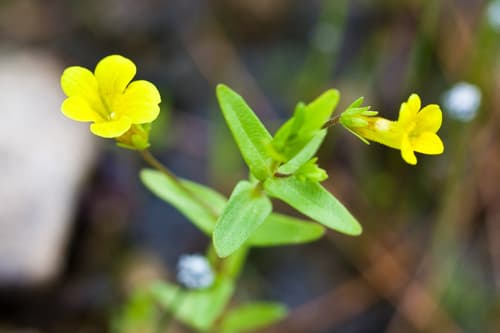
Golden Hedge-Hyssop
Gratiola lutea
Last reviewed: June 2026
Light
part sun
Water
medium
Size
6"–12" H × 4"–8" W
Bloom
Jun, Jul, Aug
Native to
CT, DE, FL, GA and 16 more states
Pollinators
bees, flies
Gratiola lutea is a compact native perennial that forms neat, low clumps in partially sunny locations. It produces small yellow flowers throughout the summer months and requires moderate watering to thrive.
In an HOA neighborhood
Golden Hedge-Hyssop takes more care to keep looking intentional in a front yard. Maintenance level: low. Consider it for backyard or mid-zone beds rather than the street edge.
Works well in: backyard only.
- Very small stature may appear insignificant in formal landscapes
- Unknown leaf retention makes year-round appearance unpredictable
- Small flowers lack visual impact for front yard displays
Wildlife value
This plant attracts bees and flies during its summer blooming period, providing nectar for these important pollinators.
Common questions
- How much sun does Golden Hedge-Hyssop need?
- Golden Hedge-Hyssop grows best in part sun conditions.
- When does Golden Hedge-Hyssop bloom?
- Golden Hedge-Hyssop blooms in June, July, and August.
- Where is Golden Hedge-Hyssop native?
- Golden Hedge-Hyssop (Gratiola lutea) is native to CT, DE, FL, GA and 16 more states, per the USDA PLANTS Database and regional native plant society lists.
- What pollinators does Golden Hedge-Hyssop attract?
- Golden Hedge-Hyssop draws bees and flies.
- Is Golden Hedge-Hyssop HOA-friendly?
- Golden Hedge-Hyssop takes more care to look intentional in a front yard. Consider it for backyard or mid-zone beds rather than the street edge.
Native range data from the USDA PLANTS Database and regional native plant society lists. Pollinator and host plant associations compiled from GBIF, iNaturalist, and published ecological literature.
Ready to grow Golden Hedge-Hyssop? Add it to your garden in Pollinator Patch to track it and get season-by-season care guidance.
Not sure where to start? Take the 2-minute yard quiz