Heartleaf Or Common Blue Wood Aster
Symphyotrichum cordifolium
Last reviewed: September 2026
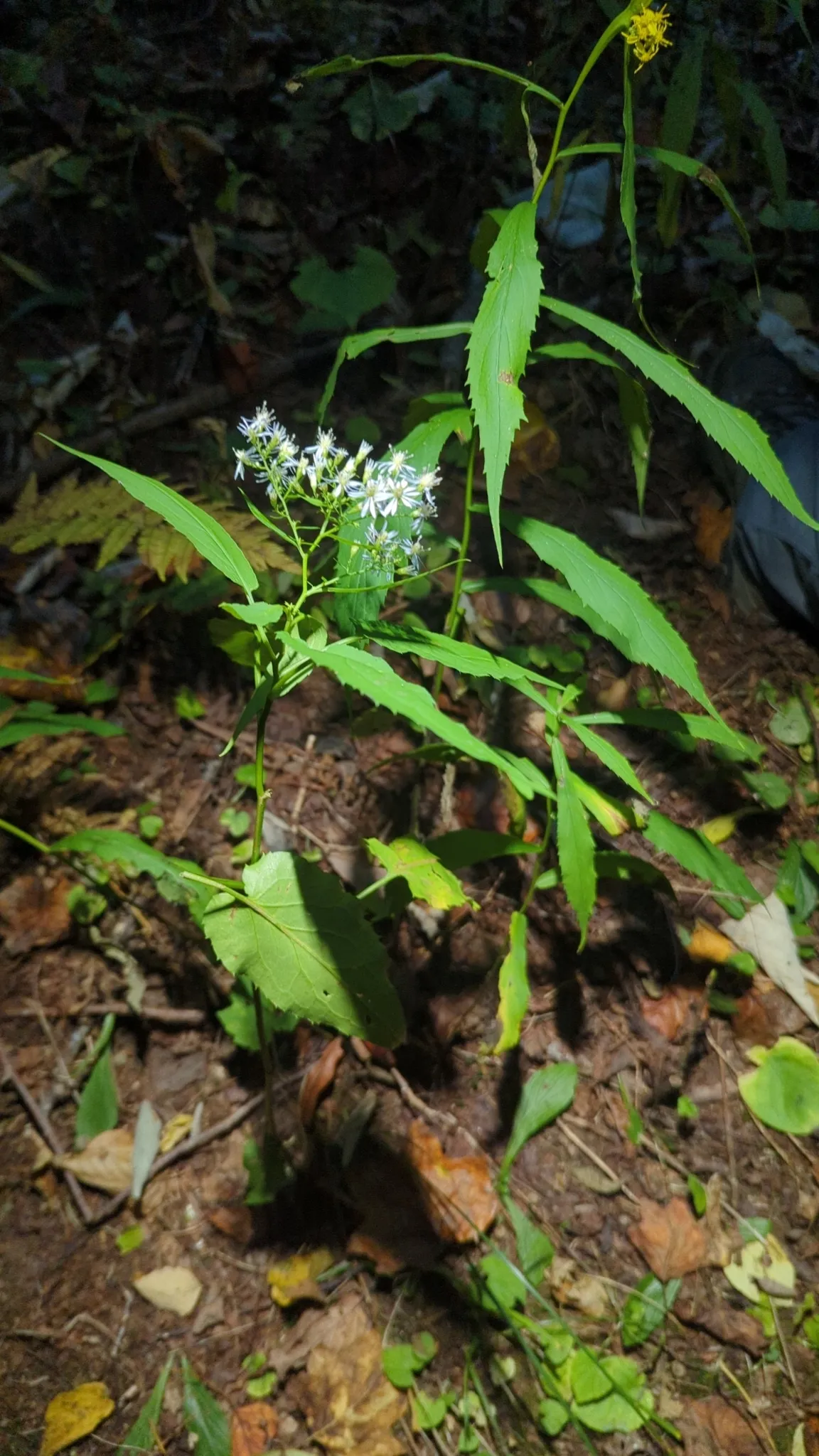
Symphyotrichum cordifolium, or common blue wood aster, produces sprays of pale blue to violet flowers from August through October in woodland edges and clearings across the eastern and midwestern United States.
Toxicity unknown
Heartleaf Or Common Blue Wood Aster (Symphyotrichum cordifolium) is not listed by the ASPCA Animal Poison Control Center (opens in new tab) or the other sources we check, so we have no verdict for it either way. Absence from those lists is not a clearance. If your pet shows symptoms after eating any plant, call the ASPCA at (888) 426-4435.
The USDA PLANTS Database (opens in new tab) does not flag Heartleaf Or Common Blue Wood Aster as toxic to livestock.
Light
part sun
Water
medium
Size
12"–36" H × 12"–24" W
Bloom
Aug, Sep, Oct
Native to
AL, AR, CT, GA and 27 more states
Pollinators
bees, butterflies, moths
Before you buy
Your city may pay you to plant this
Cities and water utilities offer rebates for replacing lawn with native and water-wise plants. We track 459 programs across 44 states, each with a link to the provider and the date we last checked it.
Find rebates in your areaPicture natives in your own yard
Upload a photo of your yard and Patch Vision shows a rendering of it planted with natives for your region, like Heartleaf Or Common Blue Wood Aster.


Browse plants for this ecoregion
Heartleaf aster produces masses of small, light blue to purple flowers from late summer through fall, creating a cloud-like display. This native perennial forms neat clumps with heart-shaped leaves and thrives in partial shade conditions where many other flowering plants struggle.
Growing Heartleaf Or Common Blue Wood Aster
Grow Heartleaf Or Common Blue Wood Aster in part sun and medium water. Mature plants reach 12 to 36 inches tall and spread 12 to 24 inches wide. Expect low maintenance to keep it looking intentional in a front yard.
How to care for Heartleaf Or Common Blue Wood Aster, by region
How to care for Heartleaf Or Common Blue Wood Aster where it is actually grown: year-round basics plus what to do each season, region by region, with the sources for each.
Care guidance last updated: October 2026
Northern Piedmont (includes Lancaster, PA)
Year-round
Blue wood aster is a shade-friendly perennial with lots of small light blue daisies from late summer into fall. In Lancaster it does best in part shade with well-drained soil. It needs very little care but it will seed itself around.
- Part shade is best. Dappled sun or full sun is also fine.
- Well-drained soil that stays moist to dry. Poorly drained clay can lead to aster wilt.
- Grows about 1 to 4 feet tall and 1.5 to 2 feet wide.
- Pinch stems in late spring for a bushier plant that may not need staking.
- Moderately deer resistant.
It self-seeds and can get weedy, so pull extra seedlings and cut it back after bloom to keep beds looking tidy.
Fall
This is the show season. Light blue flowers cover the plant from late summer into fall until frost.
- Enjoy the bloom and skip fertilizer.
- Cut spent stems back if you do not want seedlings next year.
- Water only if fall turns dry for a couple of weeks.
- Rake leaves off the crown so it can breathe.
Winter
The plant is dormant through Lancaster winters and needs almost nothing.
- No watering is needed.
- Cut the old stems down any time from late fall to early spring.
- A thin layer of leaf mulch is fine. Keep it from piling on the crown.
- Mark the spot so you do not dig it up in spring.
Spring
New growth shows up as Lancaster warms in April. This is the time to set the plant up for a sturdy, tidy summer.
- Plant or move it now in part shade with soil that drains well.
- Water new plants about once a week if rain is under an inch.
- Pinch the stem tips in late spring so it branches and stays shorter.
- Pull extra seedlings while they are small.
Summer
Summer in Lancaster is warm and humid, which suits mildew and leaf spots. Space and airflow matter more than extra water.
- Give plants room so air can move between them.
- Watch for powdery mildew, leaf spots, and rust on the leaves.
- Water deeply during a dry spell, then let the top of the soil dry.
- Foliage looks worn by late summer. You can cut it to the ground to look neater and cut down on seedlings.
Sources: NC State Extension Plant Toolbox: Symphyotrichum cordifolium
Piedmont (includes Atlanta, GA)
Year-round
Heartleaf blue wood aster is a low-fuss fall bloomer that likes part shade and soil that drains.
- Part shade, about 2 to 6 hours of direct sun, is its favorite. It also tolerates dappled light and full sun.
- Well-drained soil that runs moist to a little dry works. Aster wilt can happen in poorly drained clay.
- Pinching stems back makes it bushier and may mean no staking.
- It self-seeds freely and can get weedy, so trim before seed spreads.
- It is hardy in zones 3a to 8b, which covers Atlanta.
Cutting it back in late summer keeps the bed looking neat.
Fall
Fall is bloom time. Mostly enjoy it.
- Light blue flowers with yellow centers open from late summer into fall.
- Keep soil moist to occasionally dry, with good drainage.
Winter
Winter needs little. Cold is not a worry in Atlanta.
- Hardy to zone 3a, so Atlanta winters are mild for it.
- Keep drainage good so the roots do not sit wet.
Spring
Spring is the time to shape the plant and fix drainage.
- Pinch stems back as they grow to get a bushier plant.
- Check that clay beds drain, since poor drainage invites aster wilt.
Summer
Summer is for airflow and a late-summer tidy-up.
- Good air circulation lowers the chance of powdery mildew, leaf spots, and rust.
- Cutting foliage to the ground by late summer improves looks and limits self-seeding.
- Plants can reach 1 to 4 feet, and taller ones may need staking.
Sources: NC State Extension Plant Toolbox: Symphyotrichum cordifolium
In an HOA neighborhood
Heartleaf Or Common Blue Wood Aster is an HOA-friendly choice. Maintenance level: low. Tidiness: 4 out of 5.
Works well in: front yard, foundation, street edge, mid zone.
- Can look sparse in early spring before new growth emerges
Wildlife value
Host plant for pearl crescent butterfly.
The abundant late-season blooms provide crucial nectar for migrating butterflies and native bees when few other flowers are available. Moths also rely on this plant for both nectar and as a host plant for their caterpillars.
Common questions
- When does common blue wood aster bloom?
- Symphyotrichum cordifolium typically flowers from August into October, with small blue to violet blooms held on branching stems.
- What kind of light does this aster need?
- It grows well in part sun and also tolerates conditions from full sun to fairly shady woodland understory, making it flexible for edges and open woods.
- How much water does common blue wood aster need?
- It prefers medium moisture but can handle drier soil once established, so it does not require constant watering.
- What pollinators visit this aster?
- Bees, butterflies, and moths visit the flowers, and fall-blooming asters like this one are valued as a late-season nectar source before frost.
- Where does this aster grow naturally?
- It is typically found along woodland edges, in open forests, and in clearings where it gets a mix of sun and shade through the growing season.
- Is Heartleaf Or Common Blue Wood Aster toxic to livestock?
- The USDA PLANTS Database does not flag Heartleaf Or Common Blue Wood Aster as toxic to livestock.
- Is Heartleaf Or Common Blue Wood Aster HOA-friendly?
- Heartleaf Or Common Blue Wood Aster is generally an HOA-friendly choice in the right placement, with low maintenance.
These answers were drafted with an AI model from this plant's data. Verify care details with a local expert.
Native range data from the World Checklist of Vascular Plants (Kew). Pollinator and host plant associations compiled from GBIF, iNaturalist, and published ecological literature.
If something looks wrong
Common plant problems, and what to check first
These come up on almost any plant. Each guide lists the likely causes in the order they are worth ruling out, with one thing to check before you act on any of them, and links to the source it came from.
- It is dying right after planting
- Leaves turning yellow
- Wilting even though I watered it
- Brown crispy leaf tips
- Bugs on the plant
Ready to grow Heartleaf Or Common Blue Wood Aster? Add it to your garden in Pollinator Patch to track it and get season-by-season care guidance.