Leavenworth's Tickseed
Coreopsis leavenworthii
Last reviewed: September 2026
Coreopsis leavenworthii is a yellow-flowered forb that blooms from April through November in full sun to partial shade across the Gulf Coast and Southeast, tolerating both wet and dry soils.
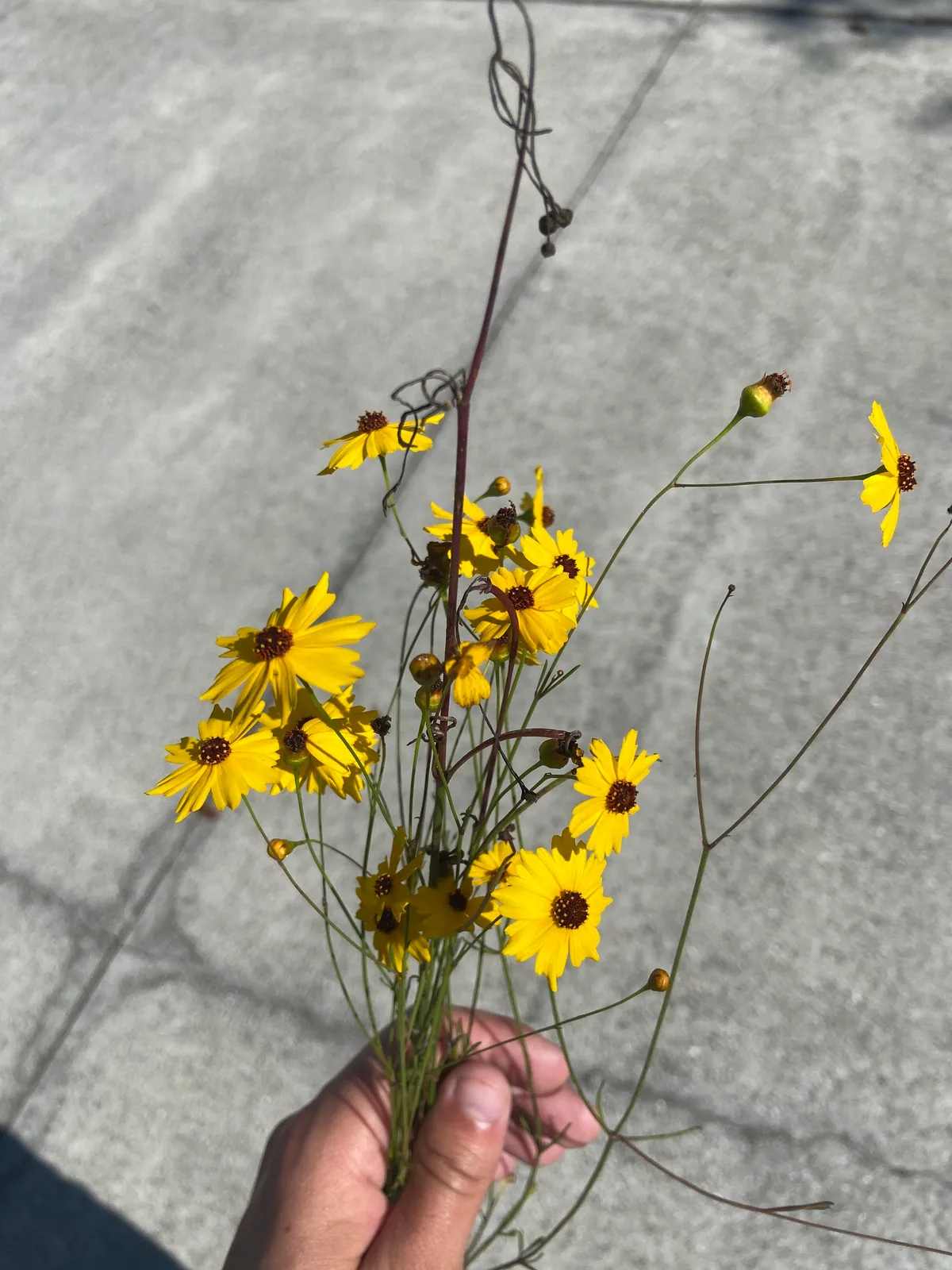
Leavenworth's Tickseed (Coreopsis leavenworthii) is not on the ASPCA Animal Poison Control Center toxic plant list for dogs or cats (aspca.org (opens in new tab), last reviewed 2026-05-21). If your pet shows symptoms after eating any plant, call the ASPCA at (888) 426-4435.
Light
full sun
Water
medium
Size
12"–36" H × 12"–24" W
Bloom
Apr, May, Jun, Jul, Aug, Sep, Oct, Nov
Native to
AL, FL, GA
Pollinators
bees, butterflies, beetles
Before you buy
Your city may pay you to plant this
Cities and water utilities offer rebates for replacing lawn with native and water-wise plants. We track 459 programs across 44 states, each with a link to the provider and the date we last checked it.
Find rebates in your areaPicture natives in your own yard
Upload a photo of your yard and Patch Vision shows a rendering of it planted with natives for your region, like Leavenworth's Tickseed.


Browse plants for this ecoregion
Leavenworth's tickseed is a cheerful native wildflower that produces bright yellow daisy-like blooms from spring through fall. This compact perennial forms neat clumps and provides months of reliable color in sunny locations. It's drought tolerant once established and requires minimal care.
Growing Leavenworth's Tickseed
Grow Leavenworth's Tickseed in full sun and medium water. Mature plants reach 12 to 36 inches tall and spread 12 to 24 inches wide. Expect low maintenance to keep it looking intentional in a front yard.
How to care for Leavenworth's Tickseed, by region
How to care for Leavenworth's Tickseed where it is actually grown: year-round basics plus what to do each season, region by region, with the sources for each.
Care guidance last updated: August 2026
Southern Coastal Plain (includes Orlando, FL)
Year-round
Leavenworth's tickseed is Florida's official state wildflower and a low-fuss choice for Central Florida's sandy soil and sun. It's a fast-growing annual to short-lived perennial that self-sows heavily, so a little bed management keeps it looking intentional in a front yard.
- Give it full sun. Central Florida's naturally sandy, well-drained soil works fine without amendment.
- Water new plants every few days until they root in, then let rainfall carry established plants.
- It self-sows heavily each year. Deadhead spent blooms if you want fewer volunteers, or let some seed heads mature to bring the patch back next season.
- Skip rich soil and heavy fertilizer. Too much of either makes the stems floppy and prone to toppling.
- It's Florida's official state wildflower and a nectar and pollen source for bees, native pollinators, and small butterflies.
- Non-toxic to cats and dogs, per the ASPCA.
A defined edge or occasional deadheading keeps this self-seeding wildflower reading as planned rather than weedy along the front walk.
Fall
Fall in Central Florida stays warm enough for tickseed to keep blooming, and mild temperatures make it an easy season for hands-off care.
- Bloom continues into fall in Central Florida's mild autumn weather. Keep deadheading if you want to manage reseeding.
- Let some seed heads mature and drop by late fall if you want next year's volunteers. That's how this short-lived species naturally keeps itself going.
- Watering needs stay low. Fall rainfall in Central Florida is usually enough for established plants.
- This is a good time to edge the bed or refresh mulch before the cooler, drier winter months.
A fall edge and mulch refresh sets up a tidy winter look for a front-yard planting.
Winter
Winter is the plant's quiet season in Central Florida. Light frost is possible, but this short-lived wildflower typically just dies back rather than needing active protection.
- Frost and freeze risk is highest in January and February in Central Florida. Coreopsis leavenworthii isn't a plant growers typically cover. It's usually treated as expendable and left to reseed on its own.
- As an annual to short-lived perennial, individual plants may die back or die out over winter. That's normal, not a sign of a problem.
- Leave spent winter growth in place until spring rather than cutting back hard. It protects the crown and any seed still left to drop.
- Little to no watering is needed in winter. Central Florida's cooler, drier season means established beds can mostly be left alone.
A tidy cutback of dead winter growth in late winter keeps a front bed looking cared for until spring regrowth and volunteers fill back in.
Spring
Spring is when Leavenworth's tickseed ramps into its main bloom, and when seed dropped last fall shows up as new seedlings around the bed.
- Central Florida's frost risk is mostly over by late February, so spring is a good window to plant new plugs or direct-sow seed outdoors.
- Check for volunteer seedlings from last year's seed drop. Thin crowded clusters or move extras to fill gaps.
- Water new seedlings while they root in, then taper off as they establish.
- Watch for aphids and thrips as spring growth picks up. A light spray of water usually knocks small numbers off.
- Hold off on fertilizer. Lean sandy soil is what keeps this plant upright and blooming well.
Thinning spring seedlings into a defined row or cluster keeps the bed looking tended instead of scattered.
Summer
Summer is peak growing season in Orlando's heat and humidity, and established plants mostly run on the season's frequent rain.
- Established plants need little to no extra water once summer's regular rain starts. Water only if there's a spotty dry stretch.
- Deadhead spent blooms through summer to keep new flowers coming and to manage how much it reseeds.
- Heavy summer downpours can flatten floppy stems. A light trim helps the plant recover its shape.
- Consistently soggy spots after big storms aren't ideal for this plant. It prefers soil that drains rather than standing water.
- It keeps blooming through Central Florida's heat and humidity. That's a big part of why it holds up as a low-maintenance choice for summer.
Regular summer deadheading keeps blooms fresh and the bed from looking overgrown before fall.
Sources: Florida Native Plant Society, Coreopsis leavenworthii, Florida Department of State, State Wildflower, ASPCA, Coreopsis, UCF Virtual Arboretum, Florida Tickseed (Coreopsis leavenworthii), UF/IFAS Extension, Central Florida Gardening Calendar (EP450)
In an HOA neighborhood
Leavenworth's Tickseed is an HOA-friendly choice. Maintenance level: low. Tidiness: 4 out of 5.
Works well in: front yard, foundation, street edge, mid zone.
Wildlife value
Host plant for painted lady butterfly.
The long blooming season attracts bees, butterflies, and beneficial beetles throughout most of the growing season. Seeds provide food for songbirds in winter.
Common questions
- When does Coreopsis leavenworthii bloom?
- Coreopsis leavenworthii generally flowers from April through November, with the heaviest bloom during the warmer summer months.
- What pollinators visit Coreopsis leavenworthii?
- Bees, butterflies, and beetles commonly visit the open, daisy-like flowers of Coreopsis leavenworthii for pollen and nectar.
- How much water does Coreopsis leavenworthii need?
- This plant does best with medium soil moisture but can handle both wetter, low-lying spots and drier, sandy soils once it is established.
- What light does Coreopsis leavenworthii prefer?
- It flowers most heavily in full sun but will still grow and bloom in partial sun or light shade, particularly in hotter climates.
- Is Leavenworth's Tickseed toxic to dogs?
- Leavenworth's Tickseed is not on the ASPCA Animal Poison Control Center toxic plant list for dogs (aspca.org).
- Is Leavenworth's Tickseed toxic to cats?
- Leavenworth's Tickseed is not on the ASPCA Animal Poison Control Center toxic plant list for cats (aspca.org).
- Is Leavenworth's Tickseed HOA-friendly?
- Leavenworth's Tickseed is generally an HOA-friendly choice in the right placement, with low maintenance.
These answers were drafted with an AI model from this plant's data. Verify care details with a local expert.
Native range data from vouchered herbarium specimen records and regional native plant society lists. Pollinator and host plant associations compiled from GBIF, iNaturalist, and published ecological literature.
If something looks wrong
Common plant problems, and what to check first
These come up on almost any plant. Each guide lists the likely causes in the order they are worth ruling out, with one thing to check before you act on any of them, and links to the source it came from.
- It is dying right after planting
- Leaves turning yellow
- Wilting even though I watered it
- Brown crispy leaf tips
- Bugs on the plant
Ready to grow Leavenworth's Tickseed? Add it to your garden in Pollinator Patch to track it and get season-by-season care guidance.