Mountain-spurge
Pachysandra procumbens
Last reviewed: August 2026
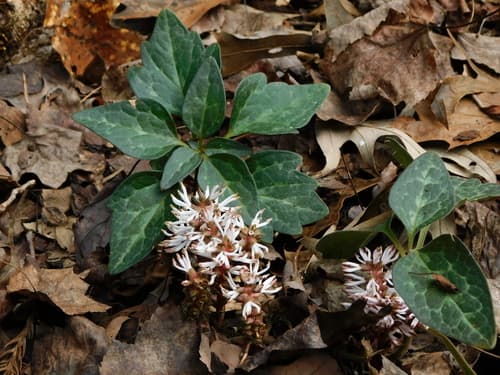
Mountain-spurge is a low, spreading woodland forb that blooms from March through May with spikes of white to pinkish flowers. It thrives in part shade to shade with medium moisture in mixed hardwood forests across the southeastern United States.
Toxicity unknown
Mountain-spurge (Pachysandra procumbens) is not listed by the ASPCA Animal Poison Control Center (opens in new tab) or the other sources we check, so we have no verdict for it either way. Absence from those lists is not a clearance. If your pet shows symptoms after eating any plant, call the ASPCA at (888) 426-4435.
Light
part shade
Water
medium
Size
6"–12" H × 12"–24" W
Bloom
Mar, Apr, May
Native to
AL, FL, GA, KY and 6 more states
Pollinators
bees, beetles
Before you buy
Your city may pay you to plant this
Cities and water utilities offer rebates for replacing lawn with native and water-wise plants. We track 459 programs across 44 states, each with a link to the provider and the date we last checked it.
Find rebates in your areaPicture natives in your own yard
Upload a photo of your yard and Patch Vision shows a rendering of it planted with natives for your region, like Mountain-spurge.


Browse plants for this ecoregion
Mountain spurge is a low-growing native groundcover that forms neat spreading colonies in shaded areas. It produces small white flower spikes in early spring and maintains attractive foliage through most of the year, making it an excellent alternative to invasive pachysandra.
Growing Mountain-spurge
Grow Mountain-spurge in part shade and medium water. Mature plants reach 6 to 12 inches tall and spread 12 to 24 inches wide. Expect low maintenance to keep it looking intentional in a front yard.
How to care for Mountain-spurge, by region
How to care for Mountain-spurge where it is actually grown: year-round basics plus what to do each season, region by region, with the sources for each.
Care guidance last updated: October 2026
Atlantic Coastal Pine Barrens (includes Riverhead, NY)
Year-round
Allegheny spurge is a low, spreading groundcover for shade that likes evenly moist, well-drained soil.
- Plant in dappled to deep shade, about 6 to 12 inches apart.
- Keep soil moist but not soggy. Sandy Long Island soil dries fast, so mulch helps.
- It forms a mat about 6 to 12 inches tall and needs very little upkeep.
- Leaves are evergreen to semi-evergreen, so some winter browning is normal.
A tidy green groundcover under trees is an HOA-friendly way to cover bare shade.
Fall
Fall is a good time to clear leaf litter and keep the soil moist before winter.
- Rake fallen leaves off the mat so it is not smothered.
- Water if autumn is dry.
- Fall is a fine time to plant or move starts so they root before winter.
- Leave mulch in place.
Winter
Winter needs little. Expect some leaves to look worn at the edge of its evergreen range.
- Leaves are evergreen to semi-evergreen, so browning in cold snaps is normal.
- Do not walk on frozen foliage.
- Wait until spring to trim off damaged growth.
- No fertilizer is needed.
Spring
Spring is the time to trim off tired leaves and let new growth fill in.
- Snip off yellow or dead leaves left from winter.
- Water new plantings regularly while roots settle in.
- Top up a thin layer of mulch to hold moisture.
- Plant new divisions or starts about 6 to 12 inches apart.
Summer
Summer care is mostly steady moisture and keeping it out of hot, dry sun.
- Soak the bed deeply every week or so during dry spells.
- Shade is key, so avoid hot afternoon sun on the planting.
- Mulch keeps sandy soil from drying out between waterings.
- Remove any scorched or yellow leaves.
Sources: NC State Extension Plant Toolbox: Pachysandra procumbens
In an HOA neighborhood
Mountain-spurge is an HOA-friendly choice. Maintenance level: low. Tidiness: 4 out of 5.
Works well in: front yard, foundation, mid zone.
- May appear sparse in winter as semi-evergreen foliage thins
Wildlife value
The spring flowers provide nectar for early-season bees and beetles when few other plants are blooming. Its native status makes it more valuable to local wildlife than non-native groundcover alternatives.
Common questions
- When does mountain-spurge bloom?
- Pachysandra procumbens flowers from March through May, sending up short spikes of fragrant white to pale pink blooms before its mottled leaves fully expand.
- What kind of light does mountain-spurge need?
- It grows best in part shade but tolerates deeper shade under a hardwood canopy, and it can handle a few hours of morning sun in cooler climates.
- How much water does mountain-spurge require?
- It prefers medium, evenly moist soil but tolerates drier conditions once its root system is established under shading trees.
- What pollinators visit mountain-spurge flowers?
- Its early spring flowers attract bees and beetles, which are drawn to the pollen produced along the short flower spikes.
- Is mountain-spurge a good groundcover for a shaded garden?
- Yes, its slow-spreading, clumping habit and patterned foliage make it a useful low groundcover for shaded beds under trees and shrubs.
- Is Mountain-spurge HOA-friendly?
- Mountain-spurge is generally an HOA-friendly choice in the right placement, with low maintenance.
These answers were drafted with an AI model from this plant's data. Verify care details with a local expert.
Native range data from the World Checklist of Vascular Plants (Kew). Pollinator and host plant associations compiled from GBIF, iNaturalist, and published ecological literature.
If something looks wrong
Common plant problems, and what to check first
These come up on almost any plant. Each guide lists the likely causes in the order they are worth ruling out, with one thing to check before you act on any of them, and links to the source it came from.
- It is dying right after planting
- Leaves turning yellow
- Wilting even though I watered it
- Brown crispy leaf tips
- Bugs on the plant
Ready to grow Mountain-spurge? Add it to your garden in Pollinator Patch to track it and get season-by-season care guidance.