Prairie ironweed
Vernonia fasciculata
Last reviewed: September 2026
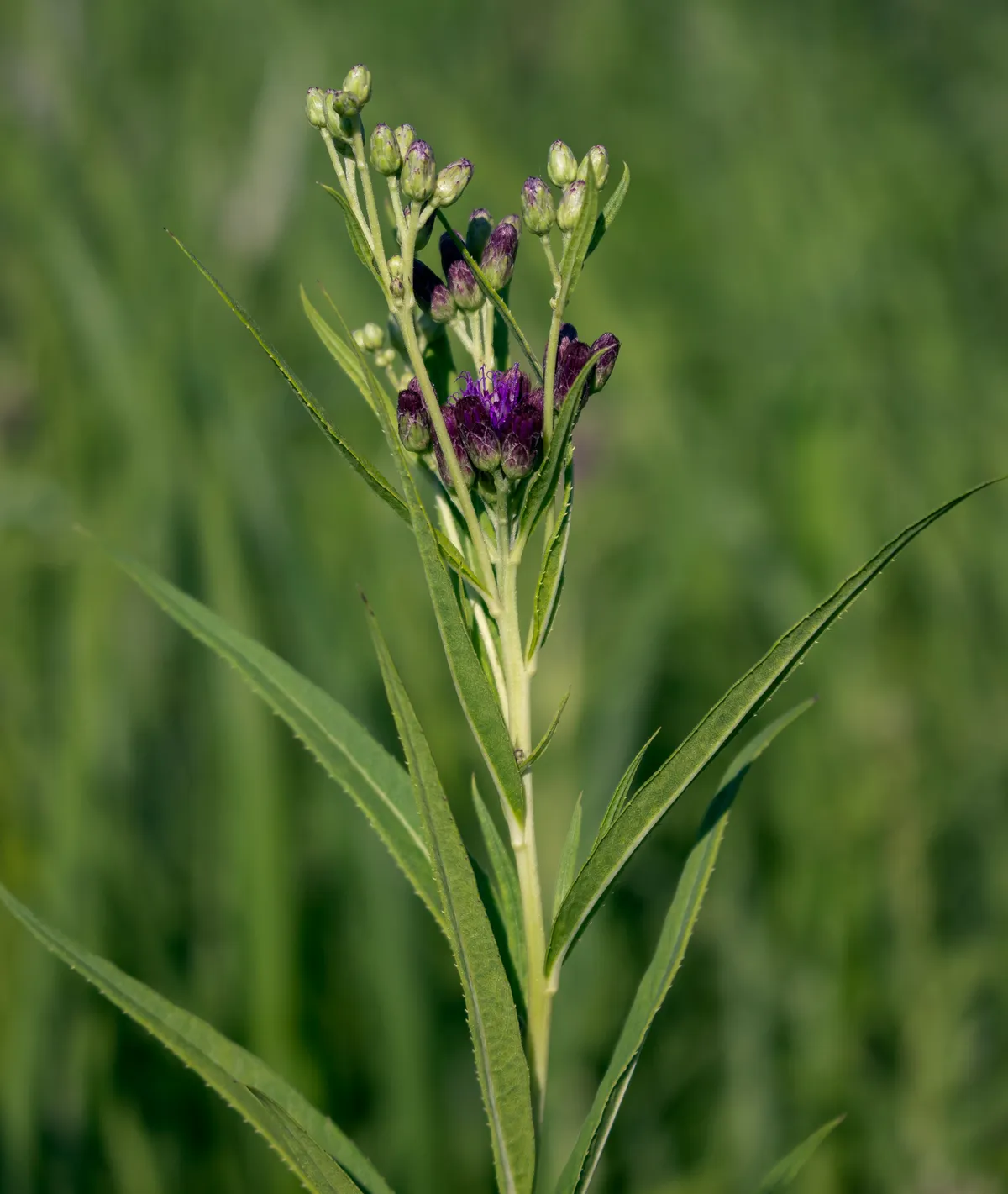
Prairie ironweed is a tall summer blooming forb that produces clusters of deep purple flowers from July through September. It thrives in full sun and moist to medium soil, often in prairies and low meadows.
Toxicity unknown
Prairie ironweed (Vernonia fasciculata) is not listed by the ASPCA Animal Poison Control Center (opens in new tab) or the other sources we check, so we have no verdict for it either way. Absence from those lists is not a clearance. If your pet shows symptoms after eating any plant, call the ASPCA at (888) 426-4435.
Light
full sun
Water
medium
Size
36"–60" H × 24"–36" W
Bloom
Jul, Aug, Sep
Native to
CO, IA, IL, IN and 12 more states
Pollinators
bees, butterflies
Deer
Resistant (per Prairie Moon Nursery)
Before you buy
Your city may pay you to plant this
Cities and water utilities offer rebates for replacing lawn with native and water-wise plants. We track 459 programs across 44 states, each with a link to the provider and the date we last checked it.
Find rebates in your areaPicture natives in your own yard
Upload a photo of your yard and Patch Vision shows a rendering of it planted with natives for your region, like Prairie ironweed.


Browse plants for this ecoregion
An upright perennial forb with narrow lance-shaped leaves and dense, flat-topped clusters of small, deep magenta-purple flowers in mid to late summer. Prefers moist, fertile soil but adapts to average garden conditions.
Growing Prairie ironweed
Grow Prairie ironweed in full sun and medium water. Mature plants reach 36 to 60 inches tall and spread 24 to 36 inches wide. Expect moderate maintenance to keep it looking intentional in a front yard.
How to care for Prairie ironweed, by region
How to care for Prairie ironweed where it is actually grown: year-round basics plus what to do each season, region by region, with the sources for each.
Care guidance last updated: July 2026
Cross Timbers (includes Fort Worth, TX)
Year-round
Prairie ironweed is a tall, upright prairie forb that spends most of the year as a quiet green clump, then tops out with clusters of small, deep purple flowers in late summer. It wants full sun and steady moisture and can reach 3 to 5 feet, so give it room toward the back of a bed.
- Plant in full sun (6 or more hours a day); it gets leggy and flops in part shade.
- Space plants 18 to 24 inches apart since a mature clump can spread 2 to 3 feet wide.
- Keep soil evenly moist, especially the first year; it is a moist-prairie plant, not a drought specialist.
- Stake or plant among sturdy neighbors (native grasses work well) since the tall stems can lean once flowers form.
- Deadhead spent flower clusters if you want to limit self-seeding in the bed.
Fall
Blooming continues into September, then the plant winds down for the year; fall is a good time to tidy the bed and thin any volunteer seedlings, not a good time to plant this particular species.
- Let the last flowers finish through September; pollinators are still using them into early fall.
- Cut spent flower stalks back to about 6 inches once seed heads have browned, usually by late October, if you want to limit self-seeding.
- Pull unwanted volunteer seedlings around the base clump; ironweed self-seeds readily in moist beds.
- Hold off on heavy fertilizing; let the plant go dormant naturally as days shorten.
- Water only if the fall stays dry; typical North Texas fall rain is usually enough once the plant is established.
Cutting back browned seed stalks before they scatter keeps the bed from reading as scraggly heading into winter.
Winter
Prairie ironweed dies back to the ground for winter and goes fully dormant; North Texas winters are mild enough that no special protection is needed once the plant is established.
- Cut the dead clump down to 4 to 6 inches by late February if you did not do it in fall.
- Leave a few inches of old stem over winter if you want seed heads to stay available for birds through the cold months.
- No watering is needed during dormancy unless the winter turns unusually dry for several weeks.
- Mulch stays in place through winter; no need to remove or refresh it until spring.
- During a hard Arctic freeze, established plants do not need covering since the crown is already dormant underground.
A cut-back, mulched clump reads as deliberately maintained rather than dead or neglected through the winter months.
Spring
Spring is the best time to get a new prairie ironweed in the ground in North Texas, while the soil is still cool and rain is more reliable.
- Plant between mid March (after last frost) and early May so roots establish before the summer heat arrives.
- Water 2 to 3 times a week for the first month if spring rain is light.
- In heavy black clay, plant a little high on a slight mound or work in compost for drainage; in the sandier soils west of the metro it will need watering more often as the weather warms.
- Watch for fresh basal growth by mid to late April; that is the sign the clump is establishing.
- Apply 2 to 3 inches of mulch, keeping it a couple inches back from the stems, to hold moisture as temperatures climb.
Fresh spring growth reads as a tidy, deliberate perennial bed if you keep last year's dead stems cut down and the mulch line neat.
Summer
This is bloom season, purple flower clusters open from July into September, but it is also the hardest stretch of the North Texas year for a moisture-loving plant like this one.
- Water deeply once or twice a week during 100F-plus stretches; do not let it dry out for extended periods.
- Check soil moisture 2 inches down before watering; medium-water plants like this one still need supplemental water through July and August here.
- Deadhead faded flower clusters through the bloom window to keep the plant tidy and encourage more buds.
- Watch for wilting by mid afternoon on the hottest days; that is a cue to water that evening, not a sign to move it to more shade.
- Refresh mulch if it has thinned to keep roots cooler and reduce watering frequency.
The purple bloom clusters read as an intentional flowering perennial, not a weed, as long as faded blooms are deadheaded and the stems stay upright.
Sources: Lady Bird Johnson Wildflower Center, Vernonia fasciculata, USDA PLANTS Database, Vernonia fasciculata profile
Texas Blackland Prairies (includes Dallas, TX)
Year-round
Prairie ironweed is a tall, upright prairie forb that spends most of the year as a quiet green clump, then tops out with clusters of small, deep purple flowers in late summer. It wants full sun and steady moisture and can reach 3 to 5 feet, so give it room toward the back of a bed.
- Plant in full sun (6 or more hours a day); it gets leggy and flops in part shade.
- Space plants 18 to 24 inches apart since a mature clump can spread 2 to 3 feet wide.
- Keep soil evenly moist, especially the first year; it is a moist-prairie plant, not a drought specialist.
- Stake or plant among sturdy neighbors (native grasses work well) since the tall stems can lean once flowers form.
- Deadhead spent flower clusters if you want to limit self-seeding in the bed.
Fall
Blooming continues into September, then the plant winds down for the year; fall is a good time to tidy the bed and thin any volunteer seedlings, not a good time to plant this particular species.
- Let the last flowers finish through September; pollinators are still using them into early fall.
- Cut spent flower stalks back to about 6 inches once seed heads have browned, usually by late October, if you want to limit self-seeding.
- Pull unwanted volunteer seedlings around the base clump; ironweed self-seeds readily in moist beds.
- Hold off on heavy fertilizing; let the plant go dormant naturally as days shorten.
- Water only if the fall stays dry; typical North Texas fall rain is usually enough once the plant is established.
Cutting back browned seed stalks before they scatter keeps the bed from reading as scraggly heading into winter.
Winter
Prairie ironweed dies back to the ground for winter and goes fully dormant; North Texas winters are mild enough that no special protection is needed once the plant is established.
- Cut the dead clump down to 4 to 6 inches by late February if you did not do it in fall.
- Leave a few inches of old stem over winter if you want seed heads to stay available for birds through the cold months.
- No watering is needed during dormancy unless the winter turns unusually dry for several weeks.
- Mulch stays in place through winter; no need to remove or refresh it until spring.
- During a hard Arctic freeze, established plants do not need covering since the crown is already dormant underground.
A cut-back, mulched clump reads as deliberately maintained rather than dead or neglected through the winter months.
Spring
Spring is the best time to get a new prairie ironweed in the ground in North Texas, while the soil is still cool and rain is more reliable.
- Plant between mid March (after last frost) and early May so roots establish before the summer heat arrives.
- Water 2 to 3 times a week for the first month if spring rain is light.
- In heavy black clay, plant a little high on a slight mound or work in compost for drainage; in the sandier soils west of the metro it will need watering more often as the weather warms.
- Watch for fresh basal growth by mid to late April; that is the sign the clump is establishing.
- Apply 2 to 3 inches of mulch, keeping it a couple inches back from the stems, to hold moisture as temperatures climb.
Fresh spring growth reads as a tidy, deliberate perennial bed if you keep last year's dead stems cut down and the mulch line neat.
Summer
This is bloom season, purple flower clusters open from July into September, but it is also the hardest stretch of the North Texas year for a moisture-loving plant like this one.
- Water deeply once or twice a week during 100F-plus stretches; do not let it dry out for extended periods.
- Check soil moisture 2 inches down before watering; medium-water plants like this one still need supplemental water through July and August here.
- Deadhead faded flower clusters through the bloom window to keep the plant tidy and encourage more buds.
- Watch for wilting by mid afternoon on the hottest days; that is a cue to water that evening, not a sign to move it to more shade.
- Refresh mulch if it has thinned to keep roots cooler and reduce watering frequency.
The purple bloom clusters read as an intentional flowering perennial, not a weed, as long as faded blooms are deadheaded and the stems stay upright.
Sources: Lady Bird Johnson Wildflower Center, Vernonia fasciculata, USDA PLANTS Database, Vernonia fasciculata profile
In an HOA neighborhood
Prairie ironweed is an HOA-friendly choice. Maintenance level: moderate. Tidiness: 3 out of 5.
Works well in: mid zone.
- Tall, upright habit can look unkempt without staking or backing plants in prominent locations
Wildlife value
Vividly colored flower clusters are a strong nectar draw for bees, butterflies, and migrating monarchs.
Common questions
- When does prairie ironweed bloom?
- Prairie ironweed typically flowers from July through September, producing clusters of small purple blooms atop tall stems.
- What pollinators visit prairie ironweed?
- Bees and butterflies are the main visitors, drawn to the nectar rich purple flower heads through the summer bloom period.
- What growing conditions does prairie ironweed need?
- It grows best in full sun with medium to consistently moist soil, similar to the low prairies and wet meadows where it is often found.
- Does prairie ironweed tolerate wet soil?
- Yes, it handles periodically wet or moist ground well and is a good fit for low spots in a sunny garden or restored prairie planting.
- Is Prairie ironweed HOA-friendly?
- Prairie ironweed is generally an HOA-friendly choice in the right placement, with moderate maintenance.
These answers were drafted with an AI model from this plant's data. Verify care details with a local expert.
Native range data from the World Checklist of Vascular Plants (Kew). Pollinator and host plant associations compiled from GBIF, iNaturalist, and published ecological literature.
If something looks wrong
Common plant problems, and what to check first
These come up on almost any plant. Each guide lists the likely causes in the order they are worth ruling out, with one thing to check before you act on any of them, and links to the source it came from.
- It is dying right after planting
- Leaves turning yellow
- Wilting even though I watered it
- Brown crispy leaf tips
- Bugs on the plant
Ready to grow Prairie ironweed? Add it to your garden in Pollinator Patch to track it and get season-by-season care guidance.