Prairie Rose
Rosa arkansana
Last reviewed: October 2026
Rosa arkansana is a low, spreading shrub that blooms pink flowers in June and July. It thrives in full sun with low water needs, doing well in prairies and open grasslands across the central United States.
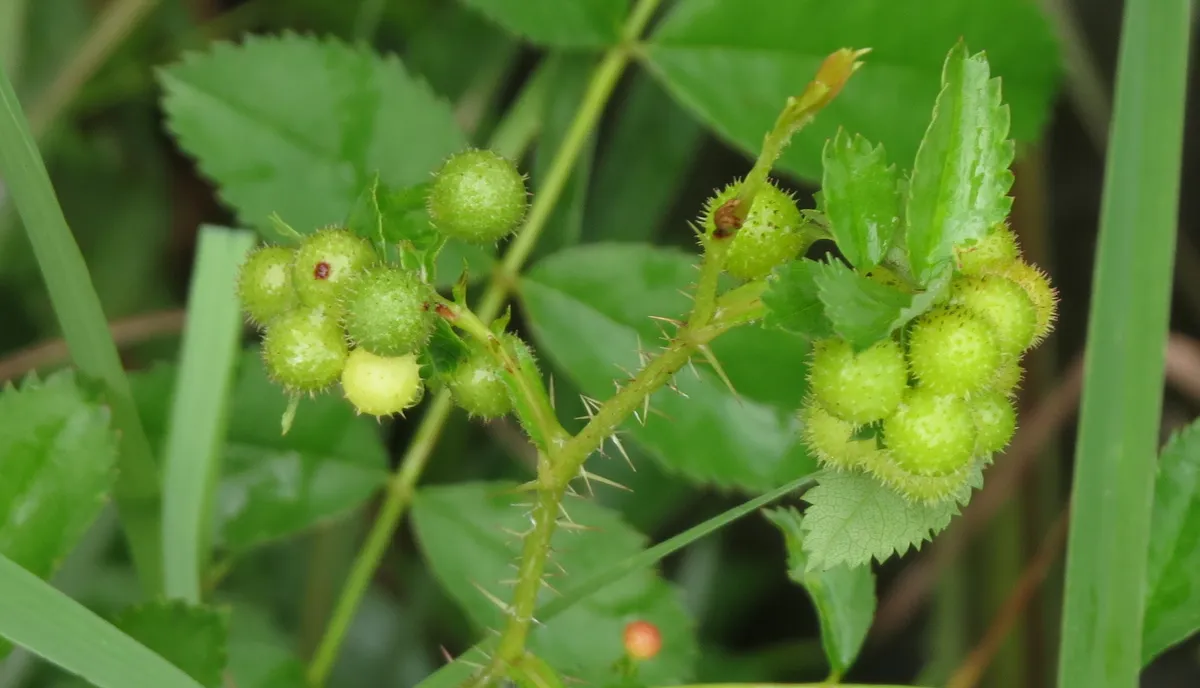
Prairie Rose (Rosa arkansana) is not on the ASPCA Animal Poison Control Center toxic plant list for dogs or cats (aspca.org (opens in new tab), last reviewed 2026-05-21). If your pet shows symptoms after eating any plant, call the ASPCA at (888) 426-4435.
Light
full sun
Water
low
Size
12"–36" H × 12"–36" W
Bloom
Jun, Jul
Native to
AR, CO, IA, IL and 15 more states
Pollinators
bees, beetles, butterflies
Before you buy
Your city may pay you to plant this
Cities and water utilities offer rebates for replacing lawn with native and water-wise plants. We track 459 programs across 44 states, each with a link to the provider and the date we last checked it.
Find rebates in your areaPicture natives in your own yard
Upload a photo of your yard and Patch Vision shows a rendering of it planted with natives for your region, like Prairie Rose.


Browse plants for this ecoregion
Prairie rose is a low-growing native shrub that produces fragrant pink flowers in summer followed by bright red rose hips in fall. This hardy plant spreads by underground runners to form colonies and requires minimal water once established.
Growing Prairie Rose
Grow Prairie Rose in full sun and low water. Mature plants reach 12 to 36 inches tall and spread 12 to 36 inches wide. Expect moderate maintenance to keep it looking intentional in a front yard.
How to care for Prairie Rose, by region
How to care for Prairie Rose where it is actually grown: year-round basics plus what to do each season, region by region, with the sources for each.
Care guidance last updated: September 2026
Cross Timbers (includes Fort Worth, TX)
Year-round
Prairie rose is a tough, low native shrub built for Texas heat and dry stretches, and it needs very little care once it settles in.
- Prairie rose is native to Texas prairies, roadsides, and open brushy ground, including the Cross Timbers around Fort Worth and the Blackland Prairie around Dallas, so local rain and heat are exactly what it evolved for.
- Give it full sun to part shade and let water drain away from the crown. Fort Worth's sandier Cross Timbers soil usually drains on its own, while Dallas's heavier Blackland Prairie clay does better with a slightly raised bed or a sandy amendment worked in so roots do not sit wet.
- It spreads slowly by underground rhizomes into a loose thicket, so give it a few feet of open ground and keep it away from a walkway or fence line.
- Roots grow deep, so an established plant shrugs off drought. Water regularly through the first year while roots are still shallow, then taper off.
- Rose in general is not on the ASPCA toxic plant list for dogs, cats, or horses, though the thorns are enough to keep most pets and kids from getting too close.
Fall
Fall is when prairie rose puts on one last show before going dormant.
- Foliage turns orange to red in fall, and the red hips left over from summer stay on the stems into winter, giving you fall color without any extra work.
- Growth slows and the plant heads toward dormancy by early to mid fall. This is not a good time to prune. Save any real cutback for late winter or early spring instead.
- Skip fertilizer in fall. Fresh growth pushed late in the year will not harden off before the first freeze.
- Leave the hips in place if you want fall and winter color or just want to feed birds. Removing them now only means less winter food and no benefit to the plant.
Winter
Winter is prairie rose's dormant season, and the plant mostly takes care of itself.
- Expect the top growth to die back partway or fully to the base most winters from cold or dry conditions. That is normal for this rose, not plant loss, and it resprouts from the crown in spring.
- Leave the dead-looking stems and hips standing through winter rather than cutting them back now. They still feed birds, and the plant handles pruning better once new growth is close in early spring.
- No extra water needed in a typical Texas winter. Only step in during an extended dry, mild stretch with no rain for several weeks.
- If bare winter stems look messy near the front of the house, a light shaping trim is fine. Save the real cutback for the early spring pruning window.
Bare winter stems can look untidy from the street. A light shaping trim keeps the planting HOA-friendly, but save the hard cutback for early spring.
Spring
Spring is prairie rose's one real pruning window before new growth takes off.
- Prune in early spring, right as buds start to break, cutting just above an outward-facing bud so new growth points away from the center of the plant.
- Take out any wood that died back over winter first. This rose naturally dies back toward the base most years from cold or drought, so a hard cutback in spring is normal and not a sign the plant is failing.
- Thin crowded stems for better airflow, and cut back any suckers coming up where you do not want the thicket to spread.
- New leaves and the season's first buds show up once growth starts in early spring, so this is the moment to check whether last year's stems survived winter or need to come out.
A tidy spring cutback keeps the front-yard planting looking HOA-friendly instead of overgrown.
Summer
Summer is prairie rose's bloom season, and after that it just needs to survive the heat.
- Flowers open from late spring into summer, and red rose hips form as the blooms fade. Leave the hips in place. They feed birds through fall and winter instead of needing deadheading.
- This is one of the most drought-tolerant native roses in Texas, with roots that can reach several feet down, so an established plant can ride out a normal Texas summer without extra water.
- Any rose planted within the last year still needs a deep soak during stretches without rain, even in summer.
- Keep an eye on suckers spreading further than you want. Cut unwanted ones off at the base rather than pulling them, which can tear at the root system.
Sources: Rosa arkansana - Lady Bird Johnson Wildflower Center, Rosa arkansana - Native Plant Society of Texas, Rosa arkansana, prairie rose - USFS Fire Effects Information System, Rosa arkansana Prairie Wild Rose - Prairie Moon Nursery, Rose - ASPCA Toxic and Non-Toxic Plants, How to Prune Roses - Iowa State University Extension
Texas Blackland Prairies (includes Dallas, TX)
Year-round
Prairie rose is a tough, low native shrub built for Texas heat and dry stretches, and it needs very little care once it settles in.
- Prairie rose is native to Texas prairies, roadsides, and open brushy ground, including the Cross Timbers around Fort Worth and the Blackland Prairie around Dallas, so local rain and heat are exactly what it evolved for.
- Give it full sun to part shade and let water drain away from the crown. Fort Worth's sandier Cross Timbers soil usually drains on its own, while Dallas's heavier Blackland Prairie clay does better with a slightly raised bed or a sandy amendment worked in so roots do not sit wet.
- It spreads slowly by underground rhizomes into a loose thicket, so give it a few feet of open ground and keep it away from a walkway or fence line.
- Roots grow deep, so an established plant shrugs off drought. Water regularly through the first year while roots are still shallow, then taper off.
- Rose in general is not on the ASPCA toxic plant list for dogs, cats, or horses, though the thorns are enough to keep most pets and kids from getting too close.
Fall
Fall is when prairie rose puts on one last show before going dormant.
- Foliage turns orange to red in fall, and the red hips left over from summer stay on the stems into winter, giving you fall color without any extra work.
- Growth slows and the plant heads toward dormancy by early to mid fall. This is not a good time to prune. Save any real cutback for late winter or early spring instead.
- Skip fertilizer in fall. Fresh growth pushed late in the year will not harden off before the first freeze.
- Leave the hips in place if you want fall and winter color or just want to feed birds. Removing them now only means less winter food and no benefit to the plant.
Winter
Winter is prairie rose's dormant season, and the plant mostly takes care of itself.
- Expect the top growth to die back partway or fully to the base most winters from cold or dry conditions. That is normal for this rose, not plant loss, and it resprouts from the crown in spring.
- Leave the dead-looking stems and hips standing through winter rather than cutting them back now. They still feed birds, and the plant handles pruning better once new growth is close in early spring.
- No extra water needed in a typical Texas winter. Only step in during an extended dry, mild stretch with no rain for several weeks.
- If bare winter stems look messy near the front of the house, a light shaping trim is fine. Save the real cutback for the early spring pruning window.
Bare winter stems can look untidy from the street. A light shaping trim keeps the planting HOA-friendly, but save the hard cutback for early spring.
Spring
Spring is prairie rose's one real pruning window before new growth takes off.
- Prune in early spring, right as buds start to break, cutting just above an outward-facing bud so new growth points away from the center of the plant.
- Take out any wood that died back over winter first. This rose naturally dies back toward the base most years from cold or drought, so a hard cutback in spring is normal and not a sign the plant is failing.
- Thin crowded stems for better airflow, and cut back any suckers coming up where you do not want the thicket to spread.
- New leaves and the season's first buds show up once growth starts in early spring, so this is the moment to check whether last year's stems survived winter or need to come out.
A tidy spring cutback keeps the front-yard planting looking HOA-friendly instead of overgrown.
Summer
Summer is prairie rose's bloom season, and after that it just needs to survive the heat.
- Flowers open from late spring into summer, and red rose hips form as the blooms fade. Leave the hips in place. They feed birds through fall and winter instead of needing deadheading.
- This is one of the most drought-tolerant native roses in Texas, with roots that can reach several feet down, so an established plant can ride out a normal Texas summer without extra water.
- Any rose planted within the last year still needs a deep soak during stretches without rain, even in summer.
- Keep an eye on suckers spreading further than you want. Cut unwanted ones off at the base rather than pulling them, which can tear at the root system.
Sources: Rosa arkansana - Lady Bird Johnson Wildflower Center, Rosa arkansana - Native Plant Society of Texas, Rosa arkansana, prairie rose - USFS Fire Effects Information System, Rosa arkansana Prairie Wild Rose - Prairie Moon Nursery, Rose - ASPCA Toxic and Non-Toxic Plants, How to Prune Roses - Iowa State University Extension
In an HOA neighborhood
Prairie Rose is an HOA-friendly choice. Maintenance level: moderate. Tidiness: 3 out of 5.
Works well in: mid zone, foundation.
- Spreads by runners which may appear uncontrolled
- Winter appearance is bare and informal
- Thorny stems may be considered hazardous near walkways
Wildlife value
The flowers attract native bees and beetles during summer blooming period. Rose hips provide food for birds and wildlife through fall and winter months.
Common questions
- How much sun does Prairie Rose need?
- Prairie Rose grows best in full sun. It can tolerate some part sun but flowers more heavily with direct light most of the day.
- When does Rosa arkansana bloom?
- Prairie Rose typically blooms in June and July, producing pink flowers on low, thorny stems.
- How much water does Prairie Rose require?
- Once established, Prairie Rose tolerates low water conditions and handles dry, well drained soils common on the prairie.
- What insects visit Prairie Rose flowers?
- Bees and beetles are common visitors to Prairie Rose flowers, drawn to the open blooms for pollen.
- Does Prairie Rose lose its leaves in winter?
- Yes, Prairie Rose is deciduous and drops its leaves in fall, resuming growth in spring.
- Is Prairie Rose toxic to dogs?
- Prairie Rose is not on the ASPCA Animal Poison Control Center toxic plant list for dogs (aspca.org).
- Is Prairie Rose toxic to cats?
- Prairie Rose is not on the ASPCA Animal Poison Control Center toxic plant list for cats (aspca.org).
- Is Prairie Rose HOA-friendly?
- Prairie Rose is generally an HOA-friendly choice in the right placement, with moderate maintenance.
These answers were drafted with an AI model from this plant's data. Verify care details with a local expert.
Native range data from vouchered herbarium specimen records and regional native plant society lists. Pollinator and host plant associations compiled from GBIF, iNaturalist, and published ecological literature.
If something looks wrong
Common plant problems, and what to check first
These come up on almost any plant. Each guide lists the likely causes in the order they are worth ruling out, with one thing to check before you act on any of them, and links to the source it came from.
- It is dying right after planting
- Leaves turning yellow
- Wilting even though I watered it
- Brown crispy leaf tips
- Bugs on the plant
Ready to grow Prairie Rose? Add it to your garden in Pollinator Patch to track it and get season-by-season care guidance.