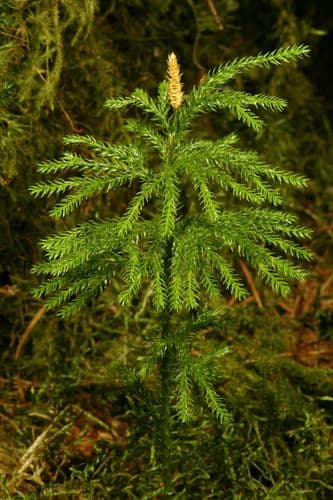
Prickle Tree Club-Moss
Dendrolycopodium dendroideum
Last reviewed: June 2026
Light
part shade
Water
medium
Size
12"–24" H × 12"–24" W
Bloom
N/A
Native to
WY
Ground-hugging clubmoss that forms dense, carpet-like colonies with delicate, feathery foliage. This ancient plant species creates a soft, moss-like groundcover that stays green year-round in shaded areas.
In an HOA neighborhood
Prickle Tree Club-Moss takes more care to keep looking intentional in a front yard. Maintenance level: low. Consider it for backyard or mid-zone beds rather than the street edge.
Works well in: backyard only.
- Unusual appearance may be viewed as weedy or unkempt
- Spreads naturally which HOAs often discourage
- Not recognized as typical landscaping by most homeowners
Wildlife value
Provides shelter and nesting material for small wildlife and ground-dwelling insects. Does not produce flowers or attract pollinators but supports the broader ecosystem as groundcover habitat.
Common questions
- How much sun does Prickle Tree Club-Moss need?
- Prickle Tree Club-Moss grows best in part shade conditions.
- Where is Prickle Tree Club-Moss native?
- Prickle Tree Club-Moss (Dendrolycopodium dendroideum) is native to WY, per the USDA PLANTS Database and regional native plant society lists.
- Is Prickle Tree Club-Moss HOA-friendly?
- Prickle Tree Club-Moss takes more care to look intentional in a front yard. Consider it for backyard or mid-zone beds rather than the street edge.
Native range data from the USDA PLANTS Database and regional native plant society lists. Pollinator and host plant associations compiled from GBIF, iNaturalist, and published ecological literature.
Ready to grow Prickle Tree Club-Moss? Add it to your garden in Pollinator Patch to track it and get season-by-season care guidance.
Not sure where to start? Take the 2-minute yard quiz