Primula hendersonii
Last reviewed: August 2026
Light
part shade
Water
medium
Size
6"–14" H × 6"–10" W
Bloom
Feb, Mar, Apr
Native to
CA, OR, WA
Pollinators
bumble bees
Before you buy
Your city may pay you to plant this
Cities and water utilities offer rebates for replacing lawn with native and water-wise plants. We track 431 programs across 44 states, each with a link to the provider and the date we last checked it.
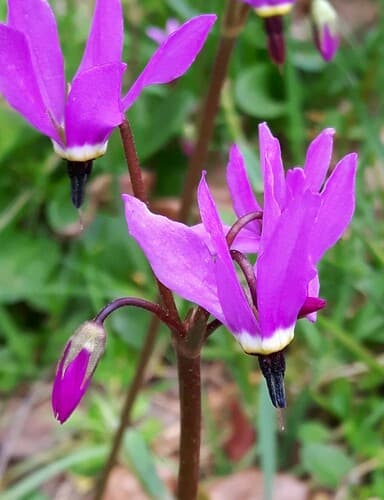
Find rebates in your areaThis shooting star is a small perennial bulb with a basal rosette of leaves and nodding pink to magenta flowers with sharply reflexed petals, held above the foliage on a bare stalk. It grows in grassland and open woodland, going dormant by early summer.
Wildlife value
The reflexed flowers require buzz pollination and are worked mainly by bumble bees, which vibrate the flower to release pollen.
Common questions
- How much sun does need?
- grows best in part shade conditions.
- When does bloom?
- blooms in February, March, and April.
- Where is native?
- (Primula hendersonii) is native to CA, OR, WA, per vouchered herbarium specimen records and regional native plant society lists.
- What pollinators does attract?
- draws bumble bees.
Native range data from vouchered herbarium specimen records and regional native plant society lists. Pollinator and host plant associations compiled from GBIF, iNaturalist, and published ecological literature.
Ready to grow ? Add it to your garden in Pollinator Patch to track it and get season-by-season care guidance.
Not sure where to start? Take the 2-minute yard quiz