Thimbleberry
Rubus odoratus
Last reviewed: June 2026
Rubus odoratus (Thimbleberry) is a deciduous shrub native to eastern North America and the Pacific Northwest, producing fragrant pink flowers in June and July that attract bees and beetles.
The USDA PLANTS Database (opens in new tab) does not flag Thimbleberry as toxic to livestock.
Light
part shade
Water
medium
Size
36"–72" H × 36"–72" W
Bloom
Jun, Jul
Native to
AL, CT, DE, GA and 22 more states
Pollinators
bees, beetles
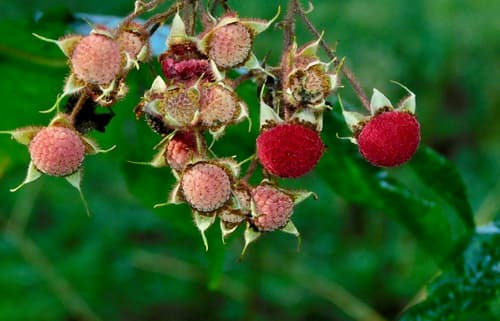
Thimbleberry is a medium-sized native shrub with large, maple-like leaves and showy pink to purple flowers in summer. It produces edible red berries and creates attractive patches through underground spreading. The plant offers three seasons of interest with flowers, fruit, and decent fall color.
Growing Thimbleberry
Grow Thimbleberry in part shade and medium water. Mature plants reach 36 to 72 inches tall and spread 36 to 72 inches wide. Expect high maintenance to keep it looking intentional in a front yard.
In an HOA neighborhood
Thimbleberry takes more care to keep looking intentional in a front yard. Maintenance level: high. Consider it for backyard or mid-zone beds rather than the street edge.
Works well in: backyard only.
- Spreads aggressively by underground runners
- Can look unkempt and weedy
- May be viewed as too wild or uncontrolled for formal landscapes
Wildlife value
The flowers attract native bees and beetles during summer blooming period. Birds and small mammals enjoy the edible berries in late summer.
Common questions
- When does Thimbleberry bloom?
- Rubus odoratus blooms during June and July, producing showy pink flowers that are typically 1-2 inches across.
- What pollinators visit Thimbleberry flowers?
- Thimbleberry flowers attract various bees and beetles, which help pollinate the plant and contribute to fruit production.
- Where is Thimbleberry native in the United States?
- Rubus odoratus is native to much of eastern North America from Maine to Georgia, extending west to the Great Lakes region and Montana, with populations also in Washington state.
- What growing conditions does Thimbleberry prefer?
- Thimbleberry thrives in partial shade to shaded locations with medium moisture levels, making it well-suited for woodland gardens and naturalized areas.
- Is Thimbleberry toxic to livestock?
- The USDA PLANTS Database does not flag Thimbleberry as toxic to livestock.
- Is Thimbleberry HOA-friendly?
- Thimbleberry takes more care to look intentional in a front yard. Consider it for backyard or mid-zone beds rather than the street edge.
Native range data from the USDA PLANTS Database and regional native plant society lists. Pollinator and host plant associations compiled from GBIF, iNaturalist, and published ecological literature.
Ready to grow Thimbleberry? Add it to your garden in Pollinator Patch to track it and get season-by-season care guidance.
Not sure where to start? Take the 2-minute yard quiz