Seaside Goldenrod
Solidago sempervirens
Last reviewed: September 2026
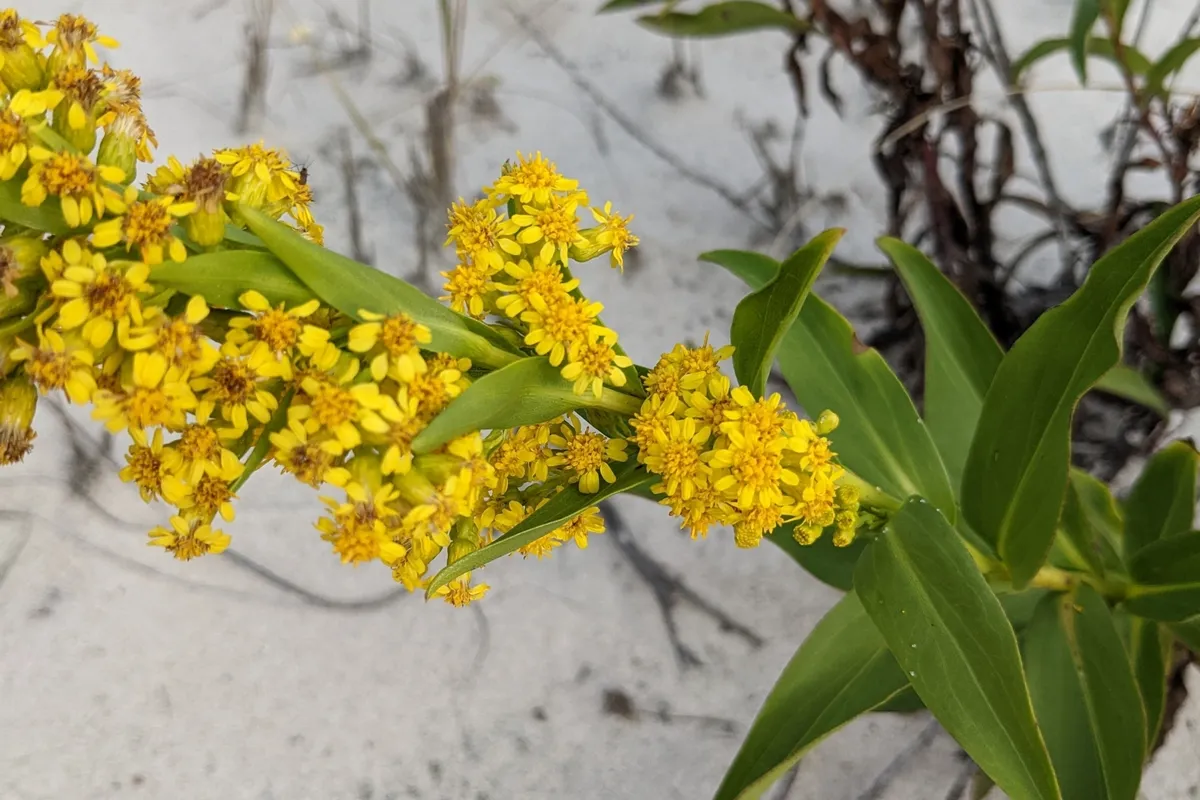
Solidago sempervirens, or seaside goldenrod, produces bright yellow flower clusters from late summer through fall in coastal dunes and salt marshes, offering an important late-season nectar source for bees, butterflies, and moths.
Toxicity unknown
Seaside Goldenrod (Solidago sempervirens) is not listed by the ASPCA Animal Poison Control Center (opens in new tab) or the other sources we check, so we have no verdict for it either way. Absence from those lists is not a clearance. If your pet shows symptoms after eating any plant, call the ASPCA at (888) 426-4435.
The USDA PLANTS Database (opens in new tab) does not flag Seaside Goldenrod as toxic to livestock.
Light
full sun
Water
low
Size
24"–96" H × 12"–24" W
Bloom
Jun, Jul, Aug, Sep, Oct, Nov
Native to
CT, DE, MA, MD and 7 more states
Pollinators
butterflies, bees, moths, nectar insects
Before you buy
Your city may pay you to plant this
Cities and water utilities offer rebates for replacing lawn with native and water-wise plants. We track 452 programs across 44 states, each with a link to the provider and the date we last checked it.
Find rebates in your areaBrowse plants for this ecoregion
Seaside Goldenrod is a tall perennial wildflower that produces bright yellow flower clusters from summer through late fall. This evergreen native maintains its foliage year-round and can reach up to 8 feet tall in optimal conditions. It thrives in full sun with minimal water once established.
Growing Seaside Goldenrod
Grow Seaside Goldenrod in full sun and low water. Mature plants reach 24 to 96 inches tall and spread 12 to 24 inches wide. Expect low maintenance to keep it looking intentional in a front yard.
How to care for Seaside Goldenrod, by region
How to care for Seaside Goldenrod where it is actually grown: year-round basics plus what to do each season, region by region, with the sources for each.
Care guidance last updated: September 2026
Mississippi Valley Loess Plains (includes Memphis, TN)
Year-round
Seaside goldenrod is a coastal plant by nature, but it adapts well to inland Memphis gardens as long as it gets full sun and soil that drains, without the salt spray and dune sand it evolved with on the coast.
- Plant in full sun in average to sandy, well-drained soil, heavy wet clay is the main thing to avoid.
- It grows in loose mounds up to about 6 feet tall in ideal conditions, though inland plants often stay shorter, cut back in late spring to keep it more compact.
- No fertilizer needed, this species is adapted to lean coastal soil and grows leggy if overfed.
- It self-sows readily, deadhead spent flowers if you want to keep it contained to one area of the bed.
Cutting it back in late spring keeps the mound compact and tidy rather than tall and sprawling, an HOA-friendly way to grow it in a visible front bed.
Fall
Fall is when seaside goldenrod earns its keep in a Memphis garden, with bright yellow, one-sided flower clusters opening from August into October.
- Leave the flowers in place for pollinators, this is a strong late-season nectar source.
- Deadhead after bloom if you want to limit how much it self-sows around the bed.
- No need to cut the plant back yet, let foliage stand through fall for the birds and late pollinators.
- Memphis's first frost typically arrives between early and mid November, blooms usually finish naturally before then.
Winter
Seaside goldenrod dies back for winter in Memphis, an herbaceous perennial whose evergreen habit on the coast does not carry over to this inland, colder-winter setting.
- Cut back dead stalks in late winter before new spring growth starts, or leave seed heads standing for winter bird interest and cut back later.
- No winter watering or protection needed, established clumps handle Memphis winters without help.
- Check the crown after a hard freeze, healthy roots resprout reliably from a dormant clump.
- Mulch lightly if the bed is newly planted, established clumps do not need it.
Spring
Spring is the season to cut seaside goldenrod back and set its shape for the year in a Memphis garden.
- Trim the clump back in late spring to encourage a shorter, bushier mound instead of tall, floppy growth.
- Divide congested clumps now if the planting has spread further than you want.
- New growth needs little water beyond normal spring rainfall once the clump is established.
- Confirm the site drains well before spring rains arrive, standing water is the main risk for this coastal species inland.
Summer
Through Memphis's hot summer, seaside goldenrod's waxy, fleshy leaves that evolved to handle coastal salt spray also help it shrug off inland heat and drought.
- Established plants need little to no supplemental water during a normal Memphis summer.
- No fertilizer needed, it is built for lean, sandy soil and stays more compact without feeding.
- Watch for flopping in rich garden soil, a mid-summer trim can help it stay upright ahead of fall bloom.
- It tolerates heat and humidity well, disease and pest problems are uncommon.
Sources: Go Botany (Native Plant Trust) - Solidago sempervirens, NC State Extension Gardener Plant Toolbox - Solidago sempervirens, Prairie Moon Nursery - Solidago sempervirens
Want these tasks as reminders timed to your yard? Pollinator Patch turns this guidance into a season-by-season care plan for the plants you actually grow.
In an HOA neighborhood
Seaside Goldenrod is an HOA-friendly choice in the right placement. Maintenance level: low. Tidiness: 2 out of 5.
Works well in: mid zone, backyard only.
- Height may appear overgrown in formal settings
- Can look weedy when dormant
- Name association with allergenic ragweed may cause concern
Wildlife value
This plant is exceptional for pollinators, attracting butterflies, bees, moths, and other nectar-feeding insects throughout its extended bloom period. The long flowering season from June through November provides crucial late-season nectar when many other plants have finished blooming.
Common questions
- When does seaside goldenrod bloom?
- Seaside goldenrod generally blooms from June into November, with the heaviest flowering in late summer and fall when many other coastal plants have finished.
- What pollinators visit seaside goldenrod?
- Bees, butterflies, moths, and other nectar-feeding insects visit the flower clusters, and the late bloom period makes it a valuable fall nectar source along the coast.
- How much water does seaside goldenrod need once established?
- It tolerates low to medium soil moisture and handles sandy, fast-draining soils well, which suits its typical dune and marsh-edge growing sites.
- Does seaside goldenrod need full sun?
- It grows best in full sun but can tolerate part sun locations, especially in sandy or open coastal settings where competing vegetation is sparse.
- Is Seaside Goldenrod toxic to livestock?
- The USDA PLANTS Database does not flag Seaside Goldenrod as toxic to livestock.
- Is Seaside Goldenrod HOA-friendly?
- Seaside Goldenrod is generally an HOA-friendly choice in the right placement, with low maintenance.
These answers were drafted with an AI model from this plant's data. Verify care details with a local expert.
Native range data from vouchered herbarium specimen records and regional native plant society lists. Pollinator and host plant associations compiled from GBIF, iNaturalist, and published ecological literature.
If something looks wrong
Common plant problems, and what to check first
These come up on almost any plant. Each guide lists the likely causes in the order they are worth ruling out, with one thing to check before you act on any of them, and links to the source it came from.
- It is dying right after planting
- Leaves turning yellow
- Wilting even though I watered it
- Brown crispy leaf tips
- Bugs on the plant
Ready to grow Seaside Goldenrod? Add it to your garden in Pollinator Patch to track it and get season-by-season care guidance.
Planning a bed around it? Start a free plan with this plant
Not sure where to start? Take the 2-minute yard quiz