Smallfruit beggarticks
Bidens mitis
Last reviewed: September 2026
Bidens mitis, or smallfruit beggarticks, is a yellow flowered forb that blooms from August through November in wet meadows, ditches and pine savannas across the southeastern and south central United States, drawing bees and butterflies.
Toxicity unknown
Smallfruit beggarticks (Bidens mitis) is not listed by the ASPCA Animal Poison Control Center (opens in new tab) or the other sources we check, so we have no verdict for it either way. Absence from those lists is not a clearance. If your pet shows symptoms after eating any plant, call the ASPCA at (888) 426-4435.
Light
full sun
Water
high
Size
12"–36" H × 12"–24" W
Bloom
Aug, Sep, Oct, Nov
Native to
AL, AR, DE, FL and 11 more states
Pollinators
bees, butterflies
Before you buy
Your city may pay you to plant this
Cities and water utilities offer rebates for replacing lawn with native and water-wise plants. We track 459 programs across 44 states, each with a link to the provider and the date we last checked it.
Find rebates in your areaPicture natives in your own yard
Upload a photo of your yard and Patch Vision shows a rendering of it planted with natives for your region, like Smallfruit beggarticks.


Browse plants for this ecoregion
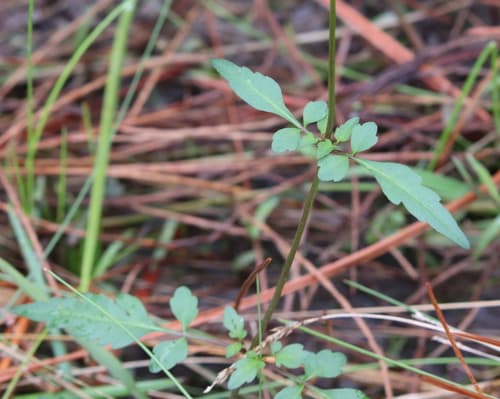
Slender branching annual forb with fine feathery foliage and small bright yellow daisy-like flowers. Thrives in consistently moist soil and forms loose colonies along wet edges.
Growing Smallfruit beggarticks
Grow Smallfruit beggarticks in full sun and high water. Mature plants reach 12 to 36 inches tall and spread 12 to 24 inches wide. Expect moderate maintenance to keep it looking intentional in a front yard.
How to care for Smallfruit beggarticks, by region
How to care for Smallfruit beggarticks where it is actually grown: year-round basics plus what to do each season, region by region, with the sources for each.
Care guidance last updated: September 2026
Cross Timbers (includes Fort Worth, TX)
Year-round
Smallfruit beggarticks is an annual wildflower that needs soil that stays moist to wet, which is different from most Texas natives.
- Give it full sun to part shade and soil that stays moist to wet. Its natural home is marsh edges and low wet ground, not a typical dry flower bed.
- In Fort Worth's clay and limestone soil, pick the lowest spot in the yard, ground near a downspout, or the edge of a rain garden so the roots stay damp.
- It grows about two to three feet tall with small yellow, daisy-like flowers.
- The seeds carry tiny hooked hairs that stick to clothes, fur, and feathers. That is how the plant spreads in the wild, so expect a few volunteer seedlings nearby the next year.
- Bees and butterflies visit the blooms for nectar.
- It is not on the ASPCA toxic plant list for dogs.
Fall
Fall is peak bloom. Small yellow flowers open from September through November.
- Flowers open from September through November, right as many other blooms are winding down.
- Deadhead spent flowers if you want a tidier look near the curb. It also cuts down on how many sticky seeds latch onto pant legs and pet fur.
- Leave a few seed heads on the plant if you want it to come back next year from its own seed.
Deadheading spent blooms as they fade keeps the bed looking tidy for curb appeal.
Winter
This is an annual. It dies back with the first hard freeze and will not resprout from the same root.
- Expect the plant to die back completely after the first freeze, since it is an annual and not a perennial.
- Cut back the dead stalks once they turn brown for a tidier winter bed.
- If seed pods matured in fall, new plants should sprout on their own from the soil next spring, so replanting usually is not necessary.
Cutting back the frost-killed stalks keeps a winter bed from looking ratty.
Spring
Spring is planting season. Sow seed directly into damp soil once the last frost has passed.
- Direct sow seed into consistently damp soil after your last frost date, and keep the seedbed moist while it germinates.
- Pick the wettest spot you have, a low corner, a rain garden, or ground near a downspout, since this plant struggles in an average dry bed.
- If seed pods matured last fall, new seedlings often show up on their own in damp beds this spring.
Summer
Keep the soil consistently wet through the hot summer. This plant does not handle a dry spell the way most Texas natives do.
- Water enough to keep the soil moist to wet all through summer. Letting it dry out is the most common way to lose this plant.
- It reaches its full height of about two to three feet by mid to late summer.
- A layer of mulch helps hold moisture, but the ground underneath should still feel damp, not dry.
Sources: Lady Bird Johnson Wildflower Center Native Plant Database, Bidens mitis, Texas A&M AgriLife Extension Aquaplant, Smallfruit Beggartick, ASPCA Toxic and Non-Toxic Plant List, Dogs, Florida Wildflower Foundation, Flower Friday: Bidens mitis (community tip), Gnarly Nursery, Bidens mitis, Smallfruit Beggarticks
Texas Blackland Prairies (includes Dallas, TX)
Year-round
Smallfruit beggarticks is an annual wildflower that needs soil that stays moist to wet, which is different from most Texas natives.
- Give it full sun to part shade and soil that stays moist to wet. Its natural home is marsh edges and low wet ground, not a typical dry flower bed.
- In Dallas's blackland clay prairie soil, pick the lowest spot in the yard, ground near a downspout, or the edge of a rain garden so the roots stay damp.
- It grows about two to three feet tall with small yellow, daisy-like flowers.
- The seeds carry tiny hooked hairs that stick to clothes, fur, and feathers. That is how the plant spreads in the wild, so expect a few volunteer seedlings nearby the next year.
- Bees and butterflies visit the blooms for nectar.
- It is not on the ASPCA toxic plant list for dogs.
Fall
Fall is peak bloom. Small yellow flowers open from September through November.
- Flowers open from September through November, right as many other blooms are winding down.
- Deadhead spent flowers if you want a tidier look near the curb. It also cuts down on how many sticky seeds latch onto pant legs and pet fur.
- Leave a few seed heads on the plant if you want it to come back next year from its own seed.
Deadheading spent blooms as they fade keeps the bed looking tidy for curb appeal.
Winter
This is an annual. It dies back with the first hard freeze and will not resprout from the same root.
- Expect the plant to die back completely after the first freeze, since it is an annual and not a perennial.
- Cut back the dead stalks once they turn brown for a tidier winter bed.
- If seed pods matured in fall, new plants should sprout on their own from the soil next spring, so replanting usually is not necessary.
Cutting back the frost-killed stalks keeps a winter bed from looking ratty.
Spring
Spring is planting season. Sow seed directly into damp soil once the last frost has passed.
- Direct sow seed into consistently damp soil after your last frost date, and keep the seedbed moist while it germinates.
- Pick the wettest spot you have, a low corner, a rain garden, or ground near a downspout, since this plant struggles in an average dry bed.
- If seed pods matured last fall, new seedlings often show up on their own in damp beds this spring.
Summer
Keep the soil consistently wet through the hot summer. This plant does not handle a dry spell the way most Texas natives do.
- Water enough to keep the soil moist to wet all through summer. Letting it dry out is the most common way to lose this plant.
- It reaches its full height of about two to three feet by mid to late summer.
- A layer of mulch helps hold moisture, but the ground underneath should still feel damp, not dry.
Sources: Lady Bird Johnson Wildflower Center Native Plant Database, Bidens mitis, Texas A&M AgriLife Extension Aquaplant, Smallfruit Beggartick, ASPCA Toxic and Non-Toxic Plant List, Dogs, Florida Wildflower Foundation, Flower Friday: Bidens mitis (community tip), Gnarly Nursery, Bidens mitis, Smallfruit Beggarticks
In an HOA neighborhood
Smallfruit beggarticks takes more care to keep looking intentional in a front yard. Maintenance level: moderate. Consider it for backyard or mid-zone beds rather than the street edge.
Works well in: front yard, mid zone.
- self-seeds readily and can look weedy if not managed
- produces bur-like seeds that stick to clothing and pet fur
Wildlife value
Nectar-rich late-season blooms attract bees and butterflies, and the seeds provide food for songbirds.
Common questions
- When does smallfruit beggarticks bloom?
- Bidens mitis blooms from August through November, with flowering usually peaking in late summer and continuing into fall.
- What growing conditions does Bidens mitis need?
- This forb does best in full sun and consistently moist to wet soil, the kind found in wet meadows, ditch banks and low pinelands where it is commonly found.
- What pollinators visit Bidens mitis?
- Bees and butterflies visit the yellow flowers of Bidens mitis for nectar and pollen during its late summer and fall bloom period.
- Is Bidens mitis a perennial or annual plant?
- Bidens mitis is a herbaceous forb that dies back each year, growing fresh from seed or roots the following season.
- Is Smallfruit beggarticks HOA-friendly?
- Smallfruit beggarticks takes more care to look intentional in a front yard. Consider it for backyard or mid-zone beds rather than the street edge.
These answers were drafted with an AI model from this plant's data. Verify care details with a local expert.
Native range data from the World Checklist of Vascular Plants (Kew). Pollinator and host plant associations compiled from GBIF, iNaturalist, and published ecological literature.
If something looks wrong
Common plant problems, and what to check first
These come up on almost any plant. Each guide lists the likely causes in the order they are worth ruling out, with one thing to check before you act on any of them, and links to the source it came from.
- It is dying right after planting
- Leaves turning yellow
- Wilting even though I watered it
- Brown crispy leaf tips
- Bugs on the plant
Ready to grow Smallfruit beggarticks? Add it to your garden in Pollinator Patch to track it and get season-by-season care guidance.