Spotted Geranium
Geranium maculatum
Last reviewed: September 2026
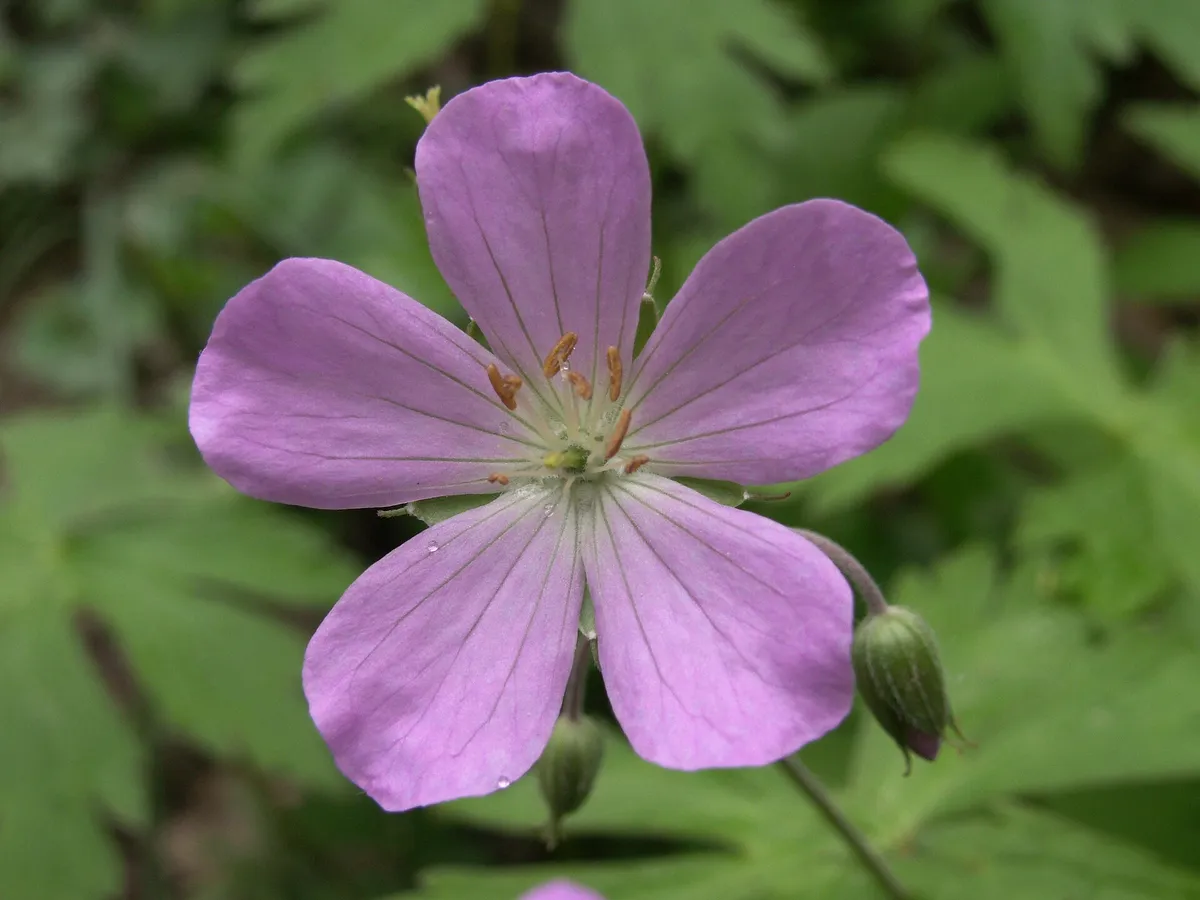
Spotted Geranium is a woodland forb that blooms pink to lavender flowers from May through July. It grows well in part shade to shade with medium moisture, often in deciduous forest understories.
Toxicity unknown
Spotted Geranium (Geranium maculatum) is not listed by the ASPCA Animal Poison Control Center (opens in new tab) or the other sources we check, so we have no verdict for it either way. Absence from those lists is not a clearance. If your pet shows symptoms after eating any plant, call the ASPCA at (888) 426-4435.
Light
part shade
Water
medium
Size
12"–24" H × 12"–18" W
Bloom
May, Jun, Jul
Native to
AL, AR, CT, DE and 32 more states
Pollinators
bees, butterflies, beetles
Deer
Resistant (per Prairie Moon Nursery)
Before you buy
Your city may pay you to plant this
Cities and water utilities offer rebates for replacing lawn with native and water-wise plants. We track 459 programs across 44 states, each with a link to the provider and the date we last checked it.
Find rebates in your areaPicture natives in your own yard
Upload a photo of your yard and Patch Vision shows a rendering of it planted with natives for your region, like Spotted Geranium.


Browse plants for this ecoregion
Spotted geranium is a charming native wildflower with deeply lobed leaves and delicate pink to purple five-petaled flowers that bloom from late spring through summer. This woodland perennial forms neat clumps and goes dormant in late summer, disappearing completely until the following spring. It thrives in partial shade with average moisture and requires minimal care once established.
Growing Spotted Geranium
Grow Spotted Geranium in part shade and medium water. Mature plants reach 12 to 24 inches tall and spread 12 to 18 inches wide. Expect low maintenance to keep it looking intentional in a front yard.
How to care for Spotted Geranium, by region
How to care for Spotted Geranium where it is actually grown: year-round basics plus what to do each season, region by region, with the sources for each.
Care guidance last updated: October 2026
Central Appalachians (includes Johnstown, PA)
Year-round
Wild geranium (Geranium maculatum) is a native woodland perennial found from Quebec and Ontario south to Georgia and west to Kansas and South Dakota, growing wild in the dry to moist woods and woodland edges of the Allegheny Plateau around Johnstown, Pennsylvania. In this USDA zone 6a region it wants partial to full shade and rich, humus soil that stays evenly moist without staying soggy, similar to the forest floor conditions it grows in naturally at this elevation. It blooms rose purple to lavender flowers from spring into early summer and can rebloom lightly if deadheaded. Bees visit the flowers for pollen and nectar. It is a different genus from the Pelargonium species ASPCA lists as toxic under the common name geranium, so it does not appear on the ASPCA toxic plant list, though deer will browse the foliage.
- Give it partial to full shade and rich, evenly moist, humus soil, since full sun scorches the foliage in this region's summers
- Space plants twelve to eighteen inches apart, it spreads slowly by rhizome into a loose colony over a few seasons
- Deadhead spent flowers to tidy the seed capsules and encourage a light rebloom
- Expect flowers in shades of rose purple to lavender, occasionally white
- Deer browse the foliage, so protect new plantings if deer pressure is high
- It is not the Pelargonium species ASPCA lists as toxic under the common name geranium, so it does not appear on the ASPCA toxic plant list
A slow spreading woodland groundcover that stays under two feet tall and blooms in a shaded bed reads as intentional and tidy, which keeps it HOA-friendly.
Fall
Fall brings cooler nights and, on many years, a touch of bronze red color to the foliage before it dies back. The first fall frost on the Allegheny Plateau around Johnstown typically arrives by early October, so plan any final planting, dividing, or transplanting for early to mid fall while the soil is still workable and warm enough for roots to settle before the ground cools. Rake fallen tree leaves lightly over the crown rather than removing them entirely, since a thin natural leaf layer mimics the woodland floor mulch this plant is used to.
- Divide or transplant in early to mid fall, well before the first frost typically arrives in early October
- Leave a thin layer of fallen leaves over the crown as natural mulch rather than clearing the bed bare
- Cut back foliage once it browns and dies back after frost
- Reduce watering as growth slows heading into dormancy
- Watch foliage for a bronze red fall color before it drops
Winter
Wild geranium is fully dormant through winter on the Allegheny Plateau around Johnstown, where this USDA zone 6a region sees average winter lows around negative ten to negative five degrees Fahrenheit. The plant dies back to the crown and needs no active care once frost has cut the foliage down. A layer of fallen leaves or light mulch over the crown helps protect it through the coldest stretches, especially for a plant in its first winter after transplanting. New growth will not appear again until the ground thaws and soil temperatures rise in spring.
- No watering or feeding is needed once the plant is dormant
- Leave a light natural leaf mulch over the crown for winter insulation, especially the first winter after planting
- Do not disturb the crown or roots while the ground is frozen
- This zone 6a region sees average winter lows around negative ten to negative five degrees Fahrenheit
- Plan next season's dividing or new plantings for spring or early fall rather than winter
Spring
Spring is peak season for wild geranium on the Allegheny Plateau around Johnstown. New foliage emerges as the woodland canopy is still opening, and rose purple to lavender flowers appear from mid spring into early summer at this zone 6a elevation. The last spring frost in this region typically clears by early May, so hold off on dividing or moving plants until the soil has fully thawed and settled. Established clumps push up quickly once soil temperatures warm, which makes this the best window to divide a crowded clump or start a new planting in a shaded bed.
- Expect new foliage and flower buds through April and May as the woodland canopy leafs out
- Wait until the ground has thawed and the last frost has cleared, typically by early May, before dividing or moving plants
- Water new divisions regularly for the first few weeks so roots establish before summer heat
- Top dress with leaf mold or compost to mimic the woodland floor it grows in naturally
- Deadhead the first flush of blooms to encourage a light second flush later in spring
Summer
By summer the main bloom is finishing and the seed capsules that give this plant its cranesbill nickname split open to fling seed a short distance from the parent plant. Summers on the Allegheny Plateau around Johnstown stay comparatively mild at this zone 6a elevation, which suits this shade woodland perennial well, but the soil under a closed leaf canopy can still dry out faster than it looks. Keep the soil evenly moist through any dry stretch, since the shallow, fibrous roots dry out before the surrounding woodland floor does once foliage fills in. Foliage can look tired by late summer, especially after a dry spell, and can be sheared back to the crown to flush fresh leaves for the rest of the season.
- Water during dry spells, aim for evenly moist soil rather than letting it dry out between waterings
- Let ripe seed capsules split and disperse naturally, or deadhead earlier if self seeding is not wanted
- Shear tired summer foliage back to the crown to encourage a fresh flush of leaves
- Keep it in shade, even a comparatively mild zone 6a summer sun can scorch leaves in open exposure
- Skip fertilizer, established woodland soil rarely needs it
Sources: Lady Bird Johnson Wildflower Center, Native Plant Database: Geranium maculatum, USDA Forest Service, Plant of the Week: Wild Geranium (Geranium maculatum), ASPCA, Toxic and Non-Toxic Plants: Geranium (Pelargonium species), USDA Plant Hardiness Zone Map, Johnstown PA (zip 15901)
Eastern Corn Belt Plains (includes Columbus, OH)
Year-round
Wild geranium (spotted geranium) is a native woodland wildflower for Ohio gardens. It wants part shade to full shade and moist, well drained soil, and it blooms pink to lavender from spring into early summer before quieting down for the rest of the year.
- Wild geranium is native to Ohio's woodlands and does best in part shade to full shade, not a full sun bed.
- It prefers moist, well drained soil but handles a range of conditions once it is established.
- Expect pink to lavender blooms from March through July, then a quieter plant as the weather warms.
- It is a good pick for a shady spot under trees or along a woodland edge rather than an open front lawn bed.
Fall
Fall is a strong planting and dividing window in Columbus, with cooler weather and typical rain helping roots settle in before the average mid October first frost. Foliage often turns red or orange before dropping.
- Fall is one of the best times in Columbus to plant or divide wild geranium, since cooler weather and typical rain help new roots establish before winter.
- Leaves often turn shades of red or orange before dropping as nights cool heading into the average mid October first frost.
- Cut back any stems that have flopped or gone fully brown, but the plant does not need to be cut to the ground this time of year.
- A light layer of fallen leaves left around the base helps protect the roots and breaks down into the soil over winter.
Leaving a thin layer of leaves under the plant is an HOA-friendly choice when the surrounding bed edges and open lawn stay raked and tidy.
Winter
Wild geranium dies back to the ground for a typical Columbus winter and returns from its roots in spring. It is hardy well past local winter lows, so bare soil in the bed over winter is expected, not a problem.
- Wild geranium dies back to the ground in a typical Columbus winter and returns from its roots each spring, so bare soil in the bed over winter is normal.
- The plant is hardy well beyond Columbus's winter lows, so no covering or extra protection is needed once it is established.
- Winter is not a good time to divide or transplant since the plant is dormant. Wait for spring or fall instead.
- A layer of mulch or leaf litter over the dormant crown helps buffer the freeze and thaw cycles common to central Ohio winters.
Spring
Spring is wild geranium's main event in Columbus. Flowers open as the soil warms, often ahead of the average mid April last frost, and this is also a fine window to divide an established clump.
- This is wild geranium's big show in Columbus, with pink to lavender flowers opening through April, May, and into June.
- New leaves can emerge before the average mid April last frost in central Ohio, so a light frost nip on early foliage is normal, not a problem.
- Spring is a good window to divide an established clump or move it to a shadier spot if it struggled the summer before.
- Keep the soil consistently moist while the plant is actively growing and flowering.
Summer
Columbus summers bring heat and humidity that can push wild geranium into a semi-dormant slowdown, with thinning or yellowing foliage by midsummer. Mulch and steady moisture during dry stretches help it through.
- Summer heat and humidity in Columbus can cause wild geranium to go semi-dormant, with foliage yellowing or thinning by July and August.
- A couple inches of mulch helps keep the roots cool and holds moisture during dry spells.
- If the foliage looks tired after the spring bloom, cutting it back to a few inches encourages a fresh flush of leaves later in the season.
- Water during extended dry stretches, but avoid soggy soil, since good drainage matters more once summer humidity sets in.
Sources: Lady Bird Johnson Wildflower Center Native Plant Database: Geranium maculatum
Piedmont (includes Atlanta, GA)
Year-round
Wild geranium likes dappled shade and rich, evenly moist soil. It needs very little work once it settles in.
- Give it part shade or light shade. Full sun only works if the soil stays moist.
- Plant in rich soil with lots of organic matter, like leaf mold or compost.
- Aim for soil that stays moist to slightly dry. Water during dry spells, especially in more sun.
- Watch for slugs and snails. Rust and leaf spot can show up but serious problems are rare.
- It spreads slowly from underground stems and is not pushy.
Fall
Fall brings red leaf color and a good time to divide or sow seed.
- Leaves can turn red before the plant goes dormant.
- Fall is a good time to divide the underground stems.
- Seed can be sown in fall or spring with no pre-treatment.
- Keep the planting spot moist while new divisions settle in.
Winter
Winter is rest time. The plant dies back and returns from its roots.
- Expect the plant to die back partly or fully. This is normal.
- It regrows each year from the underground stems.
- Leave the bed alone and avoid digging where it sleeps.
- Deer may browse it, so watch for nibbling.
Spring
Spring is bloom time. Keep the soil moist and enjoy the pink to lilac flowers.
- Flowers open in mid to late spring, pink to lilac.
- Remove spent flowers to help the bloom last longer.
- Early spring is a good time to divide clumps. Split the underground stems into pieces and replant.
- Check for slugs and snails on new leaves.
Summer
Atlanta summer heat can tire the leaves. Shade and water help, and it is fine to cut it back.
- In the hottest part of summer the leaves may yellow and decline.
- If that happens, shear the plant back to tidy it.
- Keep soil moist, and give extra water if it gets more sun.
- Spent flowers can be removed to prolong bloom.
Sources: NC State Extension Plant Toolbox: Geranium maculatum, Lady Bird Johnson Wildflower Center: Geranium maculatum
Southeastern Wisconsin Till Plains (includes Milwaukee, WI)
Year-round
Wild geranium is a native Wisconsin woodland perennial that does well in the Milwaukee area with part shade to part sun and soil that stays evenly moist. It blooms rose pink to lavender flowers for about a month in late spring, spreads slowly into a manageable clump, and needs very little upkeep once it is established.
- It is native to Wisconsin, including the Milwaukee area, and grows naturally in local oak and maple woodlands, so it is well matched to conditions here.
- It prefers part shade to part sun. It can handle more sun if the soil stays consistently moist and rich in organic matter.
- Water during dry spells, especially in the first year after planting. If the soil dries out for too long the leaves can yellow and the plant may go dormant early.
- It spreads slowly by underground rhizomes and by dropping seed, forming a loose colony rather than spreading aggressively, so it rarely needs thinning.
- Watch for aphids and slugs, and occasional rust or leaf spot on the foliage. These issues are usually minor and do not need treatment.
Fall
Fall is a good time to let wild geranium's foliage put on a show in Milwaukee, since the plant is semi-evergreen and its leaves often turn shades of red and orange before frost settles in.
- Foliage often takes on red to orange color before frost. This is a normal seasonal change and the leaves can be left standing for a few weeks of extra interest in the bed.
- Milwaukee's average first fall frost lands around mid October. Once a hard frost blackens the leaves, they can be cut back to the ground, or left in place as light winter cover.
- Early fall is also a good window to divide or transplant clumps, using the same right-angle rhizome cuts as a spring division.
- No fertilizer is needed heading into fall since the plant is entering its natural dormant period.
- Fallen leaves from nearby shade trees can be left over the crown in moderation. They break down into the rich, woodland-type soil this plant prefers.
Cutting the blackened foliage back after the first hard frost gives the front bed a clean, tended look for winter instead of a collapsed patch that can draw a violation letter.
Winter
Winter is a quiet, low-maintenance season for wild geranium in Milwaukee. The plant is well within its cold-hardy range and does not need extra protection from the cold.
- Wild geranium is hardy down to USDA zone 3, well beyond Milwaukee's zone 6a, so ordinary winter cold is not a concern and no wrapping or covering is needed.
- If foliage was left standing in fall, it may persist through a mild winter since the plant is semi-evergreen, but it can look ragged by late winter and can be tidied up before new growth starts in spring.
- A layer of shredded leaf mulch over the crown after the ground freezes can help even out soil temperature swings, though this is optional in an established bed.
- No watering is needed once the ground is frozen solid.
- Late winter is a good time to plan where to divide or move clumps once the ground thaws for spring.
If foliage lingers through a mild winter, a light tidy in late winter keeps the bed from reading as neglected before spring growth fills back in, which helps avoid a violation letter.
Spring
Spring is when wild geranium wakes up and puts on its main show in the Milwaukee area, with new growth appearing while there is still a chance of frost and flowers opening from late April into June.
- New leaves emerge in early to mid spring, often before Milwaukee's average last frost date in late April. This is normal for the plant and it does not need frost covering.
- Main bloom runs from late April through June, lasting about a month, sometimes longer if the weather stays cool.
- Keep the soil evenly moist while flowers are forming. This is the plant's biggest water need of the year.
- If a clump needs dividing or moving, do it in early spring before new growth gets tall. Cut the rhizome where it naturally forms a right angle and replant the piece with roots attached.
- More sun in spring means more flowers, as long as the soil does not dry out.
Summer
Summer in Milwaukee is when wild geranium finishes blooming and needs the most attention to soil moisture, since it can go dormant early during hot, dry stretches.
- Once flowering slows, usually by early to mid summer, the foliage can be lightly sheared back to shape it and encourage fresh leaves.
- Deadheading is not necessary since this plant does not rebloom after its spring flush, though removing spent flower stems can limit self-seeding if you want fewer volunteer plants.
- Milwaukee summers can turn hot and dry. If the soil dries out, the leaves will yellow and the plant may go dormant until fall, so water during extended dry stretches to keep it green longer.
- Aphids and slugs can appear now. A strong spray of water or hand-picking usually handles small numbers without needing a pesticide.
- Deer will sometimes eat the flowers and occasionally the foliage, so this is not a strongly deer-resistant plant in an unfenced yard.
A light shearing after the bloom fades keeps the front bed looking tended through summer rather than overgrown, which helps it read as intentional to a passing HOA inspector.
Sources: Lady Bird Johnson Wildflower Center Native Plant Database: Geranium maculatum, USDA PLANTS Profile: Geranium maculatum (GEMA), Wisconsin Horticulture Extension: Wild Geranium, PlanMyGarden: Milwaukee, WI Frost Dates (community tip)
In an HOA neighborhood
Spotted Geranium is an HOA-friendly choice in the right placement. Maintenance level: low. Tidiness: 3 out of 5.
Works well in: foundation, mid zone.
- Goes completely dormant by late summer
- May spread by self-seeding
- Informal wildflower appearance
Wildlife value
Host plant for silver-spotted skipper, Henry's elfin.
The flowers attract native bees, butterflies, and beetles during its long blooming period from May through July. Seeds are also consumed by various songbirds.
Common questions
- When does Geranium maculatum bloom?
- Spotted Geranium typically flowers from May through July, with pink to lavender blossoms appearing on low mounding foliage.
- What light and water conditions does Spotted Geranium need?
- This plant does best in part sun to shade with medium soil moisture. It tolerates drier conditions once established but prefers consistent moisture in woodland settings.
- What pollinators visit Geranium maculatum?
- Bees, butterflies, and beetles regularly visit the flowers of Spotted Geranium for pollen and nectar.
- Is Geranium maculatum evergreen?
- No, it is deciduous. The foliage dies back in fall and returns each spring from its rhizomes.
- Is Spotted Geranium HOA-friendly?
- Spotted Geranium is generally an HOA-friendly choice in the right placement, with low maintenance.
These answers were drafted with an AI model from this plant's data. Verify care details with a local expert.
Native range data from the World Checklist of Vascular Plants (Kew). Pollinator and host plant associations compiled from GBIF, iNaturalist, and published ecological literature.
If something looks wrong
Common plant problems, and what to check first
These come up on almost any plant. Each guide lists the likely causes in the order they are worth ruling out, with one thing to check before you act on any of them, and links to the source it came from.
- It is dying right after planting
- Leaves turning yellow
- Wilting even though I watered it
- Brown crispy leaf tips
- Bugs on the plant
Ready to grow Spotted Geranium? Add it to your garden in Pollinator Patch to track it and get season-by-season care guidance.