Sweet Coneflower
Rudbeckia subtomentosa
Last reviewed: June 2026
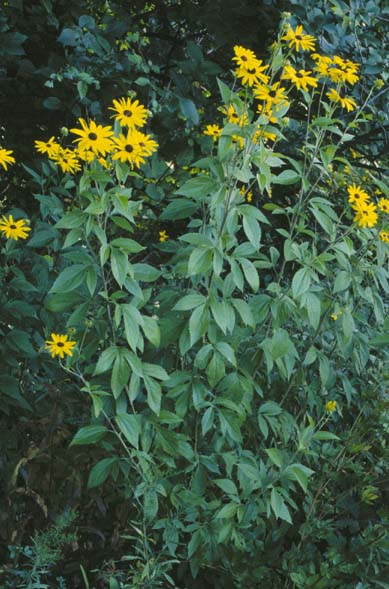
Rudbeckia subtomentosa (Sweet Coneflower) is a native wildflower blooming June through August across the Midwest and parts of the South. This adaptable perennial attracts butterflies and bees with its bright yellow daisy-like flowers.
Light
part sun
Water
medium
Size
36"–72" H × 12"–24" W
Bloom
Jun, Jul, Aug
Native to
AR, CT, IA, IL and 15 more states
Pollinators
butterflies, bees
Browse plants for this ecoregion
Sweet Coneflower is a tall native perennial that produces bright yellow daisy-like flowers with dark centers from June through August. This robust plant forms upright clumps and thrives in partial sun with moderate water needs, making it a reliable addition to native gardens.
Growing Sweet Coneflower
Grow Sweet Coneflower in part sun and medium water. Mature plants reach 36 to 72 inches tall and spread 12 to 24 inches wide. Expect low maintenance to keep it looking intentional in a front yard.
In an HOA neighborhood
Sweet Coneflower takes more care to keep looking intentional in a front yard. Maintenance level: low. Consider it for backyard or mid-zone beds rather than the street edge.
Works well in: backyard only.
- Height exceeds typical HOA-friendly range
Wildlife value
The flowers attract butterflies and native bees throughout the summer blooming period. Seeds provide food for birds in fall and winter.
Common questions
- When does Sweet Coneflower bloom?
- Sweet Coneflower blooms from June through August, producing yellow daisy-like flowers with dark centers.
- What pollinators visit Rudbeckia subtomentosa?
- Sweet Coneflower attracts butterflies and bees, making it valuable for pollinator gardens and native plant landscapes.
- Where is Sweet Coneflower native?
- This species is native to much of the central and eastern United States, including states from Minnesota south to Texas and from Kansas east to New York.
- What growing conditions does Sweet Coneflower prefer?
- Sweet Coneflower tolerates a wide range of light conditions from full sun to partial shade and adapts to various moisture levels, though it performs well in medium moisture soils.
- Is Sweet Coneflower HOA-friendly?
- Sweet Coneflower takes more care to look intentional in a front yard. Consider it for backyard or mid-zone beds rather than the street edge.
Native range data from the USDA PLANTS Database and regional native plant society lists. Pollinator and host plant associations compiled from GBIF, iNaturalist, and published ecological literature.
Does Sweet Coneflower fit your yard? Open it in Pollinator Patch to check it against your sun, soil, and HOA-conscious filters.