Texas Star Hibiscus
Hibiscus coccineus
Last reviewed: September 2026
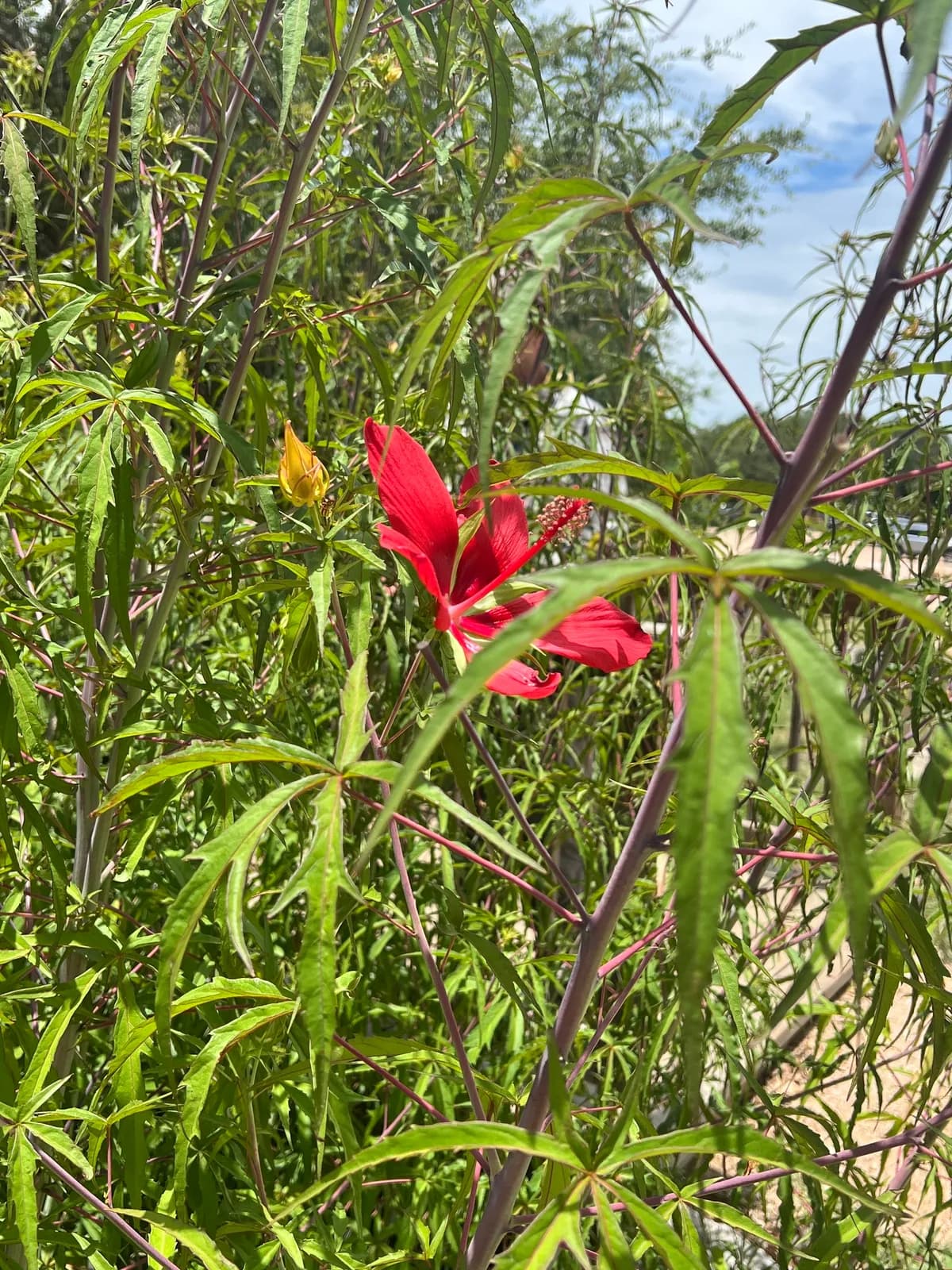
Hibiscus coccineus, the Texas Star Hibiscus, produces bright scarlet star-shaped flowers from March through August and grows best in full sun with consistently moist to wet soil.
Toxicity unknown
Texas Star Hibiscus (Hibiscus coccineus) is not listed by the ASPCA Animal Poison Control Center (opens in new tab) or the other sources we check, so we have no verdict for it either way. Absence from those lists is not a clearance. If your pet shows symptoms after eating any plant, call the ASPCA at (888) 426-4435.
Light
full sun
Water
high
Size
72"–96" H × 12"–24" W
Bloom
Mar, Apr, May, Jun, Jul, Aug
Native to
FL, GA
Pollinators
butterflies, bees, hummingbirds
Before you buy
Your city may pay you to plant this
Cities and water utilities offer rebates for replacing lawn with native and water-wise plants. We track 452 programs across 44 states, each with a link to the provider and the date we last checked it.
Find rebates in your areaBrowse plants for this ecoregion
Texas Star Hibiscus produces spectacular bright red star-shaped flowers from spring through summer on tall, slender stems. This native perennial thrives in wet conditions and can reach 6-8 feet tall with a narrow upright growth habit. The deeply lobed leaves and showy blooms create an impressive vertical accent in the landscape.
Growing Texas Star Hibiscus
Grow Texas Star Hibiscus in full sun and high water. Mature plants reach 72 to 96 inches tall and spread 12 to 24 inches wide. Expect low maintenance to keep it looking intentional in a front yard.
How to care for Texas Star Hibiscus, by region
How to care for Texas Star Hibiscus where it is actually grown: year-round basics plus what to do each season, region by region, with the sources for each.
Care guidance last updated: July 2026
Cross Timbers (includes Fort Worth, TX)
Year-round
Texas Star Hibiscus is a dramatic red flowered perennial that dies back to the ground each winter and returns from its roots. It is native to swamps and marshes in the southeastern United States, not Texas, so despite the common name it needs steady attention to establish here, especially through its first summer.
- Give it full sun and plan on consistent moisture, since it comes from wetland habitats and struggles in beds that dry out
- Give it room to grow 6 to 8 feet tall each season, well back from a front walk or the property line
- Mulch 2 to 3 inches around the base to hold moisture between waterings
- In heavy black clay, plant it high on a slight mound or work in compost for drainage. In the sandier soils west of the metro, expect to water more often through the first summer since those soils dry out faster
- Feed lightly with a balanced fertilizer in spring if growth looks weak, and skip heavy feeding once it is established
This reads as a bold accent plant, not a tidy foundation shrub. It works best set back from the front walk or used as a single specimen rather than a mass planting near the sidewalk or lot line.
Fall
Growth slows in fall and the plant starts to die back after the first freeze. This is a good time to plan cutbacks, not new plantings.
- Blooming tapers off by September as days shorten
- Leave stems standing until they turn brown and brittle after the first freeze, typically mid to late November, rather than cutting them back green
- Skip planting new stock now. Unlike trees and shrubs, this plant establishes best in spring, not fall
- Cut back watering as temperatures cool and growth slows
- Rake fallen leaves away from the base of the plant to reduce fungal issues over winter
Browning, collapsing stems in late fall can look untidy from the street. Cutting them back once a hard freeze has killed the top growth keeps the bed looking maintained.
Winter
Texas Star Hibiscus dies back completely to the ground after a hard freeze and disappears until spring. That is normal for this plant, not a sign it died.
- Cut the dead stems back to 4 to 6 inches above the ground after a hard freeze kills the top growth
- Add 2 to 3 inches of mulch over the crown before the coldest snaps, especially ahead of a severe Arctic outbreak
- Skip regular watering. The dormant root system does not need it through winter
- Leave the root crown undisturbed. It resprouts from the same spot once spring warms the soil
- If you want more plants, late winter before new growth starts is a reasonable time to divide an established clump
An empty, bare spot where the hibiscus stood is normal winter dormancy, not a dead plant, but it can read as neglect to a neighbor or HOA walk-through. A plant marker or a few inches of mulch signals it is intentional.
Spring
Spring is when Texas Star Hibiscus wakes up from its winter dieback and pushes new stems quickly. It is also the best window for planting new stock in the ground.
- New shoots emerge from the crown around April as the soil warms. Do not assume it died if you see nothing until then
- Cut any dead winter stems back to the ground by mid March, before new growth starts
- Plant new nursery stock from March through May so roots have time to establish before the July heat
- Water deeply once or twice a week as new growth appears, more often in the sandier soils west of the metro
- Watch for aphids clustering on tender new growth. A strong spray of water usually knocks them off without needing a treatment
Bare ground where the plant died back over winter can look neglected in early spring. A few inches of fresh mulch keeps the bed looking intentional until new growth fills in.
Summer
Summer is the main show for Texas Star Hibiscus, with tall star shaped red flowers from June into August, but North Texas heat means it needs regular deep watering to keep blooming.
- Water deeply 2 to 3 times a week during 100F stretches. The plant wilts fast when it dries out and will not fully bounce back until watered
- Deadhead spent blooms to keep the plant tidier, though it will keep flowering without this step
- Watch for beetles or caterpillars skeletonizing leaves in heavy heat. Hand pick pests off if damage is more than cosmetic
- Stake tall stems if wind knocks them over, especially in an exposed front bed
- Expect each flower to open in the morning and close by afternoon. New blooms replace them daily through the season
The bold red flowers and 6 to 8 foot height read as a striking accent, not a tidy planting. Placing it as a single specimen or backdrop rather than along a front walk keeps it from looking overgrown to a passing neighbor.
Sources: Lady Bird Johnson Wildflower Center: Hibiscus coccineus, NC State Extension Plant Toolbox: Hibiscus coccineus
Southeastern Plains (includes Tallahassee, FL)
Year-round
Scarlet rosemallow is a tall, upright wetland perennial that belongs at the back of a bed or along a fence, not out front on its own.
- Give it full sun and soil that stays consistently moist to wet, such as a low spot, a rain garden, or the base of a downspout.
- A mature clump reaches 6 to 8 feet tall on a narrow 1 to 2 foot base, so plan for height, not spread, when you pick a spot.
- This species is native to Florida and the wider Gulf Coast wetlands, including panhandle counties, so it fits a naturalistic Southeastern planting.
- The nursery name 'Texas Star Hibiscus' is a trade name only. This plant is native to the Southeast, not Texas.
- Bees, butterflies, and hummingbirds regularly visit the large red blooms.
- Each flower opens for a single day, but a healthy plant produces a steady run of new blooms through the season.
Site this one deliberately: back of a bed, against a fence or wall, or grouped in a rain garden, not alone by the front walkway where its height and lanky stems read as messy rather than intentional.
Fall
Fall is the tail end of the bloom season, when the last flowers give way to seed pods.
- Blooms continue into early fall in the panhandle and along the Gulf coastal plain, tapering off as nights cool.
- Seed pods form after the last flowers fade. Leave a few if you want to collect and start new plants, or let them stand for winter interest.
- Ease off supplemental water as fall rain patterns shift, but don't let the soil dry out completely.
- Skip fertilizer this time of year. New, tender growth pushed in fall is more likely to get hit by an early freeze.
- Leave this season's stems standing rather than cutting the plant to the ground now.
Winter
Winter is dormancy. Top growth dies back and the main task is deciding when and how to cut it down.
- Expect top growth to die back after a hard freeze. That's normal winter dormancy, not a dead plant.
- Cut dead stems back to about 12 to 24 inches rather than all the way to the ground, and let the cut stems stand until they break down on their own.
- This isn't a tropical hibiscus that needs frost protection. It's built for wet ground and regional winters, but an unusually hard freeze in the panhandle can still knock back any late, tender growth.
- This is also a workable window to divide a crowded clump before spring growth restarts.
Spring
Spring is when scarlet rosemallow breaks dormancy and pushes new growth toward its full summer height.
- New shoots emerge from the base as the weather warms. If you cut old stems back over winter, this is when regrowth kicks in.
- Keep soil consistently moist as growth resumes. This plant does not handle a dry spring well.
- This is a workable window to divide an overgrown clump or move a plant, while stems are still short.
- Watch new growth for aphids. A strong spray of water usually knocks back a light infestation.
- No blooms yet this season. Flowers form later, on this year's new growth, once stems mature.
Summer
Summer is peak bloom and peak water demand for scarlet rosemallow.
- Big, saucer-shaped red blooms open through mid to late summer, each lasting a single day before the next one opens.
- Water deeply and often if rainfall lets up. This plant is built for wet ground and wilts fast in a dry stretch.
- Stems can reach their full 6 to 8 foot height by mid-summer and may lean or flop in wind or heavy rain. Stake taller clumps in an exposed spot.
- Check leaves and new growth for aphids, whiteflies, and Japanese beetles.
- Deer will browse this plant, so expect some damage where deer are active in your yard.
A staked or grouped planting reads as tended. A single leaning stalk next to a walkway does not, so check for flop after summer storms.
Sources: Lady Bird Johnson Wildflower Center, Native Plant Database: Hibiscus coccineus, Atlas of Florida Plants (USF Institute for Systematic Botany): Hibiscus coccineus, Florida Wildflower Foundation: Scarlet Hibiscus, UF/IFAS Gardening Solutions: Hibiscus, NC State Extension Plant Toolbox: Hibiscus coccineus
Texas Blackland Prairies (includes Dallas, TX)
Year-round
Texas Star Hibiscus is a dramatic red flowered perennial that dies back to the ground each winter and returns from its roots. It is native to swamps and marshes in the southeastern United States, not Texas, so despite the common name it needs steady attention to establish here, especially through its first summer.
- Give it full sun and plan on consistent moisture, since it comes from wetland habitats and struggles in beds that dry out
- Give it room to grow 6 to 8 feet tall each season, well back from a front walk or the property line
- Mulch 2 to 3 inches around the base to hold moisture between waterings
- In heavy black clay, plant it high on a slight mound or work in compost for drainage. In the sandier soils west of the metro, expect to water more often through the first summer since those soils dry out faster
- Feed lightly with a balanced fertilizer in spring if growth looks weak, and skip heavy feeding once it is established
This reads as a bold accent plant, not a tidy foundation shrub. It works best set back from the front walk or used as a single specimen rather than a mass planting near the sidewalk or lot line.
Fall
Growth slows in fall and the plant starts to die back after the first freeze. This is a good time to plan cutbacks, not new plantings.
- Blooming tapers off by September as days shorten
- Leave stems standing until they turn brown and brittle after the first freeze, typically mid to late November, rather than cutting them back green
- Skip planting new stock now. Unlike trees and shrubs, this plant establishes best in spring, not fall
- Cut back watering as temperatures cool and growth slows
- Rake fallen leaves away from the base of the plant to reduce fungal issues over winter
Browning, collapsing stems in late fall can look untidy from the street. Cutting them back once a hard freeze has killed the top growth keeps the bed looking maintained.
Winter
Texas Star Hibiscus dies back completely to the ground after a hard freeze and disappears until spring. That is normal for this plant, not a sign it died.
- Cut the dead stems back to 4 to 6 inches above the ground after a hard freeze kills the top growth
- Add 2 to 3 inches of mulch over the crown before the coldest snaps, especially ahead of a severe Arctic outbreak
- Skip regular watering. The dormant root system does not need it through winter
- Leave the root crown undisturbed. It resprouts from the same spot once spring warms the soil
- If you want more plants, late winter before new growth starts is a reasonable time to divide an established clump
An empty, bare spot where the hibiscus stood is normal winter dormancy, not a dead plant, but it can read as neglect to a neighbor or HOA walk-through. A plant marker or a few inches of mulch signals it is intentional.
Spring
Spring is when Texas Star Hibiscus wakes up from its winter dieback and pushes new stems quickly. It is also the best window for planting new stock in the ground.
- New shoots emerge from the crown around April as the soil warms. Do not assume it died if you see nothing until then
- Cut any dead winter stems back to the ground by mid March, before new growth starts
- Plant new nursery stock from March through May so roots have time to establish before the July heat
- Water deeply once or twice a week as new growth appears, more often in the sandier soils west of the metro
- Watch for aphids clustering on tender new growth. A strong spray of water usually knocks them off without needing a treatment
Bare ground where the plant died back over winter can look neglected in early spring. A few inches of fresh mulch keeps the bed looking intentional until new growth fills in.
Summer
Summer is the main show for Texas Star Hibiscus, with tall star shaped red flowers from June into August, but North Texas heat means it needs regular deep watering to keep blooming.
- Water deeply 2 to 3 times a week during 100F stretches. The plant wilts fast when it dries out and will not fully bounce back until watered
- Deadhead spent blooms to keep the plant tidier, though it will keep flowering without this step
- Watch for beetles or caterpillars skeletonizing leaves in heavy heat. Hand pick pests off if damage is more than cosmetic
- Stake tall stems if wind knocks them over, especially in an exposed front bed
- Expect each flower to open in the morning and close by afternoon. New blooms replace them daily through the season
The bold red flowers and 6 to 8 foot height read as a striking accent, not a tidy planting. Placing it as a single specimen or backdrop rather than along a front walk keeps it from looking overgrown to a passing neighbor.
Sources: Lady Bird Johnson Wildflower Center: Hibiscus coccineus, NC State Extension Plant Toolbox: Hibiscus coccineus
Want these tasks as reminders timed to your yard? Pollinator Patch turns this guidance into a season-by-season care plan for the plants you actually grow.
In an HOA neighborhood
Texas Star Hibiscus takes more care to keep looking intentional in a front yard. Maintenance level: low. Consider it for backyard or mid-zone beds rather than the street edge.
Works well in: backyard only.
- Height exceeds typical HOA-friendly range
Wildlife value
The large red flowers are magnets for hummingbirds, butterflies, and bees throughout the long blooming season. This native hibiscus provides excellent nectar sources during peak summer months when many other plants are stressed.
Common questions
- When does Hibiscus coccineus bloom?
- Hibiscus coccineus blooms from March through August, sending up tall stems topped with bright red, star-shaped flowers that open in succession over the season.
- What pollinators visit Hibiscus coccineus?
- The nectar-rich flowers draw butterflies, bees, and hummingbirds throughout the blooming period, making it a useful plant for pollinator gardens.
- What growing conditions suit Hibiscus coccineus best?
- This plant prefers full sun and consistently moist to wet soil, doing well along pond edges, in rain gardens, or other spots that stay damp through the growing season.
- Does Hibiscus coccineus stay green all year?
- No. It is an herbaceous perennial that dies back to the ground after frost in fall and sends up new growth from its roots the following spring.
- Is Texas Star Hibiscus HOA-friendly?
- Texas Star Hibiscus takes more care to look intentional in a front yard. Consider it for backyard or mid-zone beds rather than the street edge.
These answers were drafted with an AI model from this plant's data. Verify care details with a local expert.
Native range data from vouchered herbarium specimen records and regional native plant society lists. Pollinator and host plant associations compiled from GBIF, iNaturalist, and published ecological literature.
If something looks wrong
Common plant problems, and what to check first
These come up on almost any plant. Each guide lists the likely causes in the order they are worth ruling out, with one thing to check before you act on any of them, and links to the source it came from.
- It is dying right after planting
- Leaves turning yellow
- Wilting even though I watered it
- Brown crispy leaf tips
- Bugs on the plant
Ready to grow Texas Star Hibiscus? Add it to your garden in Pollinator Patch to track it and get season-by-season care guidance.
Planning a bed around it? Start a free plan with this plant
Not sure where to start? Take the 2-minute yard quiz