Texas Wildrye
Elymus interruptus
Last reviewed: July 2026
Toxicity unknown
Texas Wildrye (Elymus interruptus) is not listed by the ASPCA Animal Poison Control Center (opens in new tab) or the other sources we check, so we have no verdict for it either way. Absence from those lists is not a clearance. If your pet shows symptoms after eating any plant, call the ASPCA at (888) 426-4435.
Light
full sun
Water
medium
Size
36"–48" H × 12"–18" W
Bloom
Mar, Apr, May, Jun, Jul, Aug
Native to
AZ, NM, TX
Before you buy
Your city may pay you to plant this
Cities and water utilities offer rebates for replacing lawn with native and water-wise plants. We track 452 programs across 44 states, each with a link to the provider and the date we last checked it.
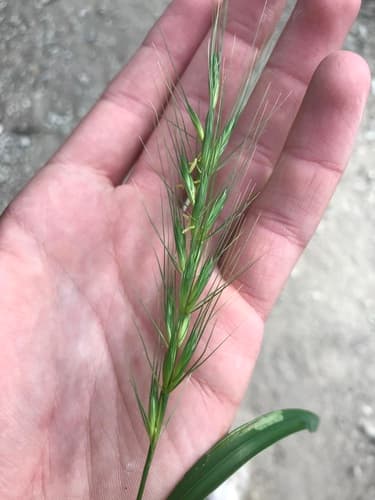
Find rebates in your areaTexas Wildrye is a tall native bunch grass that forms upright clumps with graceful seed heads. It blooms for an extended period from spring through summer, providing texture and movement in the landscape. This drought-tolerant perennial goes dormant in winter but returns reliably each spring.
In an HOA neighborhood
Texas Wildrye is an HOA-friendly choice. Maintenance level: low. Tidiness: 3 out of 5.
Works well in: front yard, mid zone.
- Cut back in late winter
Wildlife value
The seeds provide food for birds, particularly quail and other ground-feeding species. As a native grass, it offers nesting material and habitat for small wildlife.
Common questions
- How much sun does Texas Wildrye need?
- Texas Wildrye grows best in full sun conditions.
- When does Texas Wildrye bloom?
- Texas Wildrye blooms in March, April, May, June, July, and August.
- Where is Texas Wildrye native?
- Texas Wildrye (Elymus interruptus) is native to AZ, NM, TX, per vouchered herbarium specimen records and regional native plant society lists.
- Is Texas Wildrye HOA-friendly?
- Texas Wildrye is generally an HOA-friendly choice in the right placement, with low maintenance.
Native range data from vouchered herbarium specimen records and regional native plant society lists. Pollinator and host plant associations compiled from GBIF, iNaturalist, and published ecological literature.
If something looks wrong
Common plant problems, and what to check first
These come up on almost any plant. Each guide lists the likely causes in the order they are worth ruling out, with one thing to check before you act on any of them, and links to the source it came from.
- It is dying right after planting
- Leaves turning yellow
- Wilting even though I watered it
- Brown crispy leaf tips
- Bugs on the plant
Ready to grow Texas Wildrye? Add it to your garden in Pollinator Patch to track it and get season-by-season care guidance.
Planning a bed around it? Start a free plan with this plant
Not sure where to start? Take the 2-minute yard quiz