White Wild Indigo
Baptisia alba
Last reviewed: September 2026
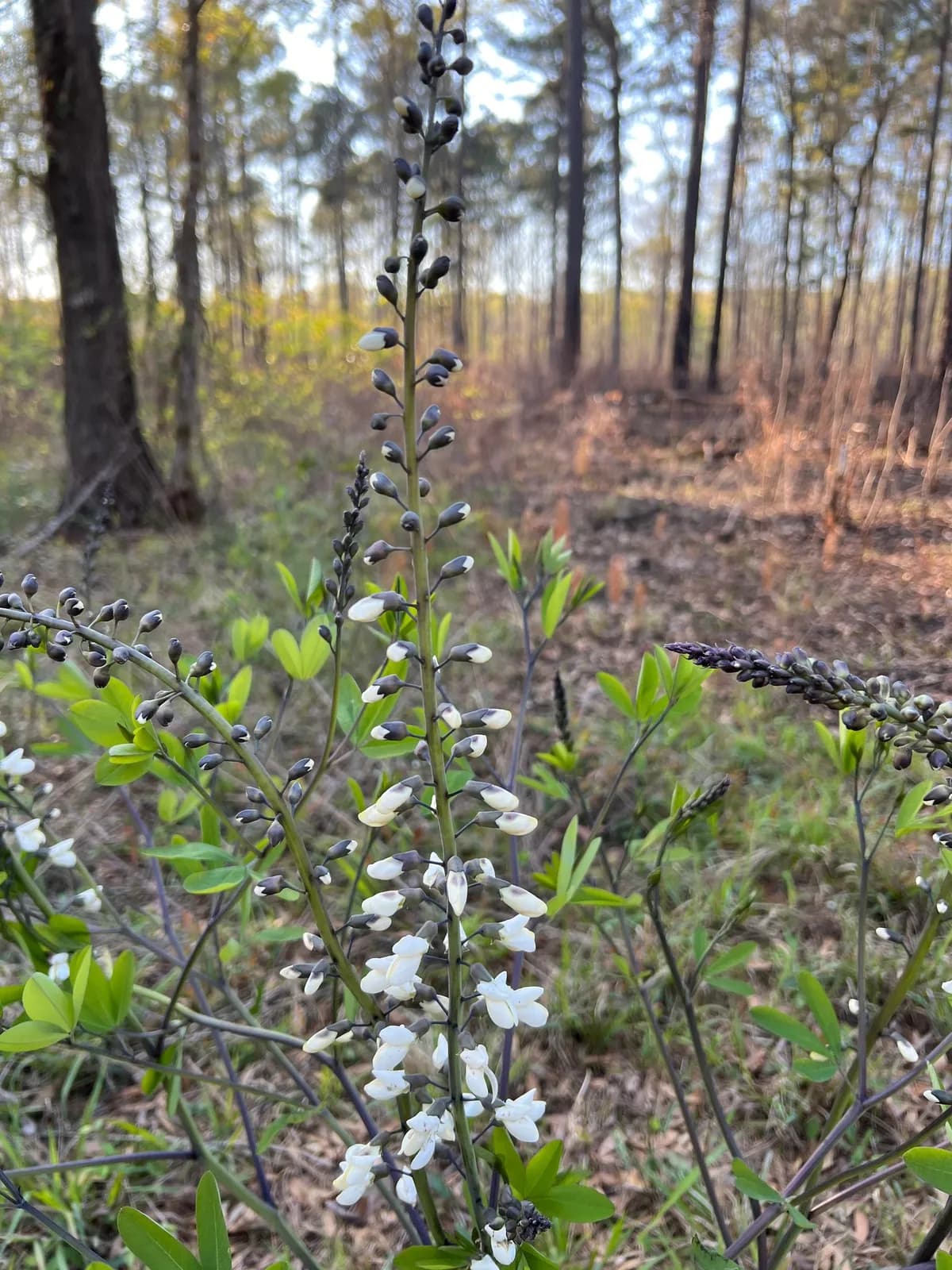
Baptisia alba sends up tall spikes of white pea-like flowers from May through July and grows best in full sun with dry to medium, well drained soil, making it a good fit for open meadows and prairie style gardens.
Toxicity unknown
White Wild Indigo (Baptisia alba) is not listed by the ASPCA Animal Poison Control Center (opens in new tab) or the other sources we check, so we have no verdict for it either way. Absence from those lists is not a clearance. If your pet shows symptoms after eating any plant, call the ASPCA at (888) 426-4435.
Light
full sun
Water
medium
Size
24"–48" H × 24"–36" W
Bloom
May, Jun, Jul
Native to
AL, FL, GA, NC and 3 more states
Pollinators
bees, butterflies
Before you buy
Your city may pay you to plant this
Cities and water utilities offer rebates for replacing lawn with native and water-wise plants. We track 459 programs across 44 states, each with a link to the provider and the date we last checked it.
Find rebates in your areaPicture natives in your own yard
Upload a photo of your yard and Patch Vision shows a rendering of it planted with natives for your region, like White Wild Indigo.


Browse plants for this ecoregion
White wild indigo is a sturdy native perennial that produces tall spikes of white pea-like flowers in late spring and early summer. The plant forms an attractive bushy mound with blue-green foliage and develops interesting dark seed pods after blooming. It's extremely drought tolerant once established and requires minimal care.
Growing White Wild Indigo
Grow White Wild Indigo in full sun and medium water. Mature plants reach 24 to 48 inches tall and spread 24 to 36 inches wide. Expect low maintenance to keep it looking intentional in a front yard.
How to care for White Wild Indigo, by region
How to care for White Wild Indigo where it is actually grown: year-round basics plus what to do each season, region by region, with the sources for each.
Care guidance last updated: September 2026
Cross Timbers (includes Fort Worth, TX)
Year-round
White wild indigo is a slow-to-establish, long-lived perennial with a deep taproot. Once it settles in it needs very little care, sending up tall spikes of white pea-like flowers followed by black seed pods that stay attractive into fall.
- Give it full sun and well-drained soil. In heavy black clay soils, plant it high on a slight mound or amend the planting hole for drainage; in the sandier soils west of the metro it will need water more often through its first summer.
- Space plants 2 to 2.5 feet apart. The clump widens slowly over several years and does not like being moved once settled, since it depends on a deep taproot.
- Keep it away from black walnut trees. It is sensitive to juglone and performs poorly nearby.
- It hosts caterpillars of the orange sulphur and wild indigo duskywing butterflies, so expect some chewed leaves in season, that is a sign the plant is doing its job.
- The Lady Bird Johnson Wildflower Center notes this plant has been fatal to cattle and can be irritating to humans if ingested. Keep it out of livestock pasture areas and away from small children who might chew on plant parts.
A well-spaced, uncrowded clump reads as an intentional accent plant rather than a wild patch once it fills into its mature rounded shape.
Fall
Fall is when white wild indigo's black seed pods and darkened foliage give the plant its "wild indigo" look, and it is a fine backup time to plant if spring was missed.
- If starting new plants in fall, aim for September or October. The mid November first frost limits how much the taproot can establish compared to a woody plant.
- Foliage blackens after the first light frost. This is normal seasonal behavior for the species, not a sign of disease.
- Leave the black seed pods standing through fall and into winter. They rattle in the wind and are part of the plant's seasonal interest.
- Do not cut the plant back yet. Wait until late winter dormancy.
- If collecting seed, plan to cold, moist stratify it before spring sowing, since fresh seed germinates poorly without it.
Blackened stems and dry pods in fall can read as dead to a passerby. Keeping the clump within a defined, mulched bed line keeps it looking intentional rather than neglected.
Winter
White wild indigo is fully dormant in winter. The one task is cutting the dried stalks back before new growth starts in spring.
- Cut the entire clump back to 4 to 6 inches in late February, before new shoots emerge, to clear the way for spring growth.
- Leave the cut stems and fallen pods in place as light winter mulch if the bed allows it, or clear them away for a tidier look.
- The plant tolerates North Texas's mild winters and short hard freezes without protection. Only an unusually severe Arctic outbreak reaching the crown is a real concern, and established plants with deep roots typically recover.
- Avoid walking on or compacting the soil over the dormant crown. In heavy clay soils, wet winter ground compacts especially easily.
- Use the bare winter silhouette to plan next season, since it is easy to see where the mature clump will fill back in.
A bare, cut-back clump in winter can look like an empty gap in the bed. Cutting to a neat, uniform 4 to 6 inch height rather than leaving ragged stalks keeps the bed reading as maintained.
Spring
Spring is the best time to plant white wild indigo, since it needs a full growing season to develop its deep taproot before its first North Texas summer.
- Plant in March or April, after the mid March last frost, so roots have months to establish before summer heat arrives.
- Water two to three times a week for the first six to eight weeks after planting, then taper off as new growth fills in.
- Watch for gray green shoots and clover-like leaves emerging through March and April, filling in quickly once the soil warms.
- Flower spikes open April through June. Leave the spent stalks alone, since the seed pods that follow are part of the plant's seasonal appeal.
- Skip fertilizer. Extra feeding produces floppy growth that needs staking.
New spring growth is low and mounded, so a mulched, edged bed reads as a tended planting rather than bare ground while the clump fills in.
Summer
Once established, white wild indigo shrugs off North Texas summer heat and needs almost no supplemental water. First-summer plants are the exception and need regular checking.
- Established plants, in their second summer or later, need no extra water even through the July and August dry stretch, drawing on their deep taproot.
- Plants installed this past spring still need a deep soak once a week through 100F-plus afternoons, since the taproot has not reached deep moisture yet.
- Seed pods darken from green to black through summer. Leave them on the plant, since they add structure and are commonly used in dried arrangements.
- Skip pruning in summer. Cutting back now removes the developing pods and pushes weak regrowth in the heat.
- If the clump starts to lean or flop under its own weight, set a low grow-through support ring in early summer to keep it upright.
A leaning or sprawled clump can look untended by August. A discreet grow-through support ring set early keeps the rounded shape that reads as deliberate.
Sources: Baptisia alba, Missouri Botanical Garden Plant Finder, Baptisia alba, Lady Bird Johnson Wildflower Center, Wild Indigo Duskywing, Butterflies and Moths of North America
Mississippi Valley Loess Plains (includes Memphis, TN)
Year-round
White wild indigo is a long-lived perennial in the pea family that is native to Tennessee. It grows slowly at first, then settles in for decades with very little care once established.
- Give it full sun to light shade and well-drained soil. It prefers sandy or rocky, slightly acidic ground but tolerates clay.
- It grows a deep taproot early on and does not transplant well, so choose its final spot before planting rather than moving it later.
- It is normal for a young plant to take two or three years to bloom well. That slow start is how this species grows, not a sign something is wrong.
- All parts of the plant carry some toxicity if eaten in quantity, so keep pets and kids from chewing on the leaves, flowers, or seed pods.
- Established plants are drought tolerant and generally left alone by deer.
Fall
In fall the foliage changes color and the black seed pods finish forming as the plant settles in for winter.
- Leaves and stems darken from bluish gray toward black as nights cool.
- The black seed pods are fully formed by now and rattle in the wind. That is a normal, expected look for this plant.
- No fertilizer is needed this time of year for an established plant.
- Leave the plant standing rather than cutting it back. The dark pods and stems carry the display into winter.
Winter
Winter is cutback time for this plant. The dried stems and black seed pods can stand for most of the season before a late winter cleanup.
- Cut the dried stems down to a few inches above the ground in late winter, before new spring growth starts.
- If left unpruned too long, the brittle winter stems can snap off at the base and blow around the yard.
- The plant is fully dormant now and needs no water or fertilizer.
- The black seed pods can stay on display through most of winter, then get cleared away with the rest of the old stems.
Cutting the dried stems back in late winter, before spring growth hides them, keeps the bed looking tidy from the street.
Spring
Spring is when new growth pushes up fast and flower spikes form. In the Memphis area this usually gets going in April.
- New shoots emerge grayish purple and grow quickly once the soil warms, often several inches a week.
- Water a newly planted or young plant during dry spells this spring. An established plant rarely needs extra water.
- White flower spikes typically open in April and May here, earlier than in cooler parts of the plant's range.
- Do not disturb the crown or dig near it now. The deep taproot is easy to damage and the plant will not forgive a move.
Summer
Summer is the easy season once this plant has roots down. It shrugs off Memphis heat and humidity without much help.
- An established plant is drought tolerant and usually does not need supplemental watering through a Memphis summer.
- Seed pods start forming after the flowers fade. Leave them on the plant. They will darken and stay part of the display into winter.
- The rounded mound of foliage can flop open in the middle by late summer. That is normal for this plant, not a disease.
- No regular pest or disease problems are expected on this species.
Sources: Lady Bird Johnson Wildflower Center: Baptisia alba, NC State Extension Gardener Plant Toolbox: Baptisia alba
Southern Coastal Plain (includes Orlando, FL)
Year-round
White wild indigo is a long-lived perennial legume with one deep taproot. Around Orlando, give it full sun to light afternoon shade, well-drained sandy soil, and leave it alone once it's in the ground.
- It grows a single deep taproot and does not like being moved. Pick a spot with full sun to part shade and good drainage, and plan on leaving it there for good.
- It is native to Florida, mostly in the pine flatwoods, sandhills, and woodland edges of the northern part of the state. It is grown further south, including central Florida, as a garden perennial even where it does not occur naturally.
- It does not want soggy roots. Overwatering and standing water are the main way people lose this plant, more than heat or drought.
- New plantings need regular water through the first year while the taproot establishes. After that it handles Florida's dry stretches without help.
- The foliage and seed pods contain alkaloids that can upset a pet's stomach if chewed. Baptisia does not show up on the ASPCA's toxic or non-toxic plant list, so its status there is unconfirmed. Keep pets from grazing on it, and call your vet or the ASPCA Animal Poison Control Center (888-426-4435) if a pet chews on it and seems off.
Its tidy mounded shape and dark seed pods read as structured rather than wild, which works for an HOA-conscious front bed once it's established.
Fall
As Orlando's rains taper off in fall, this plant's foliage darkens and starts heading into dormancy. It's also a reasonable planting window for a new one.
- The gray-green leaves shift toward black as the plant heads into dormancy, which is normal and not a disease or pest problem.
- Fall's lower heat and lighter rain pattern make it a good window to put a new plant in the ground in central Florida, since it will have cooler weather to root in before next summer's heat and storms.
- Leave the blackened stems and seed pods standing rather than cutting them back now. They still hold some seed for birds and there's no benefit to an early cutback.
- Do not disturb an existing plant's roots this time of year either. The taproot rule holds in every season.
Winter
Orlando's winters are mild but do get occasional frost, usually between early December and early February. This plant dies back to the ground after frost and returns from the same root crown in spring.
- Orlando's average frost window runs from around early December to early February, with plenty of winters that skip a hard frost altogether. Either way, expect the top growth to die back once a real frost hits.
- Once the stems have fully browned and died back, it's a low-stress time to cut them down to a few inches if you want a tidier look for the dormant season. There's no rush, the plant does not need the old growth removed.
- The root crown handles typical Orlando cold without any covering or mulch for protection. This species is documented hardy well north of Florida.
- Winter is Orlando's dry season on top of the plant being dormant, so it needs little to no water this time of year.
A cutback of the blackened dead stems once they've fully died down gives the bed a neat, dormant-season look if a tidy front yard matters to you.
Spring
Spring is when white wild indigo flowers and puts out its main flush of new growth in central Florida, usually starting around March.
- Flowering typically runs March through May in Florida, and it can start earlier here than in cooler parts of its range further north.
- New stems emerge from the root crown starting in late winter. If a plant looks bare in a mild Orlando winter, give it into spring before assuming it's gone.
- This is a bad time to divide or transplant it. The taproot is actively pushing new growth and disturbance now sets the plant back hard.
- Bumblebees are the main visitors working the flower spikes. A few weeks of blooms is normal, then the flowers give way to seed pods.
Summer
Orlando's summer wet season is the main risk period for this plant. It handles the heat fine but drainage matters a lot more once the daily thunderstorms start.
- Central Florida's summer brings near-daily afternoon thunderstorms. An established plant in a low or poorly drained spot can sit in wet soil for hours, which is the exact condition that causes root rot in Baptisia.
- Once established, it does not need supplemental watering through a normal Orlando summer. Skip the extra hose time unless there's a real dry stretch between storms.
- By mid to late summer the flowers are done and dark seed pods form. Birds eat the seeds, so there's no need to deadhead for the plant's sake.
- Full summer sun is fine and expected. Heat itself is not the stress point for this plant in Florida, wet feet is.
Sources: Lady Bird Johnson Wildflower Center, Baptisia alba plant profile, Florida Native Plant Society, Baptisia alba, ASPCA, Toxic and Non-Toxic Plant List (Dogs), USDA Forest Service, White Wild Indigo (Baptisia alba), Plant of the Week, Florida Wildflower Foundation, White wild indigo, Missouri Botanical Garden, Baptisia alba, Plant Finder
Texas Blackland Prairies (includes Dallas, TX)
Year-round
White wild indigo is a slow-to-establish, long-lived perennial with a deep taproot. Once it settles in it needs very little care, sending up tall spikes of white pea-like flowers followed by black seed pods that stay attractive into fall.
- Give it full sun and well-drained soil. In heavy black clay soils, plant it high on a slight mound or amend the planting hole for drainage; in the sandier soils west of the metro it will need water more often through its first summer.
- Space plants 2 to 2.5 feet apart. The clump widens slowly over several years and does not like being moved once settled, since it depends on a deep taproot.
- Keep it away from black walnut trees. It is sensitive to juglone and performs poorly nearby.
- It hosts caterpillars of the orange sulphur and wild indigo duskywing butterflies, so expect some chewed leaves in season, that is a sign the plant is doing its job.
- The Lady Bird Johnson Wildflower Center notes this plant has been fatal to cattle and can be irritating to humans if ingested. Keep it out of livestock pasture areas and away from small children who might chew on plant parts.
A well-spaced, uncrowded clump reads as an intentional accent plant rather than a wild patch once it fills into its mature rounded shape.
Fall
Fall is when white wild indigo's black seed pods and darkened foliage give the plant its "wild indigo" look, and it is a fine backup time to plant if spring was missed.
- If starting new plants in fall, aim for September or October. The mid November first frost limits how much the taproot can establish compared to a woody plant.
- Foliage blackens after the first light frost. This is normal seasonal behavior for the species, not a sign of disease.
- Leave the black seed pods standing through fall and into winter. They rattle in the wind and are part of the plant's seasonal interest.
- Do not cut the plant back yet. Wait until late winter dormancy.
- If collecting seed, plan to cold, moist stratify it before spring sowing, since fresh seed germinates poorly without it.
Blackened stems and dry pods in fall can read as dead to a passerby. Keeping the clump within a defined, mulched bed line keeps it looking intentional rather than neglected.
Winter
White wild indigo is fully dormant in winter. The one task is cutting the dried stalks back before new growth starts in spring.
- Cut the entire clump back to 4 to 6 inches in late February, before new shoots emerge, to clear the way for spring growth.
- Leave the cut stems and fallen pods in place as light winter mulch if the bed allows it, or clear them away for a tidier look.
- The plant tolerates North Texas's mild winters and short hard freezes without protection. Only an unusually severe Arctic outbreak reaching the crown is a real concern, and established plants with deep roots typically recover.
- Avoid walking on or compacting the soil over the dormant crown. In heavy clay soils, wet winter ground compacts especially easily.
- Use the bare winter silhouette to plan next season, since it is easy to see where the mature clump will fill back in.
A bare, cut-back clump in winter can look like an empty gap in the bed. Cutting to a neat, uniform 4 to 6 inch height rather than leaving ragged stalks keeps the bed reading as maintained.
Spring
Spring is the best time to plant white wild indigo, since it needs a full growing season to develop its deep taproot before its first North Texas summer.
- Plant in March or April, after the mid March last frost, so roots have months to establish before summer heat arrives.
- Water two to three times a week for the first six to eight weeks after planting, then taper off as new growth fills in.
- Watch for gray green shoots and clover-like leaves emerging through March and April, filling in quickly once the soil warms.
- Flower spikes open April through June. Leave the spent stalks alone, since the seed pods that follow are part of the plant's seasonal appeal.
- Skip fertilizer. Extra feeding produces floppy growth that needs staking.
New spring growth is low and mounded, so a mulched, edged bed reads as a tended planting rather than bare ground while the clump fills in.
Summer
Once established, white wild indigo shrugs off North Texas summer heat and needs almost no supplemental water. First-summer plants are the exception and need regular checking.
- Established plants, in their second summer or later, need no extra water even through the July and August dry stretch, drawing on their deep taproot.
- Plants installed this past spring still need a deep soak once a week through 100F-plus afternoons, since the taproot has not reached deep moisture yet.
- Seed pods darken from green to black through summer. Leave them on the plant, since they add structure and are commonly used in dried arrangements.
- Skip pruning in summer. Cutting back now removes the developing pods and pushes weak regrowth in the heat.
- If the clump starts to lean or flop under its own weight, set a low grow-through support ring in early summer to keep it upright.
A leaning or sprawled clump can look untended by August. A discreet grow-through support ring set early keeps the rounded shape that reads as deliberate.
Sources: Baptisia alba, Missouri Botanical Garden Plant Finder, Baptisia alba, Lady Bird Johnson Wildflower Center, Wild Indigo Duskywing, Butterflies and Moths of North America
In an HOA neighborhood
White Wild Indigo is an HOA-friendly choice. Maintenance level: low. Tidiness: 4 out of 5.
Works well in: front yard, foundation, street edge, mid zone.
- Plant may look sparse in first year before becoming established
Wildlife value
Host plant for orange sulphur butterfly, wild indigo duskywing.
The flowers attract native bees and butterflies, while the foliage serves as a host plant for several butterfly species including the wild indigo duskywing. The seed pods provide food for birds in fall and winter.
Common questions
- When does Baptisia alba bloom?
- Baptisia alba typically blooms from May through July, producing upright spikes of white flowers on tall stems.
- What growing conditions does Baptisia alba need?
- It grows best in full sun to lightly shaded sites with dry to medium, well drained soil, and it tolerates periods of low water once established.
- Do pollinators use Baptisia alba?
- Bees and butterflies regularly visit the flowers, and Baptisia species serve as host plants for the wild indigo duskywing butterfly.
- How is Baptisia alba typically used in a garden?
- It works well as a structural perennial in meadow, prairie, or pollinator gardens, since its deep roots help it handle dry spells once it is established.
- Is White Wild Indigo HOA-friendly?
- White Wild Indigo is generally an HOA-friendly choice in the right placement, with low maintenance.
These answers were drafted with an AI model from this plant's data. Verify care details with a local expert.
Native range data from vouchered herbarium specimen records and regional native plant society lists. Pollinator and host plant associations compiled from GBIF, iNaturalist, and published ecological literature.
If something looks wrong
Common plant problems, and what to check first
These come up on almost any plant. Each guide lists the likely causes in the order they are worth ruling out, with one thing to check before you act on any of them, and links to the source it came from.
- It is dying right after planting
- Leaves turning yellow
- Wilting even though I watered it
- Brown crispy leaf tips
- Bugs on the plant
Ready to grow White Wild Indigo? Add it to your garden in Pollinator Patch to track it and get season-by-season care guidance.