Wild Pink
Silene caroliniana
Last reviewed: September 2026
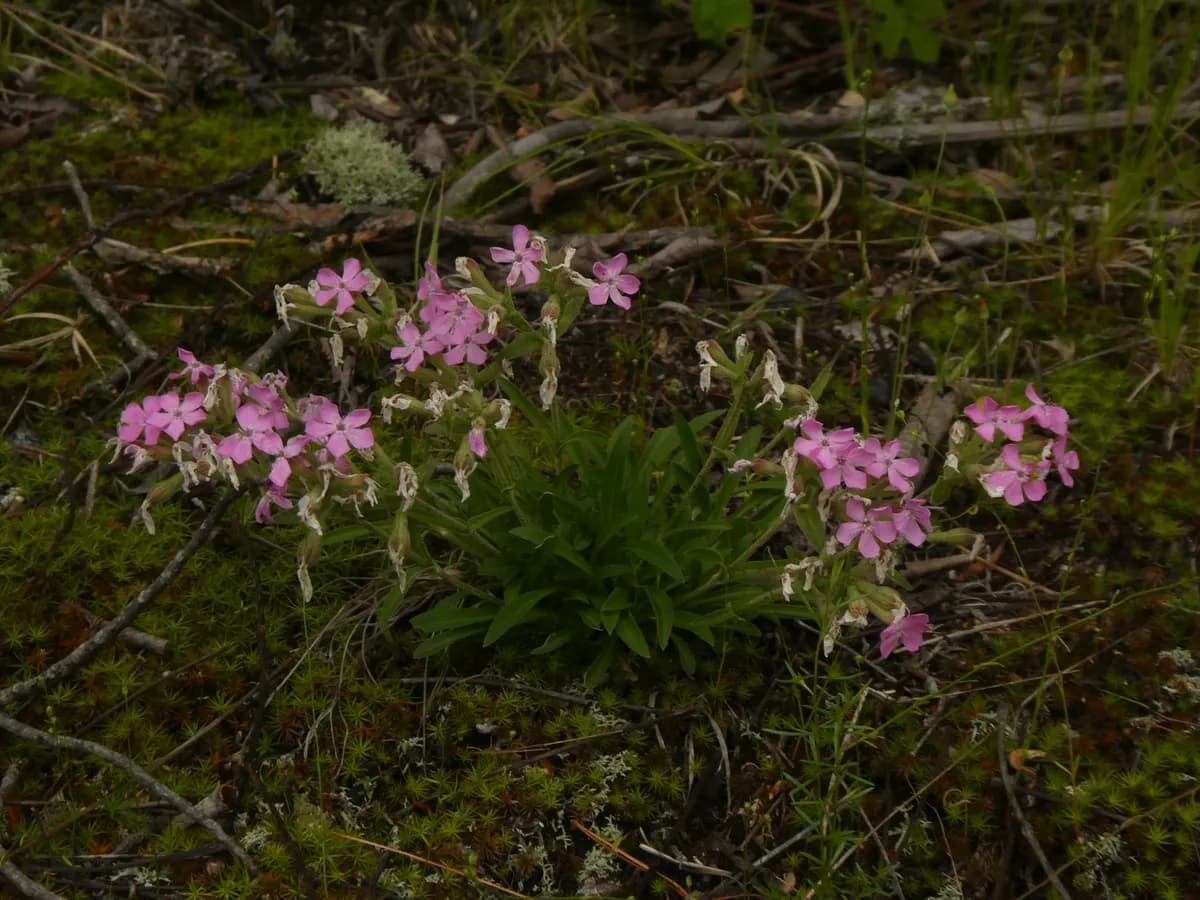
Wild pink (Silene caroliniana) is a low forb that blooms pink from April through June and thrives in part sun with low water once established, often on rocky or sandy slopes.
Toxicity unknown
Wild Pink (Silene caroliniana) is not listed by the ASPCA Animal Poison Control Center (opens in new tab) or the other sources we check, so we have no verdict for it either way. Absence from those lists is not a clearance. If your pet shows symptoms after eating any plant, call the ASPCA at (888) 426-4435.
Light
part sun
Water
low
Size
6"–12" H × 6"–12" W
Bloom
Apr, May, Jun
Native to
AL, CT, DE, GA and 16 more states
Pollinators
bees, butterflies, moths
Before you buy
Your city may pay you to plant this
Cities and water utilities offer rebates for replacing lawn with native and water-wise plants. We track 459 programs across 44 states, each with a link to the provider and the date we last checked it.
Find rebates in your areaPicture natives in your own yard
Upload a photo of your yard and Patch Vision shows a rendering of it planted with natives for your region, like Wild Pink.


Browse plants for this ecoregion
Wild pink is a low-growing native perennial that forms neat clumps of narrow leaves topped with clusters of bright pink flowers in spring and early summer. This compact plant stays tidy at 6-12 inches tall and wide, making it suitable for rock gardens, borders, and mixed plantings. It thrives in partial sun with minimal watering once established.
Growing Wild Pink
Grow Wild Pink in part sun and low water. Mature plants reach 6 to 12 inches tall and spread 6 to 12 inches wide. Expect low maintenance to keep it looking intentional in a front yard.
How to care for Wild Pink, by region
How to care for Wild Pink where it is actually grown: year-round basics plus what to do each season, region by region, with the sources for each.
Care guidance last updated: October 2026
Atlantic Coastal Pine Barrens (includes Riverhead, NY)
Year-round
Wild pink is native to New York, including Long Island, where its natural habitat of dry, sandy, well-drained soil is actually a close match for the sandy outwash soils common around Riverhead.
- Give it full sun to part shade in sandy or gravelly, well-drained soil, which is a natural fit for much of the Riverhead area.
- It is native to New York and well suited to the East End's naturally lean, sandy ground.
- Once established it is drought tolerant and needs little extra watering in typical Long Island conditions.
Fall
Fall on the East End is mild, with the first frost typically not arriving until mid to late October, giving a good window to tidy up or divide the plant before winter.
- Cut back spent stems once bloom is finished for the year.
- Mild fall weather, before the first frost in mid to late October, is a good time to divide or transplant.
- Ease off watering as temperatures cool and rainfall typically increases.
A fall cutback keeps the bed looking tended into the cooler months.
Winter
Riverhead-area winters are moderated by the surrounding water, so wild pink's low foliage mound often stays semi-evergreen through a typical Long Island winter.
- The basal foliage mound often persists through Long Island's relatively mild winters.
- Hard freezes are less common here than farther inland, so little winter protection is usually needed.
- Avoid compacting or walking on the dormant crown during the cold months.
The low evergreen mound holds a neat winter shape in a front bed with no extra care.
Spring
On the East End, wild pink blooms from April into June, with planting best done once the last frost has passed, usually late April, and the sandy soil has warmed up.
- Wait until after the last frost, typically late April on eastern Long Island, before planting.
- Main bloom runs from April through June.
- The naturally sandy Riverhead-area soil rarely needs amending for drainage.
Summer
Long Island summers can bring dry stretches, and wild pink is well adapted to that in sandy Riverhead-area soil, needing little watering once established.
- Established plants rarely need supplemental water even during a dry Long Island summer.
- Deadhead spent blooms to keep the mound tidy through the season.
- Watch for extra stress from salt spray if the planting is very close to the immediate shoreline.
Deadheading through summer keeps this low grower looking neat in a foundation bed.
Sources: Lady Bird Johnson Wildflower Center native plant database, Silene caroliniana, NC State Extension Gardener Plant Toolbox, Silene caroliniana
Central Appalachians (includes Johnstown, PA)
Year-round
Year-round care for wild pink around Johnstown, PA: full sun to part shade, sharply drained soil, little water once established.
- Give it full sun or part shade.
- It needs well-drained sandy, loamy or shallow rocky soil. Wet, heavy soil causes root rot.
- Once established it tolerates dry, rocky soil and becomes more drought tolerant.
- Plants stay 6 inches to 1 foot tall and wide in a compact, mat-forming mound.
- It does not like to be disturbed once established.
- NC State Extension lists it for USDA zones 5a to 8b.
Its low, compact mound reads as neat edging along a front border or rock garden.
Sources: NC State Extension Gardener Plant Toolbox: Silene caroliniana, Lady Bird Johnson Wildflower Center: Silene caroliniana
Interior Plateau (includes Cincinnati, OH)
Year-round
Wild pink is native to Ohio, including the Cincinnati area, where it naturally grows in dry, open, rocky or gravelly woods. The biggest thing to get right in a Cincinnati yard is drainage, since this plant is used to lean, fast draining soil and struggles in the heavy clay common here.
- Give it full sun to part shade and soil that drains quickly, working in coarse sand or gravel if your yard has heavy clay.
- It is native to Ohio, so it fits naturally into a Cincinnati-area native planting.
- Once established it tolerates dry spells well and needs little supplemental water.
Fall
As Cincinnati cools into fall, with the first frost typically arriving around mid October, this is a good time to tidy up the plant and to divide or transplant it before the ground freezes.
- Cut back any leggy or tired stems once flowering has finished for the year.
- Fall, before the ground freezes, is a good window for dividing or transplanting.
- Hold off on heavy mulching until the ground has cooled, to avoid trapping moisture around the crown.
A tidy fall cutback keeps the bed looking intentional heading into winter.
Winter
Cincinnati winters bring hard freezes and occasional snow, and wild pink's low basal foliage may die back more here than it would in a milder climate, though the plant itself is a reliable perennial in the area.
- Some winter dieback of the foliage is normal in Cincinnati's colder winters, the crown survives underground.
- A light layer of mulch after the ground freezes can help protect the crown through hard freezes.
- Avoid walking on or disturbing the dormant crown until new growth appears in spring.
The dormant mound stays low and out of the way over winter, so no bed cleanup is needed there.
Spring
Spring is the main bloom and planting season for wild pink around Cincinnati, with flowers opening from April into June once the weather warms and the last frost, usually around mid to late April, has passed.
- Wait until after the last frost, typically mid to late April in the Cincinnati area, to plant new starts.
- Expect the main bloom flush from April through June.
- Spring's heavier rains are usually fine as long as the site drains well.
Summer
Cincinnati summers get hot and humid, but wild pink handles the heat well once it is established, since it is more sensitive to wet soil than to warm temperatures.
- Water only during extended dry stretches once the plant is established.
- Deadhead spent flower stalks to encourage a tidier look through summer.
- Avoid piling heavy mulch against the crown, which can trap moisture in humid weather.
Regular deadheading keeps this low mound looking tended in a front yard bed through summer.
Sources: Lady Bird Johnson Wildflower Center native plant database, Silene caroliniana, NC State Extension Gardener Plant Toolbox, Silene caroliniana
Middle Atlantic Coastal Plain (includes Philadelphia, PA)
Year-round
Wild pink is a low, mound forming native wildflower that does well in a sunny, fast draining spot in the Philadelphia area.
- Give it full sun to light afternoon shade and soil that drains quickly. Sandy, gravelly, or rocky ground suits it better than heavy clay.
- Once established, usually after its first full year in the ground, it tolerates dry spells well and does not need frequent watering.
- It stays compact, usually under a foot tall, and spreads slowly into a tidy mound, which works well along a path edge or in a rock garden.
- Soggy soil is the biggest risk in Philadelphia's humid summers. A raised bed or a gentle slope helps water move away from the roots.
- Deadheading spent flowers can encourage a few more blooms later in the season, but it is not required for the plant to stay healthy.
Fall
Fall in the Philadelphia area is mostly cleanup and prep time for wild pink, since the plant is not actively blooming.
- Leaves are semi evergreen, so do not cut the whole plant back. Just remove dead flower stalks and any obviously dead foliage.
- This is a fine time to plant new wild pink from a nursery pot, giving roots time to settle before winter while the soil is still workable.
- Skip piling mulch directly against the crown. A thin layer of gravel or leaf litter around, not on top of, the base helps drainage through Philadelphia's wetter fall weeks.
- First frost in the Philadelphia area typically lands in early to mid November, a natural cue that active growth is slowing down.
Tidying dead flower stalks in fall keeps the front bed looking intentional rather than overgrown, an HOA-conscious touch heading into winter.
Winter
Winter is a rest period for wild pink in the Philadelphia area. The plant is cold hardy here and mostly needs to be left alone.
- Philadelphia sits around USDA zone 7a to 7b, well within the cold tolerance of this plant, so no winter covering is needed for an established planting.
- The semi evergreen basal leaves may look a little rough after a hard freeze. That is normal, and new growth returns in spring.
- Avoid walking on or compacting the soil around dormant plants, especially when it is wet or freshly thawed.
- Do not fertilize or prune in winter. Wait until new growth resumes in spring to see what actually needs cleanup.
Spring
Spring is the main bloom season for wild pink around Philadelphia, usually starting in mid to late April and continuing into June.
- Expect small, star shaped pink flowers clustered at the top of low stems through most of spring.
- This is a good window to divide crowded clumps or move seedlings, since the plant is actively growing and the weather is mild.
- Hold off on heavy fertilizer. This plant is used to lean, rocky soil, and rich feeding can make the stems floppy.
- Philadelphia's average last frost falls in mid April, so a late cold snap can still catch early buds. A light overnight cover protects open flowers, though established plants usually come through a light frost fine.
The low, mounded spring bloom stays tidy at the front of a bed, which reads as HOA-friendly from the street.
Summer
By summer, wild pink has mostly finished blooming and settles into a quiet, low mound that holds up well through Philadelphia's hot, humid stretch.
- This plant is genuinely drought tolerant once established, so let the soil dry between waterings rather than watering on a fixed schedule.
- Good drainage matters even more in summer. Humid weather plus wet soil is the most common way to lose this plant to crown or root rot.
- Trimming back any leggy or flopped stems after bloom keeps the mound neat, but it is optional.
- It does not need summer fertilizer. Poor to average soil is closer to what it grows in naturally.
Sources: Lady Bird Johnson Wildflower Center, Silene caroliniana plant profile, USDA PLANTS Database, plant profile for SICA6, Pinelands Preservation Alliance, Silene caroliniana plant page (community tip), Penn State Extension, Philadelphia County planting guide
North Central Appalachians (includes Williamsport, PA)
Year-round
Year-round care for wild pink around Williamsport, PA: full sun to part shade, sharply drained soil, little water once established.
- Give it full sun or part shade.
- It needs well-drained sandy, loamy or shallow rocky soil. Wet, heavy soil causes root rot.
- Once established it tolerates dry, rocky soil and becomes more drought tolerant.
- Plants stay 6 inches to 1 foot tall and wide in a compact, mat-forming mound.
- It does not like to be disturbed once established.
- NC State Extension lists it for USDA zones 5a to 8b.
Its low, compact mound reads as neat edging along a front border or rock garden.
Sources: NC State Extension Gardener Plant Toolbox: Silene caroliniana, Lady Bird Johnson Wildflower Center: Silene caroliniana
Northeastern Coastal Zone (includes New York, NY)
Year-round
Wild pink is a small, tidy native perennial with bright pink spring flowers, and the one thing that keeps it alive around New York is lean, sandy, fast draining soil.
- Wild pink is native to the Northeastern Coastal Zone, the ecoregion that covers the New York City area and Long Island, and New York's Natural Heritage Program records existing populations from eastern Long Island west into New York City and southern Westchester County.
- It stays small, roughly 6 to 12 inches tall and about as wide, forming a low cushion that never flops over a walkway.
- Give it full sun to part shade and sandy or gravelly soil that drains fast. Wet, heavy soil causes root rot, and that is the usual way this plant dies in a garden bed.
- Skip the compost, the rich topsoil, and the thick mulch. Lean, gritty ground is what it grew up on.
- The spring flowers are an early nectar source for butterflies and other insect pollinators, so it earns its spot even though it is short.
- In New York it is listed as Threatened, so buy nursery grown plants and never dig one out of the wild.
Its low, even cushion reads as intentional edging rather than a wild patch, which is the kind of front yard planting that rarely draws a letter.
Fall
Fall is the right time to plant it and the right time to fix drainage, but it is not a plant you cut down for winter.
- Plant or add wild pink from late September into mid October, several weeks ahead of the mid November first frost, so roots have time to settle.
- If water sat around the plant this year, fix it now. Work coarse sand and fine gravel into the area, or build the planting spot up a few inches so water runs off.
- Do not cut the plant to the ground. The low rosette is semi evergreen and is what carries it through winter.
- Rake fallen leaves off the cushion through October and November. A wet leaf mat sitting on the crown all winter is a common way to lose it.
- Skip fall fertilizer and skip the compost topdressing. Lean soil is the point with this one.
- Fall rain here is steady enough that nothing needs watering except anything you planted this season.
Because the cushion stays low and green instead of collapsing into brown stalks, clearing the leaves off it is the entire fall tidy up and the bed still reads as intentional from the sidewalk.
Winter
Winter is a do nothing season for wild pink, beyond keeping leaves, salt, and piled snow off the low rosette.
- It is hardy far below the low 20s a New York winter delivers, so no wrapping, no covering, and no winter protection.
- After storms, check that blown leaves or shoveled snow have not buried the rosette, and brush it clear.
- Keep road salt away from it. Do not pile salted snow from the walk or driveway onto the bed.
- Do not do a late winter cutback the way you would with a tall perennial. There is nothing to cut here, so a light debris clearing in late February before growth starts is all it needs.
- If the same spot sits wet and slushy for weeks every winter, that spot is wrong for this plant. Move it next fall, not in winter.
- If you want more of it, order nursery plants for spring rather than planning to divide what you have, since it does poorly when disturbed.
Its low green tuft holds a neat shape through winter, so the front bed keeps looking intentional in the months when most perennials are bare stems.
Spring
Spring is the show, so clear winter debris off the low rosette in late March, then mostly stay out of its way while it flowers.
- In late March or early April, brush any matted leaves or settled mulch off the crown so the low rosette gets light and air.
- Set out new nursery plants after the early April last frost, then leave them alone. This plant resents being dug up or shifted once it has settled.
- Expect flowers from late April into June around New York, with the showiest stretch usually late May into early June.
- Do not fertilize. Rich feeding on a plant built for lean sandy ground gives you floppy stems and fewer flowers.
- Spring rain here is normally enough. Water only this year's new plants, and only when the top inch of soil has been dry for several days.
- The flowers are an early nectar source for butterflies and other insect pollinators, so leave them standing rather than cutting them for a vase.
Hand weeding right around the cushion while it is in bloom keeps the planting reading as a deliberate border instead of a neglected strip.
Summer
Once bloom finishes, trim the spent flower stems back to the low leafy rosette and then keep the soil on the dry side through the humid heat.
- In late June or early July, cut the browned flower stems back to the low basal rosette. Do not cut into the rosette itself, since that foliage is semi evergreen and carries the plant forward.
- Established plants are drought tolerant. In a New York summer the bigger risk is a week of thunderstorms and humidity leaving the crown wet, not a dry spell.
- Keep mulch pulled back off the crown. A shallow collar of coarse sand or fine gravel sheds water better and is closer to the ground it grows on in the wild.
- If the soil around it stays soggy for days after a storm, that is a drainage problem. Note the spot now and plan to raise it or work in sand and grit this fall.
- Watch for taller neighbors flopping over it in July. Anything that shades the cushion for weeks will thin it out.
- No feeding, and no summer watering for established plants unless the whole bed has been bone dry for two weeks or more.
It fades back and gets quiet after bloom, so setting one equally low neighbor beside it keeps the spot reading as an intentional planting rather than a bare patch.
Sources: Native Plant Trust, Go Botany plant finder: Silene caroliniana, New York Natural Heritage Program, Wild Pink conservation guide, Missouri Botanical Garden Plant Finder: Silene caroliniana, NC Extension Gardener Plant Toolbox: Silene caroliniana, Lady Bird Johnson Wildflower Center: Silene caroliniana
Northern Piedmont (includes Lancaster, PA)
Year-round
In Lancaster's colder climate, wild pink's real requirement is fast-draining rocky or sandy soil.
- Water regularly through the first growing season to establish roots, then taper off.
- Once established, it's drought tolerant and rarely needs watering beyond normal Lancaster County rainfall.
- Use a light mulch, straw or leaf litter is fine, but keep it off the crown so it doesn't trap moisture through wet spring thaws.
- Plant it in the same rocky or sandy, well-drained soil it grows in naturally. Heavy clay is the main risk in this region.
- The most common mistake is planting in rich garden soil or a spot that stays wet after snowmelt. That's what rots the roots, not the cold.
- It's native to Pennsylvania's rocky woodlands and outcrops, so it's a true regional native for a Lancaster yard.
Its compact, non-spreading mound stays under a foot tall and reads as tidy rather than wild, an HOA-friendly pick for a front border.
Fall
Fall is the second planting window before Lancaster's winter sets in.
- Plant or let self-sown seedlings establish in early fall, giving roots a few weeks to settle before hard frost.
- Let seed pods ripen and drop if you want the patch to spread.
- No cutting back is needed in fall. Foliage can stay through winter.
- Clear heavy leaf drop off the crown so it isn't smothered under a wet mat before snow.
Winter
Lancaster winters are cold enough to notice, but this plant is built for it.
- Wild pink is hardy to zone 5a, well within range for a typical Lancaster winter. No special protection is needed for established plants.
- A light winter mulch of straw or leaf litter around, not on top of, the crown can help buffer freeze-thaw cycles.
- Don't walk on or compact the area during snow removal. Disturbed roots don't recover well.
- This is a dormant season. Hold off on fertilizing or dividing until spring.
Spring
Spring brings the bloom, but Lancaster's late frosts mean patience before planting.
- Wait until the ground has fully thawed and the last hard frost has passed before planting or dividing. Spring frosts can linger into April here.
- Blooms open in April and May, a bit later than in warmer parts of its range.
- Leave spent flowers in place if you want it to self-seed, or trim lightly for tidiness.
- Avoid moving or dividing established plants. They don't recover well from root disturbance.
Summer
Lancaster summers are warm and humid but shorter than further south. Care stays the same: dry and undisturbed.
- Established plants need no regular watering through a typical Lancaster summer.
- After a heavy summer storm, check that the site drains within a few hours. Standing water is the main risk.
- Full sun works well here. Part shade in the hottest afternoon hours is optional, not necessary, given Pennsylvania's milder summer heat.
- Skip fertilizer. It encourages weak growth that flops in summer storms.
Sources: Lady Bird Johnson Wildflower Center - Silene caroliniana, NC State Extension Gardener Plant Toolbox - Silene caroliniana
Piedmont (includes Atlanta, GA)
Year-round
Wild pink wants excellent drainage above all else, especially through Atlanta's humid summers.
- Water new plants regularly through their first growing season, tapering off as roots establish.
- Once established, wild pink is drought tolerant and needs no regular watering beyond typical Atlanta rainfall.
- Skip heavy organic mulch that holds moisture against the crown. A thin gravel or leaf-litter layer that doesn't stay soggy works better in Georgia's humidity.
- Amend Atlanta's dense red clay with grit or coarse sand before planting, or site it on a slope. It rots fast in heavy, waterlogged clay.
- The most common mistake here is planting it in a low, clay-bound spot that holds water through Atlanta's frequent summer thunderstorms. Root rot follows quickly.
- It's native across the Southeast, including Georgia's Piedmont, so it's a genuinely local choice for an Atlanta front yard.
Its compact, non-spreading mound stays under a foot tall and reads as tidy rather than wild, an HOA-friendly pick for a front border.
Fall
Fall is a second good planting window as Atlanta's heat breaks.
- Cooler, less humid fall weather is a good second window for planting or letting self-sown seedlings establish.
- Let ripe seed pods drop if you want the clump to spread naturally. Wild pink self-seeds readily.
- No cutting back is needed. Foliage stays low and mostly evergreen through a Georgia winter.
- Clear fallen leaves off the crown so it doesn't sit under a wet mat through Atlanta's damp fall.
Winter
Atlanta winters are mild, so this is mostly a hands-off season for wild pink.
- No winter protection needed. Wild pink is hardy through zone 8b and easily handles Atlanta's mild winters and occasional ice.
- Foliage stays mostly evergreen through winter here, unlike in the colder parts of its range.
- Keep foot traffic and mulch work off the crown. It dislikes disturbance year round.
- This is a dormant, low-growth period. Hold off on fertilizing or heavy pruning.
Spring
Spring is wild pink's show, and its planting window, before Atlanta's summer humidity sets in.
- Plant in early spring while nights are still cool. This gives roots time to establish before Atlanta's summer heat and humidity arrive.
- Expect the rose-pink blooms in April and May, the plant's main flowering period.
- You don't need to deadhead. Spent blooms can be left to self-seed if you want more plants, or trimmed lightly for a tidier look.
- Avoid disturbing the roots once it's in the ground. Wild pink resents being moved or divided after it's settled.
Summer
Atlanta summers are wild pink's biggest test. Heat it tolerates, standing moisture it doesn't.
- No supplemental watering needed for established plants. They're built for dry, well-drained sites and take Atlanta's heat in stride.
- After heavy summer thunderstorms, check that water isn't pooling around the crown. That's the main summer threat here, not the heat itself.
- Afternoon part shade can help in Atlanta's most exposed spots, though full sun is fine as long as drainage is good.
- Skip fertilizer. Rich soil and extra feeding push soft, floppy growth that struggles in the heat.
Sources: Lady Bird Johnson Wildflower Center - Silene caroliniana, NC State Extension Gardener Plant Toolbox - Silene caroliniana
Ridge and Valley (includes Harrisburg, PA)
Year-round
In the Harrisburg area, wild pink needs the same fast-draining, rocky soil it grows in naturally along Pennsylvania's ridges.
- Water new plantings regularly for the first season while roots establish, then stop.
- Established plants are drought tolerant and get by on normal Harrisburg-area rainfall alone.
- Keep mulch light and off the crown. A heavy wood mulch holds too much moisture through the region's humid summers and wet springs.
- Site it on a slope or in rocky, sandy soil rather than a low spot. The Susquehanna valley's clay-heavy low ground is the main risk.
- The most common mistake is planting in a wet, low-lying spot or heavy clay. Root rot follows within a season.
- Pennsylvania's rocky woodlands and outcrops are part of this plant's native range, so it's a genuine regional native here.
Its compact, non-spreading mound stays under a foot tall and reads as tidy rather than wild, an HOA-friendly pick for a front border.
Fall
Fall is a second planting window before winter arrives.
- Plant or let self-sown seedlings settle in early fall, before the first hard frost.
- Allow seed pods to ripen and drop if you want the clump to expand.
- No cutting back is required. Foliage persists through much of winter.
- Rake heavy leaf litter off the crown so it doesn't sit under a wet mat before snow.
Winter
Winters here are cold, but this plant is hardy well past what Harrisburg sees.
- Wild pink is hardy to zone 5a, comfortably covering Harrisburg's typical winters. No covering is needed for established plants.
- A light straw or leaf mulch around, not piled on, the crown can buffer hard freeze-thaw swings.
- Avoid compacting the soil with foot traffic or snow piles over the crown.
- Hold off on dividing or fertilizing until growth resumes in spring.
Spring
Spring is bloom season, and the best planting window once the ground has thawed.
- Plant after the soil has dried out from spring thaw and the last frost has passed.
- Expect rose-pink blooms in April and May.
- Let spent flowers self-seed if you want more plants, or trim lightly for a neater look.
- Leave established roots undisturbed. This plant does not like being moved.
Summer
Harrisburg's humid summers call for the same rule as always with this plant: dry feet, not dry care.
- No regular watering is needed for established plants through a typical central Pennsylvania summer.
- Check drainage after heavy summer thunderstorms. Pooling water is the real threat, not heat.
- Full sun works well here. Afternoon part shade is optional in the hottest stretches.
- Skip fertilizing. It produces weak growth this plant doesn't need.
Sources: Lady Bird Johnson Wildflower Center - Silene caroliniana, NC State Extension Gardener Plant Toolbox - Silene caroliniana
Southeastern Plains (includes Tallahassee, FL)
Year-round
Wild pink is native to Florida, including the Tallahassee area, where it grows in the dry, sandy, well-drained soils of longleaf pine sandhills. It is also listed as a state-endangered plant in Florida, so it is worth choosing nursery-propagated stock rather than digging plants from the wild. In a Tallahassee yard, give it full sun to part shade and soil that drains fast, since humid summers here make wet or heavy soil a bigger risk than usual.
- Give it full sun to light afternoon shade and sandy or gravelly soil that drains quickly.
- This plant is native to Florida but state-endangered, so buy nursery-propagated plants rather than wild-collected ones.
- Once established it handles Tallahassee's dry spells well, but wet or heavy clay soil is the bigger risk here.
Fall
Fall in the Tallahassee area brings relief from summer heat and is a good second window for planting or dividing wild pink, with the first frost usually not arriving until mid to late November.
- Cooler, less humid fall weather makes this a good second planting and dividing window.
- Cut back any tired or leggy summer growth to freshen up the mound before winter.
- Ease off supplemental watering as temperatures drop and rainfall typically increases.
A fall cutback keeps the plant low and tidy heading into the mild Tallahassee winter.
Winter
Winters in the Tallahassee area are mild, and wild pink's low, semi-evergreen mound of foliage typically stays visible through the season rather than dying back completely.
- The basal foliage mound often stays semi-evergreen through Tallahassee's mild winters.
- Frosts here are usually light and short, so little to no winter protection is needed.
- Avoid walking on or compacting the crown while the plant is dormant.
The low evergreen mound gives a neat winter silhouette in a front bed without any extra work.
Spring
Spring is bloom season for wild pink in the Tallahassee area, usually flowering from March into May before the summer heat and humidity set in. This is also the best window to plant new starts or divide an existing clump, while nights are still cool.
- Expect the main flush of pink flowers from March through May.
- Plant new plants or divide clumps now, before summer heat and humidity arrive.
- Water new plantings while roots settle in, then taper off once the plant is established.
Summer
Tallahassee summers are hot and humid, and that combination is harder on wild pink than heat alone. The bigger risk is soggy soil after heavy summer thunderstorms, not the warm temperatures themselves.
- Make sure the spot drains fast after summer downpours, standing water is the main threat to the roots.
- Light afternoon shade can help the foliage through the hottest, most humid stretch.
- Watch for any fungal leaf spotting in prolonged wet weather and remove affected leaves.
Snipping off spent flower stalks through summer keeps the mound looking tidy in a front bed.
Sources: Lady Bird Johnson Wildflower Center native plant database, Silene caroliniana, Atlas of Florida Plants (University of South Florida), Silene caroliniana species page, NC State Extension Gardener Plant Toolbox, Silene caroliniana
In an HOA neighborhood
Wild Pink is an HOA-friendly choice. Maintenance level: low. Tidiness: 4 out of 5.
Works well in: front yard, foundation, street edge, mid zone.
Wildlife value
The pink flowers attract native bees, butterflies, and moths during its April through June bloom period. This native plant provides important early season nectar when many other flowers are not yet blooming.
Common questions
- When does Silene caroliniana bloom?
- Wild pink typically flowers from April through June, producing clusters of pink blossoms on low mounding stems.
- How much sun does Wild Pink need?
- It grows best in part sun, tolerating anywhere from full sun to part shade depending on soil moisture and heat.
- How much water does Silene caroliniana need?
- This plant prefers low, well drained moisture and is prone to rot in consistently wet or heavy soil.
- What pollinators visit Wild Pink flowers?
- Bees, butterflies, and moths are regular visitors to the tubular pink flowers, drawn to the nectar during the spring bloom period.
- What kind of habitat suits Wild Pink?
- It does well on rocky outcrops, open woodland edges, and sandy or gravelly slopes with sharp drainage.
- Is Wild Pink HOA-friendly?
- Wild Pink is generally an HOA-friendly choice in the right placement, with low maintenance.
These answers were drafted with an AI model from this plant's data. Verify care details with a local expert.
Native range data from the World Checklist of Vascular Plants (Kew). Pollinator and host plant associations compiled from GBIF, iNaturalist, and published ecological literature.
If something looks wrong
Common plant problems, and what to check first
These come up on almost any plant. Each guide lists the likely causes in the order they are worth ruling out, with one thing to check before you act on any of them, and links to the source it came from.
- It is dying right after planting
- Leaves turning yellow
- Wilting even though I watered it
- Brown crispy leaf tips
- Bugs on the plant
Ready to grow Wild Pink? Add it to your garden in Pollinator Patch to track it and get season-by-season care guidance.