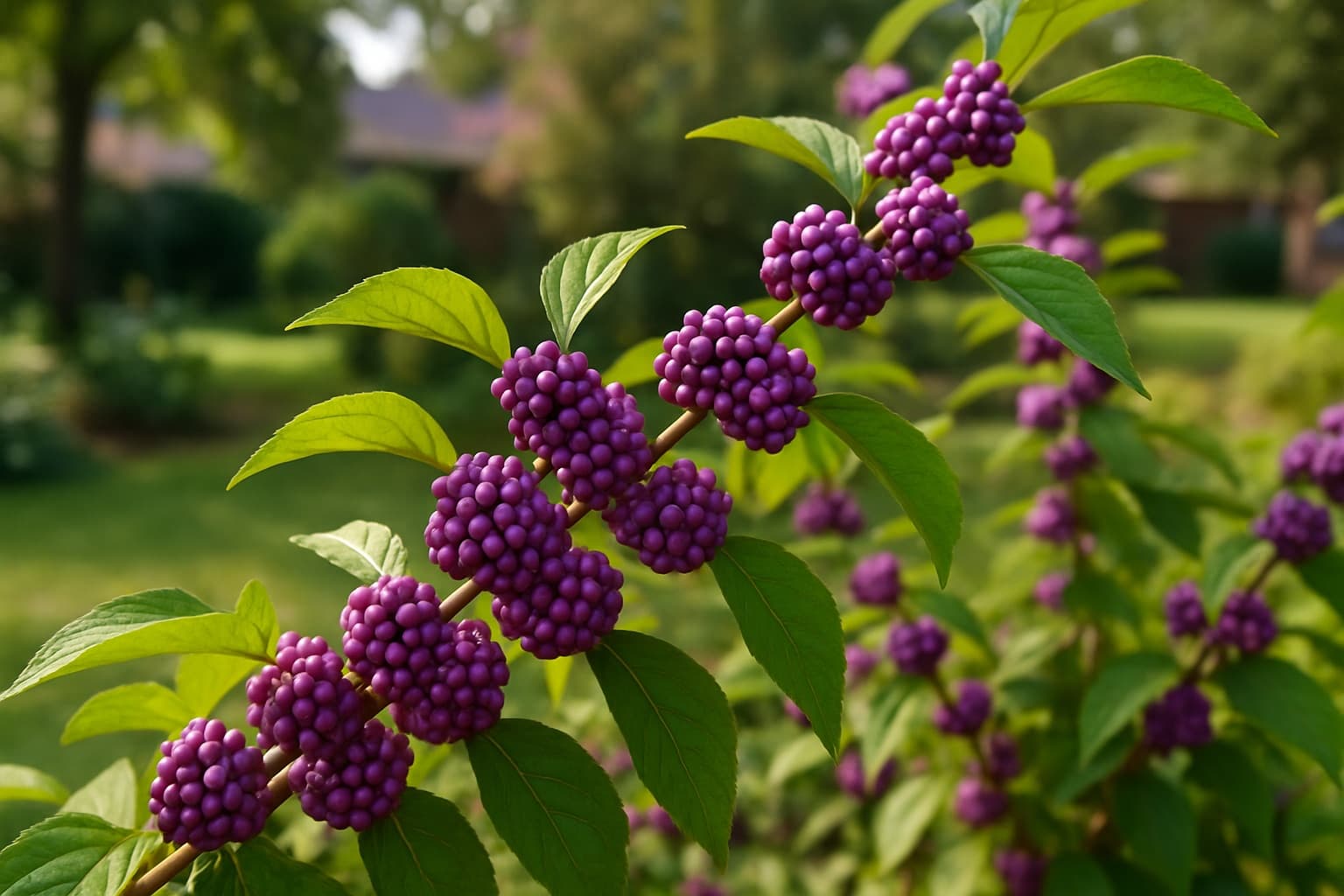
Is American Beautyberry Toxic to Dogs?
The short version
- American Beautyberry (Callicarpa americana) is not on the ASPCA toxic plant list for dogs, cats, or horses.
- Native to East Texas, including the Piney Woods ecoregion (Beaumont area), per the Lady Bird Johnson Wildflower Center.
- Its purple fall berry clusters feed birds through winter, unlike toxic look-alike Nandina.
Quick answer
American Beautyberry (Callicarpa americana) is not on the ASPCA Animal Poison Control Center toxic plant list for dogs, cats, or horses. It is not considered toxic to pets, which is part of why it works well as a berry-producing native for East Texas yards with dogs. As with any plant, a dog that eats a large amount can get mild stomach upset. If that happens, call the ASPCA Animal Poison Control Center at (888) 426-4435.
American Beautyberry is one of the more forgiving native shrubs for East Texas yards, tolerant of part shade, adaptable to different soils, and easy to find at native nurseries. It is also a plant dog owners do not need to worry about, which makes it a useful stand-in for toxic shrubs that share the same berry-covered look.
What the ASPCA says
American Beautyberry does not appear on the ASPCA Animal Poison Control Center toxic plant list for dogs, cats, or horses. That list is the standard reference for documented plant toxins in pets, and Beautyberry (checked under both its common name and its genus, Callicarpa) has no entry on it.
That said, no plant is something a dog should eat freely. A dog that works through a large quantity of leaves or berries from any species can end up with mild GI upset just from the volume and fiber involved, not from a specific toxin. If your dog eats a normal amount of fallen Beautyberry fruit while exploring the yard, it is not a plant on the watch list.
Why American Beautyberry earns a spot in a Texas dog yard
American Beautyberry is native to the southeastern United States, including East Texas and the Piney Woods (Beaumont area), per the Lady Bird Johnson Wildflower Center. It is a deciduous shrub that grows 3 to 6 feet tall, with small pink or lavender flowers in late spring and summer that draw pollinators, followed by the plant's signature clusters of bright purple berries in fall. Those berries persist after the leaves drop and are a major food source for birds like mockingbirds and cardinals heading into winter.
It tolerates part shade to full sun and adapts to a range of soils, which makes it a common and easy-to-place choice in East Texas landscaping. For a dog owner who wants fall color and winter bird activity without adding a plant to worry about, that combination is hard to beat.
| Plant | Dog Safe? | Notes |
|---|---|---|
| American Beautyberry (Callicarpa americana) | Yes | Not on ASPCA toxic plant list; East Texas native, fall berries feed birds through winter |
| Toxic shrub it can replace: Nandina | No | Nandina (Heavenly Bamboo) is toxic to dogs per the ASPCA; its red-purple berries are also documented to harm birds through cyanogenic compounds, while Beautyberry gives the same berry display without either risk |
If something goes wrong
ASPCA Animal Poison Control Center: (888) 426-4435 (24/7, fee may apply). Have the plant name ready when you call.
Checking more than one plant? See the full list of plants toxic to dogs and cats, with native alternatives, covering every plant on the ASPCA list.
See a finished plan for a yard like this
Find our guides useful? Add Pollinator Patch as a preferred source on Google and articles like this one will show up higher in your own search results.