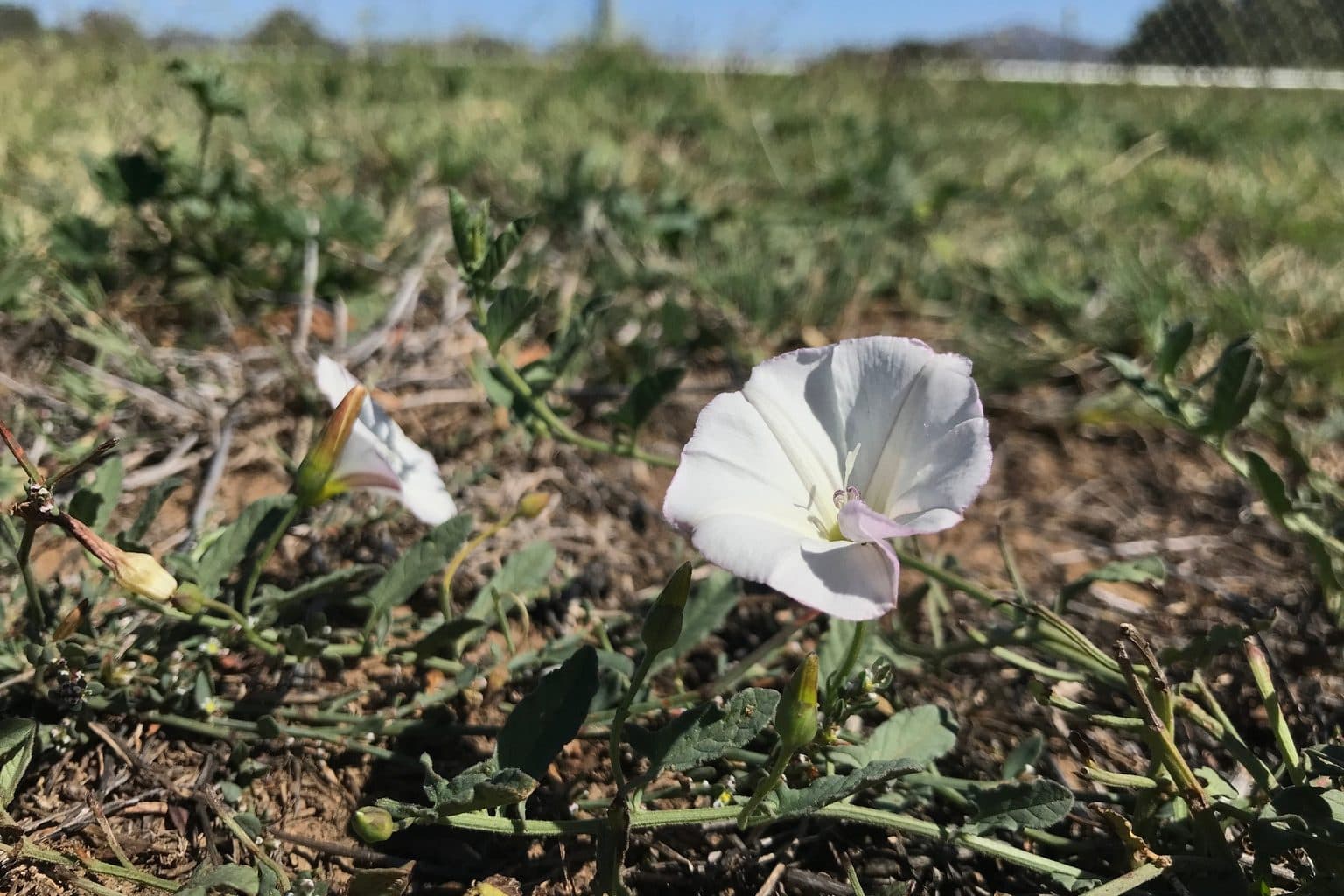
Quick answer: Field Bindweed (Convolvulus arvensis) is not on the ASPCA Animal Poison Control Center toxic plant list, but that is not the same as being proven safe. It contains tropane alkaloids and is generally considered mildly toxic, mostly causing stomach upset. It is also an invasive noxious weed, so the right move is to pull it out rather than keep it. If your dog ate a lot and is vomiting or has diarrhea, call the ASPCA Animal Poison Control Center at (888) 426-4435.
Bindweed is the twining vine with small white or pale-pink funnel flowers that shows up uninvited in lawns, beds, and along fences. People ask if it is safe for dogs because it looks a lot like a delicate morning glory. This page covers why "not on the ASPCA list" does not mean cleared, how worried to actually be, and what native groundcovers to plant once the bindweed is gone.
What the ASPCA says (and doesn't)
There is no entry for Field Bindweed (Convolvulus arvensis) in the ASPCA Animal Poison Control Center plant database, on either the toxic or the non-toxic side. That absence is easy to misread. A plant that is missing from the list has not been reviewed and cleared; it simply has no page. For a common invasive weed like bindweed, "not on the ASPCA list" is a gap in coverage, not a clean bill of health.
Other authorities do flag it. Bindweed contains tropane alkaloids, with pseudotropine the predominant one alongside tropine, tropinone, and related compounds (USDA Forest Service Fire Effects Information System, Convolvulus arvensis profile). The toxicology literature also notes nephrotoxic and hepatotoxic constituents. In a mouse feeding study, animals fed bindweed as an exclusive diet developed liver necrosis and gastrointestinal ulceration after several days (PubMed 8592835). That is an extreme experimental exposure, not what happens when a dog nibbles a vine in the yard, and it should not be read as "bindweed causes liver failure in dogs." The honest summary is narrower: real alkaloids are present, the plant is considered mildly toxic, and the day-to-day risk to a dog is stomach upset.
Is it a morning glory? No, and that matters
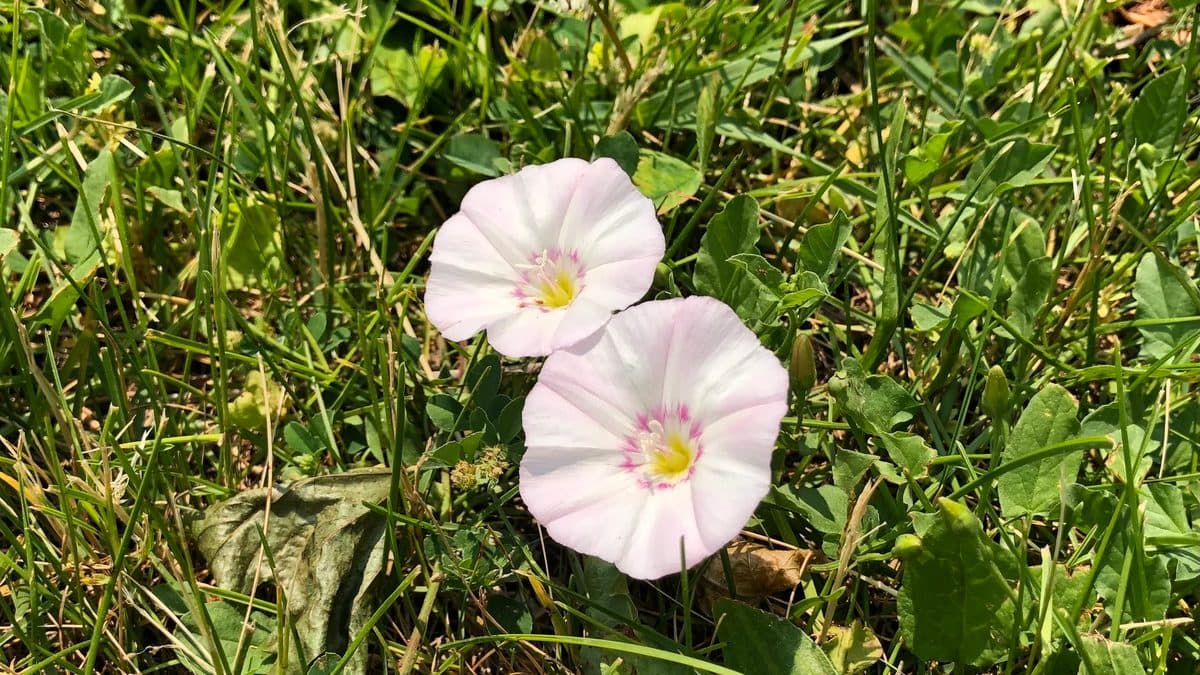
Field Bindweed is a bindweed, not a true morning glory. The two get confused because the flowers look similar, but they are different plants with different reasons to avoid them. Bindweed is a listed noxious and invasive weed across much of the country, so it is a plant to remove, not one to plant on purpose. If you were shopping for a flowering vine and landed on bindweed by mistake, the swaps below are what you actually want.
How worried should you be?
For a healthy dog that mouthed or ate a small amount of bindweed, the likely outcome is mild and short-lived: vomiting, diarrhea, or general stomach upset. The severe effects in the literature come from concentrated, exclusive-diet exposure in lab animals, not a casual nibble. That said, "mildly toxic" is not "safe," and there is no ASPCA dosing guidance to lean on because there is no ASPCA entry. If your dog ate a large quantity, is a small dog, or is showing more than brief stomach upset, call poison control rather than wait it out. The most useful thing you can do regardless is remove the plant so there is nothing to eat next time.
Bindweed vs. dog-safe native groundcovers
If you have bindweed as a groundcover-by-default, these Edwards Plateau natives (San Antonio area) give you low, spreading, dog-friendly cover you would actually choose. Native ranges per the Lady Bird Johnson Wildflower Center; none appear on the ASPCA toxic plant list.
| Plant | Dog Safe? | Notes |
|---|---|---|
| Field Bindweed (Convolvulus arvensis) | Remove | Invasive noxious weed; not ASPCA-listed but carries tropane alkaloids and is mildly toxic. Pull it, do not plant it. |
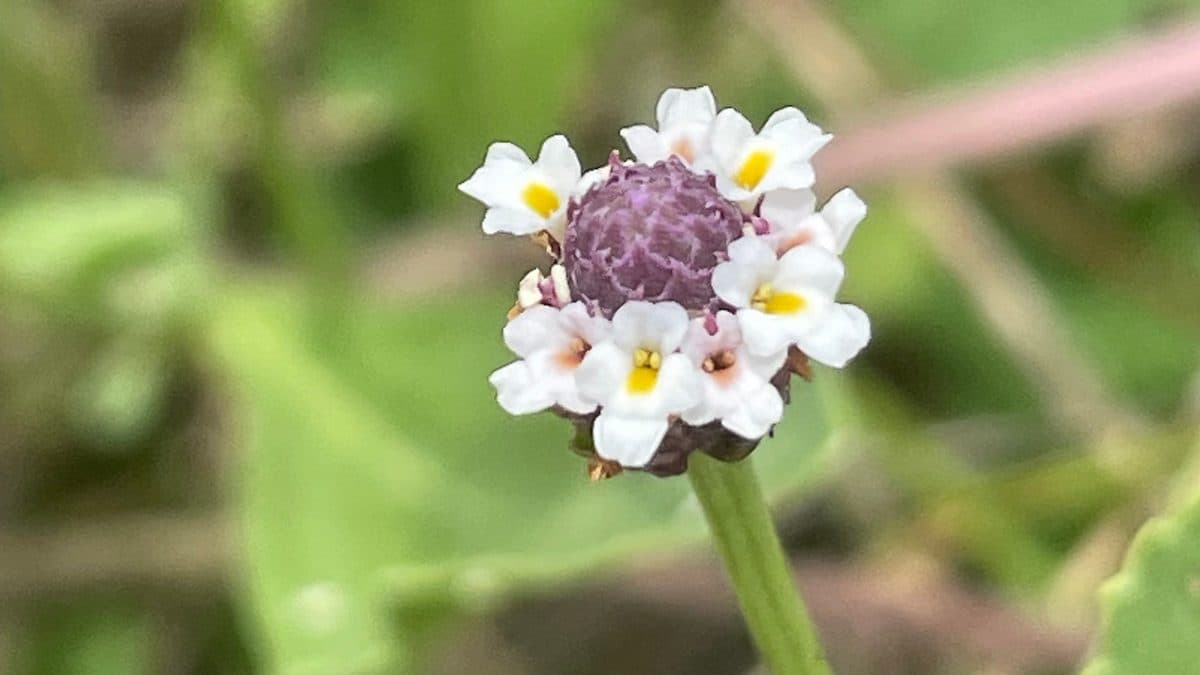
| Frogfruit (Phyla nodiflora) | Yes | Not on ASPCA toxic plant list; low mat-forming groundcover, takes foot traffic, small white flowers for pollinators |
| Horseherb / straggler daisy (Calyptocarpus vialis) | Yes | Not on ASPCA toxic plant list; spreads to fill shade and part-sun, tiny yellow flowers, tolerates mowing |
| Prairie Verbena (Glandularia bipinnatifida) | Yes | Not on ASPCA toxic plant list; low purple mounds, long bloom, very drought tough in full sun |
What to do if your dog ate it
- Estimate how much was eaten. A single nibbled vine is different from a mouthful of foliage, and the amount is the main thing poison control will ask about.
- Call the ASPCA Animal Poison Control Center at (888) 426-4435, or your vet, if your dog ate a large amount, is small, or shows more than brief stomach upset.
- Do not induce vomiting unless a vet tells you to.
- Watch for vomiting and diarrhea, and report anything beyond mild, short-lived stomach upset.
- Remove the bindweed so there is nothing left to eat. It is invasive, so this helps the yard either way.
For the plants that carry a clearer ASPCA warning and are worth checking before your next nursery run, see the six Texas yard plants most toxic to dogs.
If something goes wrong
ASPCA Animal Poison Control Center: (888) 426-4435 (24/7, fee may apply). Have your best estimate of how much was eaten ready when you call.
Checking more than one plant? See the full list of plants toxic to dogs and cats, with native alternatives, covering every plant on the ASPCA list.