If your dog ate something and you're worried right now
Call the ASPCA Animal Poison Control Center: (888) 426-4435. There's a consultation fee, but they're available 24/7 and they'll walk you through it. Your vet's emergency line is the other call to make.
Quick answer: The most dangerous plants for dogs in Texas yards are Sago Palm, Oleander, non-native Lantana camara, Chinaberry, Autumn Crocus, and Carolina Jessamine. Each has a non-toxic native swap: Dwarf Palmetto, Desert Willow, Flame Acanthus, Mexican Plum, Rain Lily, and Crossvine.
A lot of the plants Texas nurseries sell without a second thought are seriously toxic to dogs. Sago Palms sit right next to the checkout at Home Depot. Oleander lines half the highways in San Antonio. Nobody puts a warning label on any of it.
Here are the worst offenders you'll find in Texas yards, what they do to dogs, and a native plant you can put in instead. Every swap on this list is non-toxic and grows well in Zones 8 and 9. For a broader list of safe species, check the dog-safe native plants for Texas page.
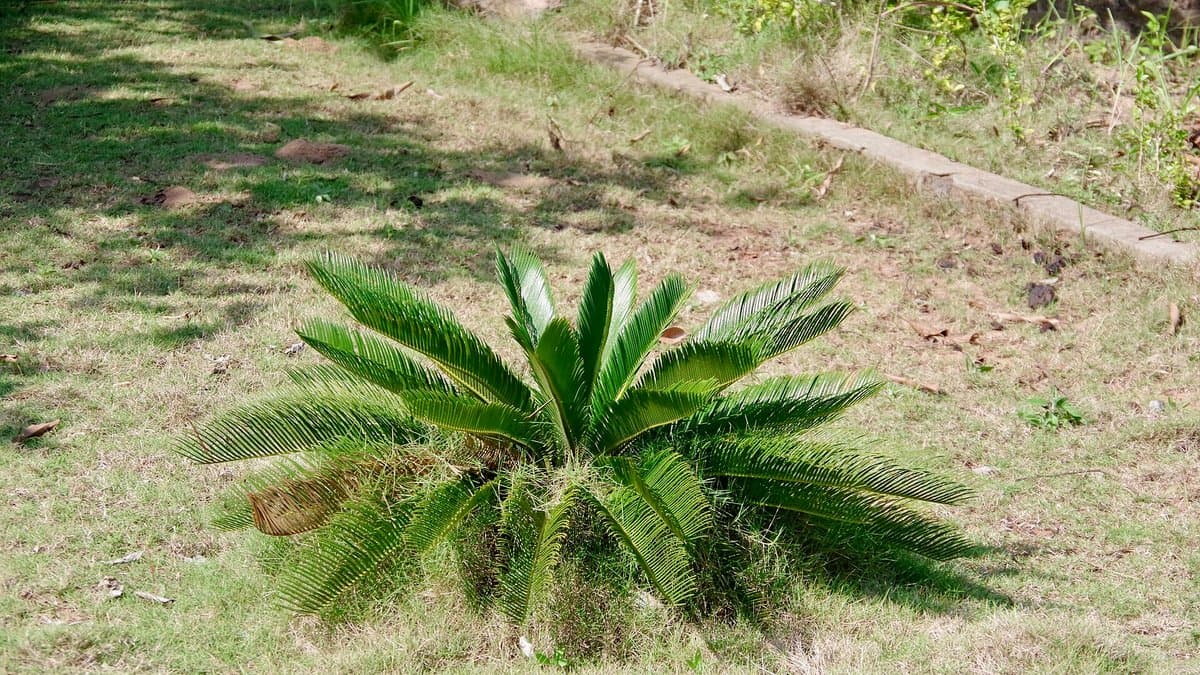
Sago Palm (Cycas revoluta)
The single most dangerous plant in a Texas yard with dogs. Every part is toxic. The seeds are the worst. One or two seeds can cause liver failure, and dogs seem weirdly drawn to them. Vomiting, bloody stool, seizures. Fatality rate is high even with treatment.
Safe swap: Dwarf Palmetto (Sabal minor). Native to East Texas, handles shade, stays under 6 feet. Gives you that tropical look without the trip to the emergency vet.
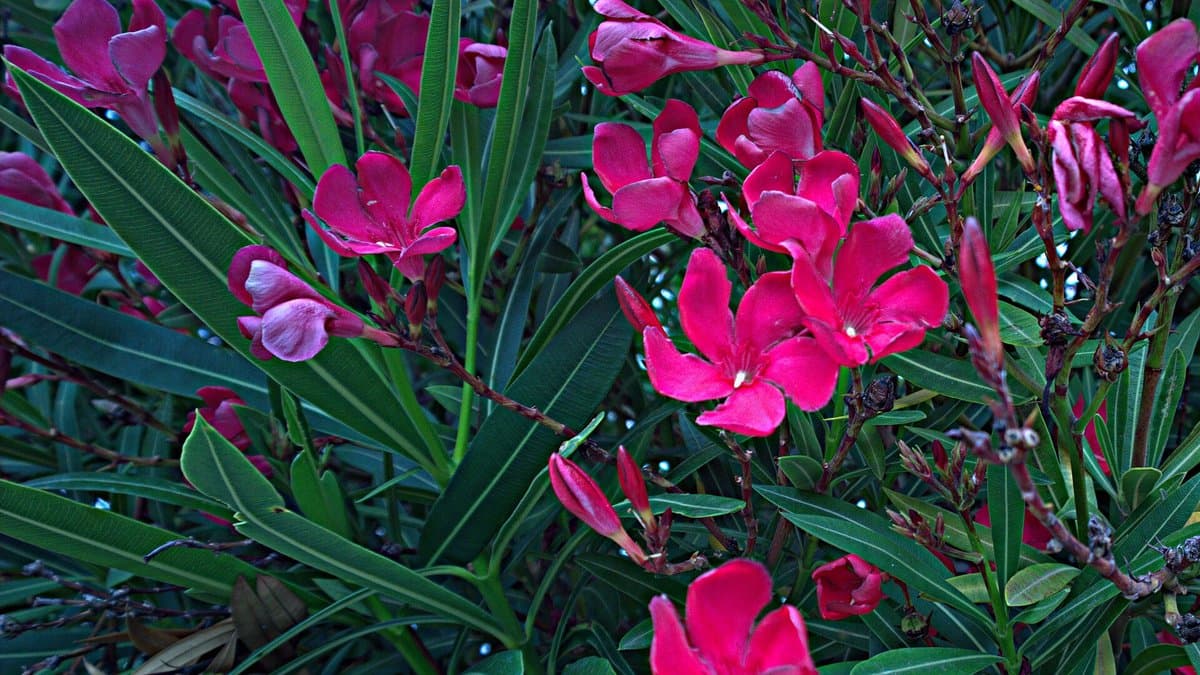
Oleander (Nerium oleander)
Leaves, flowers, bark, roots. All toxic. Even the water in a vase with oleander cuttings can make a dog sick. Symptoms hit fast: drooling, vomiting, abnormal heart rhythm. It's everywhere in Central and South Texas because it's drought-tough and blooms all summer. But it's not worth the risk.
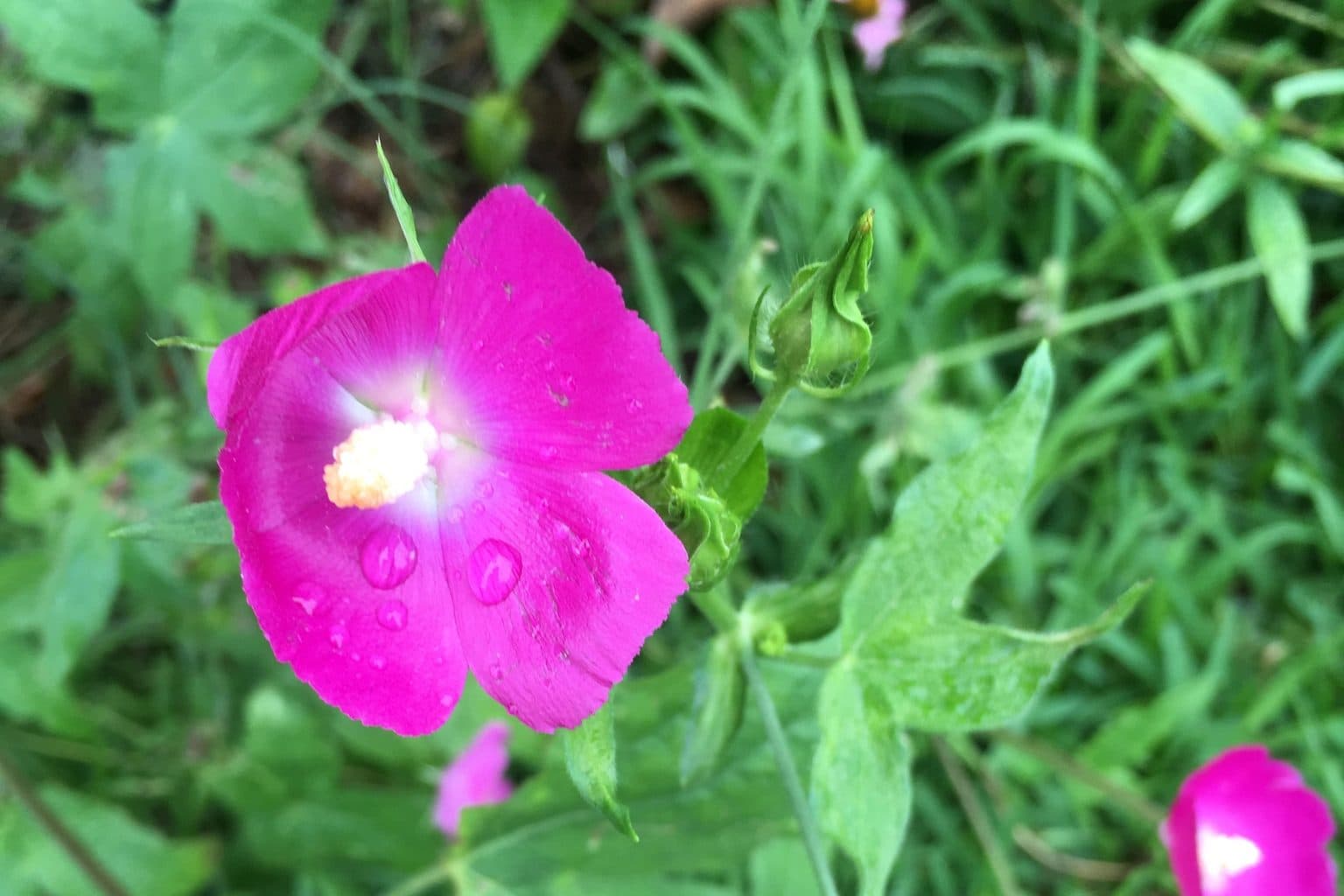
Safe swap: Desert Willow (Chilopsis linearis). Showy pink and purple flowers from June through September. Drought tolerant. Non-toxic (full answer: is Desert Willow toxic to dogs). Hummingbirds love it. Grows in Zones 7 through 11.
Non-native Lantana (Lantana camara)
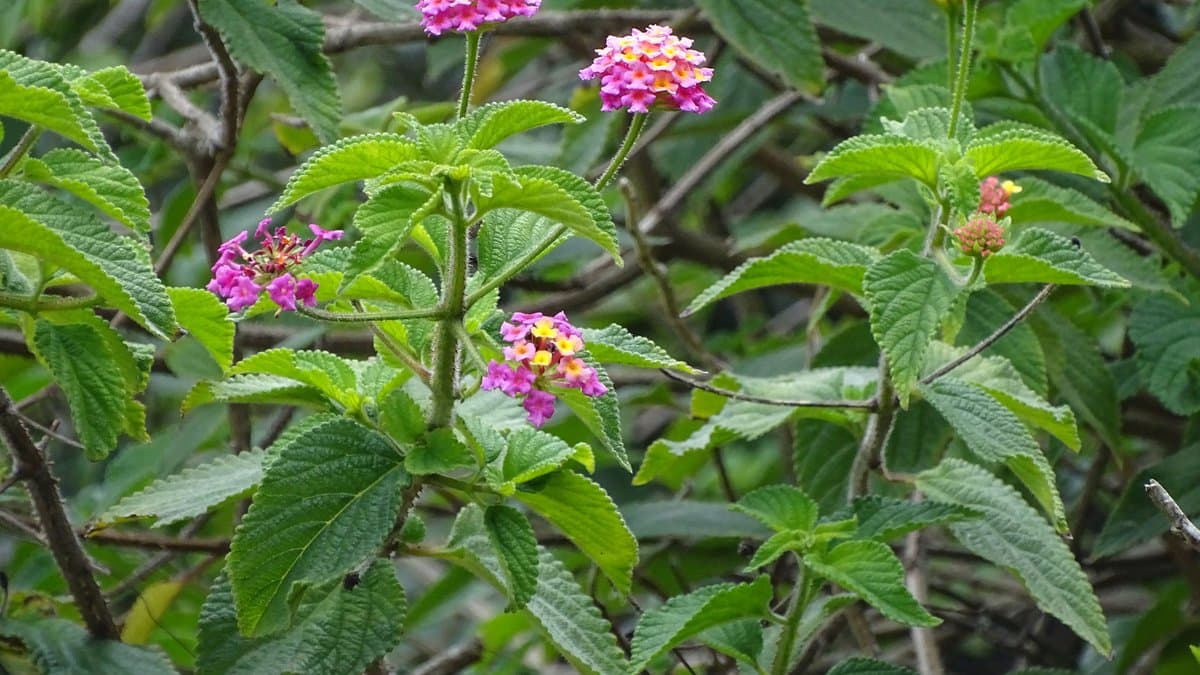
This is the one that trips people up. The non-native Lantana camara sold at big box stores has toxic berries. Unripe green ones are the most dangerous. Dogs that eat them can get vomiting, diarrhea, difficulty breathing. The native Texas Lantana (Lantana urticoides) is a different species, but the toxic triterpenoid compounds occur across the Lantana genus, and the ASPCA Animal Poison Control Center lists lantana at the genus level without carving out the native, so treat it with the same caution around dogs that chew plants. Full breakdown, including what to do if your dog already ate some: is lantana toxic to dogs.
Safe swap: Flame Acanthus (Anisacanthus quadrifidus var. wrightii). Same hot orange-red color, same sun-loving long bloom, and it is not on the ASPCA toxic plant list. Hummingbirds work it all summer. Native Texas Lantana looks the part too, but it shares the same genus toxins, so save it for beds your dog stays out of.
Chinaberry (Melia azedarach)
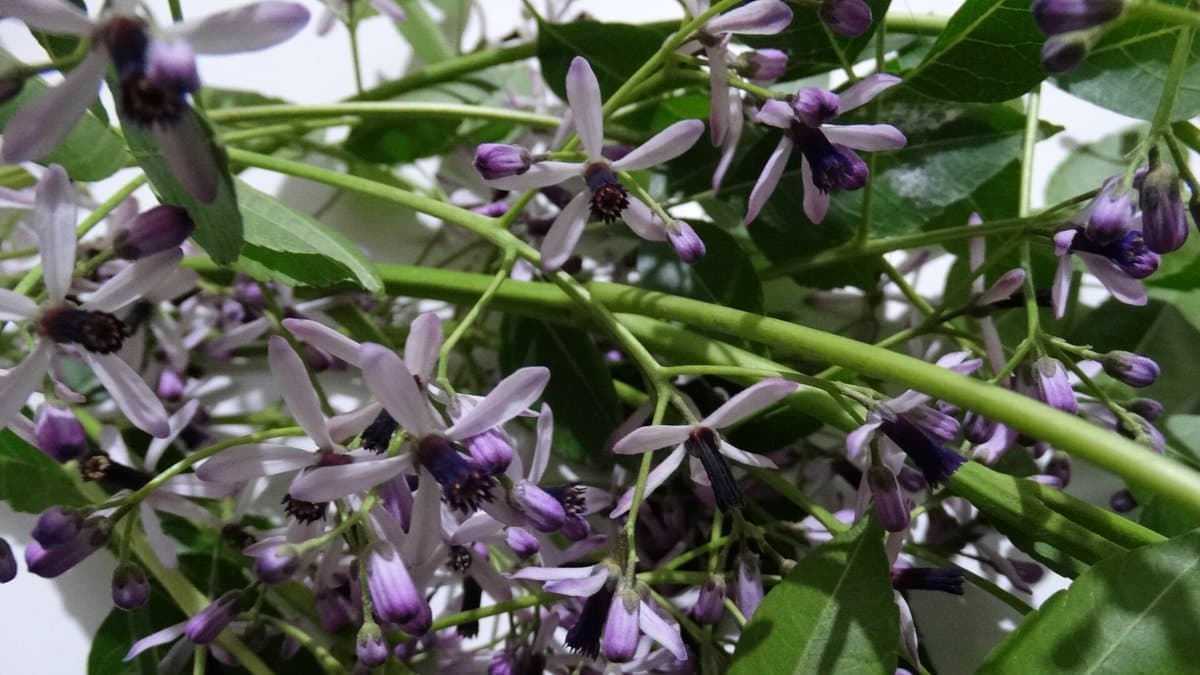
The berries are the problem. Dogs eat them off the ground in fall and winter. Six to eight berries can be toxic to a small dog. Symptoms: vomiting, diarrhea, seizures, respiratory failure in bad cases. Chinaberry is invasive in Texas too, so removing it is doing everyone a favor.
Safe swap: Mexican Plum (Prunus mexicana). Beautiful white spring blooms, small edible fruit, great fall color. Native to most of Texas. Non-toxic to dogs. Birds love the fruit.
Autumn Crocus (Colchicum autumnale)
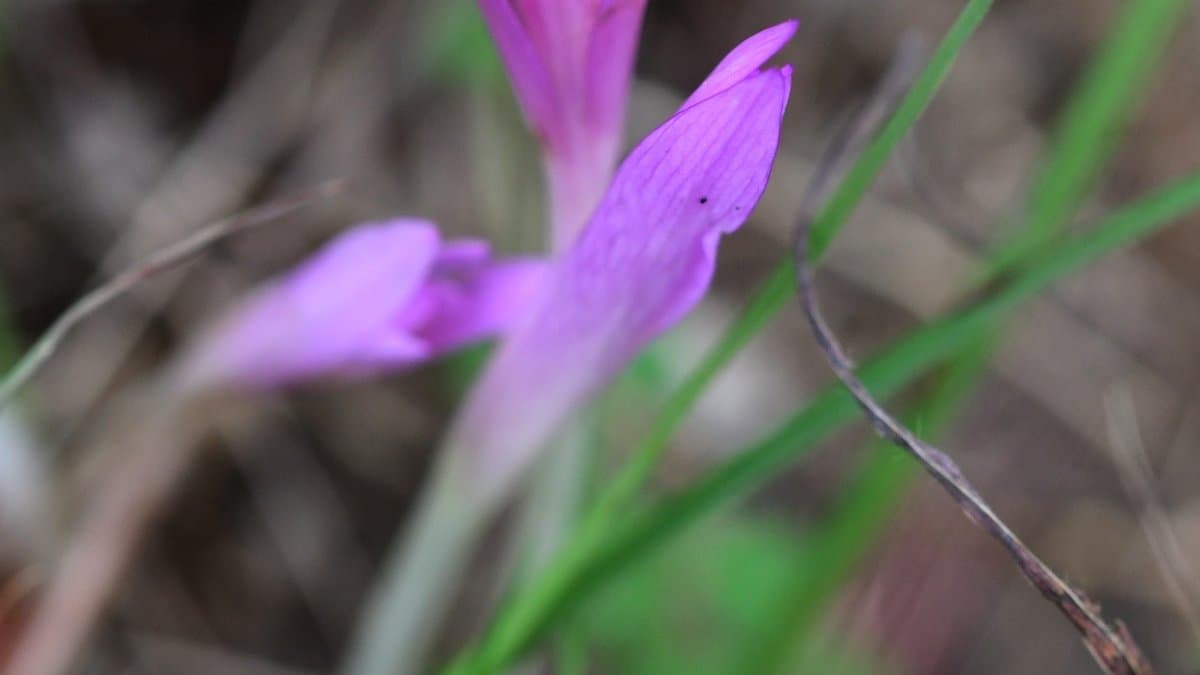
Not actually a crocus. Contains colchicine, which is seriously toxic. All parts of the plant. Symptoms can be delayed 2 to 3 days, which makes it sneaky. Organ failure is possible. It's less common in Texas landscapes than the others on this list, but it shows up in garden beds and borders.
Safe swap: Rain Lily (Zephyranthes drummondii). Pops up after summer rains with white, star-shaped flowers. Native to Texas prairies. Non-toxic. Low maintenance. Zones 7 through 10.
Carolina Jessamine (Gelsemium sempervirens)
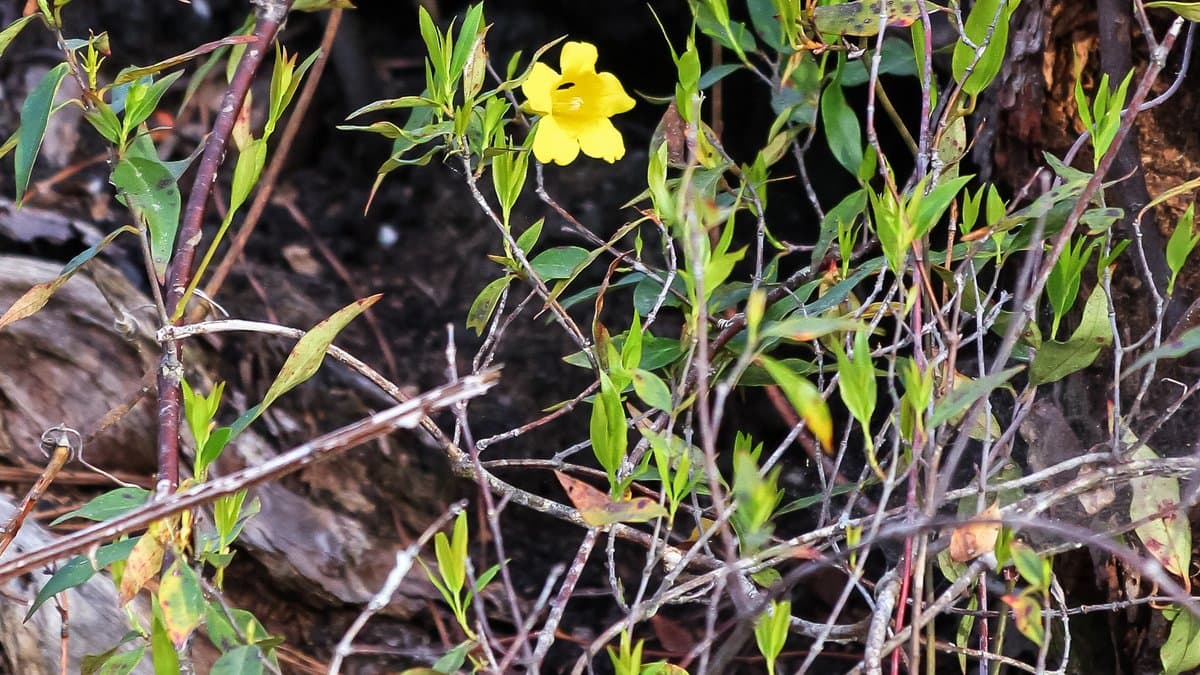
Pretty yellow flowers on a vine. It's the state flower of South Carolina and popular on Texas fences and arbors. Every part is toxic to dogs. Vomiting, weakness, difficulty breathing, seizures. Even the nectar can be a problem if a dog chews the flowers.
Safe swap: Crossvine (Bignonia capreolata). Trumpet-shaped orange and red flowers in spring. Non-toxic. Native. Hummingbird magnet. Grows fast on fences and trellises, which is probably why you wanted a vine in the first place.
Plants people often ask about (good news)
These three come up constantly in dog-safety searches. The short version: none of them are on the ASPCA toxic plant list, and all three are reasonable choices for a Texas yard with dogs. Details below for the people who want to be sure.
Is Crossvine Toxic to Dogs?
Short answer: no. Crossvine (Bignonia capreolata) is not on the ASPCA Animal Poison Control toxic plant list for dogs, cats, or horses. People look up "crossvine toxic to dogs" and "crossvine safe for dogs" because it's a common Texas landscape vine, and the answer is reassuring. If a dog chews a leaf or a flower, it's not the kind of plant that causes the serious reactions you get from Carolina Jessamine or Sago Palm. For a full breakdown including a comparison table of common Texas vines, see is crossvine toxic to dogs.
A few caveats. Any plant material can cause mild GI upset (vomiting, soft stool) if a dog eats a lot of it, and that holds for Bignonia capreolata too. "Non-toxic" means no known systemic toxin, not that unlimited munching is fine. If a dog eats a large amount and seems off, call the ASPCA Animal Poison Control Center at (888) 426-4435.
Crossvine is one of the few native flowering vines that gives you the dense vertical color of an ornamental honeysuckle without the toxicity concern. Trumpet-shaped orange-red blooms in early spring, semi-evergreen in most of Texas, and a reliable hummingbird stop. If you're pulling Carolina Jessamine or imported honeysuckle for pet safety reasons, this is the dog-safe swap most Texas homeowners land on.
Texas Ranger (Cenizo)
Texas Ranger (Leucophyllum frutescens), also sold as Cenizo or Texas Sage, is not on the ASPCA toxic plant list. The full post on whether Texas Sage is toxic to dogs covers its other names and what to do if your dog chews one. Don't mix it up with Texas mountain laurel (Dermatophyllum secundiflorum), a different plant whose seeds are toxic to dogs.
Is Horseherb Toxic to Dogs?
Short answer: no. Horseherb (Calyptocarpus vialis), sometimes called straggler daisy or lawnflower, is not on the ASPCA toxic plant list. It's one of the most commonly recommended dog-friendly groundcovers for Texas yards, especially shady areas where regular turf struggles. Searches like "is horseherb toxic to dogs" and "horseherb dog safe" land here because Texas homeowners use it as a lawn replacement under live oaks and want to be sure.
Same caveat: "non-toxic" doesn't mean a dog can eat it indefinitely. Large quantities of any plant can cause mild GI upset. Call (888) 426-4435 if anything looks off.
Horseherb stays under six inches, takes light foot traffic, blooms tiny yellow flowers most of the warm season, and asks for almost no water once established. For a fuller look at low-growing options that hold up to dogs, see the pet-friendly ground cover guide.
Quick reference
Our plant toxicity guide covers severity levels for common Texas landscape plants. The pet-friendly ground cover guide has more on low-growing options that hold up to dogs.
If you're replacing toxic plants and want help covering the cost, many Texas cities offer landscaping rebates for native plant conversions.
To filter every plant in your plan by pet toxicity before you buy, get Pollinator Patch on the App Store. Every plant has a dog and cat toxicity rating right on the card.
Checking more than one plant? See the full list of plants toxic to dogs and cats, with native alternatives, covering every plant on the ASPCA list.