Is Crossvine Safe for Dogs?
Bignonia capreolata
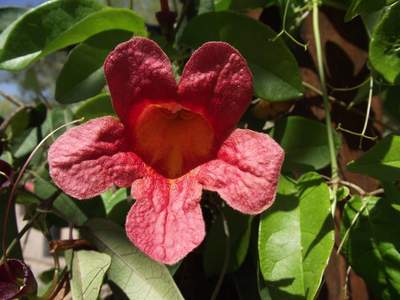
/images/plants/crossvine/attribution.json.No. Crossvine is not toxic to dogs.
Crossvine (Bignonia capreolata) is not on the ASPCA Animal Poison Control Center toxic plant list for dogs, cats, or horses. If your pet shows symptoms after eating any plant, call the ASPCA at (888) 426-4435.
Light
part sun
Water
low
Size
240"–600" H × 60"–144" W
Bloom
Mar, Apr, May
Native to
East Texas, Pineywoods, Post Oak Savannah, Blackland Prairie
Pollinators
hummingbirds, butterflies
Browse plants for this ecoregion
Crossvine is a perennial vine native to East Texas, Pineywoods, Post Oak Savannah, Blackland Prairie. It grows best in part sun with low water needs.
Crossvine (Bignonia capreolata) is a native woody vine that grows fast and blooms early. Trumpet-shaped orange-red flowers cover the vine in March and April, right when ruby-throated hummingbirds arrive in Texas. The leaves stay on the vine through most of the winter, giving you cover when other deciduous plants are bare.
Crossvine is non-toxic to dogs, cats, and horses (not on the ASPCA Animal Poison Control toxic plant list). That makes it the standard dog-safe swap for the toxic Carolina Jessamine and the invasive Japanese Honeysuckle. In HOA neighborhoods, train it on a sturdy trellis, fence, or arbor and prune lightly after bloom; the structured form reads as intentional.
Ecoregion notes for Texas. In the Pineywoods (East Texas, acidic sandy loam, 40-60 inches of rain): Crossvine is right at home. Plant in part sun, give it 1 inch of water per week the first summer, then leave it alone. In Post Oak Savannah and Blackland Prairie (DFW, Austin, San Antonio corridor, heavy clay): amend the planting hole with decomposed granite or pine bark fines to prevent root rot, water deeply but infrequently, and mulch 3 inches with shredded hardwood. In the Edwards Plateau / Hill Country (alkaline limestone, thin soil): it survives but does not thrive. Pick a north or east exposure and plan to water through the summer, especially in the establishment year.
Crossvine pairs well with Turk's Cap and Coral Honeysuckle for a hummingbird-focused vertical garden. Avoid heavy fertilizer; native vines bloom less when overfed. The vine can climb 20-50 feet with mature support, so size your trellis accordingly. Verify you have Bignonia capreolata, not the unrelated trumpet vine (Campsis radicans), which spreads more aggressively.
Bee species data compiled from GBIF, iNaturalist, Discover Life, and the USGS Native Bee Inventory and Monitoring Lab. Plant-pollinator associations informed by published ecological literature.
How to care for Crossvine, by region
How to care for Crossvine where it is actually grown: year-round basics plus what to do each season, region by region, with the sources for each.
Care guidance last updated: September 2026
Cross Timbers (includes Fort Worth, TX)
Year-round
Crossvine is a fast growing, woody vine that climbs on its own using sticky tendril pads, so it does not need trellis wire the way many vines do, and it puts on a big flush of orange red trumpet flowers each spring. It is not on the ASPCA toxic plant list for dogs, cats, or horses.
- Give it a sturdy fence, arbor, wall, or post it can grip directly, its clinging tendrils have adhesive pads and do not require tying to wire.
- Plant in part sun to full sun, more sun means a heavier bloom, while deep shade keeps the vine green but flower shy.
- Water regularly through the first one to two growing seasons while roots establish, then it tolerates dry stretches once mature.
- Expect vigorous growth, several feet of new climb in a season once established, so build pruning into your routine from the start.
- Watch for root suckers coming up near the base and pull them while small to keep the planting contained.
Fall
Fall is a good time to plant or transplant crossvine in North Texas, since cooler weather lets roots establish before next summer's heat arrives, and the foliage often shifts to a reddish purple color as temperatures drop.
- Plant new crossvine in September or October so it has months to root in before next summer.
- Ease off watering frequency as temperatures cool, but do not let a first year planting dry out completely through October.
- Expect the leaf color to shift from dark green to reddish purple in fall, that is a normal seasonal change for this vine, not a sign of stress.
- Skip fall pruning, crossvine sets its spring flower buds on the current season's growth, and a fall cut removes next year's blooms.
Reddish purple fall foliage on a trained crossvine still reads as tended and seasonal, worth a quick note to neighbors so the color shift is not mistaken for a dying plant.
Winter
Crossvine holds much of its foliage through a typical North Texas winter (it is semi-evergreen here), though a hard freeze or Arctic outbreak can brown or drop leaves and even kill back stems temporarily, while the plant itself is hardy through the area's normal winter lows.
- Expect the vine to stay mostly leafy and take on a reddish purple color through a mild winter, that is typical semi-evergreen behavior for this species, not a problem.
- After a hard freeze or Arctic outbreak, wait until new growth appears in spring before cutting back any browned stems, the plant is usually still alive at the base and roots.
- Skip winter pruning otherwise, current season wood carries next spring's flower buds.
- Check that the fence, arbor, or wires it climbs are still solidly attached before winter storms, a mature vine adds real weight to whatever it is climbing.
Browned or dropped leaves after a winter freeze can look neglected from the street, waiting for spring cleanup before judging its shape avoids a premature HOA inquiry.
Spring
Spring is when crossvine puts on its big show, clusters of orange red trumpet flowers that hummingbirds visit heavily, typically peaking in April and running into May in North Texas.
- Expect the heaviest flush of blooms in April, tapering off by late May.
- If last year's bloom was thin, cut back crowded or tangled stems right after this year's flowering finishes, that opens the plant up and helps next year's flower buds form.
- New spring growth is vigorous, check that ties or supports are still secure before the plant puts on its seasonal surge.
- In the heavy black clay soils of the Blackland Prairies, plant it high on a slight mound or work in coarse compost so spring rains do not sit at the root crown; in the sandier soils of the Cross Timbers to the west, spring rain is usually enough on its own and extra soil prep matters less.
- Check the base of the plant for new suckers pushing through the mulch and remove them while they are small.
A crossvine trained flat against a fence or arbor and in full spring bloom reads as an intentional planted feature, keep stems tied in against the support rather than left to hang free.
Summer
Summer heat is when crossvine grows fastest and needs the most water, especially in its first two summers while it is still establishing, and most blooming has finished by now.
- Water new plantings (first or second summer) deeply once or twice a week through July and August, established vines three years and older usually get by on rainfall alone most summers.
- Expect several feet of new climbing growth through summer, guide new shoots onto the support weekly so they do not blow loose or grab onto siding or shingles instead.
- If growth has sprawled past its support, do a light shaping cut in early summer rather than waiting until fall, since fall pruning removes next year's flower buds.
- Watch leaves for scorch or wilting during 100 degree stretches, water deeply at the root zone rather than a light surface sprinkle, since surface watering does not reach roots in either the heavy clay or the sandier soils here.
Sources: Missouri Botanical Garden Plant Finder, Bignonia capreolata, Lady Bird Johnson Wildflower Center, Bignonia capreolata, ASPCA Toxic and Non-Toxic Plant List, Dogs
Texas Blackland Prairies (includes Dallas, TX)
Year-round
Crossvine is a fast growing, woody vine that climbs on its own using sticky tendril pads, so it does not need trellis wire the way many vines do, and it puts on a big flush of orange red trumpet flowers each spring. It is not on the ASPCA toxic plant list for dogs, cats, or horses.
- Give it a sturdy fence, arbor, wall, or post it can grip directly, its clinging tendrils have adhesive pads and do not require tying to wire.
- Plant in part sun to full sun, more sun means a heavier bloom, while deep shade keeps the vine green but flower shy.
- Water regularly through the first one to two growing seasons while roots establish, then it tolerates dry stretches once mature.
- Expect vigorous growth, several feet of new climb in a season once established, so build pruning into your routine from the start.
- Watch for root suckers coming up near the base and pull them while small to keep the planting contained.
Fall
Fall is a good time to plant or transplant crossvine in North Texas, since cooler weather lets roots establish before next summer's heat arrives, and the foliage often shifts to a reddish purple color as temperatures drop.
- Plant new crossvine in September or October so it has months to root in before next summer.
- Ease off watering frequency as temperatures cool, but do not let a first year planting dry out completely through October.
- Expect the leaf color to shift from dark green to reddish purple in fall, that is a normal seasonal change for this vine, not a sign of stress.
- Skip fall pruning, crossvine sets its spring flower buds on the current season's growth, and a fall cut removes next year's blooms.
Reddish purple fall foliage on a trained crossvine still reads as tended and seasonal, worth a quick note to neighbors so the color shift is not mistaken for a dying plant.
Winter
Crossvine holds much of its foliage through a typical North Texas winter (it is semi-evergreen here), though a hard freeze or Arctic outbreak can brown or drop leaves and even kill back stems temporarily, while the plant itself is hardy through the area's normal winter lows.
- Expect the vine to stay mostly leafy and take on a reddish purple color through a mild winter, that is typical semi-evergreen behavior for this species, not a problem.
- After a hard freeze or Arctic outbreak, wait until new growth appears in spring before cutting back any browned stems, the plant is usually still alive at the base and roots.
- Skip winter pruning otherwise, current season wood carries next spring's flower buds.
- Check that the fence, arbor, or wires it climbs are still solidly attached before winter storms, a mature vine adds real weight to whatever it is climbing.
Browned or dropped leaves after a winter freeze can look neglected from the street, waiting for spring cleanup before judging its shape avoids a premature HOA inquiry.
Spring
Spring is when crossvine puts on its big show, clusters of orange red trumpet flowers that hummingbirds visit heavily, typically peaking in April and running into May in North Texas.
- Expect the heaviest flush of blooms in April, tapering off by late May.
- If last year's bloom was thin, cut back crowded or tangled stems right after this year's flowering finishes, that opens the plant up and helps next year's flower buds form.
- New spring growth is vigorous, check that ties or supports are still secure before the plant puts on its seasonal surge.
- In the heavy black clay soils of the Blackland Prairies, plant it high on a slight mound or work in coarse compost so spring rains do not sit at the root crown; in the sandier soils of the Cross Timbers to the west, spring rain is usually enough on its own and extra soil prep matters less.
- Check the base of the plant for new suckers pushing through the mulch and remove them while they are small.
A crossvine trained flat against a fence or arbor and in full spring bloom reads as an intentional planted feature, keep stems tied in against the support rather than left to hang free.
Summer
Summer heat is when crossvine grows fastest and needs the most water, especially in its first two summers while it is still establishing, and most blooming has finished by now.
- Water new plantings (first or second summer) deeply once or twice a week through July and August, established vines three years and older usually get by on rainfall alone most summers.
- Expect several feet of new climbing growth through summer, guide new shoots onto the support weekly so they do not blow loose or grab onto siding or shingles instead.
- If growth has sprawled past its support, do a light shaping cut in early summer rather than waiting until fall, since fall pruning removes next year's flower buds.
- Watch leaves for scorch or wilting during 100 degree stretches, water deeply at the root zone rather than a light surface sprinkle, since surface watering does not reach roots in either the heavy clay or the sandier soils here.
Sources: Missouri Botanical Garden Plant Finder, Bignonia capreolata, Lady Bird Johnson Wildflower Center, Bignonia capreolata, ASPCA Toxic and Non-Toxic Plant List, Dogs
Western Gulf Coastal Plain (includes Houston, TX)
Year-round
Crossvine is a vigorous, semi-evergreen vine native to this part of Texas that needs a sturdy support and puts on a big flush of trumpet shaped flowers each spring.
- Give it a strong arbor, fence, wall, or trellis to climb. It grips with sticky tendril pads on its own, so you do not need to tie it up.
- Plant in full sun to light shade. More sun means more flowers, though it tolerates some shade.
- Use well drained soil. Once it is established it copes with Houston's summer heat and short dry spells, and it also tolerates brief flooding.
- This is a fast, vigorous grower that can reach 30 feet or more, so plan on a yearly prune to keep it inside the space you want.
- Crossvine is not on the ASPCA toxic plant list for dogs or cats, which makes it a lower-worry choice if pets share the yard. Any plant material eaten in large amounts can still cause mild stomach upset.
Fall
Fall stays warm long enough in Houston for crossvine to keep growing, and its leaves often shift toward a purplish tint as nights cool.
- Growth slows as days shorten, but Houston's mild fall means the vine often stays active into November.
- Leaves can turn a reddish purple once nights get cooler. This is a semi-evergreen vine, so most of the foliage stays on through fall rather than dropping.
- This is a fine time for a light shape up of stems that wandered off the support over summer. Save any bigger cutback for after next spring's bloom, since heavy pruning now removes wood that could carry flower buds.
- Hold off on fertilizer. New growth pushed late in fall is more likely to get nipped if an early freeze shows up.
Keeping the vine trimmed to its support before winter reads as tidy and intentional to HOA-conscious neighbors.
Winter
Houston winters are mostly mild for crossvine, but the occasional hard freeze can knock back the top growth even though the roots almost always survive.
- In a typical Houston winter, crossvine keeps most of its leaves and just shifts to a purplish color. It is hardy well past Houston's usual winter lows.
- In a rare hard freeze, the vine can die back to the ground. The roots are usually tough enough to resprout the next spring, so do not pull it out right after a freeze. Wait to see if new growth returns first.
- Do not prune hard in winter. Cutting back now removes the wood that would have carried next spring's flower buds.
- There is not much practical way to cover a vine grown up a tall arbor or fence before a freeze, so the main move is patience rather than protection.
If a hard freeze leaves the vine looking bare or brown for a stretch, that is temporary dieback, not neglect, and it is worth having that explanation ready for an HOA-conscious neighbor.
Spring
Spring is crossvine's showcase, with clusters of orange and yellow trumpet flowers covering the vine from March into May.
- Expect the main bloom flush from March into May. Hummingbirds are the main pollinators, so a blooming crossvine is also an early food source for hummingbirds passing through.
- Growth surges in spring. Check that ties and supports are still holding as new stems reach out.
- Wait until right after the flowers fade to prune. Crossvine blooms on new growth, so cutting back too early in spring can remove buds before they open.
- A light feed of a balanced, slow release fertilizer in early spring is enough if the soil is poor. Skip it if the vine is already growing well on its own.
A quick trim right after the spring bloom fades keeps the vine looking tended on a fence or arbor that faces the street.
Summer
Houston summers are hot and humid, and an established crossvine shrugs that off while a young plant still needs regular water.
- Water deeply once or twice a week during hot, dry stretches if the vine went in within the last year. Established vines are drought tolerant and usually get by on rainfall alone.
- Growth speeds up in summer heat. Check ties and trim back any stems reaching past where you want them.
- No major pests are reported for crossvine, so summer checks are mostly about controlling growth, not watching for bugs or disease.
- Skip extra fertilizer in summer. Feeding now tends to push leafy growth instead of the flower buds you want for next spring.
Sources: USDA NRCS Plant Guide: Crossvine (Bignonia capreolata), Lady Bird Johnson Wildflower Center, Bignonia capreolata plant profile, ASPCA Toxic and Non-Toxic Plant List, Dogs, NC State Extension Plant Toolbox, Bignonia capreolata
Want these tasks as reminders timed to your yard? Pollinator Patch turns this guidance into a season-by-season care plan for the plants you actually grow.
Pet safety FAQ
Is Crossvine (Bignonia capreolata) toxic to dogs?
No. Crossvine is not on the ASPCA Animal Poison Control Center toxic plant list for dogs, cats, or horses. It is not considered toxic to pets.
Is Crossvine the same as Carolina Jessamine?
No. Carolina Jessamine (Gelsemium sempervirens) is a different vine with yellow flowers and is toxic to dogs. Crossvine has orange-red trumpet flowers and is not toxic.
What should I do if my dog eats Crossvine?
Crossvine is not considered toxic, but if your dog eats any plant and shows symptoms, call the ASPCA Animal Poison Control Center at (888) 426-4435 (24/7, fee may apply).
Source: ASPCA Animal Poison Control Center plant database (aspca.org/pet-care/animal-poison-control/toxic-and-non-toxic-plants).
Before you buy
Your city may pay you to plant this
Cities and water utilities offer rebates for replacing lawn with native and water-wise plants. We track 452 programs across 44 states, each with a link to the provider and the date we last checked it.
Find rebates in your areaIf something looks wrong
Common plant problems, and what to check first
These come up on almost any plant. Each guide lists the likely causes in the order they are worth ruling out, with one thing to check before you act on any of them, and links to the source it came from.
- It is dying right after planting
- Leaves turning yellow
- Wilting even though I watered it
- Brown crispy leaf tips
- Bugs on the plant
Keep reading
Guides that feature this plant
- Best Native Plants for Georgia Front Yards: A Piedmont Homeowner's GuideA curated list of the best native plants for Georgia Piedmont front yards, with bloom times, sizes, sun and water needs, and tips for keeping each one tidy in HOA-conscious neighborhoods. Sourced from the Georgia Native Plant Society and UGA Extension.
- Best Native Plants for Tennessee Front Yards: A Homeowner's GuideA curated list of the best native plants for Tennessee front yards, with bloom times, sizes, sun and water needs, and tips for keeping each one tidy in HOA-conscious neighborhoods. Sourced from the Tennessee Native Plant Society and UT Extension.
Ready to grow Crossvine? Add it to your garden in Pollinator Patch to track it and get season-by-season care guidance.
Planning a bed around it? Start a free plan with this plant
Not sure where to start? Take the 2-minute yard quiz