Is Texas Ranger Safe for Dogs?
Leucophyllum frutescens
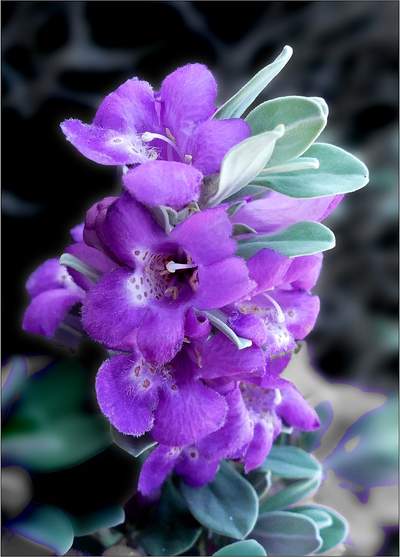
/images/plants/texas-ranger/attribution.json.No. Texas Ranger is not toxic to dogs.
Texas Ranger (Leucophyllum frutescens) is not on the ASPCA Animal Poison Control Center toxic plant list for dogs, cats, or horses. If your pet shows symptoms after eating any plant, call the ASPCA at (888) 426-4435.
Light
full sun
Water
low
Size
60"–96" H × 60"–96" W
Bloom
May, Jun, Jul, Aug, Sep, Oct
Native to
Edwards Plateau, South Texas Plains, Trans-Pecos
Pollinators
bees, butterflies
Browse plants for this ecoregion
Texas Ranger is a perennial shrub native to Edwards Plateau, South Texas Plains, Trans-Pecos. It grows best in full sun with low water needs.
Texas Ranger (Leucophyllum frutescens), also called Cenizo, Texas Sage, Purple Sage, or Barometer Bush, is the iconic silver-leaf shrub of South and West Texas. Purple, pink, or white flowers bloom in pulses after summer rains, sometimes within hours of a storm. The silver-gray foliage stays attractive year-round and pairs well with the warm tones of decomposed granite and limestone.
Texas Ranger is non-toxic to dogs, cats, and horses (not on the ASPCA toxic plant list). It is one of the most planted shrubs in Texas commercial and HOA landscapes because it stays neat, dense, and drought-tough with almost no input. It is an excellent pet-safe alternative to Oleander at a similar mature size.
Ecoregion notes for Texas. In the Edwards Plateau / Hill Country (alkaline limestone, thin rocky soil, 25-35 inches of rain): this is its native home. Plant in full sun, water deeply twice during the establishment summer, then let rain handle it. In the South Texas Plains and Trans-Pecos (Brush Country and Chihuahuan Desert, hot, alkaline, well-drained): also native; do not water once established. In the Blackland Prairie (Dallas-Austin-San Antonio corridor, heavy clay): plant on a raised berm or amend heavily with decomposed granite to prevent root rot. In the Pineywoods (acidic, high humidity): not recommended; the wet feet and acidity will kill it.
Avoid shearing into a tight ball; that triggers leggy regrowth and reduces flowering. Selective pruning in late winter is enough. Do not confuse with Texas mountain laurel (Dermatophyllum secundiflorum), an unrelated tree with toxic seeds. Pair with Blackfoot Daisy, Mealy Blue Sage, or Gulf Muhly for a low-water, HOA-friendly bed.
Bee species data compiled from GBIF, iNaturalist, Discover Life, and the USGS Native Bee Inventory and Monitoring Lab. Plant-pollinator associations informed by published ecological literature.
How to care for Texas Ranger, by region
How to care for Texas Ranger where it is actually grown: year-round basics plus what to do each season, region by region, with the sources for each.
Care guidance last updated: July 2026
Cross Timbers (includes Fort Worth, TX)
Year-round
Texas sage is a tough, sun-loving shrub that does best when you mostly leave it alone. The two ways people kill it around Fort Worth are overwatering it and shearing it into a tight ball. Give it full sun, sharp drainage, and a light hand.
- While it is getting established the first year, water deeply about once a week so the roots reach down. After that first year, water only during long dry stretches, since soggy soil rots the roots and kills the blooms.
- Prune in late winter or early spring just before new growth starts. Use bypass pruners and take out no more than a third of the live growth, and never cut back into bare, leafless wood because it may not resprout there.
- Do not shear it like a formal hedge. Shearing pushes a thick shell of new growth on the outside that shades out the center and leaves the plant leggy and bare inside (UF/IFAS Extension).
- Keep mulch a couple inches back from the base. Piling mulch or soil against the trunk traps moisture and invites rot on a plant that wants to stay dry.
Fall
Fall is a wind-down season. A light tidy-up is fine, but stop any heavy pruning so you do not push tender new growth into the first freeze.
- Do only light cleanup. Snip off any broken or awkward branches, but save real shaping for late winter so a hard cut does not spur soft growth right before frost.
- Ease off water as temperatures drop. Cooler, shorter days mean the shrub uses far less, and wet feet going into winter is a rot risk.
- Leave the last blooms alone for pollinators. Texas sage can keep flowering into fall in North Texas, and those late flowers feed bees.
A quick fall tidy of broken or stray branches keeps the shrub looking cared for through the off-season and reads as intentional to an HOA-conscious neighbor.
Winter
Texas sage is evergreen and holds a silvery look through a Fort Worth winter. It handles the cold here fine, so mostly leave it be and skip the water.
- Do not water in winter unless the season is unusually warm and dry. Dormant-season overwatering is a common way this plant gets root rot.
- It stays evergreen and keeps its gray-green leaves, so there is no cutback needed for the cold. Some tip dieback after a hard North Texas freeze is normal and gets cleaned up at the late-winter prune.
- Wait until late winter, just before spring growth, for any real shaping cuts rather than pruning mid-winter.
Its evergreen silver foliage gives a tidy winter silhouette on its own, so leaving it uncut still reads as intentional and keeps the front bed looking maintained.
Spring
Spring is your one real pruning window near Fort Worth. Shape the shrub before the flush of new growth, and hold off on watering unless the soil is truly dry.
- In late February or March, before new growth pushes, thin and lightly shape with bypass pruners. Remove up to a third of the live growth and skip any dead, leafless wood in the interior.
- Do not fertilize. Texas sage blooms best in lean soil, and spring feeding just pushes soft growth that flops and skips flowers.
- Hold back on water. Spring rain around Fort Worth is usually enough, so only water if you have had a dry stretch and the top few inches are bone dry.
A late-winter shaping reads as intentional upkeep and avoids the overgrown, ragged look that can draw a violation letter later in the year.
Summer
Summer is peak bloom. Fort Worth heat and humidity swings trigger the flush of purple flowers, so the main job is to resist overwatering and enjoy it.
- Water sparingly. Established Texas sage handles North Texas summer heat on its own, and the biggest summer mistake is watering a plant that does not need it, which suppresses blooms and invites root rot.
- Expect big flushes of bloom after summer rain or a humidity spike. This is normal and needs no action from you.
- If a plant looks overgrown right after a bloom, you can lightly tip-prune, but avoid a hard cutback in the heat since it stresses the shrub.
Sources: UF IFAS Extension Texas Sage fact sheet, Gardening Know How growing Texas sage (community tip), ASPCA Texas Sage plant listing
Texas Blackland Prairies (includes Dallas, TX)
Year-round
Cenizo is a Texas native, but its real home is the dry alkaline limestone and caliche country of the Edwards Plateau, South Texas, and the Trans-Pecos, not the humid heavy black clay around Dallas. Here in the Blackland Prairies the soil is wetter and heavier than this shrub likes, so your whole job is to fake the dry, sharp-draining ground it grew up on. The number-one thing that kills cenizo in Dallas is wet feet in soggy black gumbo, which brings on cotton root rot. Plant it high on a raised mound, mix in lots of gravel or decomposed granite for drainage, give it full sun, and water it very rarely once it is settled in. Do that and this tough silver shrub will bloom after rains from spring through fall.
- Native to Texas, but adapted to dry limestone hills, not humid Dallas clay
- Full sun all day, the more the better
- Plant high on a mound or berm so water drains away fast
- Amend the hole heavily with gravel or decomposed granite
- Low water once established, never let it sit wet
- Blooms after rains spring through fall, the barometer bush
Fall
Fall, roughly October into November, is the very best window to plant cenizo in Dallas because the roots settle in during mild weather before winter. Same rules as always here, plant high on a gravel-cut mound so the heavy clay never traps water at the crown. This is also a good time for a light shaping after the last bloom flush to keep the shrub reading as a tidy, intentional specimen rather than an open, leggy tangle. Cut back tapering off watering as the weather cools, since a cenizo heading into a wet Dallas winter wants to be on the dry side.
- Best planting window, get roots in during mild weather
- Plant on a high, gravel or decomposed-granite mound
- Lightly shape after the final bloom flush, do not shear hard
- Cut watering way back as nights cool off
- Keep mulch off the stems so the crown stays dry
- No fall fertilizer
A light, hand shaping after the last fall bloom keeps a 5 to 8 foot cenizo reading as an intentional specimen instead of an open, leggy shrub, which is what an HOA-conscious front yard wants before winter. Shape lightly to preserve the natural rounded form rather than shearing it into a hard box.
Winter
Cenizo is evergreen and handles Dallas winters fine, since our zone 8a freezes are only light to moderate and this shrub takes them in stride. The main winter risk is the same one as the rest of the year, cold wet clay sitting at the roots, so do not water at all through the dormant months and make sure winter rain drains away from the base. Late winter, before spring growth pushes, is the one time you can do a harder renewal prune on an old, woody, leggy plant to bring it back into a fuller shape. Keep any cut light on a young, well-shaped plant. Otherwise just leave it be and let it rest dry.
- Evergreen and cold-hardy through normal Dallas freezes
- Do not water, wet winter clay is the danger
- Check that rain drains away from the crown, not toward it
- Late winter is the window for a harder renewal prune on old, leggy plants
- Prune before new spring growth starts
- No fertilizer, no fussing, let it rest
If you do a late-winter renewal prune on an old, leggy cenizo, cut it back into an even rounded shape so it reads as deliberate upkeep rather than a shrub someone hacked at, which keeps a front-yard specimen looking intentional to an HOA-conscious eye.
Spring
Spring is the best time to get a young cenizo settled, second only to fall. If you are planting, build a raised mound of native soil cut with lots of gravel or decomposed granite so the crown sits above the surrounding grade and water runs off instead of pooling. This is the season to check that winter rain did not leave a soggy low spot around the base. Give it room and full sun, then mostly leave it alone. Warm rains will trigger its first flush of purple bloom.
- Plant now on a high, gravel-amended mound for sharp drainage
- Set the crown above grade so water sheds away
- Skip fertilizer, rich feeding makes it soft and leggy
- Water a new plant deeply but wait for the top to dry out
- Pull mulch back a few inches off the stems to keep them dry
- Full sun, no afternoon shade
Summer
Summer is where a desert plant like cenizo can actually struggle in Dallas, and the danger is not the heat, it is the wet. Our July and August highs push past 95 to 100F, but the real risk is humid air plus heavy clay holding water at the roots, which invites cotton root rot. The rule is simple, do not water an established cenizo unless it has gone a very long dry stretch and is clearly wilting. It will flush into bloom on its own after summer thunderstorms, which is why folks call it the barometer bush. Let the black clay dry hard between any watering and never leave standing water at the base.
- Water rarely, only after a long dry spell and visible wilt
- Never leave standing water on the heavy clay at the base
- Heat is fine, wet feet plus humidity are the killer
- Expect bloom flushes a few days after summer storms
- Do not fertilize, it does not want the push in heat
- If leaves look grey and mushy at the crown, suspect root rot from overwatering
Sources: USDA PLANTS: Leucophyllum frutescens (LEFR3), Lady Bird Johnson Wildflower Center: Leucophyllum frutescens
Want these tasks as reminders timed to your yard? Pollinator Patch turns this guidance into a season-by-season care plan for the plants you actually grow.
Pet safety FAQ
Is Texas Sage (Leucophyllum frutescens) toxic to dogs?
No. Texas Sage (also called Cenizo, Purple Sage, or Barometer Bush) is not on the ASPCA Animal Poison Control Center toxic plant list for dogs, cats, or horses. It is not considered toxic to pets.
Is Leucophyllum frutescens safe for cats?
Yes. Leucophyllum frutescens is not listed by the ASPCA Animal Poison Control Center as toxic to cats. As with any plant, large quantities can cause mild GI upset, but there is no known systemic toxin.
What should I do if my dog eats Texas Sage?
Texas Sage is not considered toxic, but if your dog eats any plant and shows symptoms (vomiting, lethargy, diarrhea), call the ASPCA Animal Poison Control Center at (888) 426-4435 (24/7, fee may apply).
Is Texas Sage Toxic to Dogs? is our full write-up on this question, with the ASPCA record and the safe native swaps.
Source: ASPCA Animal Poison Control Center plant database (aspca.org/pet-care/animal-poison-control/toxic-and-non-toxic-plants).
Before you buy
Your city may pay you to plant this
Cities and water utilities offer rebates for replacing lawn with native and water-wise plants. We track 452 programs across 44 states, each with a link to the provider and the date we last checked it.
Find rebates in your areaIf something looks wrong
Common plant problems, and what to check first
These come up on almost any plant. Each guide lists the likely causes in the order they are worth ruling out, with one thing to check before you act on any of them, and links to the source it came from.
- It is dying right after planting
- Leaves turning yellow
- Wilting even though I watered it
- Brown crispy leaf tips
- Bugs on the plant
Ready to grow Texas Ranger? Add it to your garden in Pollinator Patch to track it and get season-by-season care guidance.
Planning a bed around it? Start a free plan with this plant
Not sure where to start? Take the 2-minute yard quiz