If you've got a dog and a front yard in Texas, you already know the drill. Brown patches where they run. Yellow spots where they pee. And every spring, another round of fertilizer and weed killer that you're not thrilled about them rolling in.
The good news: there are native ground covers that handle dogs, heat, and drought all at once. No chemicals needed. Most of them actually look better than the St. Augustine they're replacing. And none of the four is on the ASPCA Animal Poison Control Center toxic plant list for dogs, which is the part that matters most. For the full rundown of Texas natives checked against that list, see the dog-safe native plants for Texas hub.
If your yard is outside Texas, our national list of dog-friendly ground covers covers five other regions (Orlando, Denver, Phoenix, Washington and Seattle), three plants each, every one checked by scientific name against the ASPCA toxic plant list.
Why traditional lawns and dogs don't mix
St. Augustine and Bermuda grass need a lot of help to look good in Texas. Weekly mowing, fertilizer every few months, pre-emergent herbicides, fungicide when brown patch hits. That's a cocktail of chemicals your dog walks through, rolls in, and licks off their paws.
Then there's the wear problem. Dogs run the same paths. They dig. A 60-pound lab can turn a shady corner into a mud pit in about two weeks. Traditional turf just can't keep up with that, especially in summer when it's already stressed from heat.
Four dog-safe native ground covers for Texas
None of these four is on the ASPCA Animal Poison Control Center toxic plant list for dogs (aspca.org, checked by scientific name). If your dog eats a plant and shows symptoms, call the ASPCA Animal Poison Control Center at (888) 426-4435. You can verify any plant on our plant toxicity guide, which covers the most common landscape species.
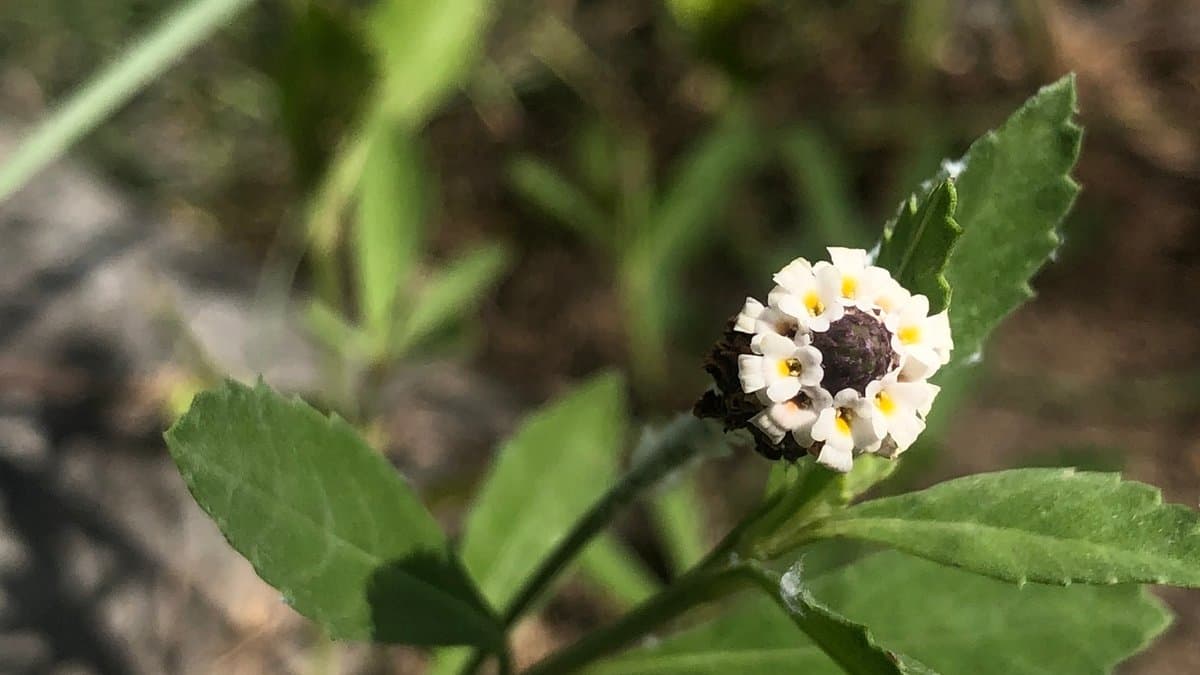
1. Frogfruit (Phyla nodiflora)
This is the one I recommend first to anyone with dogs. Frogfruit stays flat (2 to 4 inches), handles foot traffic like a champ, and spreads fast enough to fill bare spots before your dog can make new ones. Full sun, Zones 7 through 11, not on the ASPCA toxic plant list. It produces tiny white and pink flowers that native bees love. In Austin and San Antonio, it stays green from March through November most years.
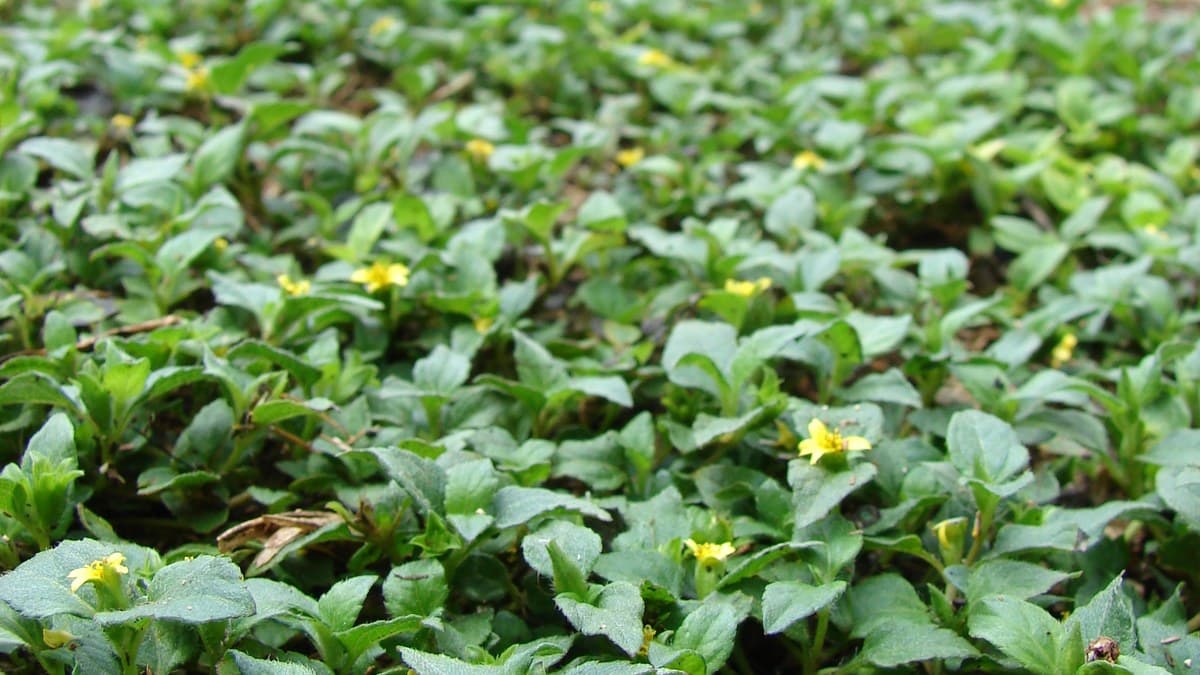
2. Horseherb (Calyptocarpus vialis)
Already growing in half the yards in Central Texas, whether people planted it or not. Horseherb thrives in shade, spreads aggressively, and bounces back from dog traffic fast. Small yellow flowers pop up spring through fall. It's not on the ASPCA toxic plant list and basically unkillable. If you've got a shady yard with a dog path problem, this is your plant.
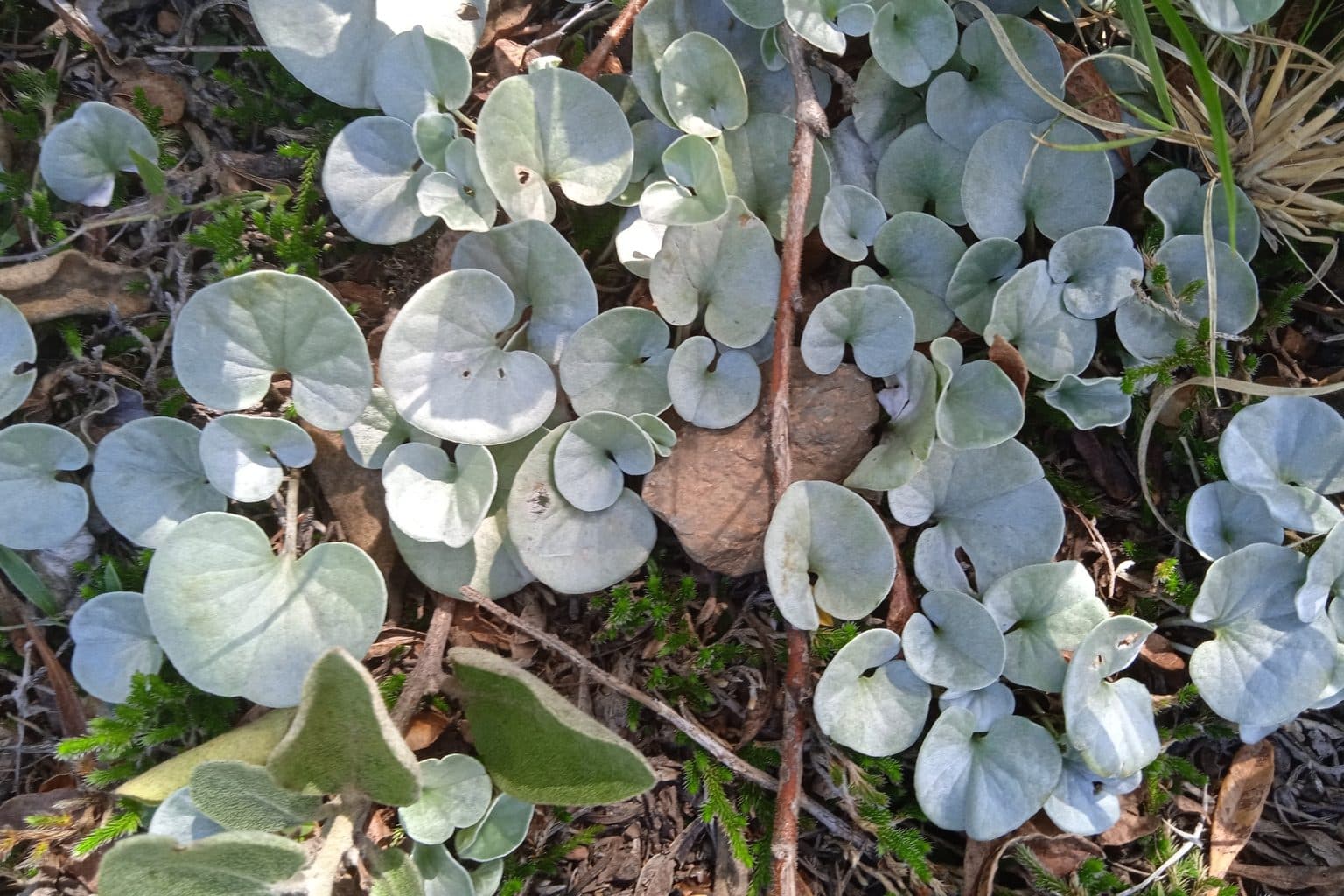
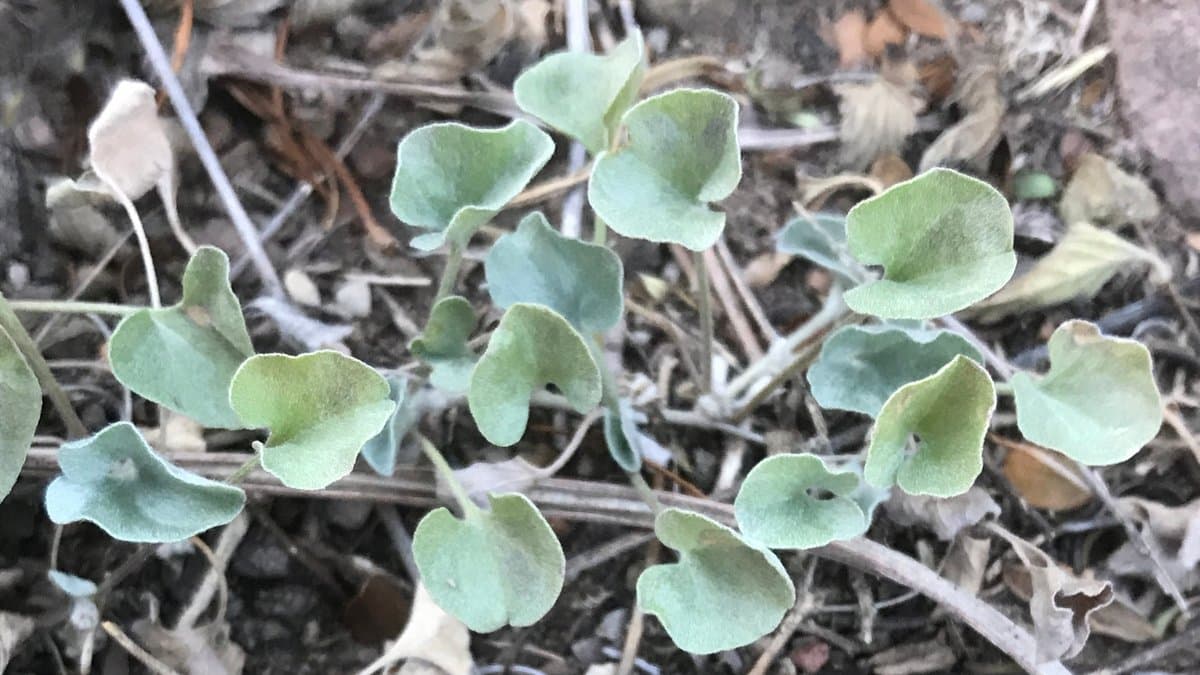
3. Silver Ponyfoot (Dichondra argentea)
Low growing with silver, rounded leaves that look great spilling over bed edges or covering open ground. Drought tolerant once it's established. Not quite as tough under heavy foot traffic as Frogfruit, so it works better in areas your dog visits but doesn't sprint through daily. The silver color adds contrast next to green plantings.
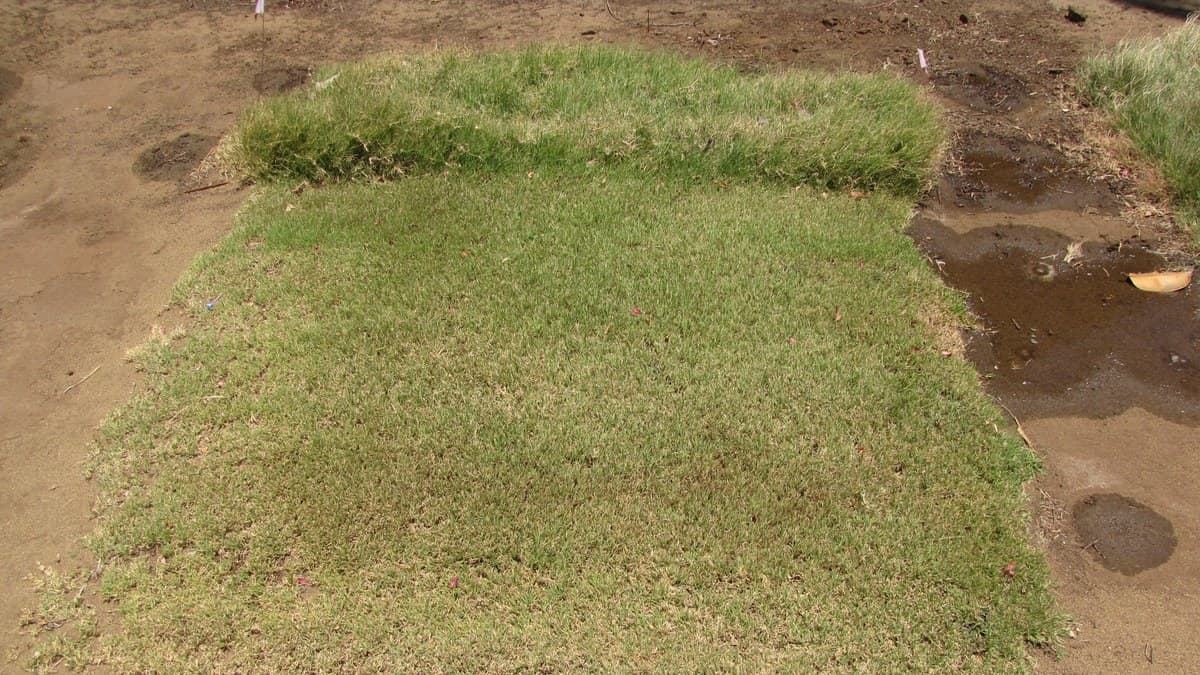
4. Buffalo Grass (Bouteloua dactyloides)
If you want something that still looks like a lawn, Buffalo Grass is the move. It's a true native grass, Zones 3 through 9, and it uses a fraction of the water St. Augustine needs. You can mow it or let it grow to about 4 inches. Not on the ASPCA toxic plant list. It does go dormant and turn tan in winter, which some HOAs don't love, but in summer it's thick and soft underfoot.
Plants to keep away from dogs
Toxic to dogs. Skip these.
- Sago Palm (Cycas revoluta): Every part is toxic. Even one seed can cause liver failure. Common in Texas landscapes, unfortunately.
- Oleander (Nerium oleander): Leaves, flowers, stems, all toxic. Popular along highways but dangerous in yards with pets.
- Non-native Lantana (Lantana camara): The berries are toxic to dogs per the ASPCA Animal Poison Control Center, which lists lantana at the genus level. The native Texas Lantana (Lantana urticoides) is a different species but shares the same genus toxins, so treat it with the same caution around dogs that chew plants. Full breakdown: is lantana toxic to dogs.
The plant toxicity guide has the full list with severity levels.
Design tips for dog yards
Dogs are going to run where they run. You can't really stop that. But you can work with it.
- Build in a path. If your dog runs the fence line, put decomposed granite or flagstone there instead of fighting it with plants.
- Use raised beds (even 6 to 8 inches high) to protect plantings you care about. Dogs tend to respect a physical edge.
- Mix your ground covers. Frogfruit in the sunny spots, Horseherb in the shade. Buffalo Grass where you want that lawn look near the street.
- Put the toughest ground cover in the highest-traffic zone and save Silver Ponyfoot for the bed edges where it can spill over without getting trampled.
Our native plants guide covers how to group species by light and water needs, which helps when you're mixing ground covers across different parts of the yard.
Getting started
Start with the worst spot. That bare patch under the tree where nothing survives? Try Horseherb. The sunny strip by the driveway that's half dead grass? Frogfruit. You don't have to do the whole yard at once.
Many Texas cities offer rebates for removing turf and replacing it with water-wise landscaping. Austin's program pays up to $3,000 for converting turf grass to a native plant bed. San Antonio's SAWS has a similar program. That can cover your plants and then some.
Want a dog-friendly native yard plan for your Texas zip code?
Pollinator Patch helps you pick non-toxic native plants for your specific region, with layout suggestions that account for sun, shade, and yes, dog paths.
Checking more than one plant? See the full list of plants toxic to dogs and cats, with native alternatives, covering every plant on the ASPCA list.