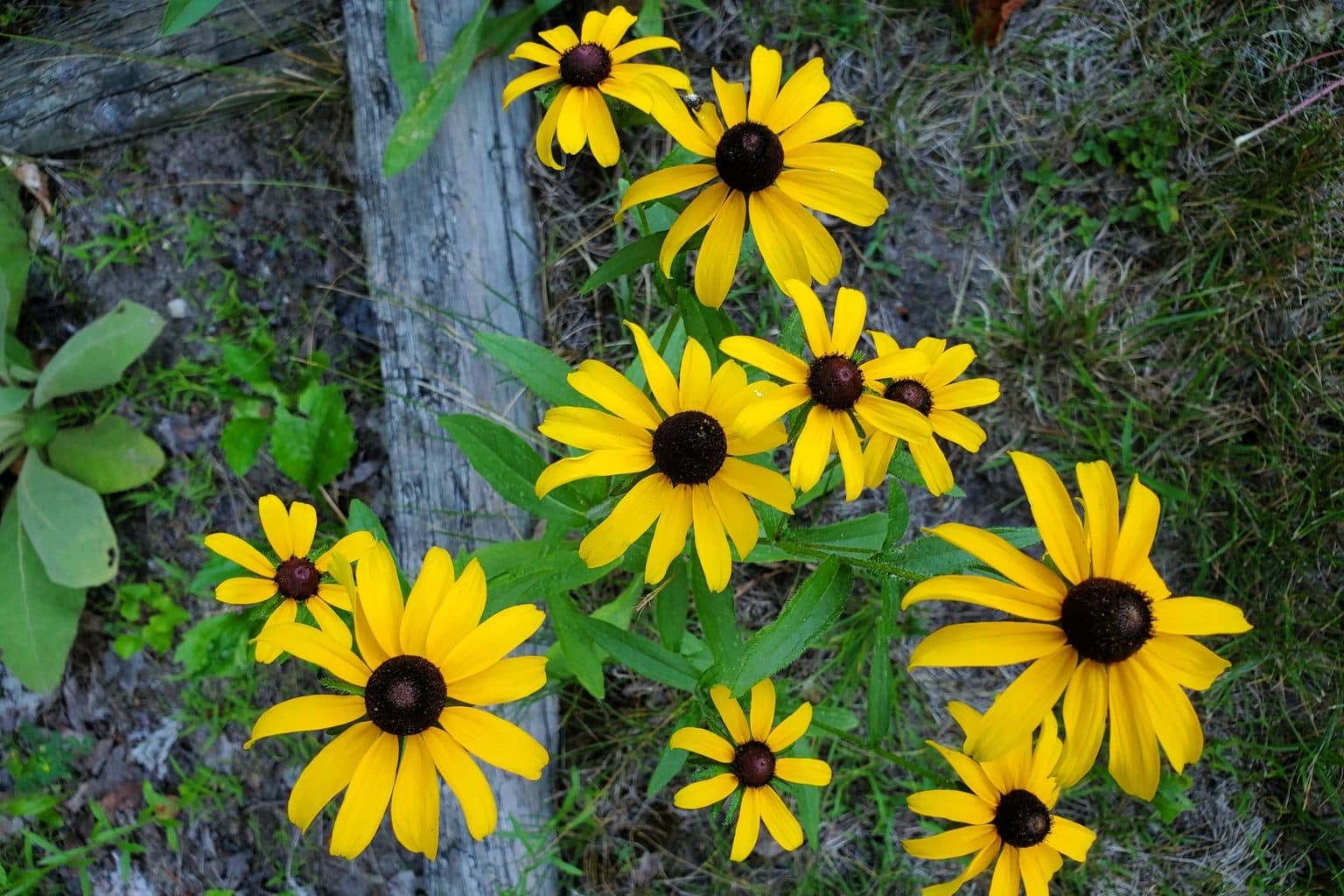
Quick answer: Black-eyed Susan (Rudbeckia hirta) is not on the ASPCA Animal Poison Control Center toxic plant list for dogs, cats, or horses. It is not considered toxic to pets. The one thing to know is that the bristly leaves and stems can cause mild mouth or skin irritation in a dog that chews on them, but that is contact irritation, not poisoning.
Black-eyed Susan is one of the most planted native wildflowers in the country, so it is a fair question for any dog owner filling a sunny bed. The short version is reassuring. Here is the detail, including the irritation caveat that trips up the search results.
What the ASPCA says
Black-eyed Susan (Rudbeckia hirta) does not appear on the ASPCA Animal Poison Control Center toxic plant list for dogs, cats, or horses. That standard means there is no documented systemic toxin for those species. You can verify at aspca.org/pet-care/animal-poison-control/toxic-and-non-toxic-plants.
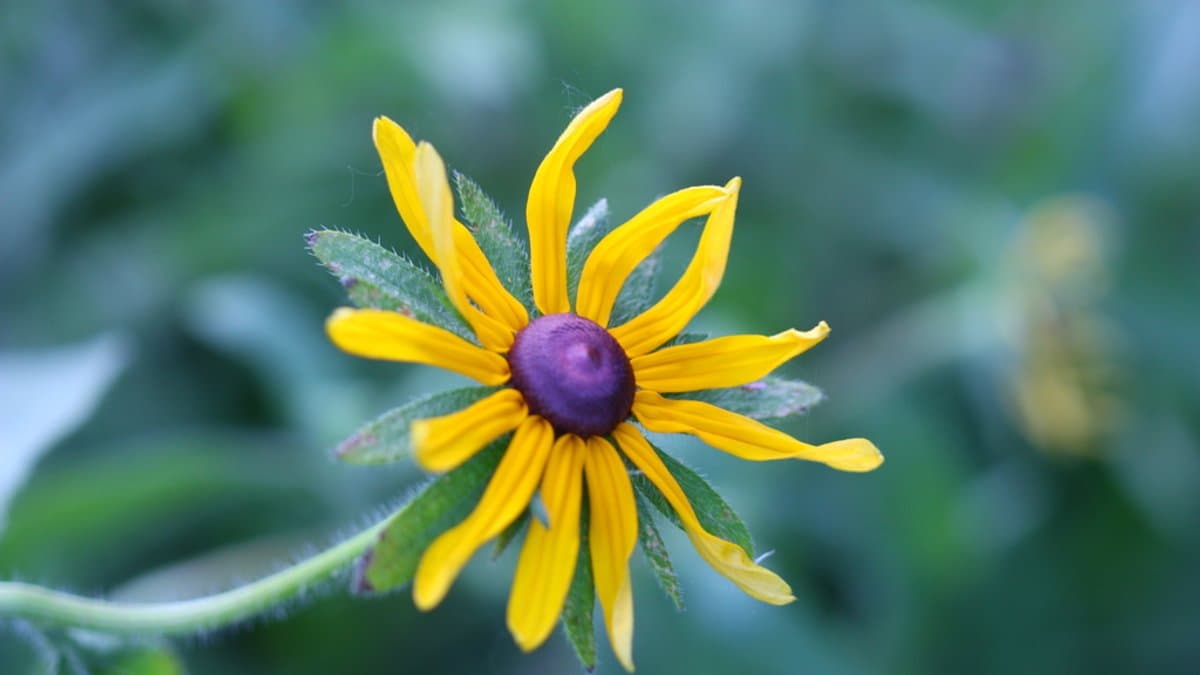
Where the mixed answers come from is the plant's texture. Rudbeckia leaves and stems are covered in stiff hairs, and some dogs that chew them get mild mouth irritation or, after rubbing against the foliage, a little skin redness. That is mechanical and chemical contact irritation, not the systemic toxicity that lands a plant on the ASPCA list. As with any plant, a dog that eats a large quantity can also get short-lived stomach upset. If your dog eats a lot and shows symptoms, call the ASPCA Animal Poison Control Center at (888) 426-4435.
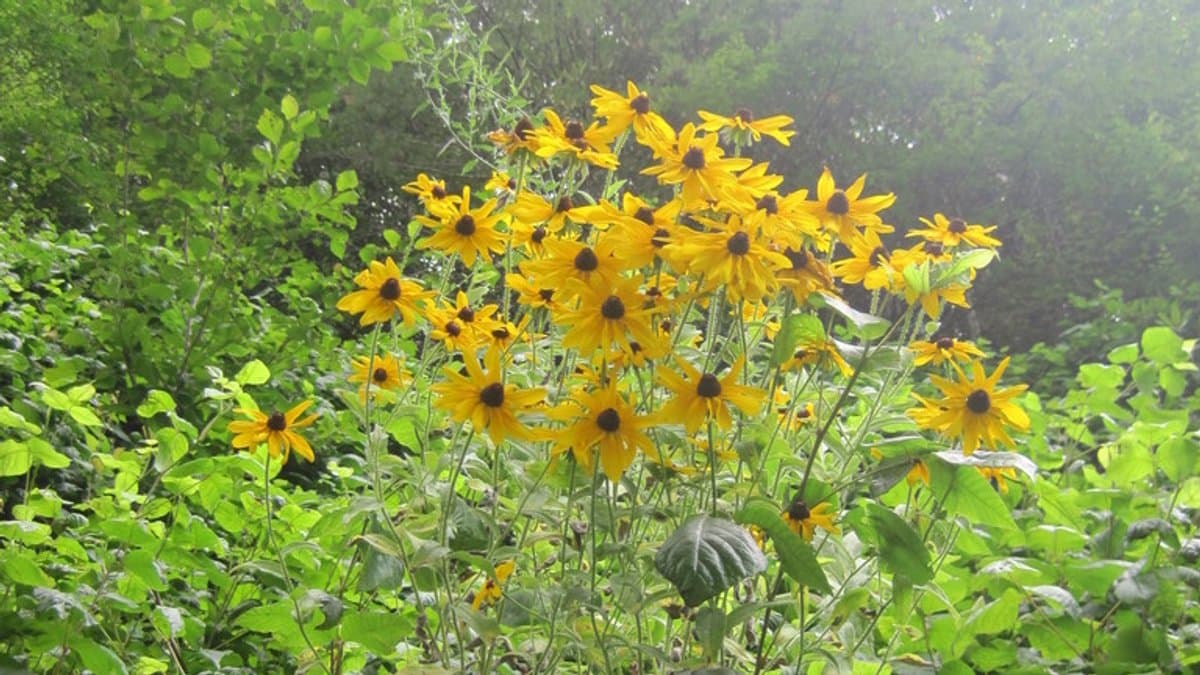
Black-eyed Susan and its safe lookalikes
The yellow-daisy look is shared by several native plants, and the good news is the whole group is dog-friendly. If you are not certain which one you have, none of these are on the ASPCA toxic plant list:
| Plant | Dog Safe? | Notes |
|---|---|---|
| Black-eyed Susan (Rudbeckia hirta) | Yes | Not on ASPCA toxic plant list; bristly leaves can mildly irritate on contact |
| Purple Coneflower (Echinacea purpurea) | Yes | Not on ASPCA toxic plant list; a frequent garden companion to Black-eyed Susan |
| Coreopsis / Tickseed (Coreopsis spp.) | Yes | Listed non-toxic to dogs, cats, and horses by the ASPCA |
| Blanket Flower (Gaillardia spp.) | Yes | Not on ASPCA toxic plant list; sap can mildly irritate skin on contact |
Why Black-eyed Susan earns the spot anyway
It is native across most of the United States, blooms for months on almost no water, reseeds politely, and feeds a long list of bees and butterflies. Its upright, daisy-form habit reads as deliberate planting rather than weeds, which keeps it on the safe side of an HOA review. A non-toxic plant that does all of that is an easy pick for a yard with dogs.
Pairing it up? See is coneflower toxic to dogs for its usual garden partner, and the dog-friendly native backyard guide for the rest of the bed.
If something goes wrong
ASPCA Animal Poison Control Center: (888) 426-4435 (24/7, fee may apply). Have the plant name ready when you call.