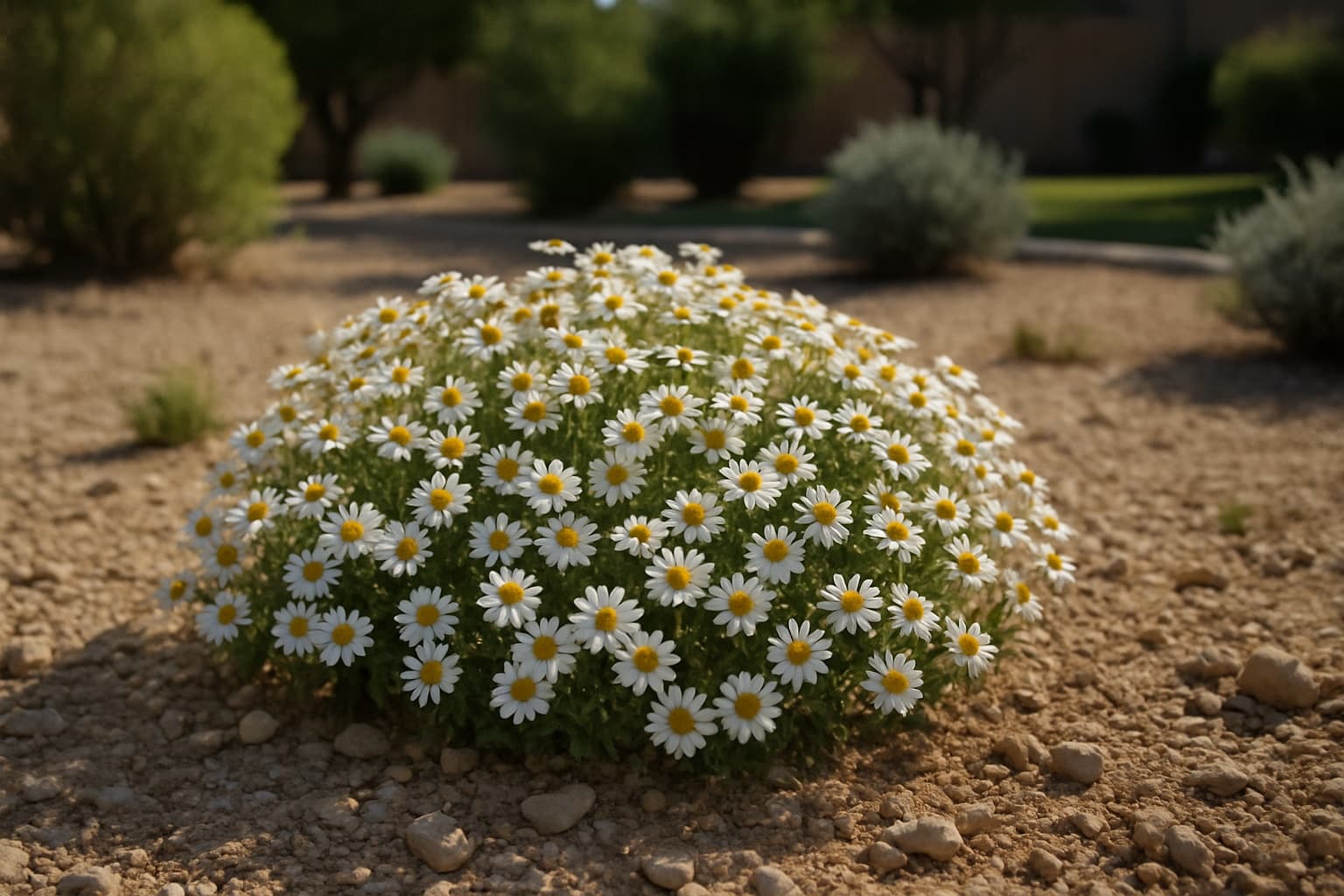
Is Blackfoot Daisy Toxic to Dogs?
The short version
- Blackfoot Daisy (Melampodium leucanthum) is not on the ASPCA toxic plant list for dogs, cats, or horses.
- Native to the Trans-Pecos / Chihuahuan Desert (El Paso area) and the Edwards Plateau / Hill Country.
- Blooms nearly year-round in poor, rocky, caliche soil with essentially no supplemental water.
Quick answer
Blackfoot daisy (Melampodium leucanthum) is not on the ASPCA Animal Poison Control Center toxic plant list for dogs, cats, or horses. It is not considered toxic to pets, which is part of why it works so well in a West Texas yard that also has a dog in it. As with any plant, a dog that eats a large amount can get mild stomach upset. If that happens, call the ASPCA Animal Poison Control Center at (888) 426-4435.
Blackfoot daisy is one of the toughest native wildflowers in Texas, a low mounding plant that stays in bloom from spring through fall, sometimes even into a mild winter, while asking for almost no water once it settles in. It is also a plant a dog owner does not have to think twice about.
What the ASPCA says
Blackfoot daisy (Melampodium leucanthum) does not appear on the ASPCA Animal Poison Control Center toxic plant list for dogs, cats, or horses. That means there is no documented systemic toxin on record for those species. You can verify at aspca.org/pet-care/animal-poison-control/toxic-and-non-toxic-plants.
The usual caveat still applies. A dog that eats a large quantity of any plant material, flowers included, can end up with mild GI upset. Blackfoot daisy is not a plant most dogs show much interest in, but if your dog snacks on any landscaping, keep an eye on it the way you would after any unusual plant eating.
Why blackfoot daisy earns a spot in a West Texas dog yard
Blackfoot daisy is native across West and Central Texas, particularly the Trans-Pecos / Chihuahuan Desert (El Paso area) and the Edwards Plateau and Hill Country farther east, per the Lady Bird Johnson Wildflower Center. It is a classic extreme-drought Texas wildflower, the kind of plant that shows up on rocky roadsides and caliche slopes where almost nothing else will grow.
The plant itself is a low, mounding perennial, typically 6 to 12 inches tall and wider than it is tall, covered nearly year-round in small white daisy-like flowers with yellow centers and a light honey scent. It blooms spring through fall and sometimes keeps going through a mild winter. Once established it needs essentially no supplemental water, and it holds up in poor rocky or caliche soil that would stall out most other plantings. That tidy, rounded mound shape and long bloom season read as an intentional, well-kept planting rather than an overgrown patch, which makes blackfoot daisy a strong HOA-friendly xeriscape choice for a front yard with a dog in it.
If something goes wrong
ASPCA Animal Poison Control Center: (888) 426-4435 (24/7, fee may apply). Have the plant name ready when you call.
Checking more than one plant? See the full list of plants toxic to dogs and cats, with native alternatives, covering every plant on the ASPCA list.
See a finished plan for a yard like this
Find our guides useful? Add Pollinator Patch as a preferred source on Google and articles like this one will show up higher in your own search results.