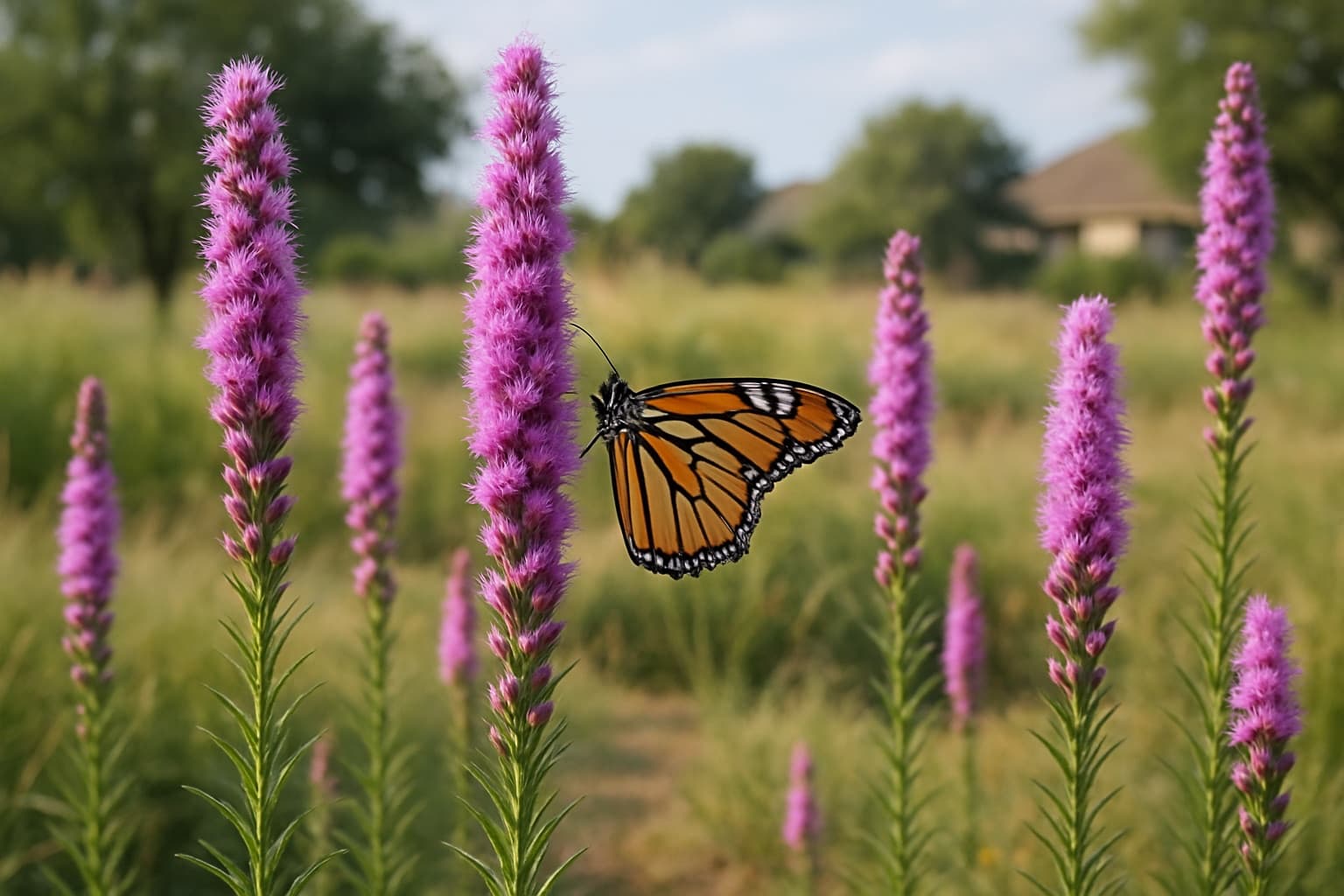
Is Blazing Star Toxic to Dogs?
The short version
- Blazing Star (genus Liatris) is not on the ASPCA toxic plant list for dogs, cats, or horses.
- The common nursery species, Liatris spicata, is native to the eastern US, not Texas.
- Liatris mucronata (Texas Gayfeather) is the true Texas native, common in the Blackland Prairie (Dallas area).
Quick answer
Blazing Star (genus Liatris) is not on the ASPCA toxic plant list. One caveat before you buy: "Blazing Star" covers more than one species, and the plant sold at most nurseries is not native to Texas. If you are planting a Texas native yard, ask for Liatris mucronata (Texas Gayfeather) instead. If your dog eats a large amount of any plant and seems unwell, call the ASPCA Animal Poison Control Center at (888) 426-4435.
Blazing Star is one of the better-known fall bloomers for a pollinator yard: tall purple-pink spikes that show up right when monarchs are moving through on their way south. It is also a name that gets applied loosely at nurseries, which matters if you are trying to build a specifically Texas-native bed rather than just a pretty one.
What the ASPCA says
The genus Liatris, which covers every plant sold as Blazing Star or Gayfeather, does not appear on the ASPCA Animal Poison Control Center toxic plant list for dogs, cats, or horses. There is no listing under "Liatris," "Blazing Star," or "Gayfeather" in any spelling. That is a real absence of a documented toxin, not just a gap in testing.
The usual caveat still applies. A dog that eats a large quantity of almost any plant, including one that is not toxic, can end up with mild stomach upset from the fiber and plant material alone. That is a digestion issue, not poisoning, and it is worth mentioning to your vet if it happens, but it is a different category from the plants that do appear on the ASPCA list.
Which Blazing Star is actually native to Texas?
This is where the common name gets confusing. The Blazing Star most garden centers stock, Liatris spicata (sometimes called Dense Blazing Star or Marsh Blazing Star), is native to the eastern and southeastern United States, roughly New Jersey to Michigan and Illinois, south to Florida and Louisiana. Its natural range does not reach Texas, so planting it here gets you a pollinator-friendly perennial, but not a Texas native.
Texas has its own true native in the same genus: Liatris mucronata, commonly called Texas Gayfeather or Narrowleaf Blazing Star. It is native across much of the state, including the Blackland Prairie ecoregion that runs through the Dallas area, per the Lady Bird Johnson Wildflower Center database. If the goal is a Texas-native bed rather than just a Blazing Star look, this is the species to ask a nursery for by name.
Why it earns a spot in a fall pollinator garden
Both species share the same growth habit: an upright perennial with narrow, grass-like leaves and a tall, dense flower spike packed with small, fuzzy purple-pink blooms. Unusually for a spike-form flower, Blazing Star opens from the top down instead of the bottom up. It flowers in late summer into fall, which lines up with when monarchs are refueling for their migration south, and it draws native bees and other butterflies just as reliably.
For a homeowner who wants a plant that pulls its weight for pollinators without raising any concern about a dog in the yard, either species delivers. The only decision left is which one belongs in the ground, and that comes down to whether you are matching your regional native range.
If something goes wrong
ASPCA Animal Poison Control Center: (888) 426-4435 (24/7, fee may apply). Have the plant name ready when you call.
Checking more than one plant? See the full list of plants toxic to dogs and cats, with native alternatives, covering every plant on the ASPCA list.
See a finished plan for a yard like this
Find our guides useful? Add Pollinator Patch as a preferred source on Google and articles like this one will show up higher in your own search results.