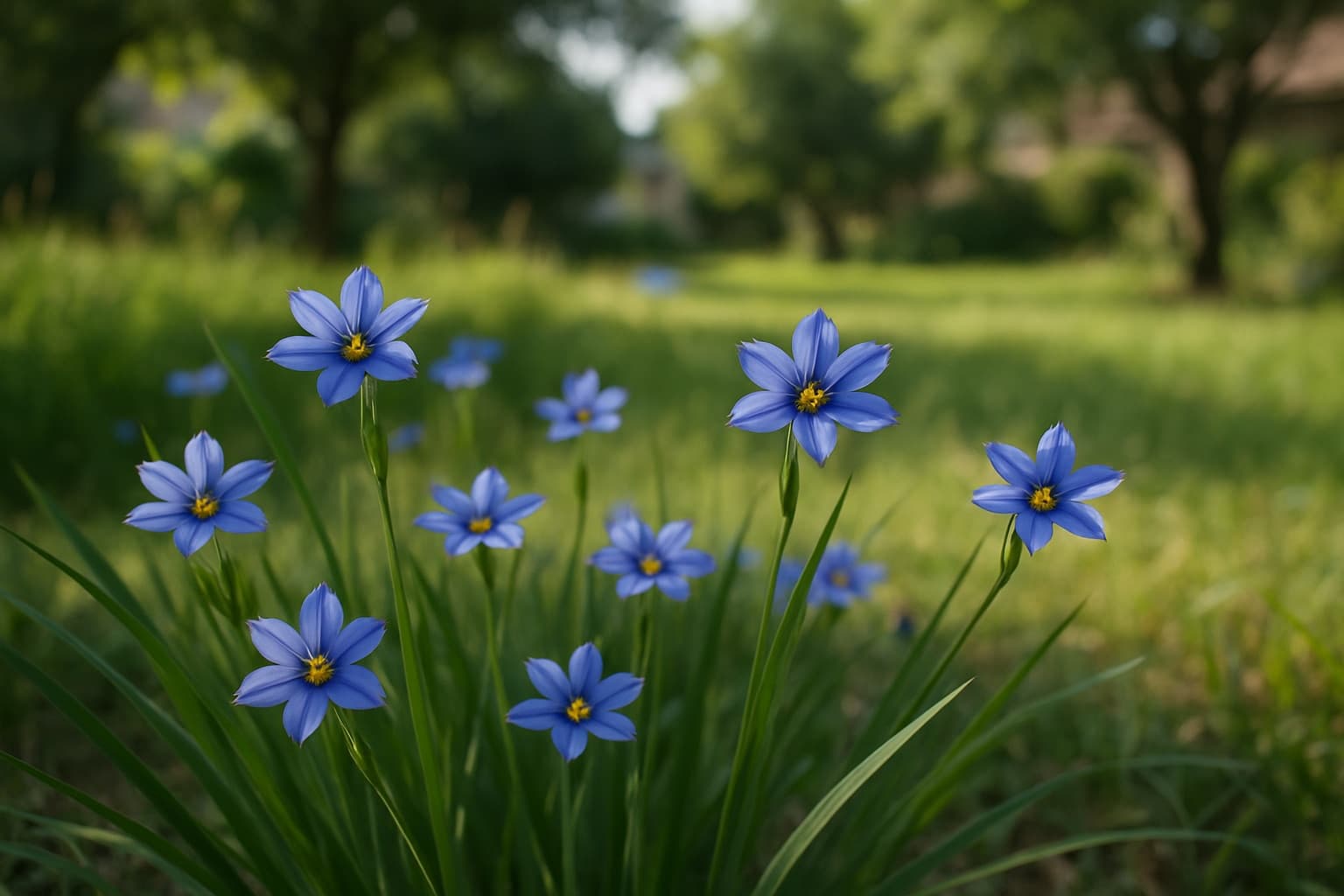
Is Blue-Eyed Grass Toxic to Dogs?
The short version
- Blue-Eyed Grass (Sisyrinchium angustifolium) is not on the ASPCA toxic plant list for dogs, cats, or horses.
- True Iris (Iris species) IS ASPCA-confirmed toxic to dogs, a different genus despite the family resemblance.
- Native across the Texas Gulf Coast Prairie (Houston area) and much of the eastern half of the state.
Quick answer
Blue-Eyed Grass (Sisyrinchium angustifolium) is not on the ASPCA Animal Poison Control Center toxic plant list for dogs, cats, or horses. It is sometimes mistaken for true Iris because both are in the iris family and share grass-like leaves and blue-purple flowers, but true Iris (genus Iris) is confirmed toxic to dogs by the ASPCA. Blue-Eyed Grass and true Iris are different plants, and only the second one is a concern. Call the ASPCA Animal Poison Control Center at (888) 426-4435 with any questions.
Blue-Eyed Grass has grass-thin leaves and tiny six-petaled flowers, but a quick glance can still put it in the same mental bucket as bearded or flag Iris, plants in the same family that carry a real ASPCA toxicity warning. The two are not the same genus, and the mix-up is worth clearing up before you plant either one where a dog spends time.
What the ASPCA says
Blue-Eyed Grass (Sisyrinchium angustifolium) does not appear on the ASPCA Animal Poison Control Center toxic plant list for dogs, cats, or horses. That standard means there is no documented systemic toxin for those species. You can verify at aspca.org/pet-care/animal-poison-control/toxic-and-non-toxic-plants.
The usual caveat still applies. A dog that eats a large quantity of any plant material, including a non-toxic one, can end up with mild stomach upset. Blue-Eyed Grass is a small, low-growing plant, so the practical risk from a curious dog nosing around it is limited, but it is not a reason to ignore GI symptoms after any large plant meal.
Do not confuse it with true Iris
The confusion starts with the family tree. Blue-Eyed Grass sits in the iris family (Iridaceae), which also holds the genus Iris, the bearded and flag irises common in garden beds. Sharing a family does not mean sharing a toxicity profile, and the two genera behave differently for a dog owner:
| Plant | Dog Safe? | Notes |
|---|---|---|
| Blue-Eyed Grass (Sisyrinchium angustifolium) | Yes | Not on ASPCA toxic plant list; small six-petaled blue-violet flowers on grass-like leaves |
| True Iris (Iris species, bearded or flag iris) | No | Toxic to dogs per the ASPCA; larger three-petal-and-three-sepal flowers on broad sword-like leaves from thick rhizomes |
The fast visual tell holds up in most yards. Blue-Eyed Grass stays small, usually under a foot tall, with true grass-thin leaves and tiny flowers. True Iris has broad, flat, sword-shaped leaves and much larger, showier flowers on thicker stems. If what you are looking at has leaves wider than a blade of grass or flowers bigger than a thumbnail, it is worth a second look before assuming it is the dog-safe one.
Why Blue-Eyed Grass earns a spot in a Gulf Coast dog yard
Blue-Eyed Grass is native across the eastern half of Texas, including the Gulf Coast Prairies and Marshes, the Texas Blackland Prairies, and the Western Gulf Coastal Plain, per the Lady Bird Johnson Wildflower Center (LBJWC), so it is a genuine fit for a wide stretch of the state, not a narrow-range specialty plant. In the Gulf Coast Prairie (Houston area), it grows as a low clumping perennial, typically 6 to 12 inches tall, with narrow blue-green leaves and small blue-violet flowers with a yellow throat that open in spring. It naturally shows up in meadows, damp fields, and open woods, and it draws small native bees while staying out of the way as a border or naturalistic-bed accent.
For a dog owner in Houston looking for a low native that will not draw a second call to the ASPCA hotline, Blue-Eyed Grass fills that role without the lookalike risk true Iris carries.
If something goes wrong
ASPCA Animal Poison Control Center: (888) 426-4435 (24/7, fee may apply). Have the plant name ready when you call.
Checking more than one plant? See the full list of plants toxic to dogs and cats, with native alternatives, covering every plant on the ASPCA list.
See a finished plan for a yard like this
Find our guides useful? Add Pollinator Patch as a preferred source on Google and articles like this one will show up higher in your own search results.