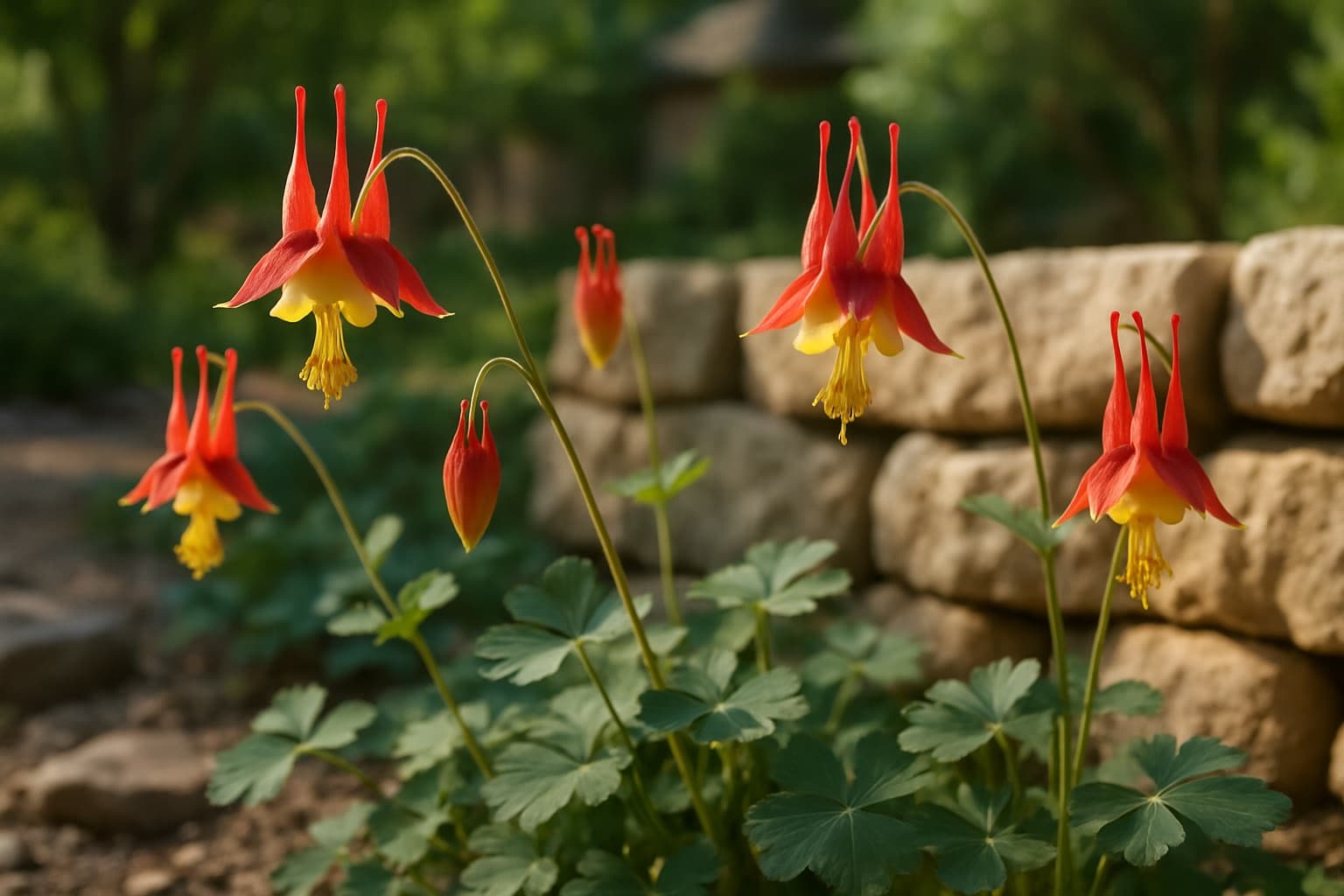
Is Columbine Toxic to Dogs?
The short version
- Eastern Red Columbine (Aquilegia canadensis) is not on the ASPCA toxic plant list for dogs, cats, or horses.
- Native to the Edwards Plateau / Hill Country (San Antonio area), including shaded limestone canyons.
- Its nodding red-and-yellow flowers are a favorite of ruby-throated hummingbirds.
Quick answer
Eastern red columbine (Aquilegia canadensis) is not on the ASPCA Animal Poison Control Center toxic plant list for dogs, cats, or horses. It is not considered toxic to pets, which makes it a solid pick for a shaded Hill Country bed where a dog spends time. As with any plant, a dog that eats a large amount can get mild stomach upset. If that happens, call the ASPCA Animal Poison Control Center at (888) 426-4435.
Wild columbine is one of the better shade wildflowers for a Central Texas yard: it blooms in spring with nodding red-and-yellow flowers built for hummingbird tongues, it tolerates the rocky limestone soil that frustrates so many other perennials, and it does all of that without landing on the ASPCA's list of plants to worry about around dogs.
What the ASPCA says
Eastern red columbine (Aquilegia canadensis, also called wild columbine) does not appear on the ASPCA Animal Poison Control Center toxic plant list for dogs, cats, or horses. That means there is no documented systemic toxin listed for those species. You can verify at aspca.org/pet-care/animal-poison-control/toxic-and-non-toxic-plants.
The general caveat still applies: a dog that eats a large quantity of any plant material, columbine included, can end up with mild gastrointestinal upset just from the fiber and plant matter. That is a different thing from toxicity, and it is not a reason to rule the plant out of a yard where a dog spends time.
Why columbine earns a spot in a Hill Country dog yard
Wild columbine is native across much of the eastern half of Texas, including the Edwards Plateau / Hill Country (San Antonio area), where it grows in the shaded limestone canyons the region is known for, places like Lost Maples State Natural Area, per the Lady Bird Johnson Wildflower Center. It is a perennial wildflower, typically one to two feet tall, with blue-green lobed foliage and nodding red-and-yellow bell-shaped flowers that carry long, backward-pointing spurs in spring.
Those spurs are built for ruby-throated hummingbirds, whose long tongues reach the nectar at the back, and the flowers also draw long-tongued native bees and sphinx moths. Columbine prefers part shade and rocky, well-drained soil, which makes it a natural fit for a shaded limestone bed or a woodland-edge planting rather than a full-sun front lawn.
If something goes wrong
ASPCA Animal Poison Control Center: (888) 426-4435 (24/7, fee may apply). Have the plant name ready when you call.
Checking more than one plant? See the full list of plants toxic to dogs and cats, with native alternatives, covering every plant on the ASPCA list.
See a finished plan for a yard like this
Find our guides useful? Add Pollinator Patch as a preferred source on Google and articles like this one will show up higher in your own search results.