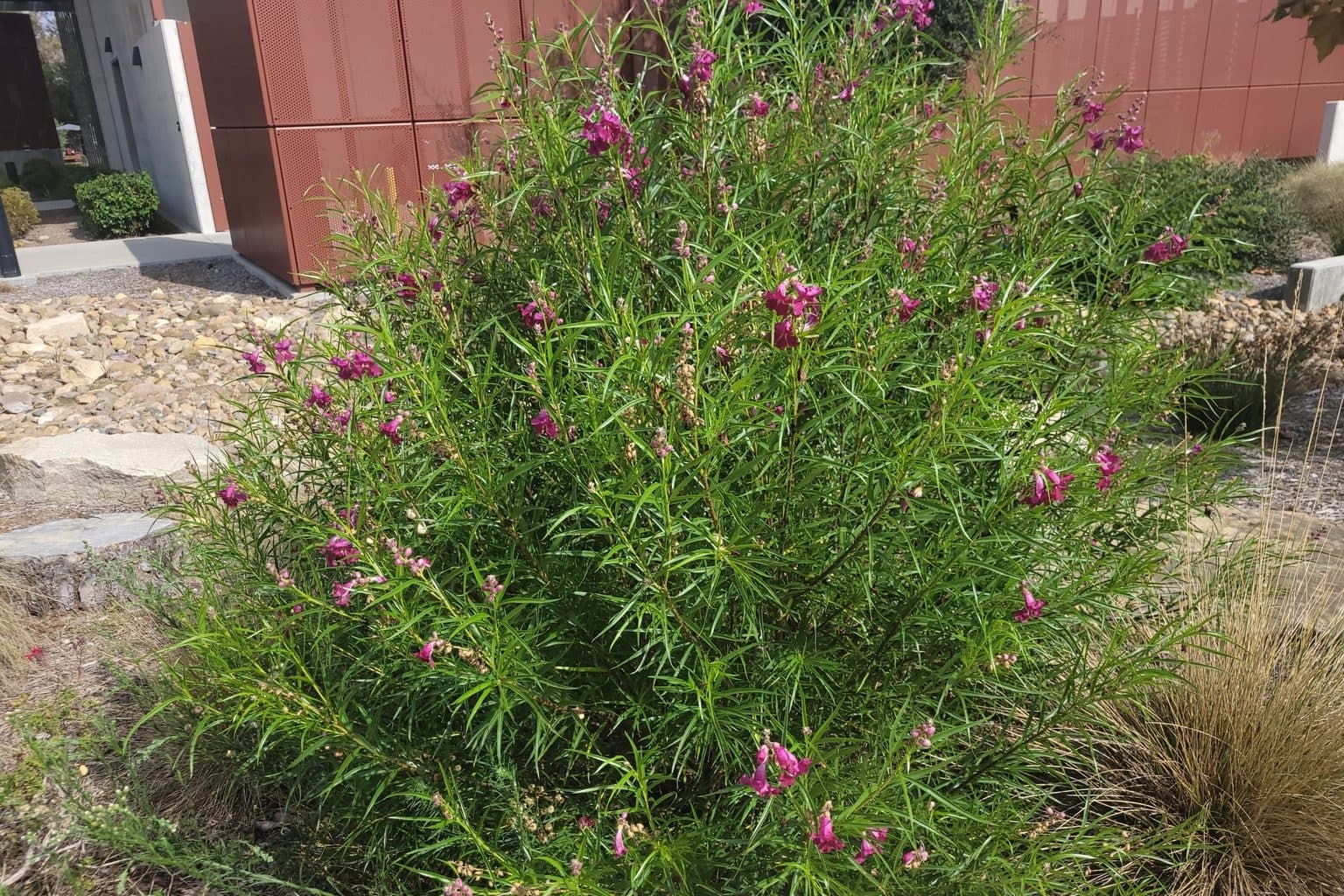
Quick answer: Desert Willow (Chilopsis linearis) is not on the ASPCA Animal Poison Control Center toxic plant list for dogs, cats, or horses. The ASPCA says its list is not meant to be all-inclusive, but rather a compilation of the most frequently encountered plants. The flowers, leaves, and seed pods have no known systemic toxin that causes serious reactions in dogs.
Desert Willow drops a lot of material a dog can reach: trumpet flowers in summer, long bean-like seed pods in fall. Owners see a dog mouthing the pods and search in a hurry. The good news is that none of it carries a documented toxin.
What the ASPCA says
The ASPCA Animal Poison Control Center maintains the most widely used database of plants toxic to dogs, cats, and horses. Desert Willow (Chilopsis linearis) does not appear on that list. "Not on the ASPCA toxic plant list" is a meaningful standard. It means the plant has not been documented to cause toxic reactions in the species listed. You can check directly at aspca.org/pet-care/animal-poison-control/toxic-and-non-toxic-plants.
As with any plant, non-toxic does not mean edible in quantity. A dog that eats a pile of seed pods can get mild GI upset from the plant material itself. If your dog eats a large amount of anything and shows symptoms, call the ASPCA Animal Poison Control Center at (888) 426-4435.
Desert Willow is not a true willow
Part of the confusion comes from the name. Desert Willow is not related to true willows (Salix species). It earned the name from its narrow, willow-like leaves, but it is in the same family as trumpet vines and crossvine. True willow bark contains salicin, a compound related to aspirin, which is why some sources flag willows for pets. That concern does not transfer to Desert Willow.
It is also sometimes confused with Weeping Willow on plant tags and in nursery conversations. If the tag says Chilopsis linearis, you have Desert Willow, and the ASPCA toxic list does not include it.
Common Texas small trees and dog safety
| Tree | Off ASPCA toxic list? | Notes |
|---|---|---|
| Desert Willow (Chilopsis linearis) | Yes | Not on ASPCA toxic plant list (ASPCA Animal Poison Control Center) |
| Mexican Plum (Prunus mexicana) | Mostly | Tree itself fine for yards; Prunus pits and wilted leaves contain cyanogenic compounds per the ASPCA, so discourage pit chewing |
| Chinaberry (Melia azedarach) | No | Berries toxic to dogs per the ASPCA Animal Poison Control Center; also invasive in Texas |
| Oleander (Nerium oleander) | No | All parts toxic to dogs per the ASPCA; commonly planted where Desert Willow would be the safer pick |
| Vitex / Texas Lilac (Vitex agnus-castus) | Yes | Not on ASPCA toxic plant list (ASPCA Animal Poison Control Center); non-native |
Where Desert Willow belongs in a Texas yard
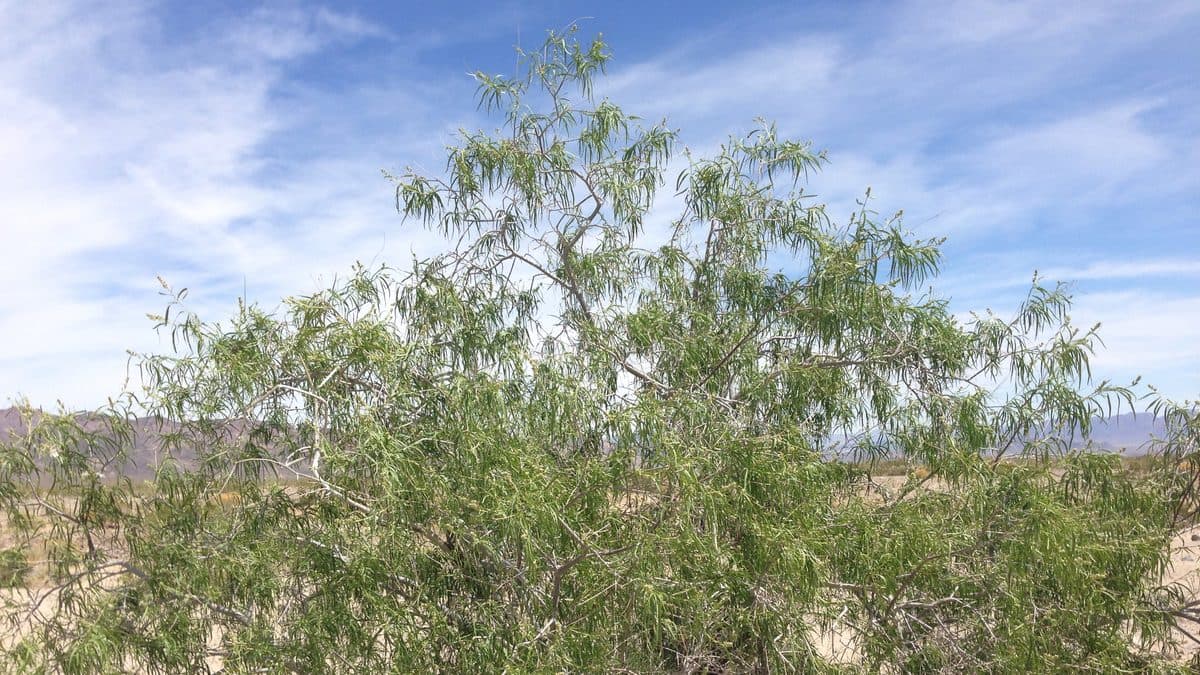
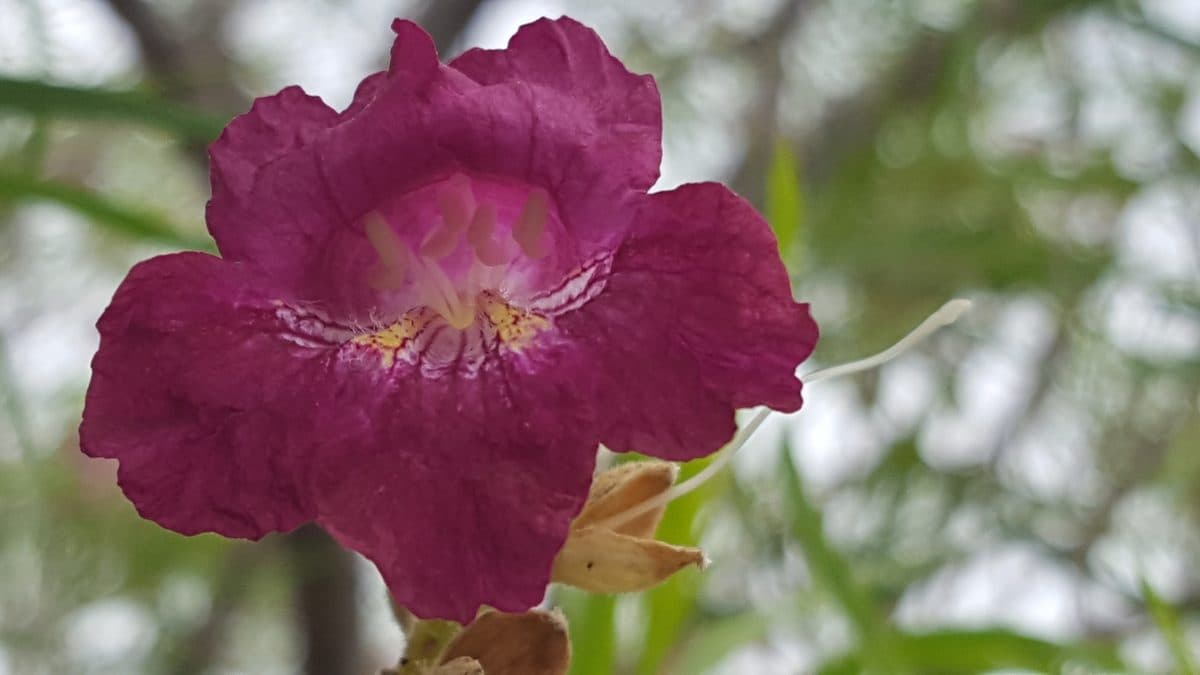
Desert Willow is native to the Trans-Pecos and far west Texas (El Paso area) per the Lady Bird Johnson Wildflower Center, and it performs well in dry, sunny yards across central Texas. It tops out around 15 to 25 feet, blooms pink and purple trumpets from May into September, and hummingbirds work the flowers all summer. It is one of the standard safe swaps for Oleander, which fills the same visual slot but is toxic to dogs per the ASPCA.
If you are vetting a whole yard rather than one tree, start with the six Texas yard plants most toxic to dogs, then design around your dog with the dog-friendly native backyard guide.
If something goes wrong
ASPCA Animal Poison Control Center: (888) 426-4435 (24/7, fee may apply). Have the plant name ready when you call.