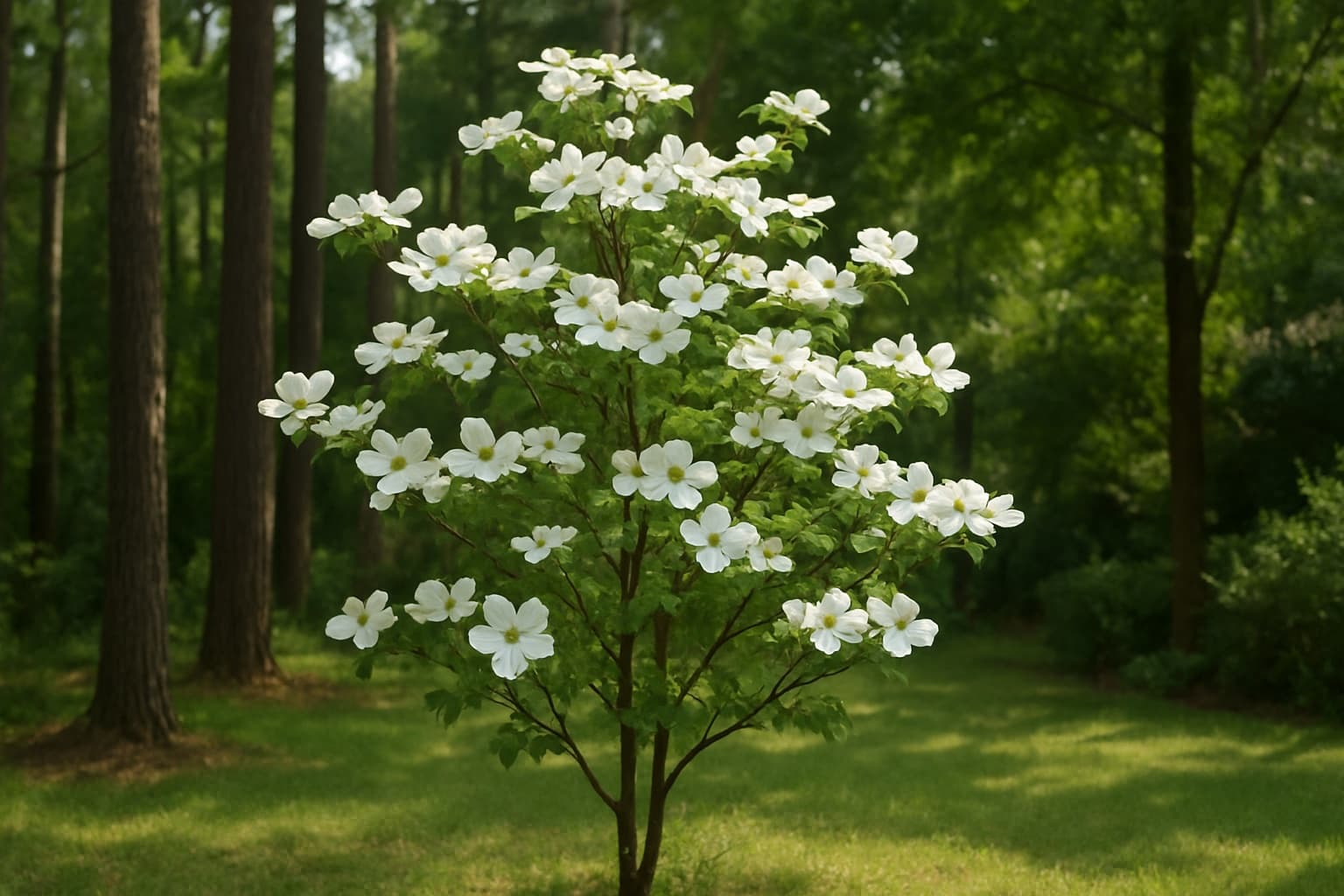
Is Dogwood Toxic to Dogs?
The short version
- Flowering Dogwood (Cornus florida) is not on the ASPCA toxic plant list for dogs, cats, or horses.
- Dogbane (Apocynum spp.) and Dog Hobble (Leucothoe spp.) are unrelated plants that ARE ASPCA-confirmed toxic to dogs.
- Native to the East Texas Piney Woods (Beaumont area), per the Lady Bird Johnson Wildflower Center.
Quick answer
True Flowering Dogwood (Cornus florida) is not on the ASPCA Animal Poison Control Center toxic plant list for dogs, cats, or horses. If you landed here because of a "dog" name scare, the plants you may be thinking of are Dogbane (Apocynum spp.) and Dog Hobble (Leucothoe spp.), two unrelated plants that are confirmed toxic to dogs and cats per the ASPCA. The shared "dog" in the name is a coincidence, not a warning about the tree. Questions about a specific dog: call the ASPCA Animal Poison Control Center at (888) 426-4435.
A lot of plant names include "dog," and it causes real mix-ups when someone is searching for what is and is not safe around a pet. Flowering Dogwood, the small spring-blooming tree, gets pulled into the same worry as Dogbane and Dog Hobble even though the three plants are not related and only two of them are actually a concern.
What the ASPCA says
True Flowering Dogwood (Cornus florida) does not appear on the ASPCA Animal Poison Control Center toxic plant list for dogs, cats, or horses. That standard means there is no documented systemic toxin in the tree for those species. You can verify at aspca.org/pet-care/animal-poison-control/toxic-and-non-toxic-plants.
The usual caveat applies to any plant material: a dog that eats a large quantity of leaves, bark, or the fall drupes can get mild stomach upset just from the volume and fiber, not from a documented toxin. That is a general digestive response, not evidence that Dogwood itself is toxic.
Do not confuse it with Dogbane or Dog Hobble
The confusion is understandable. Here is how the three plants that share "dog" in their name actually compare:
| Plant | Dog Safe? | Notes |
|---|---|---|
| Flowering Dogwood (Cornus florida) | Yes | Not on ASPCA toxic plant list; the actual tree, with white or pink spring bracts |
| Dogbane (Apocynum spp.) | No | Toxic to dogs and cats per the ASPCA; an herbaceous plant unrelated to Dogwood |
| Dog Hobble (Leucothoe spp.) | No | Toxic to dogs and cats per the ASPCA; an evergreen shrub unrelated to Dogwood |
Telling them apart in the yard is straightforward once you know what to look for. True Flowering Dogwood is a small tree with four white or pink bracts surrounding a tiny cluster of true flowers in spring, and opposite leaves with veins that curve to follow the leaf edge. Dogbane is herbaceous, not woody, with small pink or white flowers clustered along the stem. Dog Hobble is a low evergreen shrub with small white bell-shaped flowers hanging along arching branches. None of the three look alike once you are standing in front of them, even though the names collide online.
Why Flowering Dogwood earns a spot in an East Texas dog yard
Flowering Dogwood is native across East Texas, especially the Piney Woods (Beaumont area), per the Lady Bird Johnson Wildflower Center. It is well known enough in that ecoregion that several small Piney Woods towns hold dogwood festivals each spring around bloom time. As a small deciduous understory tree, it typically reaches 15 to 25 feet, prefers part shade and well-drained acidic soil, and fits the classic woodland-edge role in an East Texas yard. The showy white or pink four-bracted spring flowers give way to red berry-like drupes in fall, which birds work over quickly, and the foliage turns burgundy-red before it drops.
If something goes wrong
ASPCA Animal Poison Control Center: (888) 426-4435 (24/7, fee may apply). Have the plant name ready when you call.
Checking more than one plant? See the full list of plants toxic to dogs and cats, with native alternatives, covering every plant on the ASPCA list.
See a finished plan for a yard like this
Find our guides useful? Add Pollinator Patch as a preferred source on Google and articles like this one will show up higher in your own search results.