Is Frogfruit Toxic to Dogs?
The short version
- Frogfruit (Phyla nodiflora) is not on the ASPCA toxic plant list for dogs, cats, or horses.
- Native statewide, especially the South Texas Plains (McAllen area); tolerant of foot traffic and mowing.
- A key host plant for the Common Buckeye and Phaon Crescent butterflies.
Quick answer
Frogfruit (Phyla nodiflora), also called turkey tangle fogfruit, is not on the ASPCA Animal Poison Control Center toxic plant list for dogs, cats, or horses. It is not considered toxic to pets, which is part of why it works as a low groundcover in yards where a dog spends most of its day. As with any plant, a dog that eats a large amount can get mild stomach upset. If that happens, call the ASPCA Animal Poison Control Center at (888) 426-4435.
Frogfruit is not the plant most people picture when they think "native groundcover." It stays low, spreads on its own, and can take a dog walking across it every day without dying back, which is not something you can say about most flowering natives. It is also a host plant for two Texas butterflies, so a patch of it is doing more work than a stretch of turf grass ever would.
What the ASPCA says
Frogfruit (Phyla nodiflora) does not appear on the ASPCA Animal Poison Control Center toxic plant list for dogs, cats, or horses. That means there is no documented systemic toxin on record for those species. You can check the list yourself at aspca.org/pet-care/animal-poison-control/toxic-and-non-toxic-plants.
The usual caveat still applies. A dog that eats a large quantity of any plant material, frogfruit included, can end up with mild GI upset. That is a volume problem, not a toxicity problem, and it is true of grass, mulch, and most anything green a dog decides to chew on.
Why frogfruit earns a spot in a South Texas dog yard
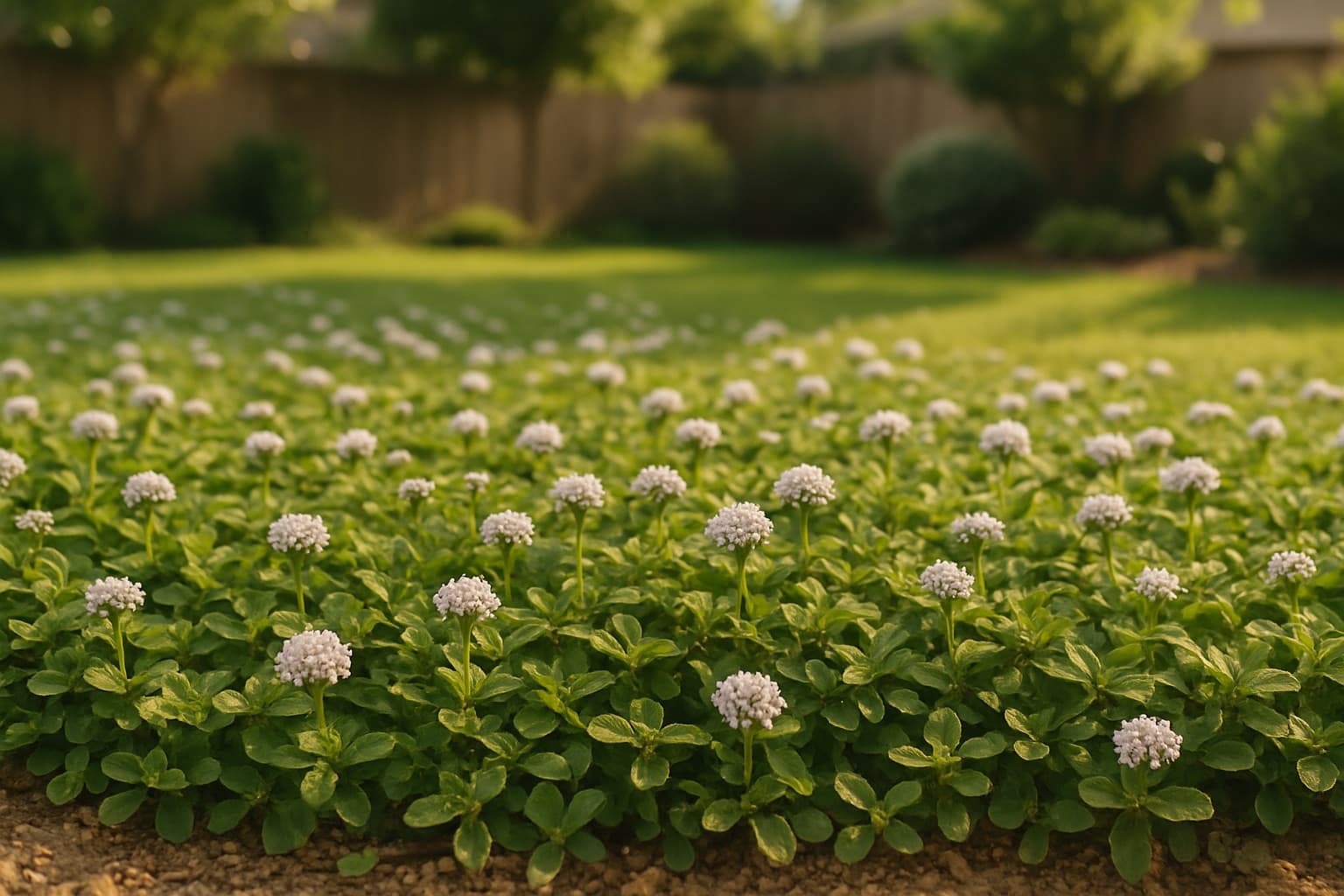
Frogfruit is native and widespread across nearly all of Texas, per the Lady Bird Johnson Wildflower Center, and it is especially common in the South Texas Plains (McAllen area), where it grows as one of the most reliable low groundcovers around. The plant stays 2 to 6 inches tall, spreads by runners along the ground, and puts out small clusters of white-to-lavender flowers nearly year-round in mild weather.
Those flowers are not just decoration. Frogfruit is one of the most valuable host plants in Texas for the Common Buckeye and the Phaon Crescent, and its blooms are a strong nectar source for small native bees. What sets it apart from other pollinator plants, though, is how much foot traffic and mowing it tolerates. Most flowering natives sulk or die under regular trampling. Frogfruit keeps spreading, which makes it a genuine native turf-alternative, a lawn substitute a dog can actually walk on, rather than a bed you have to fence off.
If something goes wrong
ASPCA Animal Poison Control Center: (888) 426-4435 (24/7, fee may apply). Have the plant name ready when you call.
Checking more than one plant? See the full list of plants toxic to dogs and cats, with native alternatives, covering every plant on the ASPCA list.
See a finished plan for a yard like this
Find our guides useful? Add Pollinator Patch as a preferred source on Google and articles like this one will show up higher in your own search results.